Quality-First TDD
Guides quality-first TDD for new behavior, bug fixes
Guides quality-first TDD for new behavior, bug fixes, and test changes. Selects the smallest test layer, proves a distinct regression risk, and runs bounded RED-GREEN-REFACTOR verification.
---
name: common-tdd
description: "Guides quality-first TDD for new behavior, bug fixes, and test changes. Selects the smallest test layer, proves a distinct regression risk, and runs bounded RED-GREEN-REFACTOR verification."
metadata:
  triggers:
    files:
      - "**/*.test.ts"
      - "**/*.spec.ts"
      - "**/*_test.go"
      - "**/*Test.java"
      - "**/*_test.dart"
      - "**/*_spec.rb"
    keywords:
      - tdd
      - unit test
      - write test
      - red green refactor
      - failing test
Overview
A passing test is insufficient; the test must prove an owned behavior and a distinct plausible fault.
Manual install (npx, ZIP)
npx skills add HoangNguyen0403/agent-skills-standard --skill common-tdd -g -a claude-codenpx degit HoangNguyen0403/agent-skills-standard/skills/common/common-tdd#develop ~/.claude/skills/common-tddConnects with Agent Alley MCP · agentalley.io/mcp
Files included
SKILL.md3.8 KB
Read SKILL.md here
Show the full text75 lines
Quality-First TDD
Priority: P0 (CRITICAL)
A passing test is insufficient; the test must prove an owned behavior and a distinct plausible fault.
Choose the mode
- New behavior: strict RED -> GREEN -> REFACTOR. Do not write production code before the expected RED.
- Legacy or bug fix: characterize only when needed, then reproduce the intended change as a failing regression (RED). Preserve unrelated existing code; do not delete it merely because it predates the test.
Before writing a test
Compare against the existing suite before adding or removing cases. Ensure the scenario is not already covered upstream or in nearby layers.
Create one Test Intent Record per behavior/risk:
contract: observable contract — an application-owned result or outward side effectfault: distinct plausible fault this test catcheslayer: smallest honest unit, component, contract, integration, or E2E layercases: minimal distinct equivalence classes; use a parameterized test for equivalent inputscommand: exact focused single-run command
Reject tests that duplicate existing suite coverage, assert internal mock choreography over outward side effects, depend on time/network/order, or invent numeric four-pillar scores without measured evidence.
Bounded loop
- Run configured lint/type checks, inspect nearby tests, and derive the smallest command.
- RED: add one intent group and run it in the foreground, sequentially, single-run mode.
- Classify RED as
expected_red,invalid_red,unexpected_green, orverification_infra_failed. If it isunexpected_green, inspect existing coverage and remove a redundant or weak case before implementing production code. - GREEN: implement only enough to satisfy
expected_red; rerun the same command. - REFACTOR: improve structure without changing behavior; rerun the same command.
- Escalate only when evidence requires it: related unit target, integration/contract target, then explicit release/full-suite gate.
Execution safety
- Honor project timeouts; otherwise use a 120-second fallback to bound a focused command.
- On timeout, terminate only the agent-owned process group and verify child cleanup.
- Never watch, blanket-kill, or retry an unchanged failure. Record the new hypothesis or corrective change first.
- Coverage percentages are diagnostic tools, never an admission criterion. Without a configured threshold, report risk gaps and never add padding tests for an arbitrary percentage.
Red flags and rationalizations
- Stop on:
add tests after,too small,passed first run,run the full suite again, ormock every collaborator. - Urgency, manual testing, test count, or a coverage target never bypasses the intent record, expected RED, bounded command, or fault proof.
Test shape
- Verify one logical contract per test; multiple assertions are allowed when verifying related aspects or side effects of that single contract.
- Assert observable outcomes and outward side effects, not mock choreography or call sequences.
- Mock external boundaries only when isolation requires it; prefer real pure/domain behavior and simple fakes.
- Keep test names behavior-focused, without ticket IDs or TODO/FIXME markers.
See references/quality-contract.md for the intent record, failure taxonomy, layer routing, and runner examples.
| 1 | |
| 2 | name common-tdd |
| 3 | description "Guides quality-first TDD for new behavior, bug fixes, and test changes. Selects the smallest test layer, proves a distinct regression risk, and runs bounded RED-GREEN-REFACTOR verification." |
| 4 | metadata |
| 5 | triggers |
| 6 | files |
| 7 | - "**/*.test.ts" |
| 8 | - "**/*.spec.ts" |
| 9 | - "**/*_test.go" |
| 10 | - "**/*Test.java" |
| 11 | - "**/*_test.dart" |
| 12 | - "**/*_spec.rb" |
| 13 | keywords |
| 14 | - tdd |
| 15 | - unit test |
| 16 | - write test |
| 17 | - red green refactor |
| 18 | - failing test |
| 19 | - test coverage |
| 20 | |
| 21 | |
| 22 | # Quality-First TDD |
| 23 | |
| 24 | ## **Priority: P0 (CRITICAL)** |
| 25 | |
| 26 | A passing test is insufficient; the test must prove an owned behavior and a distinct plausible fault. |
| 27 | |
| 28 | ## Choose the mode |
| 29 | |
| 30 | **New behavior:** strict RED -> GREEN -> REFACTOR. Do not write production code before the expected RED. |
| 31 | **Legacy or bug fix:** characterize only when needed, then reproduce the intended change as a failing regression (RED). Preserve unrelated existing code; do not delete it merely because it predates the test. |
| 32 | |
| 33 | ## Before writing a test |
| 34 | |
| 35 | Compare against the existing suite before adding or removing cases. Ensure the scenario is not already covered upstream or in nearby layers. |
| 36 | |
| 37 | Create one Test Intent Record per behavior/risk: |
| 38 | |
| 39 | `contract`: observable contract — an application-owned result or outward side effect |
| 40 | `fault`: distinct plausible fault this test catches |
| 41 | `layer`: smallest honest unit, component, contract, integration, or E2E layer |
| 42 | `cases`: minimal distinct equivalence classes; use a parameterized test for equivalent inputs |
| 43 | `command`: exact focused single-run command |
| 44 | |
| 45 | Reject tests that duplicate existing suite coverage, assert internal mock choreography over outward side effects, depend on time/network/order, or invent numeric four-pillar scores without measured evidence. |
| 46 | ## Bounded loop |
| 47 | |
| 48 | Run configured lint/type checks, inspect nearby tests, and derive the smallest command. |
| 49 | **RED:** add one intent group and run it in the foreground, sequentially, single-run mode. |
| 50 | Classify RED as `expected_red`, `invalid_red`, `unexpected_green`, or `verification_infra_failed`. If it is `unexpected_green`, inspect existing coverage and remove a redundant or weak case before implementing production code. |
| 51 | **GREEN:** implement only enough to satisfy `expected_red`; rerun the same command. |
| 52 | **REFACTOR:** improve structure without changing behavior; rerun the same command. |
| 53 | Escalate only when evidence requires it: related unit target, integration/contract target, then explicit release/full-suite gate. |
| 54 | |
| 55 | ## Execution safety |
| 56 | |
| 57 | Honor project timeouts; otherwise use a 120-second fallback to bound a focused command. |
| 58 | On timeout, terminate only the agent-owned process group and verify child cleanup. |
| 59 | Never watch, blanket-kill, or retry an unchanged failure. Record the new hypothesis or corrective change first. |
| 60 | Coverage percentages are diagnostic tools, never an admission criterion. Without a configured threshold, report risk gaps and never add padding tests for an arbitrary percentage. |
| 61 | |
| 62 | ## Red flags and rationalizations |
| 63 | |
| 64 | Stop on: `add tests after`, `too small`, `passed first run`, `run the full suite again`, or `mock every collaborator`. |
| 65 | Urgency, manual testing, test count, or a coverage target never bypasses the intent record, expected RED, bounded command, or fault proof. |
| 66 | |
| 67 | ## Test shape |
| 68 | |
| 69 | Verify one logical contract per test; multiple assertions are allowed when verifying related aspects or side effects of that single contract. |
| 70 | Assert observable outcomes and outward side effects, not mock choreography or call sequences. |
| 71 | Mock external boundaries only when isolation requires it; prefer real pure/domain behavior and simple fakes. |
| 72 | Keep test names behavior-focused, without ticket IDs or TODO/FIXME markers. |
| 73 | |
| 74 | See `references/quality-contract.md` for the intent record, failure taxonomy, layer routing, and runner examples. |
| 75 |
Details
- License
- MIT
- Stars on the repo
- ★ 569
- Checked
- Source
- HoangNguyen0403/agent-skills-standard ↗
- Creator
- HoangNguyen0403 · 21 listings
Similar skills
See all →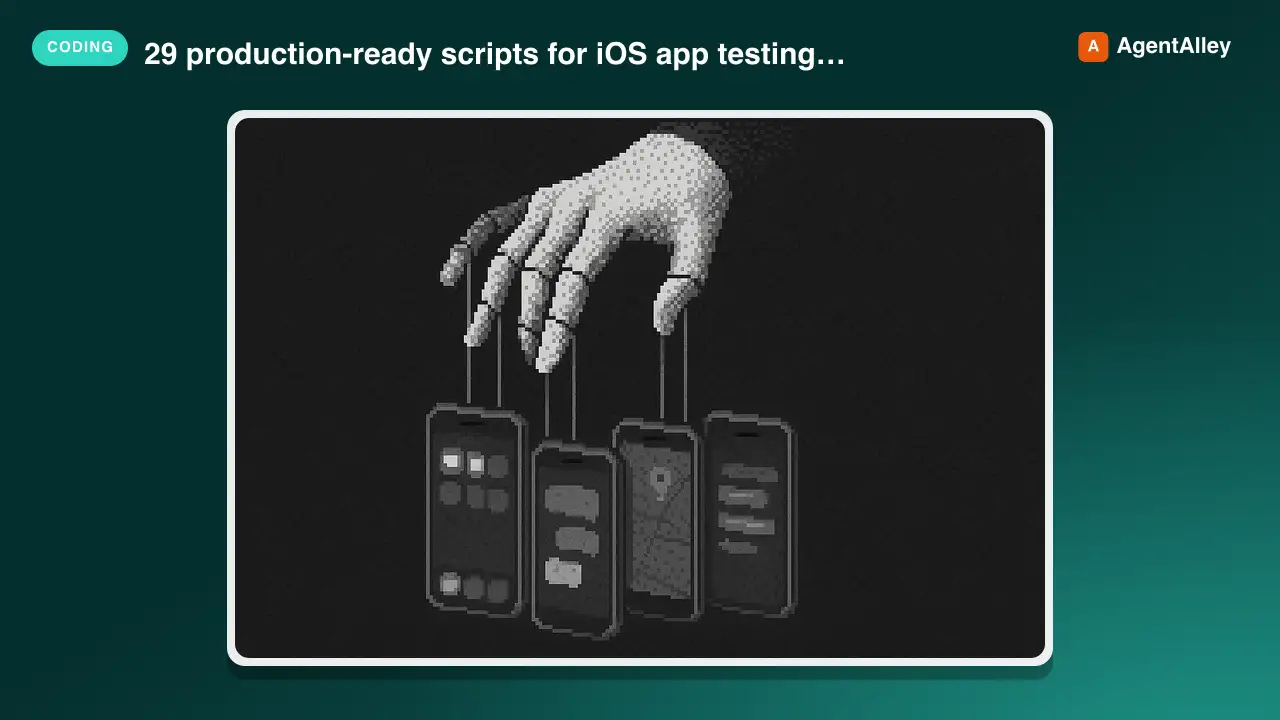 SkilliOS Simulator Testing Scripts
 conorluddy/ios-simulator-skill · by conorluddy29 production-ready scripts for iOS app testing, building, and automation. Provides semantic UI navigation, build automation, accessibility testing, and simulator lifecycle management. Optimized for AI agents with minimal token output.★ 1.3k GitHub stars
 SkillMoAI Autonomous Orchestrator
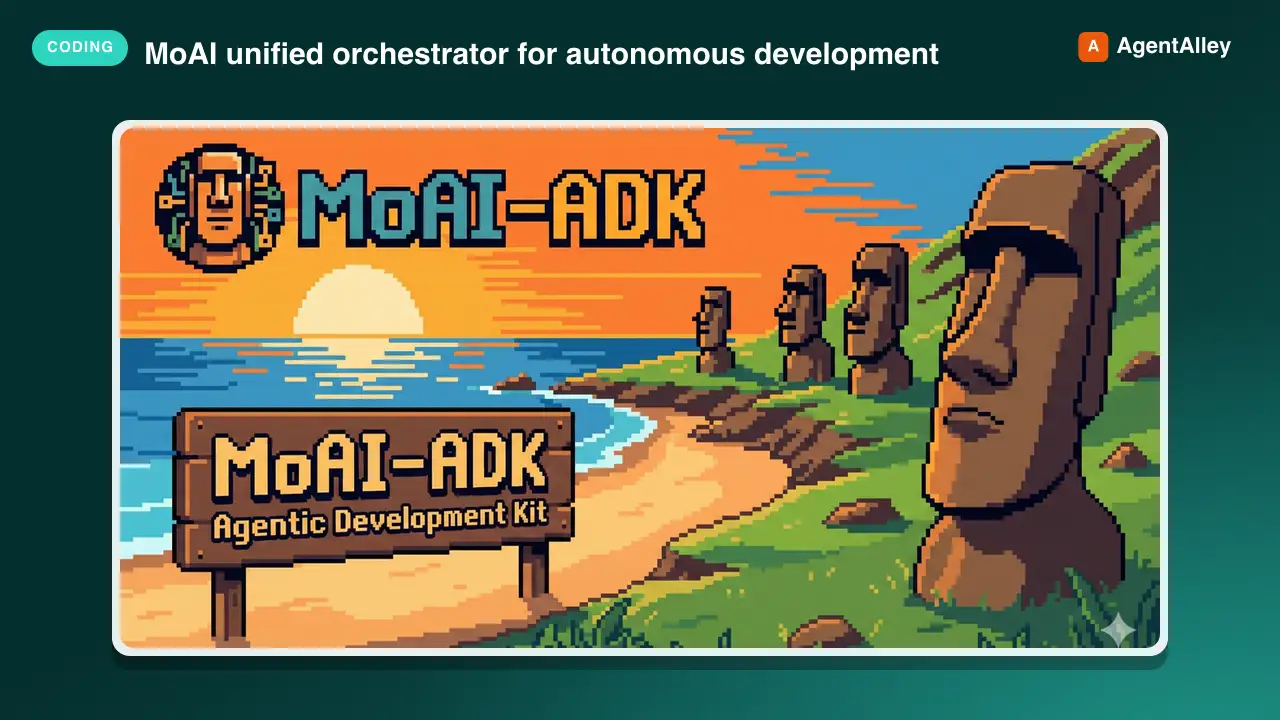
 modu-ai/moai-adk · by modu-aiMoAI unified orchestrator for autonomous development. Routes natural language or subcommands (plan, run, sync, project, fix, loop, mx, feedback, review, clean, codemaps, gate, e2e, harness, goal, gtd, todo) to specialized agents.★ 1.2k GitHub stars
 SkillAndroid Test Writer
 HoangNguyen0403/agent-skills-standard · by HoangNguyen0403Write Android unit, Compose UI, and Hilt-integrated tests. Use when designing test behavior with MockK or coroutine test utilities; defer database/WorkManager-specific recipes to the owning feature skill.★ 569 GitHub stars
 AgentVibe Testing
 AishwaryShrivastav/vibe-testing · by AishwaryShrivastavCode-aware browser testing for AI coding agents. 14 MCP tools, CLI workflows, regression memory, and human-readable QA reports.★ 18 GitHub stars
 SkillFeature Testing Framework
 obra/superpowers · by obraUse when implementing any feature or bugfix, before writing implementation code★ 290k GitHub stars
 SkillWeb App Tester
 anthropics/skills · by anthropicsToolkit for interacting with and testing local web applications using Playwright. Supports verifying frontend functionality, debugging UI behavior, capturing browser screenshots, and viewing browser logs.★ 178k GitHub stars
More from HoangNguyen0403
SkillAndroid Test WriterHoangNguyen0403/agent-skills-standard · by HoangNguyen0403Write Android unit, Compose UI, and Hilt-integrated tests. Use when designing test behavior with MockK or coroutine test utilities; defer database/WorkManager-specific recipes to the owning feature skill.★ 569 GitHub stars SkillArchitecture Diagram DesignerHoangNguyen0403/agent-skills-standard · by HoangNguyen0403Draws architecture diagrams as editable draw.io files with a fixed house style, C4 levels, evidence-tagged shapes, and optional multi-view identity checks. Use when producing a system context, container, component, deployment, data flow, sequence, state, or ERD, or redrawing an ASCII or Mermaid one.★ 569 GitHub stars
 SkillCode Review ExpertHoangNguyen0403/agent-skills-standard · by HoangNguyen0403Conduct high-quality, persona-driven code reviews. Use when reviewing PRs, critiquing code quality, or analyzing changes for team feedback.★ 569 GitHub stars
 SkillCybersecurity Framework MapperHoangNguyen0403/agent-skills-standard · by HoangNguyen0403Maintains sparse, reviewable cybersecurity framework edges with versioned IDs, relation, rationale, source, and review status. Use when mapping exercise observations or procedures to NIST, ATT&CK, or another named framework.★ 569 GitHub stars
 SkillDecision Discipline FrameworkHoangNguyen0403/agent-skills-standard · by HoangNguyen0403Right-size, ground, and gate SDLC decisions with SNC-sized depth, said-vs-assumed write-back, an evidence ledger, honest option cards, recorded approval, and self-review. Use when running brainstorm-feature, plan-feature, design-solution, or system-design-session.★ 569 GitHub stars
 SkillFlutter Robot Pattern TestsHoangNguyen0403/agent-skills-standard · by HoangNguyen0403Write unit, widget, and integration tests with robot patterns, widget keys, and Patrol in Flutter. Use when implementing test behavior; defer CI-only configuration without test changes.★ 569 GitHub stars