Code Review Expert
Conduct high-quality, persona-driven code reviews
Conduct high-quality, persona-driven code reviews. Use when reviewing PRs, critiquing code quality, or analyzing changes for team feedback.
---
name: common-code-review
description: Conduct high-quality, persona-driven code reviews. Use when reviewing PRs, critiquing code quality, or analyzing changes for team feedback.
metadata:
  triggers:
    keywords:
    - review
    - pr
    - critique
    - analyze code
---
# Code Review Expert

## **Priority: P1 (HIGH)**

**Role: Principal Engineer / senior review.** Focus: logic, security, architecture. constructive.

## Review Principles
Overview
Role: Principal Engineer / senior review. Focus: logic, security, architecture. constructive.
Manual install (npx, ZIP)
Claude Code
npx skills add HoangNguyen0403/agent-skills-standard --skill common-code-review -g -a claude-codeClaude Code (degit)
npx degit HoangNguyen0403/agent-skills-standard/skills/common/common-code-review#develop ~/.claude/skills/common-code-reviewClaude.ai / desktop
Codex, Cursor, other agents
Connects with Agent Alley MCP · agentalley.io/mcp
Files included
SKILL.md3.0 KB
Read SKILL.md here
SKILL.md
Show the full text79 lines
Code Review Expert
Priority: P1 (HIGH)
Role: Principal Engineer / senior review. Focus: logic, security, architecture. constructive.
Review Principles
- Substance > Style: Ignore formatting. Find bugs, flaws, design errors.
- Questions > Commands: " this handle null?" instead of "Fix this."
- Clarity: Group by
[BLOCKER],[MAJOR],[NIT]. - Sync: Enforce active framework P0 rules.
- Evidence First: Findings need file, AC, test, or diff evidence.
- Findings First: Lead with risks, not summary.
- Review completeness: Include test coverage and edge-case coverage even when CI is green or the requester asks for a quick review.
- Test-Review Evidence Gate: Before flagging a
[MAJOR]missing-test finding, apply ../common-tdd/references/quality-contract.md: explicitly name (1) the changed business contract, (2) the concrete plausible fault escaping to consumers, and (3) proof that nearby or upstream suites do not already cover it. Verify one logical contract per test; multiple assertions are allowed for related aspects/side effects. Do NOT demand a test per public symbol, private method, or trivial getter/echo.
Review Checklist (Mandatory)
- Security: No injection, secrets, auth leaks.
- Efficiency: No N+1 queries, memory leaks, high Big O.
- Logic: Requirements met. Edge cases handled.
- Clean Code: DRY/SOLID. Intent-revealing names.
Output Format (Strict)
Every substantive finding must include the literal `Why:` field. If code or a diff is missing, state the evidence needed before offering a substantive finding.
[SEVERITY] [File] Issue Description
Why: Risk or impact description.
Fix: 1-2 line code or action.
Red Flags
- Stop if you are praising before reviewing: Start with findings.
- Stop if a claim lacks evidence: Mark it as assumption or inspect more.
- Stop if you are reviewing style only: Return to behavior, security, tests.
Rationalization Prevention
- "It probably handles that edge case": Probably is not evidence.
- "CI is green so review is done": Tests do not replace review.
- "Only style matters here": Ignore style, not behavioral risk.
Anti-Patterns
- No Nitpicking: Ignore style; focus on impact.
- No Vague Demands: Explain why and how.
- No Skimming: Review tests and edge cases.
References
Canonical response anchors
When this skill applies, preserve the following domain terminology or equivalent concrete examples in the answer when relevant:
- BLOCKER
- Check
- MAJOR
- edge cases
- tests
| 1 | |
| 2 | name common-code-review |
| 3 | description Conduct high-quality, persona-driven code reviews. Use when reviewing PRs, critiquing code quality, or analyzing changes for team feedback. |
| 4 | metadata |
| 5 | triggers |
| 6 | keywords |
| 7 | - review |
| 8 | - pr |
| 9 | - critique |
| 10 | - analyze code |
| 11 | |
| 12 | # Code Review Expert |
| 13 | |
| 14 | ## **Priority: P1 (HIGH)** |
| 15 | |
| 16 | **Role: Principal Engineer / senior review.** Focus: logic, security, architecture. constructive. |
| 17 | |
| 18 | ## Review Principles |
| 19 | |
| 20 | **Substance > Style**: Ignore formatting. Find bugs, flaws, design errors. |
| 21 | **Questions > Commands**: " this handle null?" instead of "Fix this." |
| 22 | **Clarity**: Group by `[BLOCKER]`, `[MAJOR]`, `[NIT]`. |
| 23 | **Sync**: Enforce active framework P0 rules. |
| 24 | **Evidence First**: Findings need file, AC, test, or diff evidence. |
| 25 | **Findings First**: Lead with risks, not summary. |
| 26 | **Review completeness**: Include test coverage and edge-case coverage even when CI is green or the requester asks for a quick review. |
| 27 | **Test-Review Evidence Gate**: Before flagging a `[MAJOR]` missing-test finding, apply [../common-tdd/references/quality-contract.md]: explicitly name (1) the changed business contract, (2) the concrete plausible fault escaping to consumers, and (3) proof that nearby or upstream suites do not already cover it. Verify one logical contract per test; multiple assertions are allowed for related aspects/side effects. Do NOT demand a test per public symbol, private method, or trivial getter/echo. |
| 28 | |
| 29 | ## Review Checklist (Mandatory) |
| 30 | |
| 31 | [ ] **Security**: No injection, secrets, auth leaks. |
| 32 | [ ] **Efficiency**: No N+1 queries, memory leaks, high Big O. |
| 33 | [ ] **Logic**: Requirements met. Edge cases handled. |
| 34 | [ ] **Clean Code**: DRY/SOLID. Intent-revealing names. |
| 35 | |
| 36 | See [references/checklist.md]. |
| 37 | |
| 38 | ## Output Format (Strict) |
| 39 | |
| 40 | |
| 41 | |
| 42 | Every substantive finding must include the literal `Why:` field. If code or a diff is missing, state the evidence needed before offering a substantive finding. |
| 43 | [SEVERITY] [File] Issue Description |
| 44 | Why: Risk or impact description. |
| 45 | Fix: 1-2 line code or action. |
| 46 | |
| 47 | |
| 48 | ## Red Flags |
| 49 | |
| 50 | **Stop if you are praising before reviewing**: Start with findings. |
| 51 | **Stop if a claim lacks evidence**: Mark it as assumption or inspect more. |
| 52 | **Stop if you are reviewing style only**: Return to behavior, security, tests. |
| 53 | |
| 54 | ## Rationalization Prevention |
| 55 | |
| 56 | **"It probably handles that edge case"**: Probably is not evidence. |
| 57 | **"CI is green so review is done"**: Tests do not replace review. |
| 58 | **"Only style matters here"**: Ignore style, not behavioral risk. |
| 59 | |
| 60 | ## Anti-Patterns |
| 61 | |
| 62 | **No Nitpicking**: Ignore style; focus on impact. |
| 63 | **No Vague Demands**: Explain _why_ and _how_. |
| 64 | **No Skimming**: Review tests and edge cases. |
| 65 | |
| 66 | ## References |
| 67 | |
| 68 | [Output Templates] |
| 69 | [Full Checklist] |
| 70 | |
| 71 | ## Canonical response anchors |
| 72 | |
| 73 | When this skill applies, preserve the following domain terminology or equivalent concrete examples in the answer when relevant: |
| 74 | BLOCKER |
| 75 | Check |
| 76 | MAJOR |
| 77 | edge cases |
| 78 | tests |
| 79 |
Details
- License
- MIT
- Stars on the repo
- ★ 569
- Checked
- Source
- HoangNguyen0403/agent-skills-standard ↗
- Creator
- HoangNguyen0403 · 21 listings
Similar skills
See all → SkillCode Review Feedback Analyzer
 obra/superpowers · by obraUse when receiving code review feedback, before implementing suggestions, especially if feedback seems unclear or technically questionable - requires technical rigor and verification, not performative agreement or blind implementation★ 290k GitHub stars
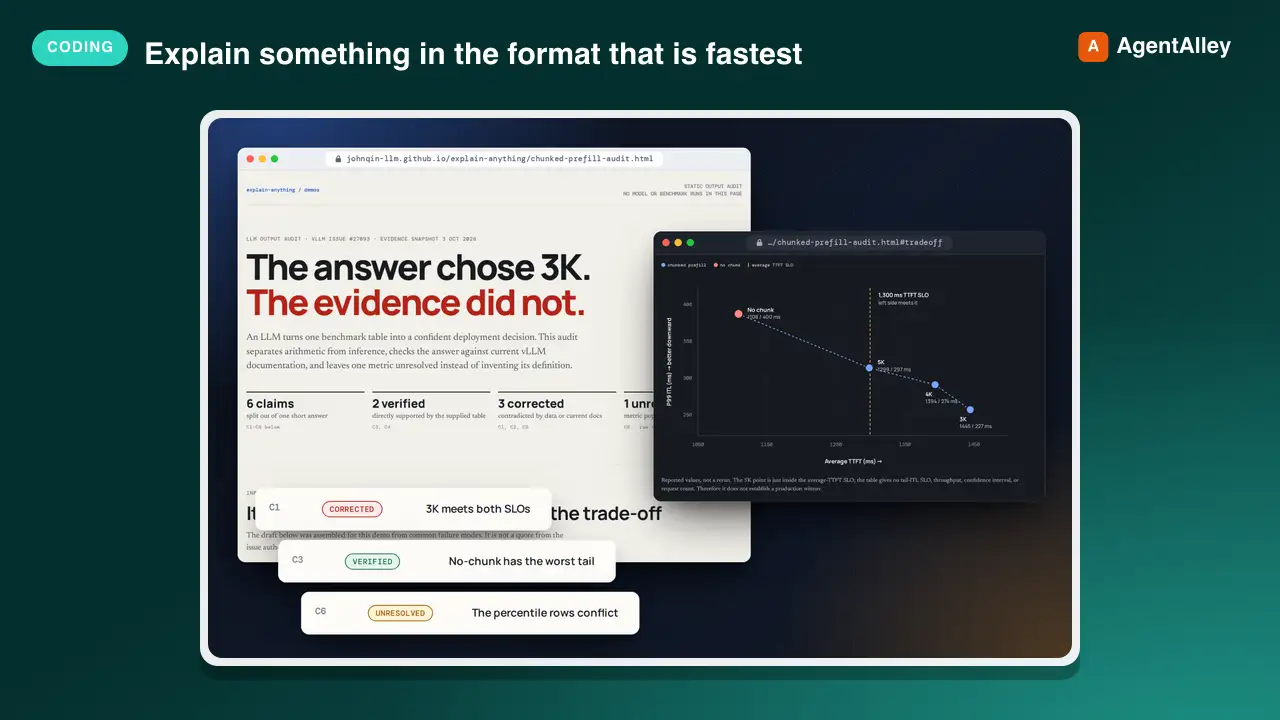 SkillContent Explainer
 JohnQinAMD/llm-output-explainer · by JohnQinAMDExplain something in the format that is fastest to understand, from controlled English (ASD-STE100 style), to a diagram, to an interactive HTML page, to a narrated explainer video. Check facts against their sources, using parallel subagents for independent evidence streams when the host supports them. Use when the user wants to understand a substantial concept, algorithm, code change, pull request, paper, benchmark result, or agent output, or asks for an explainer, diagram, HTML explanation, STE, or video. Not for one-line answers, drafting a pull request description, or code review.★ 4 GitHub stars
 SkillCode Review Requesterobra/superpowers · by obraUse when completing tasks, implementing major features, or before merging to verify work meets requirements★ 290k GitHub stars
 SkillMulti-Axis Code Review
 addyosmani/agent-skills · by addyosmaniConducts multi-axis code review. Use before merging any change. Use when reviewing code written by yourself, another agent, or a human. Use when you need to assess code quality across multiple dimensions before it enters the main branch.★ 98.7k GitHub stars
 SkillCode Clarity Simplifieraddyosmani/agent-skills · by addyosmaniSimplifies code for clarity. Use when refactoring code for clarity without changing behavior. Use when code works but is harder to read, maintain, or extend than it should be. Use when reviewing code that has accumulated unnecessary complexity.★ 98.7k GitHub stars
 SkillGitHub Code Reviewer
 ruvnet/RuView · by ruvnetComprehensive GitHub code review with AI-powered swarm coordination★ 94.7k GitHub stars
More from HoangNguyen0403
 SkillAndroid Test Writer
 HoangNguyen0403/agent-skills-standard · by HoangNguyen0403Write Android unit, Compose UI, and Hilt-integrated tests. Use when designing test behavior with MockK or coroutine test utilities; defer database/WorkManager-specific recipes to the owning feature skill.★ 569 GitHub stars
 SkillArchitecture Diagram DesignerHoangNguyen0403/agent-skills-standard · by HoangNguyen0403Draws architecture diagrams as editable draw.io files with a fixed house style, C4 levels, evidence-tagged shapes, and optional multi-view identity checks. Use when producing a system context, container, component, deployment, data flow, sequence, state, or ERD, or redrawing an ASCII or Mermaid one.★ 569 GitHub stars
 SkillCybersecurity Framework MapperHoangNguyen0403/agent-skills-standard · by HoangNguyen0403Maintains sparse, reviewable cybersecurity framework edges with versioned IDs, relation, rationale, source, and review status. Use when mapping exercise observations or procedures to NIST, ATT&CK, or another named framework.★ 569 GitHub stars
 SkillDecision Discipline FrameworkHoangNguyen0403/agent-skills-standard · by HoangNguyen0403Right-size, ground, and gate SDLC decisions with SNC-sized depth, said-vs-assumed write-back, an evidence ledger, honest option cards, recorded approval, and self-review. Use when running brainstorm-feature, plan-feature, design-solution, or system-design-session.★ 569 GitHub stars
 SkillFlutter Robot Pattern TestsHoangNguyen0403/agent-skills-standard · by HoangNguyen0403Write unit, widget, and integration tests with robot patterns, widget keys, and Patrol in Flutter. Use when implementing test behavior; defer CI-only configuration without test changes.★ 569 GitHub stars
 SkillGo Unit Test BuilderHoangNguyen0403/agent-skills-standard · by HoangNguyen0403Write unit tests with table-driven patterns and interface mocking in Go. Use when writing Go unit tests, table-driven tests, or using mock interfaces.★ 569 GitHub stars