Architecture Diagram Designer
Architecture Diagramming Standard
Draws architecture diagrams as editable draw.io files with a fixed house style, C4 levels, evidence-tagged shapes, and optional multi-view identity checks. Use when producing a system context, container, component, deployment, data…
---
name: common-architecture-diagramming
description: Draws architecture diagrams as editable draw.io files with a fixed house style, C4 levels, evidence-tagged shapes, and optional multi-view identity checks. Use when producing a system context, container, component, deployment, data flow, sequence, state, or ERD, or redrawing an ASCII or Mermaid one.
metadata:
  triggers:
    files:
      - "ARCHITECTURE.md"
      - "**/*.drawio"
      - "**/*.mermaid"
      - "docs/architecture/**"
    keywords:
      - diagram
      - c4
      - drawio
      - mermaid
      - erd
      - entity relationship
      - schema diagram
Overview
Never hand-write mxGraph XML. Write a spec; the scripts own every visual decision, so diagrams stay identical across authors, repositories, and sessions.
Manual install (npx, ZIP)
npx skills add HoangNguyen0403/agent-skills-standard --skill common-architecture-diagramming -g -a claude-codenpx degit HoangNguyen0403/agent-skills-standard/.agents/skills/common/common-architecture-diagramming#develop ~/.claude/skills/common-architecture-diagrammingConnects with Agent Alley MCP · agentalley.io/mcp
Files included
SKILL.md5.0 KB
Read SKILL.md here
Show the full text93 lines
Architecture Diagramming Standard
Priority: P1 (HIGH)
Pipeline
Never hand-write mxGraph XML. Write a spec; the scripts own every visual decision, so diagrams stay identical across authors, repositories, and sessions.
- Write
spec.json— schema in diagram-spec.md. For an ERD, generate it:python3 scripts/schema_to_spec.py db/schema.sql --title "<System> — ERD" -o spec.json python3 scripts/validate_spec.py spec.jsonpython3 scripts/render_drawio.py spec.json -o docs/architecture/<slug>.drawio --strict(exit 2 = a layout finding; change the spec, per layout-rules.md)- For related views, optionally validate view-manifest.md:
python3 scripts/validate_manifest.py view-manifest.json - Export the image: a draw.io MCP tool if the session has one, else
python3 scripts/export_drawio.py docs/architecture/<slug>.drawio -f png -o docs/architecture/<slug>.png, else ship the.drawioand say the image was not exported. See export paths. - Inspect the exported image at normal reading size; strict validation cannot prove labels and edges are legible. Fix the spec and re-export before handoff.
The JSON spec is the semantic source of truth; .drawio is the editable presentation and the
image is a copy for a deck. Generated XML records its own baseline; regeneration protects
manual edits by default. Use --acknowledge-manual-edits only after returning semantic changes to the spec.
Guidelines
- Name the audience and the decision before drawing anything.
- One C4 level per diagram: context, container, or component, never mixed.
- Pick the type from the message, not from habit. See diagram-selection.md.
- Evidence and confidence are separate. Code citations are documented evidence, not runtime
observations; use
assumedorunverifiedfor honest design uncertainty. - Put the number on the box.
metriccarries the load or SLO that sized the node,constraintsays why it exists; never invent either. - Label every edge with its protocol or event; use
style: asyncfor events. - Cloud icons only where verified.
gcp:*andaws:*are official icons; every other vendor is acloud:*kind with the service named insublabel. No Azure logos exist in the bundle, so Azure is alwayscloud:*. - Exec audience caps at 12 nodes. Past that, split by level or by flow.
- Legend and title block are generated. Do not remove or duplicate them.
- Refine in the spec, not by mutating generated XML. Regeneration preserves files with a valid own baseline, but refuses hand mutation until explicitly acknowledged.
Anti-Patterns
- No hand-written XML: Write the spec, run the renderer.
- No invented boxes: Omit what the evidence does not support.
- No mixed levels: Table columns never appear in a context diagram.
- No unlabeled arrows: State the protocol or the event.
- No mystery acronyms: Expand every abbreviation on first use.
- No orphan nodes: Connect it or cut it.
Red Flags
| Thought | Reality |
|---|---|
| "It is one box, I will write the XML" | The renderer owns style, legend, and title block. Use it. |
| "Close enough, I will guess this service" | Guesses ship as facts. Omit the evidence and let it render UNVERIFIED. |
| "Managers want the whole system on one page" | Past 12 nodes they stop reading. Split it. |
References
- Diagram spec · View manifest · Style catalog · House style
- Source extraction · Exec readability
- C4 model · Cloud · Best practices
- Layout rules · Checklist · Export paths and Mermaid fallback
- Runnable examples:
assets/fixtures/<type>.spec.json, one per diagram type, plus schema samples underassets/fixtures/schemas/. - Batch or delegated drawing:
specialist-solution-diagrammer.
| 1 | |
| 2 | name common-architecture-diagramming |
| 3 | description Draws architecture diagrams as editable draw.io files with a fixed house style, C4 levels, evidence-tagged shapes, and optional multi-view identity checks. Use when producing a system context, container, component, deployment, data flow, sequence, state, or ERD, or redrawing an ASCII or Mermaid one. |
| 4 | metadata |
| 5 | triggers |
| 6 | files |
| 7 | - "ARCHITECTURE.md" |
| 8 | - "**/*.drawio" |
| 9 | - "**/*.mermaid" |
| 10 | - "docs/architecture/**" |
| 11 | keywords |
| 12 | - diagram |
| 13 | - c4 |
| 14 | - drawio |
| 15 | - mermaid |
| 16 | - erd |
| 17 | - entity relationship |
| 18 | - schema diagram |
| 19 | - aws |
| 20 | - architecture diagram |
| 21 | - solution architecture |
| 22 | - system context |
| 23 | - deployment diagram |
| 24 | |
| 25 | # Architecture Diagramming Standard |
| 26 | |
| 27 | ## **Priority: P1 (HIGH)** |
| 28 | |
| 29 | ## Pipeline |
| 30 | |
| 31 | Never hand-write mxGraph XML. Write a spec; the scripts own every visual decision, |
| 32 | so diagrams stay identical across authors, repositories, and sessions. |
| 33 | |
| 34 | Write `spec.json` — schema in [diagram-spec.md]. For an ERD, |
| 35 | generate it: `python3 scripts/schema_to_spec.py db/schema.sql --title "<System> — ERD" -o spec.json` |
| 36 | `python3 scripts/validate_spec.py spec.json` |
| 37 | `python3 scripts/render_drawio.py spec.json -o docs/architecture/<slug>.drawio --strict` |
| 38 | (exit 2 = a layout finding; change the spec, per [layout-rules.md]) |
| 39 | For related views, optionally validate [view-manifest.md]: |
| 40 | `python3 scripts/validate_manifest.py view-manifest.json` |
| 41 | Export the image: a draw.io MCP tool if the session has one, else |
| 42 | `python3 scripts/export_drawio.py docs/architecture/<slug>.drawio -f png -o docs/architecture/<slug>.png`, |
| 43 | else ship the `.drawio` and say the image was not exported. See [export paths]. |
| 44 | Inspect the exported image at normal reading size; strict validation cannot prove labels and edges are legible. Fix the spec and re-export before handoff. |
| 45 | |
| 46 | The JSON spec is the semantic source of truth; `.drawio` is the editable presentation and the |
| 47 | image is a copy for a deck. Generated XML records its own baseline; regeneration protects |
| 48 | manual edits by default. Use `--acknowledge-manual-edits` only after returning semantic changes to the spec. |
| 49 | |
| 50 | ## Guidelines |
| 51 | |
| 52 | **Name the audience and the decision** before drawing anything. |
| 53 | **One C4 level per diagram**: context, container, or component, never mixed. |
| 54 | **Pick the type from the message**, not from habit. See [diagram-selection.md]. |
| 55 | **Evidence and confidence are separate.** Code citations are documented evidence, not runtime |
| 56 | observations; use `assumed` or `unverified` for honest design uncertainty. |
| 57 | **Put the number on the box.** `metric` carries the load or SLO that sized the node, |
| 58 | `constraint` says why it exists; never invent either. |
| 59 | **Label every edge** with its protocol or event; use `style: async` for events. |
| 60 | **Cloud icons only where verified.** `gcp:*` and `aws:*` are official icons; every other |
| 61 | vendor is a `cloud:*` kind with the service named in `sublabel`. No Azure logos exist in |
| 62 | the bundle, so Azure is always `cloud:*`. |
| 63 | **Exec audience caps at 12 nodes.** Past that, split by level or by flow. |
| 64 | **Legend and title block are generated.** Do not remove or duplicate them. |
| 65 | **Refine in the spec, not by mutating generated XML.** Regeneration preserves files with a |
| 66 | valid own baseline, but refuses hand mutation until explicitly acknowledged. |
| 67 | |
| 68 | ## Anti-Patterns |
| 69 | |
| 70 | **No hand-written XML**: Write the spec, run the renderer. |
| 71 | **No invented boxes**: Omit what the evidence does not support. |
| 72 | **No mixed levels**: Table columns never appear in a context diagram. |
| 73 | **No unlabeled arrows**: State the protocol or the event. |
| 74 | **No mystery acronyms**: Expand every abbreviation on first use. |
| 75 | **No orphan nodes**: Connect it or cut it. |
| 76 | |
| 77 | ## Red Flags |
| 78 | |
| 79 | | Thought | Reality | |
| 80 | |---------|---------| |
| 81 | | "It is one box, I will write the XML" | The renderer owns style, legend, and title block. Use it. | |
| 82 | | "Close enough, I will guess this service" | Guesses ship as facts. Omit the evidence and let it render UNVERIFIED. | |
| 83 | | "Managers want the whole system on one page" | Past 12 nodes they stop reading. Split it. | |
| 84 | |
| 85 | ## References |
| 86 | |
| 87 | [Diagram spec] · [View manifest] · [Style catalog] · [House style] |
| 88 | [Source extraction] · [Exec readability] |
| 89 | [C4 model] · [Cloud] · [Best practices] |
| 90 | [Layout rules] · [Checklist] · [Export paths and Mermaid fallback] |
| 91 | Runnable examples: `assets/fixtures/<type>.spec.json`, one per diagram type, plus schema samples under `assets/fixtures/schemas/`. |
| 92 | Batch or delegated drawing: `specialist-solution-diagrammer`. |
| 93 |
Details
- License
- MIT
- Stars on the repo
- ★ 569
- Checked
- Source
- HoangNguyen0403/agent-skills-standard ↗
- Creator
- HoangNguyen0403 · 21 listings
Similar skills
See all →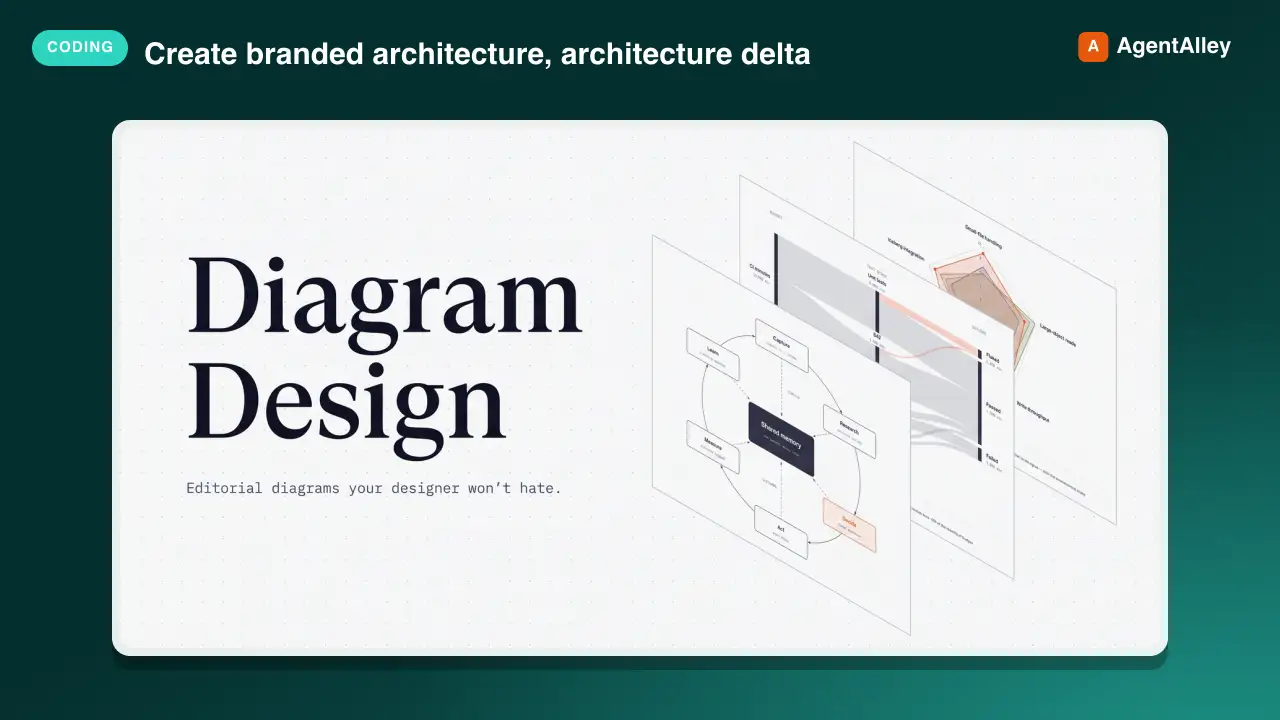 SkillCustom Diagram Designer
 cathrynlavery/diagram-design · by cathrynlaveryCreate branded architecture, architecture delta, IT current-state, flowchart, sequence, state machine, ER/data model, timeline, swimlane, quadrant, radar/spider, polar chart (polar/radial lollipop), loop/flywheel, nested, tree, org chart, layer stack, Venn, pyramid/funnel, treemap and marimekko, heatmap, bar and dumbbell, waterfall, line (slopegraph, ridgeline, streamgraph, bump), Gantt and scatter charts (bubble, beeswarm), high-level, process, medallion, data flow, DP integration, DP security matrix, Sankey, fishbone, Wardley map, kanban, user journey, deployment, dependency graph, UML class, story map, or database schema diagrams as HTML/SVG/PNG, with .drawio, Mermaid, and .excalidraw import, plus lifecycle phase maps, block decomposition trees, and onboarding guidance.★ 43.2k GitHub stars
 SkillArchitecture Pattern Reviewer
 pascalorg/editor · by pascalorgReview a PR against the Pascal architectural rules — package boundaries (core/viewer/editor/nodes), the registry-driven composition model (def.geometry / def.renderer / def.system), legacy-dispatch regressions, the slots + world-scale-UV convention for new nodes/geometry, hook hygiene (useEditor/useScene/useViewer), and selector performance. Use when the user asks to review a PR, audit a branch, or check that changes respect the codebase's architecture.★ 24.6k GitHub stars
 SkillArchitecture Diagram Creator
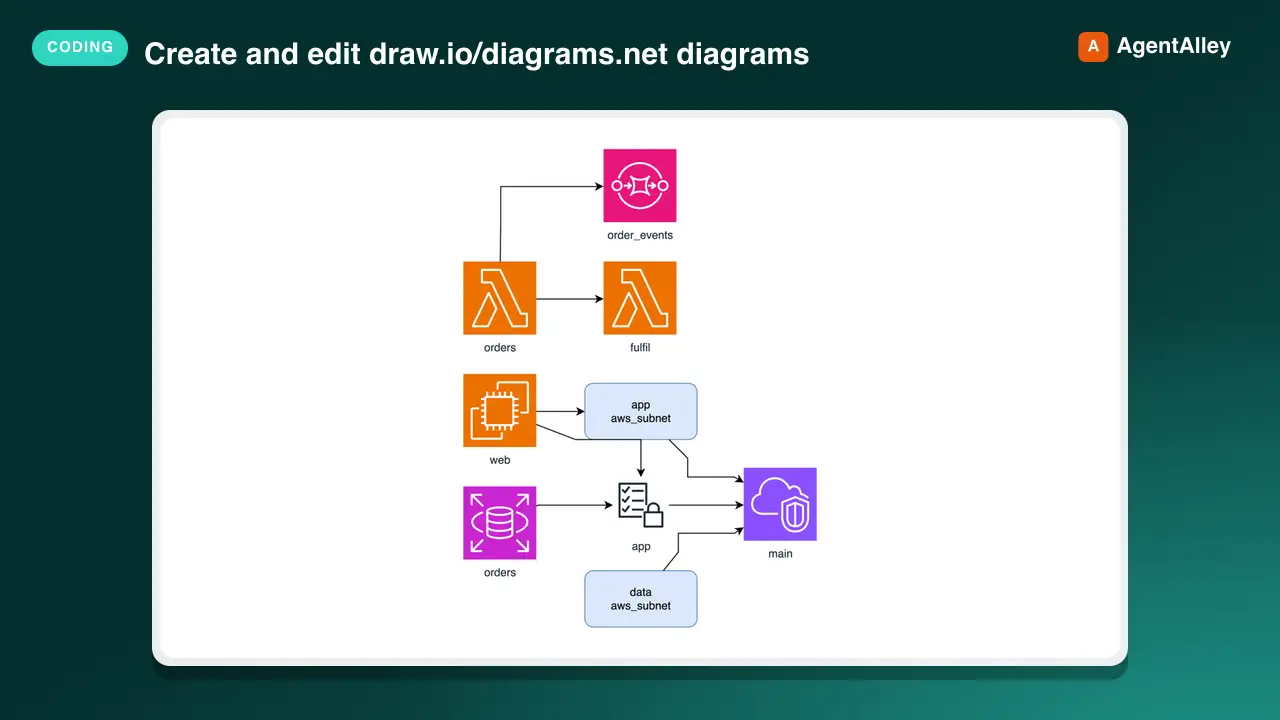
 Agents365-ai/drawio-skill · by Agents365-aiCreate and edit draw.io/diagrams.net diagrams as editable `.drawio` files. Covers architecture, UML/ERD/sequence, BPMN, network, and swimlane views authored from a description or converted from code, IaC, SQL, and API schemas, plus sync, query, test, review, export, and publish of existing diagrams. Use when the user asks for draw.io/diagrams.net or an editable diagram; prefer Mermaid/PlantUML when diagrams-as-code is enough.★ 9.8k GitHub stars
 SkillArchitecture Diagram Generator
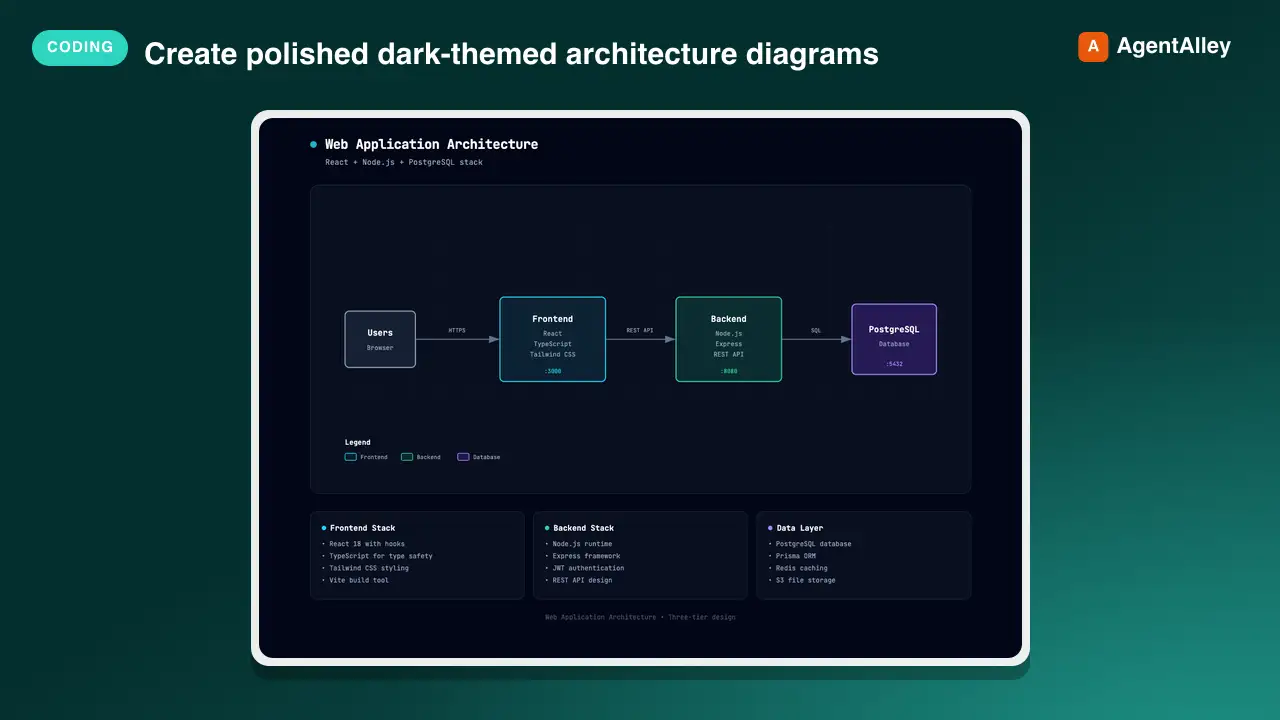
 Cocoon-AI/architecture-diagram-generator · by Cocoon-AICreate polished dark-themed architecture diagrams as self-contained HTML+SVG files. Use when the user asks for system, infrastructure, cloud, security, or network topology diagrams.★ 7.4k GitHub stars
 SkillLLM Knowledge Distillation
 Ar9av/obsidian-wiki · by Ar9avThe foundational knowledge distillation pattern for building and maintaining an AI-powered Obsidian wiki. Based on Andrej Karpathy's LLM Wiki architecture. Use this skill whenever the user wants to understand the wiki pattern, set up a new knowledge base, or needs guidance on the three-layer architecture (raw sources → wiki → schema). Also use when discussing knowledge management strategy, wiki structure decisions, or how to organize distilled knowledge. This is the "theory" skill — other skills handle specific operations (ingesting, querying, linting).★ 3.5k GitHub stars
 SkillSoftware Design Philosophy
 wondelai/skills · by wondelaiManage software complexity through deep modules, information hiding, and strategic programming. Use when the user mentions "module design", "API too complex", "shallow class", "complexity budget", "strategic vs tactical", "deep module", "information leakage", "pass-through method", "this code is over-engineered", or "simplify this design". Also trigger when reviewing an interface for simplicity, evaluating whether an abstraction is pulling its weight, deciding whether a comment is worth writing, or choosing between general-purpose and special-purpose approaches. Covers deep vs shallow modules, red flags for complexity, and comments as design documentation. For code quality, see clean-code. For architecture boundaries, see clean-architecture.★ 2.2k GitHub stars
More from HoangNguyen0403
 SkillAndroid Test Writer
 HoangNguyen0403/agent-skills-standard · by HoangNguyen0403Write Android unit, Compose UI, and Hilt-integrated tests. Use when designing test behavior with MockK or coroutine test utilities; defer database/WorkManager-specific recipes to the owning feature skill.★ 569 GitHub stars
 SkillCode Review ExpertHoangNguyen0403/agent-skills-standard · by HoangNguyen0403Conduct high-quality, persona-driven code reviews. Use when reviewing PRs, critiquing code quality, or analyzing changes for team feedback.★ 569 GitHub stars
 SkillCybersecurity Framework MapperHoangNguyen0403/agent-skills-standard · by HoangNguyen0403Maintains sparse, reviewable cybersecurity framework edges with versioned IDs, relation, rationale, source, and review status. Use when mapping exercise observations or procedures to NIST, ATT&CK, or another named framework.★ 569 GitHub stars
 SkillDecision Discipline FrameworkHoangNguyen0403/agent-skills-standard · by HoangNguyen0403Right-size, ground, and gate SDLC decisions with SNC-sized depth, said-vs-assumed write-back, an evidence ledger, honest option cards, recorded approval, and self-review. Use when running brainstorm-feature, plan-feature, design-solution, or system-design-session.★ 569 GitHub stars
 SkillFlutter Robot Pattern TestsHoangNguyen0403/agent-skills-standard · by HoangNguyen0403Write unit, widget, and integration tests with robot patterns, widget keys, and Patrol in Flutter. Use when implementing test behavior; defer CI-only configuration without test changes.★ 569 GitHub stars
 SkillGo Unit Test BuilderHoangNguyen0403/agent-skills-standard · by HoangNguyen0403Write unit tests with table-driven patterns and interface mocking in Go. Use when writing Go unit tests, table-driven tests, or using mock interfaces.★ 569 GitHub stars