Talent Bench Mapper
Talent mapping
Talent mapping skill for Claude Code and Codex: map the talent bench for a function across a set of target or competitor companies using Explorium data via Vibe Prospecting. Returns an org-style map per company (headcount by seniority,…
---
name: talent-mapping
description: "Talent mapping skill for Claude Code and Codex: map the talent bench for a function across a set of target or competitor companies using Explorium data via Vibe Prospecting. Returns an org-style map per company (headcount by seniority, named leaders and individual contributors, tenure, recent joiners and leavers), plus company-level movement signals like layoffs, leadership changes, acquisitions, and headcount decline that indicate when talent is likely open to a move. Use for recruiting strategy, competitive talent intelligence, executive search market maps, and workforce planning. Triggers on 'talent map', 'map the engineering team at', 'who works in [function] at our competitors', 'talent intelligence', 'where can we hire from', 'market map for a search'. Works in Claude Code, Codex, Hermes-Agent, and OpenClaw."
compatibility: "Requires: Vibe Prospecting MCP server (https://vibeprospecting.explorium.ai/mcp, bundled with this plugin) or the Vibe Prospecting CLI (npx @vibeprospecting/vpai@latest)"
---

# Talent Mapping

Map who does a given job across a set of companies, and where that talent is most likely to move, before a single outreach goes out.

## Input

`$ARGUMENTS` describes:

- A function or role family to map (required): "data engineering", "enterprise sales", "product design leadership".
- A company set (required): named companies or domains, a competitor list, or a company profile ("Series C-E cybersecurity in the US, 200-1000 employees").
- Optional seniority focus (default Manager and above plus senior ICs).
- Optional geography.
Overview
Map who does a given job across a set of companies, and where that talent is most likely to move, before a single outreach goes out.
Manual install (npx, ZIP)
npx skills add explorium-ai/gtm-skills --skill talent-mapping -g -a claude-codenpx degit explorium-ai/gtm-skills/skills/talent-mapping#main ~/.claude/skills/talent-mappingConnects with Agent Alley MCP · agentalley.io/mcp
Files included
SKILL.md7.4 KB
Read SKILL.md here
Show the full text92 lines
Talent Mapping
Map who does a given job across a set of companies, and where that talent is most likely to move, before a single outreach goes out.
Input
$ARGUMENTS describes:
- A function or role family to map (required): "data engineering", "enterprise sales", "product design leadership".
- A company set (required): named companies or domains, a competitor list, or a company profile ("Series C-E cybersecurity in the US, 200-1000 employees").
- Optional seniority focus (default Manager and above plus senior ICs).
- Optional geography.
- Optional depth: "overview" (counts and leaders only, default) or "full" (named roster per company).
Setup check (always do this first)
This skill runs on Explorium's B2B data through Vibe Prospecting. Before step 1, confirm a data path is available:
- MCP / connector: a Vibe Prospecting tool such as
fetch-entitiesormatch-businessis in your tool list. If it is, proceed. - CLI fallback: run
npx @vibeprospecting/vpai@latest --help. If it lists tools, proceed. If it errors on auth, ask the user to runnpx @vibeprospecting/vpai@latest config --api-key "YOUR_VP_API_KEY". - Neither available: stop and tell the user: "Please connect the Vibe Prospecting connector (https://vibeprospecting.explorium.ai/mcp) or configure the CLI, then let me know." Do not continue or invent data.
Workflow
Resolve the company set. Match each named company and sanity-check firmographics: a major brand resolving to 1-50 employees in a Corporate-Managing-Offices category likely routed to a shell entity, so retry with the alternate domain. For a profile instead of names, size it first and cap the map at 15 companies; if more match, ask the user to tighten or pick. Surface ambiguous matches for confirmation rather than picking silently.
Define the role family. Translate the function into a department value plus 4 to 8 discovered canonical titles spanning the ladder (IC, senior IC, manager, director, VP, C-level). Confirm the family with the user, since "data" alone can mean analytics, engineering, or science.
Count before you pull. For each company, get the match count by seniority band for the role family. This is cheap and produces the bench-size view even when the user only wants an overview.
Pull leaders, sample ICs. For every company, materialize the people at Director and above in the role family. For "full" depth, also materialize senior ICs and managers up to 50 per company. Pair every title filter with a seniority value: title-only filters leak.
Enrich profiles. Pull profile data for the materialized people to get tenure in current role, time at company, and prior employers. Skip contact enrichment: a talent map is research. Point the user to
talent-sourcingorenrich-contactwhen they move to outreach.Collect movement signals.
- Company level, last 180 days: business events for layoffs, leadership changes, acquisitions or mergers, office closures, and funding rounds. Verify each headline names the target company: industry-wide articles can cross-attribute.
- Workforce trend: headcount change in the last 6 and 12 months, and department-level trend for the mapped function where available.
- People level: prospect events for recent role changes among the mapped leaders.
Score each company as a talent source (0-100):
- Bench depth (35): count of people in the role family at the target seniority, relative to the other companies in the set.
- Movement pressure (40): layoff or restructuring = 90-100; new leadership in the mapped function in the last 6 months = 70-85; acquisition = 70; declining headcount = 50-70; flat = 30; strong growth or fresh large round = 10-20.
- Tenure ripeness (25): share of mapped people with 2-4 years in role.
Explain the score in one line. Do not score individuals here; that belongs to
talent-sourcing.
Output Format
Map Scope
Role family (department plus titles), seniority bands, geography, and the resolved company list with domain, industry, and headcount bucket. Note any company that failed to resolve.
Talent Source Ranking
| Rank | Company | Bench Size (role family) | Directors+ | Headcount Trend 12m | Key Movement Signal | Source Score | Why |
|---|
Company Maps
One block per company, ordered by source score:
- Bench by seniority: counts per band.
- Leadership: name, title, tenure in role, prior employer, LinkedIn. Flag leaders who joined in the last 6 months (team reshuffles often follow).
- Notable ICs (full depth only): name, title, tenure, LinkedIn.
- Signals: dated events with a one-line summary.
Market Read
3 to 6 bullets: where the deepest benches sit, which companies show the most pressure right now, common prior-employer feeder companies seen across the map, and typical tenure. Flag companies to avoid (client conflicts, strong growth making talent hard to move).
Next Steps
- Run
talent-sourcingscoped to the top 3 source companies to build a ranked candidate pipeline. - Re-run in 60-90 days to catch new movement signals.
- Expand the set with
lookalike-accountsseeded on the highest-scoring source company.
Fair-hiring and privacy rules
- Map roles and companies, not personal characteristics. Never segment or comment on protected characteristics or proxies for them.
- Keep the map to professional, publicly listed information. Do not pull personal contact data during mapping.
- When the user names companies under a no-poach or client agreement, exclude them and say so in Map Scope.
Limitations
- Requires the Vibe Prospecting connector or CLI; data coverage and credits follow the user's Vibe Prospecting plan.
- Counts reflect people whose professional profiles match the role family. Small or stealth teams, and people with sparse profiles, are undercounted.
- No department-level headcount history for every company: when missing, fall back to company-wide headcount trend and say so.
- No executive-departure event type. Leavers show up only indirectly, via new-joiner signals at other companies or role-change events.
- No sub-department job-function filter. The finest cut is department plus discovered titles.
- Title filters are loose: always pair with seniority.
- Large companies can return thousands of matches: the map caps named rosters at 50 per company and relies on counts beyond that.
| 1 | |
| 2 | name talent-mapping |
| 3 | description "Talent mapping skill for Claude Code and Codex: map the talent bench for a function across a set of target or competitor companies using Explorium data via Vibe Prospecting. Returns an org-style map per company (headcount by seniority, named leaders and individual contributors, tenure, recent joiners and leavers), plus company-level movement signals like layoffs, leadership changes, acquisitions, and headcount decline that indicate when talent is likely open to a move. Use for recruiting strategy, competitive talent intelligence, executive search market maps, and workforce planning. Triggers on 'talent map', 'map the engineering team at', 'who works in [function] at our competitors', 'talent intelligence', 'where can we hire from', 'market map for a search'. Works in Claude Code, Codex, Hermes-Agent, and OpenClaw." |
| 4 | compatibility "Requires: Vibe Prospecting MCP server (https://vibeprospecting.explorium.ai/mcp, bundled with this plugin) or the Vibe Prospecting CLI (npx @vibeprospecting/vpai@latest)" |
| 5 | |
| 6 | |
| 7 | # Talent Mapping |
| 8 | |
| 9 | Map who does a given job across a set of companies, and where that talent is most likely to move, before a single outreach goes out. |
| 10 | |
| 11 | ## Input |
| 12 | |
| 13 | `$ARGUMENTS` describes: |
| 14 | |
| 15 | A function or role family to map (required): "data engineering", "enterprise sales", "product design leadership". |
| 16 | A company set (required): named companies or domains, a competitor list, or a company profile ("Series C-E cybersecurity in the US, 200-1000 employees"). |
| 17 | Optional seniority focus (default Manager and above plus senior ICs). |
| 18 | Optional geography. |
| 19 | Optional depth: "overview" (counts and leaders only, default) or "full" (named roster per company). |
| 20 | |
| 21 | ## Setup check (always do this first) |
| 22 | |
| 23 | This skill runs on Explorium's B2B data through Vibe Prospecting. Before step 1, confirm a data path is available: |
| 24 | |
| 25 | **MCP / connector:** a Vibe Prospecting tool such as `fetch-entities` or `match-business` is in your tool list. If it is, proceed. |
| 26 | **CLI fallback:** run `npx @vibeprospecting/vpai@latest --help`. If it lists tools, proceed. If it errors on auth, ask the user to run `npx @vibeprospecting/vpai@latest config --api-key "YOUR_VP_API_KEY"`. |
| 27 | **Neither available:** stop and tell the user: "Please connect the Vibe Prospecting connector (https://vibeprospecting.explorium.ai/mcp) or configure the CLI, then let me know." Do not continue or invent data. |
| 28 | |
| 29 | ## Workflow |
| 30 | |
| 31 | **Resolve the company set.** Match each named company and sanity-check firmographics: a major brand resolving to 1-50 employees in a Corporate-Managing-Offices category likely routed to a shell entity, so retry with the alternate domain. For a profile instead of names, size it first and cap the map at 15 companies; if more match, ask the user to tighten or pick. Surface ambiguous matches for confirmation rather than picking silently. |
| 32 | |
| 33 | **Define the role family.** Translate the function into a department value plus 4 to 8 discovered canonical titles spanning the ladder (IC, senior IC, manager, director, VP, C-level). Confirm the family with the user, since "data" alone can mean analytics, engineering, or science. |
| 34 | |
| 35 | **Count before you pull.** For each company, get the match count by seniority band for the role family. This is cheap and produces the bench-size view even when the user only wants an overview. |
| 36 | |
| 37 | **Pull leaders, sample ICs.** For every company, materialize the people at Director and above in the role family. For "full" depth, also materialize senior ICs and managers up to 50 per company. Pair every title filter with a seniority value: title-only filters leak. |
| 38 | |
| 39 | **Enrich profiles.** Pull profile data for the materialized people to get tenure in current role, time at company, and prior employers. Skip contact enrichment: a talent map is research. Point the user to `talent-sourcing` or `enrich-contact` when they move to outreach. |
| 40 | |
| 41 | **Collect movement signals.** |
| 42 | Company level, last 180 days: business events for layoffs, leadership changes, acquisitions or mergers, office closures, and funding rounds. Verify each headline names the target company: industry-wide articles can cross-attribute. |
| 43 | Workforce trend: headcount change in the last 6 and 12 months, and department-level trend for the mapped function where available. |
| 44 | People level: prospect events for recent role changes among the mapped leaders. |
| 45 | |
| 46 | **Score each company as a talent source** (0-100): |
| 47 | Bench depth (35): count of people in the role family at the target seniority, relative to the other companies in the set. |
| 48 | Movement pressure (40): layoff or restructuring = 90-100; new leadership in the mapped function in the last 6 months = 70-85; acquisition = 70; declining headcount = 50-70; flat = 30; strong growth or fresh large round = 10-20. |
| 49 | Tenure ripeness (25): share of mapped people with 2-4 years in role. |
| 50 | Explain the score in one line. Do not score individuals here; that belongs to `talent-sourcing`. |
| 51 | |
| 52 | ## Output Format |
| 53 | |
| 54 | ### Map Scope |
| 55 | Role family (department plus titles), seniority bands, geography, and the resolved company list with domain, industry, and headcount bucket. Note any company that failed to resolve. |
| 56 | |
| 57 | ### Talent Source Ranking |
| 58 | |
| 59 | | Rank | Company | Bench Size (role family) | Directors+ | Headcount Trend 12m | Key Movement Signal | Source Score | Why | |
| 60 | |------|---------|--------------------------|------------|---------------------|---------------------|--------------|-----| |
| 61 | |
| 62 | ### Company Maps |
| 63 | One block per company, ordered by source score: |
| 64 | Bench by seniority: counts per band. |
| 65 | Leadership: name, title, tenure in role, prior employer, LinkedIn. Flag leaders who joined in the last 6 months (team reshuffles often follow). |
| 66 | Notable ICs (full depth only): name, title, tenure, LinkedIn. |
| 67 | Signals: dated events with a one-line summary. |
| 68 | |
| 69 | ### Market Read |
| 70 | 3 to 6 bullets: where the deepest benches sit, which companies show the most pressure right now, common prior-employer feeder companies seen across the map, and typical tenure. Flag companies to avoid (client conflicts, strong growth making talent hard to move). |
| 71 | |
| 72 | ### Next Steps |
| 73 | Run `talent-sourcing` scoped to the top 3 source companies to build a ranked candidate pipeline. |
| 74 | Re-run in 60-90 days to catch new movement signals. |
| 75 | Expand the set with `lookalike-accounts` seeded on the highest-scoring source company. |
| 76 | |
| 77 | ## Fair-hiring and privacy rules |
| 78 | |
| 79 | Map roles and companies, not personal characteristics. Never segment or comment on protected characteristics or proxies for them. |
| 80 | Keep the map to professional, publicly listed information. Do not pull personal contact data during mapping. |
| 81 | When the user names companies under a no-poach or client agreement, exclude them and say so in Map Scope. |
| 82 | |
| 83 | ## Limitations |
| 84 | |
| 85 | Requires the Vibe Prospecting connector or CLI; data coverage and credits follow the user's Vibe Prospecting plan. |
| 86 | Counts reflect people whose professional profiles match the role family. Small or stealth teams, and people with sparse profiles, are undercounted. |
| 87 | No department-level headcount history for every company: when missing, fall back to company-wide headcount trend and say so. |
| 88 | No executive-departure event type. Leavers show up only indirectly, via new-joiner signals at other companies or role-change events. |
| 89 | No sub-department job-function filter. The finest cut is department plus discovered titles. |
| 90 | Title filters are loose: always pair with seniority. |
| 91 | Large companies can return thousands of matches: the map caps named rosters at 50 per company and relies on counts beyond that. |
| 92 |
Details
- License
- MIT
- Stars on the repo
- ★ 197
- Checked
- Source
- explorium-ai/gtm-skills ↗
- Creator
- explorium-ai · 17 listings
Similar skills
See all →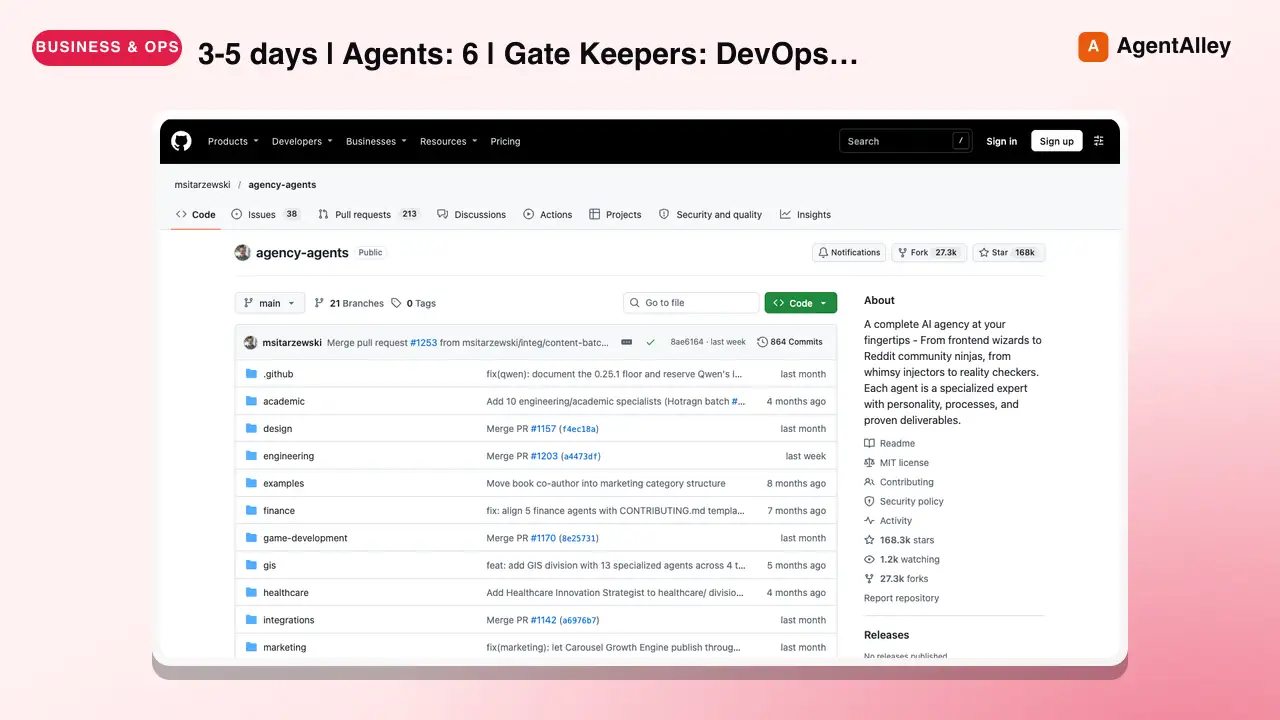 AgentPhase 2: Foundation Scaffolding
 msitarzewski/agency-agents · by msitarzewski> Duration: 3-5 days | Agents: 6 | Gate Keepers: DevOps Automator + Evidence Collector★ 154k GitHub stars
 AgentNEXUS Network Frameworkmsitarzewski/agency-agents · by msitarzewski> NEXUS transforms The Agency's independent AI specialists into a synchronized intelligence network. This is not a prompt collection — it…★ 154k GitHub stars
 SkillAnsoff Matrix Generator
 phuryn/pm-skills · by phurynGenerate an Ansoff Matrix analysis mapping growth strategies across market penetration, market development, product development, and diversification. Use when considering growth options, planning market expansion, or evaluating strategic growth paths.★ 26.6k GitHub stars
 SkillArchitecture Advisor
 shadcn/improve · by shadcnSurvey any codebase as a senior advisor and produce prioritized, self-contained implementation plans for OTHER models/agents to execute. Strictly read-only on source code — never implements, fixes, or refactors anything itself. Use when asked to audit a codebase, find improvement opportunities (bugs, security, performance, test coverage, tech debt, migrations, DX), suggest features or where to take the project next (roadmap, product direction), or generate handoff plans for another agent to implement.★ 9.2k GitHub stars
 SkillCareer Skills Translator
 Paramchoudhary/ResumeSkills · by ParamchoudharyTranslate skills from one industry to another, identify transferable skills★ 2.4k GitHub stars
 SkillMarketing Skills Collection
 LeoYeAI/openclaw-marketing-skills · by LeoYeAIA collection of 37 battle-tested marketing skills for OpenClaw agents. Use when you want to install or reference any marketing skill including: CRO (page-cro, signup-flow-cro, onboarding-cro, form-cro, popup-cro, paywall-upgrade-cro), copywriting, copy-editing, cold-email, email-sequence, social-content, seo-audit, ai-seo, programmatic-seo, site-architecture, schema-markup, content-strategy, paid-ads, ad-creative, ab-test-setup, analytics-tracking, referral-program, free-tool-strategy, churn-prevention, revops, sales-enablement, launch-strategy, pricing-strategy, competitor-alternatives, marketing-ideas, marketing-psychology, lead-magnets, product-marketing-context, and data connectors (google-ads-connect, search-console-connect, meta-ads-connect, x-twitter-connect). Start with product-marketing-context to set up your product context document, then use any other skill naturally. Powered by MyClaw.ai.★ 1k GitHub stars
More from explorium-ai
 SkillABM Campaign Playbook
 explorium-ai/gtm-skills · by explorium-aiABM campaign skill for Claude Code: run a full Account-Based Marketing campaign end-to-end — from ICP definition to live LinkedIn Ads. Builds targeted account lists with Vibe Prospecting, enriches and scores companies with real-time B2B data, generates personalized ad creatives with Claude Code and Figma, pushes matched audiences to LinkedIn Ads, and monitors campaigns daily at scale. The complete GTM skill for AI-driven account-based marketing in Claude Code, Codex, Hermes-Agent, and OpenClaw. No agency needed.★ 197 GitHub stars
 SkillDecision-Maker Shortlistexplorium-ai/gtm-skills · by explorium-aiContact data skill for Claude Code and Codex: build a ranked shortlist of decision-makers and contacts at a target company for outbound prospecting, deal acceleration, or renewal/expansion plays. Returns verified contact data including email, phone, LinkedIn profile, title, seniority, and department. Provide a company name or domain plus optional seniority focus or use case. Use for contact data enrichment, LinkedIn profile lookup, and building outbound contact lists. Works in Claude Code, Codex, Hermes-Agent, and OpenClaw.★ 197 GitHub stars
 SkillAccount Fit Scorerexplorium-ai/gtm-skills · by explorium-aiLead scoring and buying signals skill for Claude Code and Codex: rank a list of accounts by ICP fit, buying intent, real-time trigger events, and workforce momentum. Returns composite score (0-100), tier (A/B/C), and a 'why now' signal per account. Use for account-based selling, ABM list prioritization, territory planning, signal-based selling, and buyer-intent ranking. Triggers on 'score these accounts', 'rank by ICP fit and intent', 'prioritize this account list', 'which accounts have the strongest buying signals', 'ICP scoring', 'account prioritization'. Works in Claude Code, Codex, Hermes-Agent, OpenClaw, and Claude Cowork.★ 197 GitHub stars
 SkillCompany Intelligence Briefexplorium-ai/gtm-skills · by explorium-aiAccount research skill for Claude Code and Codex: generate a high-signal company intelligence brief including firmographics, technographics, funding history, hiring signals, business events, recent website and LinkedIn moves, and a peer cohort. Identify the account by business_id, company name, or domain. Use for pre-call research, QBR prep, competitive analysis, cold outbound targeting, and renewal risk assessment. The go-to account research skill for Claude Code, Codex, Hermes-Agent, and OpenClaw.★ 197 GitHub stars
 SkillB2B Data Cleanerexplorium-ai/gtm-skills · by explorium-aiData cleaning, entity matching, and deduplication skill for Claude Code and Codex: triage, standardize, and validate a CSV, Excel, or JSON list of B2B companies or contacts before enrichment. Normalizes company names and domains, validates emails and phone numbers, matches and deduplicates records, and tags invalid rows non-destructively. Run before enrichment or CRM import to avoid paying for noisy records. Use for CRM enrichment prep, company name and website matching, entity matching, and contact deduplication. Works in Claude Code, Codex, and n8n via MCP.★ 197 GitHub stars
 SkillVibe-Lemlist Outreachexplorium-ai/gtm-skills · by explorium-aiCold email skill for Claude Code and Codex: build a targeted B2B prospect list with Vibe Prospecting, enrich it with firmographics and verified work emails, write a personalized icebreaker and email per prospect from their real company data, and push every lead into a live Lemlist campaign with personalization variables pre-filled. Use for cold outbound, email personalization at scale, and Lemlist campaign setup. Triggers on 'cold email campaign', 'push leads to Lemlist', 'write personalized outbound emails', 'build a Lemlist sequence'. Works in Claude Code, Codex, Grok, and Claude Cowork.★ 197 GitHub stars