System Design Workshop
System Design Session Skill
Run an interactive system design session that turns a product goal into a sized, justified architecture with diagrams, ADRs, a scorecard, and a machine-readable handoff.
---
name: system-design-session
description: "Run an interactive system design session that turns a product goal into a sized, justified architecture with diagrams, ADRs, a scorecard, and a machine-readable handoff."
metadata:
  internal: true
  triggers:
    keywords:
    - system design session
    - workflow
---
# System Design Session Skill

> [!IMPORTANT]
> Run an interactive system design session that turns a product goal into a sized, justified architecture with diagrams, ADRs, a scorecard, and a machine-readable handoff.

Optional args: slug=<feature>, ticket=<id/url>, mode=interactive|autonomous|channel, channel=<id>, auto_continue=true|false, profile=business|hybrid|technical.

## Instructions
Overview
Optional args: slug=<feature>, ticket=<id/url>, mode=interactive|autonomous|channel, channel=<id>, auto_continue=true|false, profile=business|hybrid|technical.
Manual install (npx, ZIP)
npx skills add HoangNguyen0403/agent-skills-standard --skill system-design-session -g -a claude-codenpx degit HoangNguyen0403/agent-skills-standard/.codex/skills/system-design-session#develop ~/.claude/skills/system-design-sessionConnects with Agent Alley MCP · agentalley.io/mcp
Files included
SKILL.md7.6 KB
Read SKILL.md here
Show the full text108 lines
System Design Session Skill
[!IMPORTANT] Run an interactive system design session that turns a product goal into a sized, justified architecture with diagrams, ADRs, a scorecard, and a machine-readable handoff.
Optional args: slug=<feature>, ticket=<id/url>, mode=interactive|autonomous|channel, channel=<id>, auto_continue=true|false, profile=business|hybrid|technical.
Instructions
When the user asks to perform this workflow, execute the following steps:
System Design Workflow (Architecture / How Big)
Goal: Produce a capacity-justified architecture baseline that design-solution can turn into contracts.
Steps
- Load inputs:
- Load
system-design-methodologyplus matched siblings (estimation, building-blocks, data-architecture, resilience-ops, review, principles) andcommon-architecture-diagrammingfor the draw.io render pipeline, andcommon-decision-disciplinefor option cards and the evidence ledger. - Load PRD or ticket, existing architecture docs, and current traffic/incident data when reviewing an existing system.
- Load
- Classify and announce:
- Mode: new design | review existing | interview practice.
- Interview practice: load
system-design-interview-coaching, run the seven phases on its time budget as the interviewer, score with its rubric after; steps 3-6 below are the candidate's work, not the agent's. - Depth: quick sketch (defaults assumed, each labeled
ASSUMED) or full session (every gate confirmed). - Escalate quick to full when an irreversible or cross-team choice appears.
- Intake (gate):
- Ask max 3 blocking questions per turn from the intake checklist; supply a recommended default for each.
- Record functional requirements, NFR targets, out-of-scope fence, operating team, and every
ASSUMEDvalue. - Review-existing mode: map current state, measure real traffic and incidents, and name the binding constraint before proposing change.
- Estimate (gate):
- Compute average and peak QPS, storage over retention, bandwidth, working-set memory, and monthly cost at that scale.
- Name the shaping quantity and confirm the order of magnitude before any component is drawn.
- Design incrementally:
- Price the null option first (do nothing, buy, or extend an existing service); rejecting it needs a stated reason.
- Start from client, API, service, store; add one component at a time as
constraint -> component -> cost. - Fix API surface, data ownership, and consistency class per flow.
- Route the result as HLD first: record audience, scope, shaping constraint, ownership, failure domain, lifecycle status, and the decision to review. HLD may be prose or a selected context/container view; do not require every diagram.
- For each chosen deep dive, create an LLD handoff (
REQ-* -> HLD-* -> CMP-* -> LLD-* -> VER-*) covering the component contract, invariant, ordering/idempotency, failure/recovery, and verification. “Low-level design” is the same lane as LLD. - Render only selected views through
common-architecture-diagrammingwhen they answer named questions: use context/container, sequence, dataflow, deployment, or state as appropriate; prose or a table is sufficient otherwise. Carrymetricandconstraintonly when stated, and leave them absent rather than inventing numbers. No doc yet (quick sketch, or writes disallowed): leaveevidenceabsent and let the node render UNVERIFIED. Output only the selecteddocs/architecture/[slug]-<type>.drawioartifacts plus exported images. Phase map:system-design-methodology/references/phase-deliverables.md.
- Deep dive and decide:
- Dispatch the 2-3 riskiest components to
specialist-system-architect, one brief each with profile, audience/question, workload, SLO, team/budget, invariant, scope, evidence status, and HLD decision. - Require options with rejection reasons, an LLD contract, concrete adverse timeline/recovery, verification hooks, and an ADR reversal trigger. The specialist must not re-run intake or add machinery without a constraint.
- Merge the returned options, failure modes, and irreversible decisions; state bottlenecks, SPOFs, and rejected alternatives with reasons.
- Write one ADR per irreversible decision, each with its reversal trigger; stage the plan as build now, enabling seam, and the metric threshold that triggers the next step.
- Before producing independent post-decision docs/diagrams, list exact-file slices, acceptance checks, verification and integration owner; assign each bounded slice to the lowest-cost qualified configured executor where available. Keep decisions and final review with the lead.
- Allow one focused correction for a defective slice before escalating per configured fallback; record executor/model, exception or fallback reason, corrections and available usage/cost (otherwise
unavailable) in the handoff. Do not claim savings without data. - Save the design to
docs/design/system-design-[slug].mdwhen file writes are allowed.
- Dispatch the 2-3 riskiest components to
- Score and hand off:
- Run the nine-axis scorecard with a declared system profile; permit a justified
N/Aaxis and do not reward caches/queues/replicas/regions without a measured need, owner, cost, and recovery behavior. - Run independent semantic review in
system-design-review/references/semantic-evaluation.md; lexical checks remain smoke signals. - Emit the HLD/LLD trace and handoff payload; route to
design-solution.
- Run the nine-axis scorecard with a declared system profile; permit a justified
Runtime Contract
- Use when architecture, scale, or store selection is unsettled and the design would otherwise be guessed.
- Required inputs: a product goal or existing system, plus scale parameters or explicit permission to assume defaults.
- Never emit a component set before capacity numbers exist or assumptions are labeled.
- Return BLOCKED for undecided cross-team ownership, compliance/residency constraints, or a budget ceiling that changes the topology.
Handoff Payload
slug,operator_profile, design doc path, mode and depth, requirement table, capacity numbers, component list with justifications, data ownership map, NFR thresholds, diagram paths (.drawio + image), ADR list, scorecard, risk register, next workflow.
Blocking Questions
- Ask max 3 at a time with a recommended default and 2-3 options.
Output Template
# System Design: [Name]
## Mode And Depth
## Requirements (Functional / NFR / Out Of Scope)
## Assumptions
## Capacity Estimation (incl. monthly cost)
## Null Option Considered
## Component Architecture (constraint -> component -> cost)
## Selected Views (optional; prose or tables allowed)
## Data Ownership And Consistency
## Deep Dives
## Trade-offs And Rejected Alternatives
## Staged Plan (Now / Seam / Trigger)
## ADRs (with reversal triggers)
## Design Scorecard (9 axes)
## Interview Scorecard (6 × 0-3, interview mode only)
## Risk Register

## Outcome Report
{schema_version: 1, run_id: "[run-id]", slug: "[slug]", workflow: system-design-session, feature_status: design_ready, started_at: "[timestamp]", completed_at: "[timestamp]", requirement_trace: {brd_objectives: [], requirements: [], acceptance_criteria: [], srs: []}, completed_evidence: [], missing_evidence: [], decision_needed: [], recommended_next_workflow: design-solution, cost: {source: unavailable}, agent: {identity: "[agent-identity]", model: "[model]"}}

## Next Workflow
design-solution | plan-feature
## Cost Report
Call `get_session_cost(workflow="system-design-session")` before final handoff.
| 1 | |
| 2 | name system-design-session |
| 3 | description "Run an interactive system design session that turns a product goal into a sized, justified architecture with diagrams, ADRs, a scorecard, and a machine-readable handoff." |
| 4 | metadata |
| 5 | internal true |
| 6 | triggers |
| 7 | keywords |
| 8 | - system design session |
| 9 | - workflow |
| 10 | |
| 11 | # System Design Session Skill |
| 12 | |
| 13 | > [!IMPORTANT] |
| 14 | > Run an interactive system design session that turns a product goal into a sized, justified architecture with diagrams, ADRs, a scorecard, and a machine-readable handoff. |
| 15 | |
| 16 | Optional args: slug=<feature>, ticket=<id/url>, mode=interactive|autonomous|channel, channel=<id>, auto_continue=true|false, profile=business|hybrid|technical. |
| 17 | |
| 18 | ## Instructions |
| 19 | |
| 20 | When the user asks to perform this workflow, execute the following steps: |
| 21 | |
| 22 | |
| 23 | # System Design Workflow (Architecture / How Big) |
| 24 | |
| 25 | Goal: Produce a capacity-justified architecture baseline that `design-solution` can turn into contracts. |
| 26 | |
| 27 | ## Steps |
| 28 | |
| 29 | Load inputs: |
| 30 | Load `system-design-methodology` plus matched siblings (estimation, building-blocks, data-architecture, resilience-ops, review, principles) and `common-architecture-diagramming` for the draw.io render pipeline, and `common-decision-discipline` for option cards and the evidence ledger. |
| 31 | Load PRD or ticket, existing architecture docs, and current traffic/incident data when reviewing an existing system. |
| 32 | Classify and announce: |
| 33 | Mode: new design | review existing | interview practice. |
| 34 | Interview practice: load `system-design-interview-coaching`, run the seven phases on its time budget as the interviewer, score with its rubric after; steps 3-6 below are the candidate's work, not the agent's. |
| 35 | Depth: quick sketch (defaults assumed, each labeled `ASSUMED`) or full session (every gate confirmed). |
| 36 | Escalate quick to full when an irreversible or cross-team choice appears. |
| 37 | Intake (gate): |
| 38 | Ask max 3 blocking questions per turn from the intake checklist; supply a recommended default for each. |
| 39 | Record functional requirements, NFR targets, out-of-scope fence, operating team, and every `ASSUMED` value. |
| 40 | Review-existing mode: map current state, measure real traffic and incidents, and name the binding constraint before proposing change. |
| 41 | Estimate (gate): |
| 42 | Compute average and peak QPS, storage over retention, bandwidth, working-set memory, and monthly cost at that scale. |
| 43 | Name the shaping quantity and confirm the order of magnitude before any component is drawn. |
| 44 | Design incrementally: |
| 45 | Price the null option first (do nothing, buy, or extend an existing service); rejecting it needs a stated reason. |
| 46 | Start from client, API, service, store; add one component at a time as `constraint -> component -> cost`. |
| 47 | Fix API surface, data ownership, and consistency class per flow. |
| 48 | Route the result as HLD first: record audience, scope, shaping constraint, ownership, failure domain, lifecycle status, and the decision to review. HLD may be prose or a selected context/container view; do not require every diagram. |
| 49 | For each chosen deep dive, create an LLD handoff (`REQ-* -> HLD-* -> CMP-* -> LLD-* -> VER-*`) covering the component contract, invariant, ordering/idempotency, failure/recovery, and verification. “Low-level design” is the same lane as LLD. |
| 50 | Render only selected views through `common-architecture-diagramming` when they answer named questions: use context/container, sequence, dataflow, deployment, or state as appropriate; prose or a table is sufficient otherwise. Carry `metric` and `constraint` only when stated, and leave them absent rather than inventing numbers. No doc yet (quick sketch, or writes disallowed): leave `evidence` absent and let the node render UNVERIFIED. Output only the selected `docs/architecture/[slug]-<type>.drawio` artifacts plus exported images. Phase map: `system-design-methodology/references/phase-deliverables.md`. |
| 51 | Deep dive and decide: |
| 52 | Dispatch the 2-3 riskiest components to `specialist-system-architect`, one brief each with profile, audience/question, workload, SLO, team/budget, invariant, scope, evidence status, and HLD decision. |
| 53 | Require options with rejection reasons, an LLD contract, concrete adverse timeline/recovery, verification hooks, and an ADR reversal trigger. The specialist must not re-run intake or add machinery without a constraint. |
| 54 | Merge the returned options, failure modes, and irreversible decisions; state bottlenecks, SPOFs, and rejected alternatives with reasons. |
| 55 | Write one ADR per irreversible decision, each with its reversal trigger; stage the plan as build now, enabling seam, and the metric threshold that triggers the next step. |
| 56 | Before producing independent post-decision docs/diagrams, list exact-file slices, acceptance checks, verification and integration owner; assign each bounded slice to the lowest-cost qualified configured executor where available. Keep decisions and final review with the lead. |
| 57 | Allow one focused correction for a defective slice before escalating per configured fallback; record executor/model, exception or fallback reason, corrections and available usage/cost (otherwise `unavailable`) in the handoff. Do not claim savings without data. |
| 58 | Save the design to `docs/design/system-design-[slug].md` when file writes are allowed. |
| 59 | Score and hand off: |
| 60 | Run the nine-axis scorecard with a declared system profile; permit a justified `N/A` axis and do not reward caches/queues/replicas/regions without a measured need, owner, cost, and recovery behavior. |
| 61 | Run independent semantic review in `system-design-review/references/semantic-evaluation.md`; lexical checks remain smoke signals. |
| 62 | Emit the HLD/LLD trace and handoff payload; route to `design-solution`. |
| 63 | |
| 64 | ## Runtime Contract |
| 65 | |
| 66 | Use when architecture, scale, or store selection is unsettled and the design would otherwise be guessed. |
| 67 | Required inputs: a product goal or existing system, plus scale parameters or explicit permission to assume defaults. |
| 68 | Never emit a component set before capacity numbers exist or assumptions are labeled. |
| 69 | Return BLOCKED for undecided cross-team ownership, compliance/residency constraints, or a budget ceiling that changes the topology. |
| 70 | |
| 71 | ## Handoff Payload |
| 72 | |
| 73 | `slug`, `operator_profile`, design doc path, mode and depth, requirement table, capacity numbers, component list with justifications, data ownership map, NFR thresholds, diagram paths (.drawio + image), ADR list, scorecard, risk register, next workflow. |
| 74 | |
| 75 | ## Blocking Questions |
| 76 | |
| 77 | Ask max 3 at a time with a recommended default and 2-3 options. |
| 78 | |
| 79 | ## Output Template |
| 80 | |
| 81 | |
| 82 | # System Design: [Name] |
| 83 | ## Mode And Depth |
| 84 | ## Requirements (Functional / NFR / Out Of Scope) |
| 85 | ## Assumptions |
| 86 | ## Capacity Estimation (incl. monthly cost) |
| 87 | ## Null Option Considered |
| 88 | ## Component Architecture (constraint -> component -> cost) |
| 89 | ## Selected Views (optional; prose or tables allowed) |
| 90 | ## Data Ownership And Consistency |
| 91 | ## Deep Dives |
| 92 | ## Trade-offs And Rejected Alternatives |
| 93 | ## Staged Plan (Now / Seam / Trigger) |
| 94 | ## ADRs (with reversal triggers) |
| 95 | ## Design Scorecard (9 axes) |
| 96 | ## Interview Scorecard (6 × 0-3, interview mode only) |
| 97 | ## Risk Register |
| 98 | |
| 99 | ## Outcome Report |
| 100 | {schema_version: 1, run_id: "[run-id]", slug: "[slug]", workflow: system-design-session, feature_status: design_ready, started_at: "[timestamp]", completed_at: "[timestamp]", requirement_trace: {brd_objectives: [], requirements: [], acceptance_criteria: [], srs: []}, completed_evidence: [], missing_evidence: [], decision_needed: [], recommended_next_workflow: design-solution, cost: {source: unavailable}, agent: {identity: "[agent-identity]", model: "[model]"}} |
| 101 | |
| 102 | ## Next Workflow |
| 103 | design-solution | plan-feature |
| 104 | ## Cost Report |
| 105 | Call `get_session_cost(workflow="system-design-session")` before final handoff. |
| 106 | |
| 107 | |
| 108 |
Details
- License
- MIT
- Stars on the repo
- ★ 569
- Checked
- Source
- HoangNguyen0403/agent-skills-standard ↗
- Creator
- HoangNguyen0403 · 21 listings
Similar skills
See all →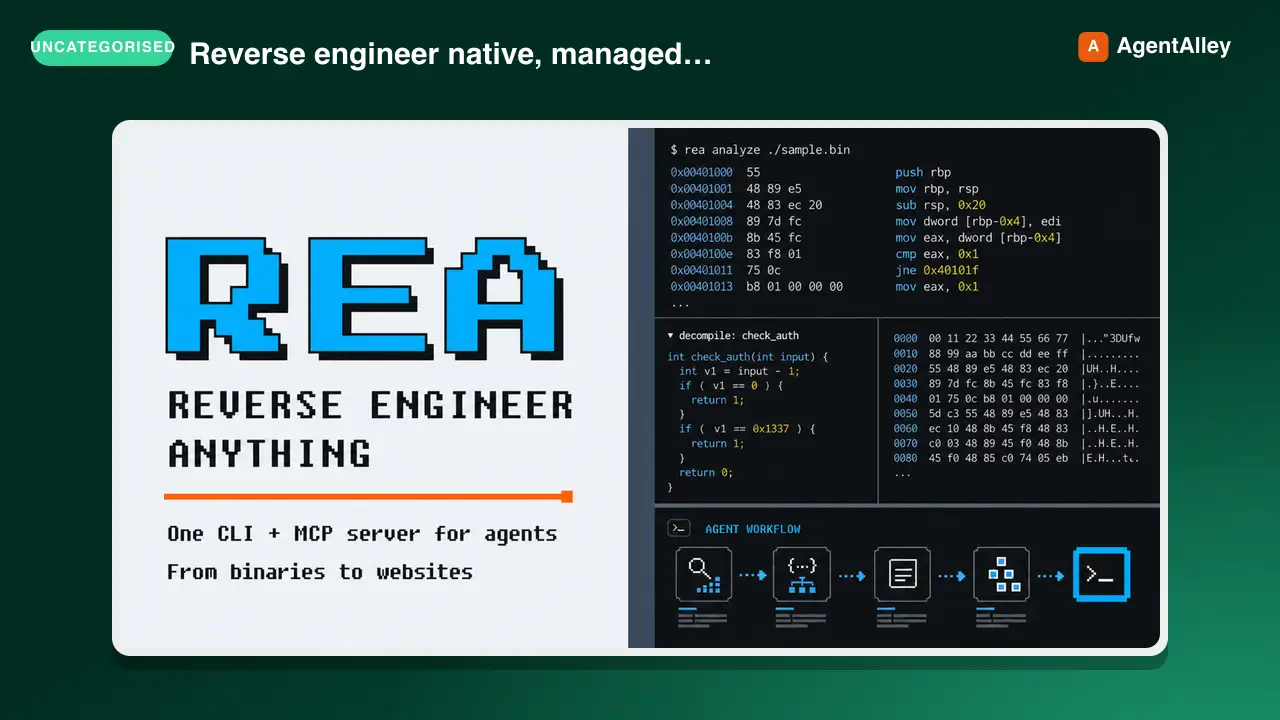 SkillCross-Platform Reverse Engineer
 morluto/rea · by morlutoReverse engineer native, managed, Electron/JavaScript, packaged, firmware, and browser targets with REA. Use shipped-artifact or requested runtime evidence to explain features, compare versions, decompile code, or guide a reconstruction. Skip REA for ordinary source-repository architecture analysis.★ 316k GitHub stars
 SkillBrainstorm Ideas
 obra/superpowers · by obraYou MUST use this before any creative work - creating features, building components, adding functionality, or modifying behavior. Explores user intent, requirements and design before implementation.★ 290k GitHub stars
 SkillCode Review Feedback Analyzerobra/superpowers · by obraUse when receiving code review feedback, before implementing suggestions, especially if feedback seems unclear or technically questionable - requires technical rigor and verification, not performative agreement or blind implementation★ 290k GitHub stars
 SkillBug Diagnosis Framework
 mattpocock/skills · by mattpocockDiagnosis loop for hard bugs and performance regressions. Use when the user says "diagnose"/"debug this", or reports something broken/throwing/failing/slow.★ 267k GitHub stars
 SkillImplement Specmattpocock/skills · by mattpocockImplement the result of /to-spec and /to-tickets in code.★ 267k GitHub stars
 SkillPR Description Writermattpocock/skills · by mattpocockUse when writing a PR body.★ 267k GitHub stars
More from HoangNguyen0403
 SkillAndroid Test Writer
 HoangNguyen0403/agent-skills-standard · by HoangNguyen0403Write Android unit, Compose UI, and Hilt-integrated tests. Use when designing test behavior with MockK or coroutine test utilities; defer database/WorkManager-specific recipes to the owning feature skill.★ 569 GitHub stars
 SkillArchitecture Diagram DesignerHoangNguyen0403/agent-skills-standard · by HoangNguyen0403Draws architecture diagrams as editable draw.io files with a fixed house style, C4 levels, evidence-tagged shapes, and optional multi-view identity checks. Use when producing a system context, container, component, deployment, data flow, sequence, state, or ERD, or redrawing an ASCII or Mermaid one.★ 569 GitHub stars
 SkillCode Review ExpertHoangNguyen0403/agent-skills-standard · by HoangNguyen0403Conduct high-quality, persona-driven code reviews. Use when reviewing PRs, critiquing code quality, or analyzing changes for team feedback.★ 569 GitHub stars
 SkillCybersecurity Framework MapperHoangNguyen0403/agent-skills-standard · by HoangNguyen0403Maintains sparse, reviewable cybersecurity framework edges with versioned IDs, relation, rationale, source, and review status. Use when mapping exercise observations or procedures to NIST, ATT&CK, or another named framework.★ 569 GitHub stars
 SkillDecision Discipline FrameworkHoangNguyen0403/agent-skills-standard · by HoangNguyen0403Right-size, ground, and gate SDLC decisions with SNC-sized depth, said-vs-assumed write-back, an evidence ledger, honest option cards, recorded approval, and self-review. Use when running brainstorm-feature, plan-feature, design-solution, or system-design-session.★ 569 GitHub stars
 SkillFlutter Robot Pattern TestsHoangNguyen0403/agent-skills-standard · by HoangNguyen0403Write unit, widget, and integration tests with robot patterns, widget keys, and Patrol in Flutter. Use when implementing test behavior; defer CI-only configuration without test changes.★ 569 GitHub stars