GTM System Architecture
Gtm system architecture
Design a complete GTM operating system — revenue model, data model, operating model, growth model, and GTM model per WbD's 6-model framework. Use when designing a GTM system from scratch, auditing an existing one, or aligning teams…
---
name: gtm-system-architecture
description: >-
  Design a complete GTM operating system — revenue model, data model, operating
  model, growth model, and GTM model per WbD's 6-model framework. Use when designing
  a GTM system from scratch, auditing an existing one, or aligning teams around
  a unified revenue architecture. Triggers on: "GTM system", "revenue architecture",
  "operating model", "GTM model", "revenue system", "go-to-market design", "GTM
  audit", or any request about designing how GTM works end-to-end.
license: MIT
compatibility: Claude Code, Codex, GitHub Copilot, Cursor, Gemini CLI, OpenCode, Goose, Hermes, Windsurf, Zed
metadata:
  version: "1.0.0"
  author: LeadMagic
  category: analytics
  tags: [gtm, system-design, revenue-architecture, operating-model]
  related_skills: [gtm-metrics, pipeline-management, marketing-strategy, sales-team-building]
  frameworks: [Winning by Design GTM Index, Bowtie Model, SiriusDecisions Demand Waterfall]
Overview
A GTM system is the operating system underneath your revenue. It's the answer to "how does money flow through this company?" — not "what tactics are we running this quarter?"
Manual install (npx, ZIP)
npx skills add LeadMagic/gtm-skills --skill gtm-system-architecture -g -a claude-codenpx degit LeadMagic/gtm-skills/skills/analytics/gtm-system-architecture#main ~/.claude/skills/gtm-system-architectureConnects with Agent Alley MCP · agentalley.io/mcp
Files included
SKILL.md7.5 KB
Read SKILL.md here
Show the full text175 lines
GTM System Architecture
Overview
A GTM system is the operating system underneath your revenue. It's the answer to "how does money flow through this company?" — not "what tactics are we running this quarter?"
Winning by Design's GTM Index framework scores 1-10 across six interconnected models. Most companies break because they optimize one model while neglecting the others. This skill designs all six as one unified system.
When to Use
- "Design our GTM system"
- "Audit our revenue architecture"
- "Build a GTM operating model"
- "Our GTM is fragmented — fix it"
- "Align sales, marketing, and CS"
- "Design how revenue flows"
Authoritative Foundations
- Winning by Design GTM Index — six models (Revenue, Data, Math, Operating, Growth, GTM). 1-10 scoring per model. Average across 1000+ companies benchmarked.
- Winning by Design Bowtie — revenue is a continuous loop: acquire → retain → expand. Not a funnel that ends at "closed won."
- SiriusDecisions Demand Waterfall — demand flows through stages with defined handoffs and conversion metrics.
Step-by-Step Process
Phase 1: The Six Models (WbD GTM Index)
Score each 1-10, then identify the weakest link:
1. Revenue Model — "Do we know how we make money?"
- Pricing clarity, packaging, discount authority, expansion model.
- Weak: "We charge whatever the customer agrees to."
- Strong: "Standard tiers, defined discount rules, clear expansion path."
2. Data Model — "Can we answer basic questions about our business?"
- CRM hygiene, pipeline data, conversion rates, attribution.
- Weak: "We don't know our MQL→SQL conversion rate."
- Strong: "Every deal has stage, source, close date, and MEDDIC dimensions."
3. Math Model — "Do unit economics work?"
- LTV:CAC, payback period, CAC by channel, churn rates, NRR.
- Weak: "We don't track CAC by channel. We think churn is around 3%."
- Strong: "CAC payback is 8 months, LTV:CAC is 4:1, NRR is 115%."
4. Operating Model — "Is there a documented process someone could follow?"
- Sales process stages, playbooks, enablement, handoff documentation.
- Weak: "Reps sell however they want. No two deals look the same."
- Strong: "Stage definitions with Goals and Exit Criteria. Playbook documented. New reps ramp in 90 days."
5. Growth Model — "Do we know which channels work and at what cost?"
- Channel mix, CAC by channel, channel ROI, experimentation velocity.
- Weak: "We try things and see what sticks."
- Strong: "Paid search CAC is $X, content CAC is $Y, outbound CAC is $Z. We allocate budget to highest-ROI channels."
6. GTM Model — "Is the whole system connected?"
- Sales-marketing-CS alignment, shared metrics, unified customer journey.
- Weak: "Marketing generates MQLs sales ignores. CS doesn't know what was sold."
- Strong: "Unified Bowtie. Shared metrics across functions. Single customer view from first touch through renewal."
Phase 2: Bowtie Architecture
Revenue doesn't end at "closed won." It continues through retention and expansion. Design the Bowtie:
Awareness → Education → Selection → Onboarding → Adoption → Expansion → Renewal
[Marketing]   [Marketing]  [Sales]   [CS]       [CS]      [CS/Sales]   [CS]
Each stage has: owner (which team), goal (what success looks like), handoff criteria (when to pass to next stage), and metrics (how to measure).
Phase 3: System Integration
The six models don't operate independently:
- Revenue Model ↔ Math Model: Pricing choices determine unit economics. Lower price → lower ARPU → longer CAC payback. Know the tradeoff.
- Data Model ↔ Operating Model: If CRM data is unreliable, the process can't be inspected. Fix data before adding process.
- Growth Model ↔ GTM Model: Marketing channels produce demand. Sales converts it. CS retains it. If any link breaks, the system fails.
- Weakest link principle: The lowest-scoring model caps the entire system. A 9/10 Revenue Model with a 3/10 Data Model is a 3/10 system.
Phase 4: Implementation Roadmap
Don't fix all six at once. Sequence by impact:
- Fix the Math Model first. If unit economics don't work, nothing else matters. Know your CAC, LTV, churn, payback.
- Fix the Data Model. Clean CRM, define stages, establish reporting.
- Design the Operating Model. Document processes, build playbooks.
- Optimize the Growth Model. Test channels, measure CAC per channel.
- Refine the Revenue Model. Pricing, packaging, discount rules.
- Align the GTM Model. Cross-functional alignment, shared metrics.
Output Format
GTM system design: six-model assessment (current scores + target scores), Bowtie architecture with ownership per stage, weakest-link analysis, implementation roadmap with 90-day priorities, and measurement dashboard.
Quality Check
- All six models scored 1-10 with evidence
- Weakest link identified (lowest scoring model)
- Bowtie architecture with owner, goal, handoff criteria per stage
- Implementation roadmap (not trying to fix everything at once)
- Shared metrics across functions (not siloed KPIs)
- Re-assessment cadence (quarterly GTM Index check)
Common Pitfalls
Optimizing one model in isolation. Improving the Operating Model without fixing the Data Model means adding process to bad data. Fix data first.
No Bowtie. Treating revenue as a pipeline that ends at "closed won" ignores the 70%+ of lifetime value that comes after the sale.
Self-assessment without evidence. "I think our Math Model is a 7" without actually calculating LTV:CAC. Score with data, not feelings.
Trying to fix everything at once. Six-model overhauls take 12-18 months. Sequence one or two per quarter.
GTM model owned by one function. GTM alignment requires sales, marketing, and CS leadership in the same room with shared metrics.
Execution Artifacts
references/framework-notes.md— named frameworks, citation anchors, and operating assumptionstemplates/output-template.md— copy-paste deliverable structure for the userscripts/check-output.py— local checklist validator for required sections This skill includes lightweight artifacts the agent can load on demand: Use the artifacts when the user asks for an implementation-ready deliverable, a repeatable workflow, or a quality check rather than generic advice.
Related Skills
- gtm-metrics: Model measurement and dashboards
- pipeline-management: Operating model execution
- marketing-strategy: Growth model design
- sales-team-building: Operating model staffing
| 1 | |
| 2 | name gtm-system-architecture |
| 3 | description >- |
| 4 | Design a complete GTM operating system — revenue model, data model, operating |
| 5 | model, growth model, and GTM model per WbD's 6-model framework. Use when designing |
| 6 | a GTM system from scratch, auditing an existing one, or aligning teams around |
| 7 | a unified revenue architecture. Triggers on: "GTM system", "revenue architecture", |
| 8 | "operating model", "GTM model", "revenue system", "go-to-market design", "GTM |
| 9 | audit", or any request about designing how GTM works end-to-end. |
| 10 | license MIT |
| 11 | compatibility Claude Code, Codex, GitHub Copilot, Cursor, Gemini CLI, OpenCode, Goose, Hermes, Windsurf, Zed |
| 12 | metadata |
| 13 | version "1.0.0" |
| 14 | author LeadMagic |
| 15 | category analytics |
| 16 | tags [gtm, system-design, revenue-architecture, operating-model] |
| 17 | related_skills [gtm-metrics, pipeline-management, marketing-strategy, sales-team-building] |
| 18 | frameworks [Winning by Design GTM Index, Bowtie Model, SiriusDecisions Demand Waterfall] |
| 19 | |
| 20 | |
| 21 | # GTM System Architecture |
| 22 | |
| 23 | ## Overview |
| 24 | |
| 25 | A GTM system is the operating system underneath your revenue. It's the answer |
| 26 | to "how does money flow through this company?" — not "what tactics are we |
| 27 | running this quarter?" |
| 28 | |
| 29 | Winning by Design's GTM Index framework scores 1-10 across six interconnected |
| 30 | models. Most companies break because they optimize one model while neglecting |
| 31 | the others. This skill designs all six as one unified system. |
| 32 | |
| 33 | ## When to Use |
| 34 | |
| 35 | "Design our GTM system" |
| 36 | "Audit our revenue architecture" |
| 37 | "Build a GTM operating model" |
| 38 | "Our GTM is fragmented — fix it" |
| 39 | "Align sales, marketing, and CS" |
| 40 | "Design how revenue flows" |
| 41 | |
| 42 | ## Authoritative Foundations |
| 43 | |
| 44 | **Winning by Design GTM Index** — six models (Revenue, Data, Math, Operating, |
| 45 | Growth, GTM). 1-10 scoring per model. Average across 1000+ companies benchmarked. |
| 46 | **Winning by Design Bowtie** — revenue is a continuous loop: acquire → retain |
| 47 | → expand. Not a funnel that ends at "closed won." |
| 48 | **SiriusDecisions Demand Waterfall** — demand flows through stages with |
| 49 | defined handoffs and conversion metrics. |
| 50 | |
| 51 | ## Step-by-Step Process |
| 52 | |
| 53 | ### Phase 1: The Six Models (WbD GTM Index) |
| 54 | |
| 55 | Score each 1-10, then identify the weakest link: |
| 56 | |
| 57 | **1. Revenue Model — "Do we know how we make money?"** |
| 58 | Pricing clarity, packaging, discount authority, expansion model. |
| 59 | Weak: "We charge whatever the customer agrees to." |
| 60 | Strong: "Standard tiers, defined discount rules, clear expansion path." |
| 61 | |
| 62 | **2. Data Model — "Can we answer basic questions about our business?"** |
| 63 | CRM hygiene, pipeline data, conversion rates, attribution. |
| 64 | Weak: "We don't know our MQL→SQL conversion rate." |
| 65 | Strong: "Every deal has stage, source, close date, and MEDDIC dimensions." |
| 66 | |
| 67 | **3. Math Model — "Do unit economics work?"** |
| 68 | LTV:CAC, payback period, CAC by channel, churn rates, NRR. |
| 69 | Weak: "We don't track CAC by channel. We think churn is around 3%." |
| 70 | Strong: "CAC payback is 8 months, LTV:CAC is 4:1, NRR is 115%." |
| 71 | |
| 72 | **4. Operating Model — "Is there a documented process someone could follow?"** |
| 73 | Sales process stages, playbooks, enablement, handoff documentation. |
| 74 | Weak: "Reps sell however they want. No two deals look the same." |
| 75 | Strong: "Stage definitions with Goals and Exit Criteria. Playbook |
| 76 | documented. New reps ramp in 90 days." |
| 77 | |
| 78 | **5. Growth Model — "Do we know which channels work and at what cost?"** |
| 79 | Channel mix, CAC by channel, channel ROI, experimentation velocity. |
| 80 | Weak: "We try things and see what sticks." |
| 81 | Strong: "Paid search CAC is $X, content CAC is $Y, outbound CAC is $Z. |
| 82 | We allocate budget to highest-ROI channels." |
| 83 | |
| 84 | **6. GTM Model — "Is the whole system connected?"** |
| 85 | Sales-marketing-CS alignment, shared metrics, unified customer journey. |
| 86 | Weak: "Marketing generates MQLs sales ignores. CS doesn't know what was |
| 87 | sold." |
| 88 | Strong: "Unified Bowtie. Shared metrics across functions. Single customer |
| 89 | view from first touch through renewal." |
| 90 | |
| 91 | ### Phase 2: Bowtie Architecture |
| 92 | |
| 93 | Revenue doesn't end at "closed won." It continues through retention and |
| 94 | expansion. Design the Bowtie: |
| 95 | |
| 96 | |
| 97 | Awareness → Education → Selection → Onboarding → Adoption → Expansion → Renewal |
| 98 | [Marketing] [Marketing] [Sales] [CS] [CS] [CS/Sales] [CS] |
| 99 | |
| 100 | |
| 101 | Each stage has: owner (which team), goal (what success looks like), handoff |
| 102 | criteria (when to pass to next stage), and metrics (how to measure). |
| 103 | |
| 104 | ### Phase 3: System Integration |
| 105 | |
| 106 | The six models don't operate independently: |
| 107 | |
| 108 | **Revenue Model ↔ Math Model:** Pricing choices determine unit economics. |
| 109 | Lower price → lower ARPU → longer CAC payback. Know the tradeoff. |
| 110 | **Data Model ↔ Operating Model:** If CRM data is unreliable, the process |
| 111 | can't be inspected. Fix data before adding process. |
| 112 | **Growth Model ↔ GTM Model:** Marketing channels produce demand. Sales |
| 113 | converts it. CS retains it. If any link breaks, the system fails. |
| 114 | **Weakest link principle:** The lowest-scoring model caps the entire system. |
| 115 | A 9/10 Revenue Model with a 3/10 Data Model is a 3/10 system. |
| 116 | |
| 117 | ### Phase 4: Implementation Roadmap |
| 118 | |
| 119 | Don't fix all six at once. Sequence by impact: |
| 120 | |
| 121 | **Fix the Math Model first.** If unit economics don't work, nothing else |
| 122 | matters. Know your CAC, LTV, churn, payback. |
| 123 | **Fix the Data Model.** Clean CRM, define stages, establish reporting. |
| 124 | **Design the Operating Model.** Document processes, build playbooks. |
| 125 | **Optimize the Growth Model.** Test channels, measure CAC per channel. |
| 126 | **Refine the Revenue Model.** Pricing, packaging, discount rules. |
| 127 | **Align the GTM Model.** Cross-functional alignment, shared metrics. |
| 128 | |
| 129 | ## Output Format |
| 130 | |
| 131 | GTM system design: six-model assessment (current scores + target scores), |
| 132 | Bowtie architecture with ownership per stage, weakest-link analysis, |
| 133 | implementation roadmap with 90-day priorities, and measurement dashboard. |
| 134 | |
| 135 | ## Quality Check |
| 136 | |
| 137 | [ ] All six models scored 1-10 with evidence |
| 138 | [ ] Weakest link identified (lowest scoring model) |
| 139 | [ ] Bowtie architecture with owner, goal, handoff criteria per stage |
| 140 | [ ] Implementation roadmap (not trying to fix everything at once) |
| 141 | [ ] Shared metrics across functions (not siloed KPIs) |
| 142 | [ ] Re-assessment cadence (quarterly GTM Index check) |
| 143 | |
| 144 | ## Common Pitfalls |
| 145 | |
| 146 | **Optimizing one model in isolation.** Improving the Operating Model without |
| 147 | fixing the Data Model means adding process to bad data. Fix data first. |
| 148 | |
| 149 | **No Bowtie.** Treating revenue as a pipeline that ends at "closed won" |
| 150 | ignores the 70%+ of lifetime value that comes after the sale. |
| 151 | |
| 152 | **Self-assessment without evidence.** "I think our Math Model is a 7" |
| 153 | without actually calculating LTV:CAC. Score with data, not feelings. |
| 154 | |
| 155 | **Trying to fix everything at once.** Six-model overhauls take 12-18 months. |
| 156 | Sequence one or two per quarter. |
| 157 | |
| 158 | **GTM model owned by one function.** GTM alignment requires sales, |
| 159 | marketing, and CS leadership in the same room with shared metrics. |
| 160 | |
| 161 | ## Execution Artifacts |
| 162 | |
| 163 | `references/framework-notes.md` — named frameworks, citation anchors, and operating assumptions |
| 164 | `templates/output-template.md` — copy-paste deliverable structure for the user |
| 165 | `scripts/check-output.py` — local checklist validator for required sections |
| 166 | This skill includes lightweight artifacts the agent can load on demand: |
| 167 | Use the artifacts when the user asks for an implementation-ready deliverable, a repeatable workflow, or a quality check rather than generic advice. |
| 168 | |
| 169 | ## Related Skills |
| 170 | |
| 171 | **gtm-metrics**: Model measurement and dashboards |
| 172 | **pipeline-management**: Operating model execution |
| 173 | **marketing-strategy**: Growth model design |
| 174 | **sales-team-building**: Operating model staffing |
| 175 |
Details
- License
- MIT
- Stars on the repo
- ★ 62
- Checked
- Source
- LeadMagic/gtm-skills ↗
- Creator
- LeadMagic · 129 listings
Similar skills
See all →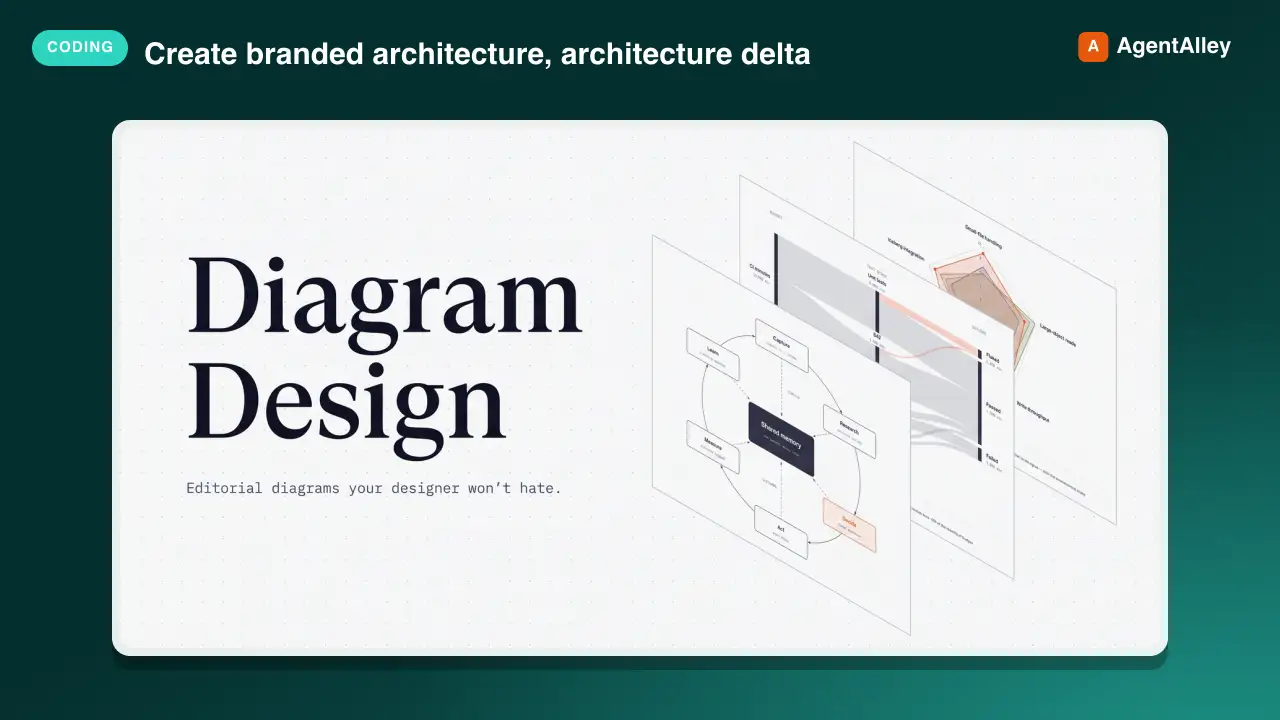 SkillCustom Diagram Designer
 cathrynlavery/diagram-design · by cathrynlaveryCreate branded architecture, architecture delta, IT current-state, flowchart, sequence, state machine, ER/data model, timeline, swimlane, quadrant, radar/spider, polar chart (polar/radial lollipop), loop/flywheel, nested, tree, org chart, layer stack, Venn, pyramid/funnel, treemap and marimekko, heatmap, bar and dumbbell, waterfall, line (slopegraph, ridgeline, streamgraph, bump), Gantt and scatter charts (bubble, beeswarm), high-level, process, medallion, data flow, DP integration, DP security matrix, Sankey, fishbone, Wardley map, kanban, user journey, deployment, dependency graph, UML class, story map, or database schema diagrams as HTML/SVG/PNG, with .drawio, Mermaid, and .excalidraw import, plus lifecycle phase maps, block decomposition trees, and onboarding guidance.★ 43.2k GitHub stars
 SkillArchitecture Pattern Reviewer
 pascalorg/editor · by pascalorgReview a PR against the Pascal architectural rules — package boundaries (core/viewer/editor/nodes), the registry-driven composition model (def.geometry / def.renderer / def.system), legacy-dispatch regressions, the slots + world-scale-UV convention for new nodes/geometry, hook hygiene (useEditor/useScene/useViewer), and selector performance. Use when the user asks to review a PR, audit a branch, or check that changes respect the codebase's architecture.★ 24.6k GitHub stars
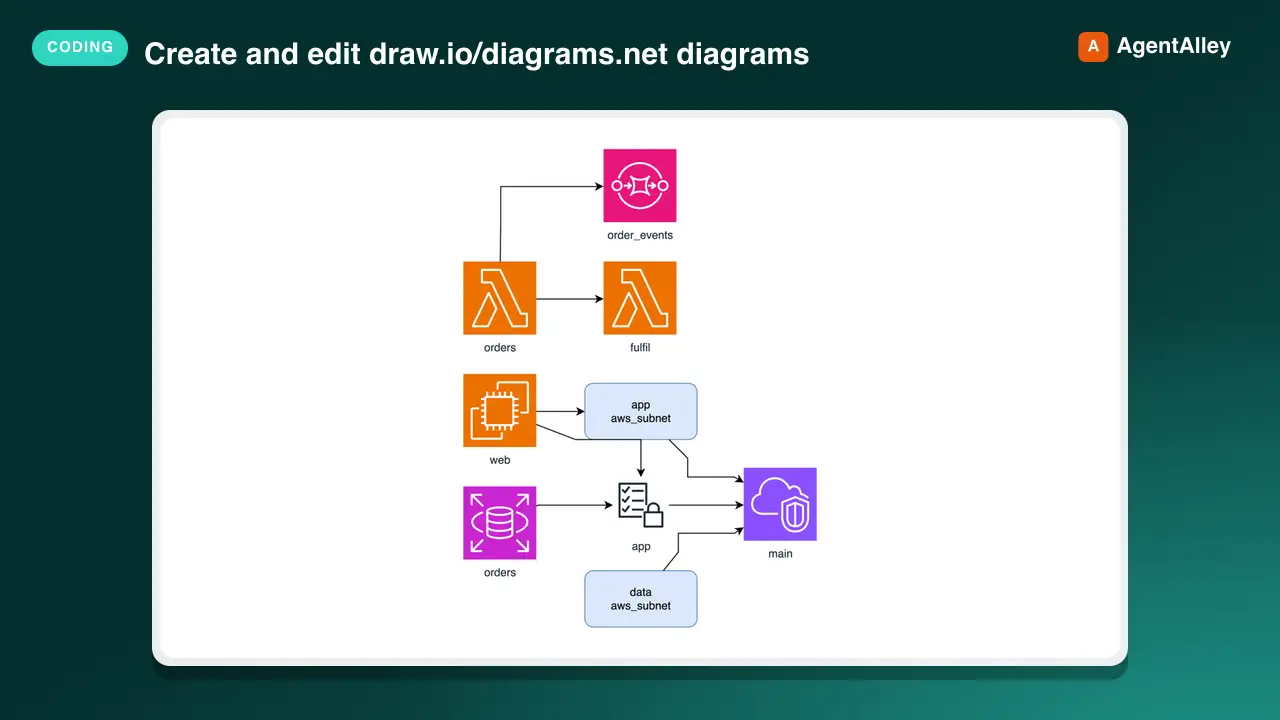 SkillArchitecture Diagram Creator
 Agents365-ai/drawio-skill · by Agents365-aiCreate and edit draw.io/diagrams.net diagrams as editable `.drawio` files. Covers architecture, UML/ERD/sequence, BPMN, network, and swimlane views authored from a description or converted from code, IaC, SQL, and API schemas, plus sync, query, test, review, export, and publish of existing diagrams. Use when the user asks for draw.io/diagrams.net or an editable diagram; prefer Mermaid/PlantUML when diagrams-as-code is enough.★ 9.8k GitHub stars
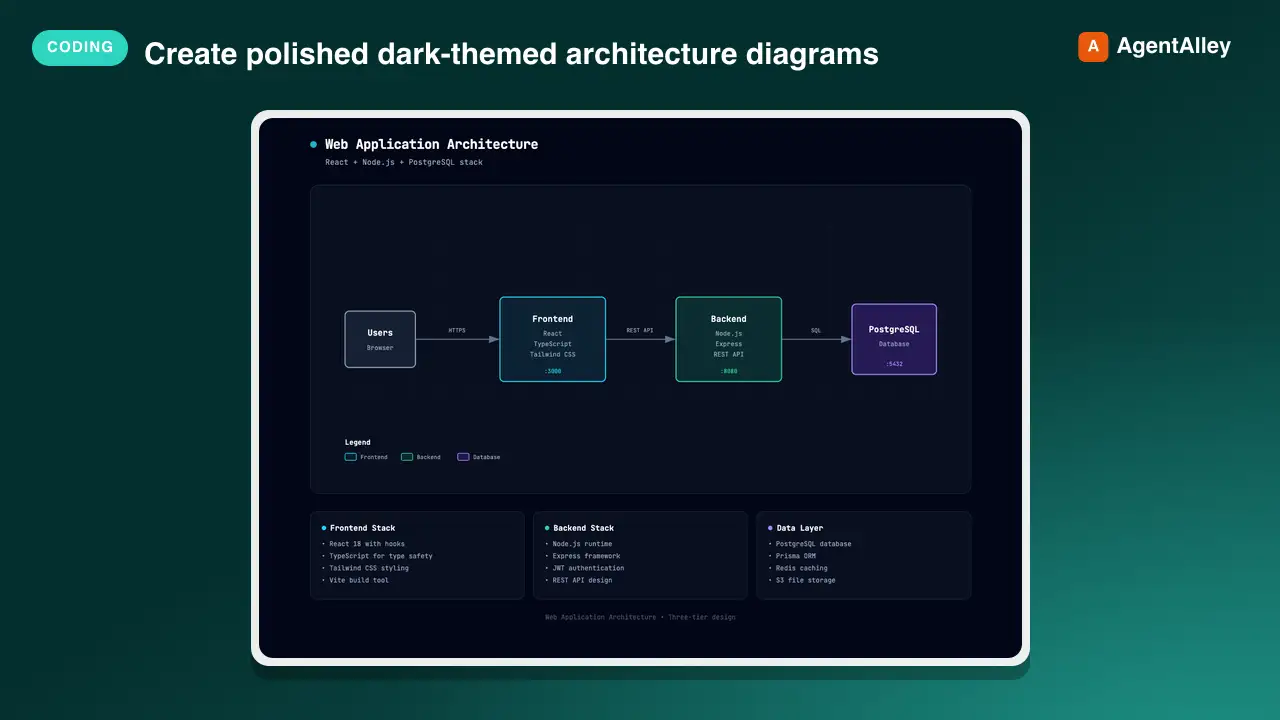 SkillArchitecture Diagram Generator
 Cocoon-AI/architecture-diagram-generator · by Cocoon-AICreate polished dark-themed architecture diagrams as self-contained HTML+SVG files. Use when the user asks for system, infrastructure, cloud, security, or network topology diagrams.★ 7.4k GitHub stars
 SkillLLM Knowledge Distillation
 Ar9av/obsidian-wiki · by Ar9avThe foundational knowledge distillation pattern for building and maintaining an AI-powered Obsidian wiki. Based on Andrej Karpathy's LLM Wiki architecture. Use this skill whenever the user wants to understand the wiki pattern, set up a new knowledge base, or needs guidance on the three-layer architecture (raw sources → wiki → schema). Also use when discussing knowledge management strategy, wiki structure decisions, or how to organize distilled knowledge. This is the "theory" skill — other skills handle specific operations (ingesting, querying, linting).★ 3.5k GitHub stars
 SkillSoftware Design Philosophy
 wondelai/skills · by wondelaiManage software complexity through deep modules, information hiding, and strategic programming. Use when the user mentions "module design", "API too complex", "shallow class", "complexity budget", "strategic vs tactical", "deep module", "information leakage", "pass-through method", "this code is over-engineered", or "simplify this design". Also trigger when reviewing an interface for simplicity, evaluating whether an abstraction is pulling its weight, deciding whether a comment is worth writing, or choosing between general-purpose and special-purpose approaches. Covers deep vs shallow modules, red flags for complexity, and comments as design documentation. For code quality, see clean-code. For architecture boundaries, see clean-architecture.★ 2.2k GitHub stars
More from LeadMagic
 SkillFirst-Party Analytics Setup
 LeadMagic/gtm-skills · by LeadMagicSet up first-party tracking and analytics — website pixels, conversion tracking, UTM architecture, cookie consent, server-side tagging vs client-side, 1P vs 3P data strategy, and identity resolution. Use when setting up tracking, implementing pixels, building attribution, or preparing for privacy-first measurement. Triggers on: "pixel", "tracking", "conversion tracking", "first-party data", server-side tagging", "UTM", "cookie consent", "1P vs 3P", "identity resolution", or any tracking implementation request.★ 62 GitHub stars
 SkillStrategic Account MarketingLeadMagic/gtm-skills · by LeadMagicRuns strategic 1-to-1 ABM for 5-15 high-value accounts: account plans, custom microsites, executive engagement, direct mail, and board-level connections. Use when a named enterprise account justifies bespoke content and executive time, or when the user needs a strategic account plan. Triggers on: "1-to-1 ABM", "strategic ABM", "custom ABM", "key account marketing", "named account".★ 62 GitHub stars
 SkillCluster Account MarketingLeadMagic/gtm-skills · by LeadMagicRuns ABM at scale (1-to-few) for 15-50 clustered accounts: industry or persona clusters, semi-custom campaigns, and cluster-level content. Use when named-account ABM needs to reach more accounts without bespoke work per account. Triggers on: "1-to-few ABM", "ABM scale", "cluster ABM", "industry ABM".★ 62 GitHub stars
 SkillProgrammatic Account TargetingLeadMagic/gtm-skills · by LeadMagicRuns programmatic 1-to-many ABM for 50-200+ accounts: automated personalization, scaled outbound, intent-based targeting, and lookalike expansion. Use when ABM coverage must grow without adding headcount or when the user wants automated account-based outreach. Triggers on: "1-to-many ABM", programmatic ABM", "scaled ABM", "automated ABM".★ 62 GitHub stars
 SkillAccount Strategy DesignerLeadMagic/gtm-skills · by LeadMagicDesigns an account-based marketing program: tier selection, account scoring, channel orchestration, BDR alignment (account-based sales development), and a measurement framework. Use when the user is launching or redesigning ABM, choosing between 1-to-1, 1-to-few, and 1-to-many, or building a target account program. Triggers on: "ABM strategy", "account based marketing", "ABM playbook", "design ABM", "target accounts", "ABSD", "account based sales development", "Lars Nilsson".★ 62 GitHub stars
 SkillTarget Account SelectorLeadMagic/gtm-skills · by LeadMagicBuilds and tiers a target account list: fit and intent scoring models, tier assignment, and TAM segmentation. Use when the user needs to decide which accounts to target, score or tier an account list, or prioritize a TAM for ABM or outbound. Triggers on: "account selection", "target account list", "tier accounts", "prioritize accounts", "TAM segmentation".★ 62 GitHub stars