Cluster Account Marketing
ABM 1-to-Few (Scale)
Runs ABM at scale (1-to-few) for 15-50 clustered accounts: industry or persona clusters, semi-custom campaigns, and cluster-level content. Use when named-account ABM needs to reach more accounts without bespoke work per account.
---
name: abm-1-to-few
description: >-
  Runs ABM at scale (1-to-few) for 15-50 clustered accounts: industry or persona
  clusters, semi-custom campaigns, and cluster-level content. Use when
  named-account ABM needs to reach more accounts without bespoke work per
  account. Triggers on: "1-to-few ABM", "ABM scale", "cluster ABM", "industry
  ABM".
license: MIT
compatibility: Claude Code, Codex, GitHub Copilot, Cursor, Gemini CLI, OpenCode, Goose, Hermes, Windsurf, Zed
metadata:
  version: "1.0.0"
  author: LeadMagic
  category: abm
  tags: [abm, 1-to-few, scale-abm, industry-clusters, b2b]
  frameworks:
    - "TOPO (now Gartner) — 1:few ABM clusters"
    - "Force Management — MEDDICC"
Overview
Before delivering, verify: - [ ] All required sections are complete - [ ] Output matches the user's stated need - [ ] Named frameworks are cited for key recommendations - [ ] No vague claims — every recommendation has a specific action - [ ] Deliverable is ready for operational use, not just conceptual
Manual install (npx, ZIP)
npx skills add LeadMagic/gtm-skills --skill abm-1-to-few -g -a claude-codenpx degit LeadMagic/gtm-skills/skills/abm/abm-1-to-few#main ~/.claude/skills/abm-1-to-fewConnects with Agent Alley MCP · agentalley.io/mcp
Files included
SKILL.md7.0 KB
Read SKILL.md here
Show the full text143 lines
ABM 1-to-Few (Scale)
Overview
ABM at Scale for 15-50 accounts clustered by industry, use case, or buying trigger. Not fully custom like 1-to-1, but not automated like 1-to-many. This is the sweet spot where you get 80% of 1-to-1 results at 20% of the effort — if you cluster correctly and build semi-custom assets that feel personalized.
Authoritative Foundations
- TOPO (now Gartner) — 1:few ABM clusters — Cluster 15-50 accounts by a shared trait (vertical, use case, trigger, or competitor) and build one semi-custom play per cluster instead of per account.
- Force Management — MEDDICC — Confirm a champion and economic buyer in every clustered account before scaling the play; cluster content does not replace per-account qualification.
- ITSMA — Account-Based Marketing — Tier-based ABM (1:1 / 1:few / 1:many); measure pipeline from target accounts, not lead volume.
When to Use
- "Build ABM at scale"
- "Create industry cluster ABM"
- "Semi-custom ABM campaigns"
- "Scale our ABM beyond named accounts"
Step-by-Step Process
Phase 1: Account Clustering
Group accounts by commonality:
- Industry cluster: All fintech, all healthcare, all manufacturing
- Use case cluster: All companies buying for pipeline gen, all buying for enrichment
- Trigger cluster: All companies that just raised, all with new CRO, all hiring RevOps
- Tech stack cluster: All on Salesforce, all on HubSpot, all running Clay
- Competitor cluster: All current users of a specific competitor
Phase 2: Cluster-Specific Campaign Design
Per cluster, build:
- Pain point narrative: Industry-specific challenge, regulatory pressure, market shift
- Proof points: 2-3 case studies from the same industry/use case
- Persona messaging: CFO, CRO, VP Sales, RevOps — each gets industry-contextualized value prop
- Objection library: The top 5 objections specific to this cluster
Phase 3: Semi-Custom Assets
- Industry landing page: Variant of your homepage with industry-specific hero/social proof
- Cluster email sequence: 5-touch sequence with industry-specific openers + proof
- LinkedIn content calendar: 4-week cadence tailored to cluster themes
- Cluster webinar: Industry panel or use case deep-dive
- Direct mail / gifts: Physical asset (book, report) — coordinate via
strategic-gifting(Sendoso/Postal); no logo swag
Phase 4: Coordinated Execution
- Week 1: LinkedIn connection + content engagement
- Week 2: Direct mail arrives + email Touch 1 (reference the mailer)
- Week 3: Email Touch 2 + LinkedIn DM + SDR call
- Week 4: Webinar invite + personal outreach to registrants
Phase 5: Measurement by Cluster
Track per cluster: coverage %, engagement rate, meeting rate, pipeline created, win rate, ACV. Kill clusters that underperform after 60 days; double down on winners.
Output Format
Cluster playbook with: cluster definitions, per-cluster campaign brief, asset production plan, execution calendar, and measurement dashboard.
Quality Check
Before delivering, verify:
- All required sections are complete
- Output matches the user's stated need
- Named frameworks are cited for key recommendations
- No vague claims — every recommendation has a specific action
- Deliverable is ready for operational use, not just conceptual
Common Pitfalls
- Treating ABM as a marketing-only initiative. ABM requires tight sales alignment. Without BDRs assigned to specific accounts and shared account briefs, marketing produces content nobody uses. Fix: weekly ABM standups with marketing + BDRs + AEs.
- One-size-fits-all tiering. Applying the same playbook to Tier 1 and Tier 3 accounts. Fix: Tier 1 gets custom content and executive engagement; Tier 3 gets automated personalization.
- Measuring ABM on MQLs. ABM success is pipeline from target accounts, not lead volume. Fix: track coverage %, engagement depth, pipeline created, and win rate by tier.
Execution Artifacts
references/framework-notes.md— named frameworks, citation anchors, and operating assumptionstemplates/output-template.md— copy-paste deliverable structure for the userscripts/check-output.py— local checklist validator for required sections This skill includes lightweight artifacts the agent can load on demand: Use the artifacts when the user asks for an implementation-ready deliverable, a repeatable workflow, or a quality check rather than generic advice.
Implementation Depth
Use this section when the user asks for a finished asset, not a high-level explanation.
Diagnostic Questions
- What is the primary motion: founder-led, sales-led, product-led, partner-led, or lifecycle-led?
- Which ICP tier is the output for: small business, mid-market, enterprise, or mixed?
- What proof is available today: customer stories, usage data, third-party validation, screenshots, or none?
- What system will execute the work: CRM, sequencer, warehouse, support desk, product analytics, or manual workflow?
- What decision will the user make from this output: launch, prioritize, route, rewrite, score, coach, or measure?
Framework Application
Map the recommendation explicitly to the named frameworks in this skill:
- TOPO ABM Scale Framework: apply only the part that directly improves the requested deliverable.
- Force Management MEDDICC: apply only the part that directly improves the requested deliverable.
- ITSMA — Account-Based Marketing: apply only the part that directly improves the requested deliverable.
Deliverable Standard
A strong output from this skill includes:
- A crisp diagnosis of the current situation
- A recommended path with tradeoffs, not a generic list
- A concrete artifact the user can use immediately: table, script, checklist, scorecard, sequence, dashboard spec, or implementation plan
- A measurement plan with leading and lagging indicators
- Risks and edge cases called out before execution
Adaptation Rules
- For small business: reduce complexity, shorten time-to-value, and prioritize owner/operator clarity.
- For mid-market: include workflow ownership, handoffs, integrations, and enablement assets.
- For enterprise: include governance, risk, procurement, stakeholder mapping, and proof requirements.
Related Skills
- abm-strategy, abm-1-to-1, abm-1-to-many, cold-email-strategy, landing-pages
| 1 | |
| 2 | name abm-1-to-few |
| 3 | description >- |
| 4 | Runs ABM at scale (1-to-few) for 15-50 clustered accounts: industry or persona |
| 5 | clusters, semi-custom campaigns, and cluster-level content. Use when |
| 6 | named-account ABM needs to reach more accounts without bespoke work per |
| 7 | account. Triggers on: "1-to-few ABM", "ABM scale", "cluster ABM", "industry |
| 8 | ABM". |
| 9 | license MIT |
| 10 | compatibility Claude Code, Codex, GitHub Copilot, Cursor, Gemini CLI, OpenCode, Goose, Hermes, Windsurf, Zed |
| 11 | metadata |
| 12 | version "1.0.0" |
| 13 | author LeadMagic |
| 14 | category abm |
| 15 | tags [abm, 1-to-few, scale-abm, industry-clusters, b2b] |
| 16 | frameworks |
| 17 | - "TOPO (now Gartner) — 1:few ABM clusters" |
| 18 | - "Force Management — MEDDICC" |
| 19 | - "ITSMA — Account-Based Marketing" |
| 20 | |
| 21 | |
| 22 | # ABM 1-to-Few (Scale) |
| 23 | |
| 24 | ## Overview |
| 25 | ABM at Scale for 15-50 accounts clustered by industry, use case, or buying trigger. |
| 26 | Not fully custom like 1-to-1, but not automated like 1-to-many. This is the |
| 27 | sweet spot where you get 80% of 1-to-1 results at 20% of the effort — if you |
| 28 | cluster correctly and build semi-custom assets that feel personalized. |
| 29 | |
| 30 | ## Authoritative Foundations |
| 31 | **TOPO (now Gartner) — 1:few ABM clusters** — Cluster 15-50 accounts by a shared trait (vertical, use case, trigger, or competitor) and build one semi-custom play per cluster instead of per account. |
| 32 | **Force Management — MEDDICC** — Confirm a champion and economic buyer in every clustered account before scaling the play; cluster content does not replace per-account qualification. |
| 33 | **ITSMA — Account-Based Marketing** — Tier-based ABM (1:1 / 1:few / 1:many); measure pipeline from target accounts, not lead volume. |
| 34 | |
| 35 | ## When to Use |
| 36 | "Build ABM at scale" |
| 37 | "Create industry cluster ABM" |
| 38 | "Semi-custom ABM campaigns" |
| 39 | "Scale our ABM beyond named accounts" |
| 40 | |
| 41 | ## Step-by-Step Process |
| 42 | |
| 43 | ### Phase 1: Account Clustering |
| 44 | Group accounts by commonality: |
| 45 | **Industry cluster:** All fintech, all healthcare, all manufacturing |
| 46 | **Use case cluster:** All companies buying for pipeline gen, all buying for enrichment |
| 47 | **Trigger cluster:** All companies that just raised, all with new CRO, all hiring RevOps |
| 48 | **Tech stack cluster:** All on Salesforce, all on HubSpot, all running Clay |
| 49 | **Competitor cluster:** All current users of a specific competitor |
| 50 | |
| 51 | ### Phase 2: Cluster-Specific Campaign Design |
| 52 | Per cluster, build: |
| 53 | **Pain point narrative:** Industry-specific challenge, regulatory pressure, market shift |
| 54 | **Proof points:** 2-3 case studies from the same industry/use case |
| 55 | **Persona messaging:** CFO, CRO, VP Sales, RevOps — each gets industry-contextualized value prop |
| 56 | **Objection library:** The top 5 objections specific to this cluster |
| 57 | |
| 58 | ### Phase 3: Semi-Custom Assets |
| 59 | **Industry landing page:** Variant of your homepage with industry-specific hero/social proof |
| 60 | **Cluster email sequence:** 5-touch sequence with industry-specific openers + proof |
| 61 | **LinkedIn content calendar:** 4-week cadence tailored to cluster themes |
| 62 | **Cluster webinar:** Industry panel or use case deep-dive |
| 63 | **Direct mail / gifts:** Physical asset (book, report) — coordinate via `strategic-gifting` (Sendoso/Postal); no logo swag |
| 64 | |
| 65 | ### Phase 4: Coordinated Execution |
| 66 | **Week 1:** LinkedIn connection + content engagement |
| 67 | **Week 2:** Direct mail arrives + email Touch 1 (reference the mailer) |
| 68 | **Week 3:** Email Touch 2 + LinkedIn DM + SDR call |
| 69 | **Week 4:** Webinar invite + personal outreach to registrants |
| 70 | |
| 71 | ### Phase 5: Measurement by Cluster |
| 72 | Track per cluster: coverage %, engagement rate, meeting rate, pipeline created, |
| 73 | win rate, ACV. Kill clusters that underperform after 60 days; double down on winners. |
| 74 | |
| 75 | ## Output Format |
| 76 | Cluster playbook with: cluster definitions, per-cluster campaign brief, asset production |
| 77 | plan, execution calendar, and measurement dashboard. |
| 78 | |
| 79 | |
| 80 | |
| 81 | ## Quality Check |
| 82 | |
| 83 | Before delivering, verify: |
| 84 | [ ] All required sections are complete |
| 85 | [ ] Output matches the user's stated need |
| 86 | [ ] Named frameworks are cited for key recommendations |
| 87 | [ ] No vague claims — every recommendation has a specific action |
| 88 | [ ] Deliverable is ready for operational use, not just conceptual |
| 89 | |
| 90 | ## Common Pitfalls |
| 91 | |
| 92 | **Treating ABM as a marketing-only initiative.** ABM requires tight sales alignment. Without BDRs assigned to specific accounts and shared account briefs, marketing produces content nobody uses. Fix: weekly ABM standups with marketing + BDRs + AEs. |
| 93 | **One-size-fits-all tiering.** Applying the same playbook to Tier 1 and Tier 3 accounts. Fix: Tier 1 gets custom content and executive engagement; Tier 3 gets automated personalization. |
| 94 | **Measuring ABM on MQLs.** ABM success is pipeline from target accounts, not lead volume. Fix: track coverage %, engagement depth, pipeline created, and win rate by tier. |
| 95 | |
| 96 | ## Execution Artifacts |
| 97 | |
| 98 | `references/framework-notes.md` — named frameworks, citation anchors, and operating assumptions |
| 99 | `templates/output-template.md` — copy-paste deliverable structure for the user |
| 100 | `scripts/check-output.py` — local checklist validator for required sections |
| 101 | This skill includes lightweight artifacts the agent can load on demand: |
| 102 | Use the artifacts when the user asks for an implementation-ready deliverable, a repeatable workflow, or a quality check rather than generic advice. |
| 103 | |
| 104 | ## Implementation Depth |
| 105 | |
| 106 | Use this section when the user asks for a finished asset, not a high-level explanation. |
| 107 | |
| 108 | ### Diagnostic Questions |
| 109 | |
| 110 | What is the primary motion: founder-led, sales-led, product-led, partner-led, or lifecycle-led? |
| 111 | Which ICP tier is the output for: small business, mid-market, enterprise, or mixed? |
| 112 | What proof is available today: customer stories, usage data, third-party validation, screenshots, or none? |
| 113 | What system will execute the work: CRM, sequencer, warehouse, support desk, product analytics, or manual workflow? |
| 114 | What decision will the user make from this output: launch, prioritize, route, rewrite, score, coach, or measure? |
| 115 | |
| 116 | ### Framework Application |
| 117 | |
| 118 | Map the recommendation explicitly to the named frameworks in this skill: |
| 119 | |
| 120 | TOPO ABM Scale Framework: apply only the part that directly improves the requested deliverable. |
| 121 | Force Management MEDDICC: apply only the part that directly improves the requested deliverable. |
| 122 | ITSMA — Account-Based Marketing: apply only the part that directly improves the requested deliverable. |
| 123 | |
| 124 | ### Deliverable Standard |
| 125 | |
| 126 | A strong output from this skill includes: |
| 127 | |
| 128 | A crisp diagnosis of the current situation |
| 129 | A recommended path with tradeoffs, not a generic list |
| 130 | A concrete artifact the user can use immediately: table, script, checklist, scorecard, sequence, dashboard spec, or implementation plan |
| 131 | A measurement plan with leading and lagging indicators |
| 132 | Risks and edge cases called out before execution |
| 133 | |
| 134 | ### Adaptation Rules |
| 135 | |
| 136 | For small business: reduce complexity, shorten time-to-value, and prioritize owner/operator clarity. |
| 137 | For mid-market: include workflow ownership, handoffs, integrations, and enablement assets. |
| 138 | For enterprise: include governance, risk, procurement, stakeholder mapping, and proof requirements. |
| 139 | |
| 140 | |
| 141 | ## Related Skills |
| 142 | abm-strategy, abm-1-to-1, abm-1-to-many, cold-email-strategy, landing-pages |
| 143 |
Details
- License
- MIT
- Stars on the repo
- ★ 62
- Checked
- Source
- LeadMagic/gtm-skills ↗
- Creator
- LeadMagic · 129 listings
Similar skills
See all →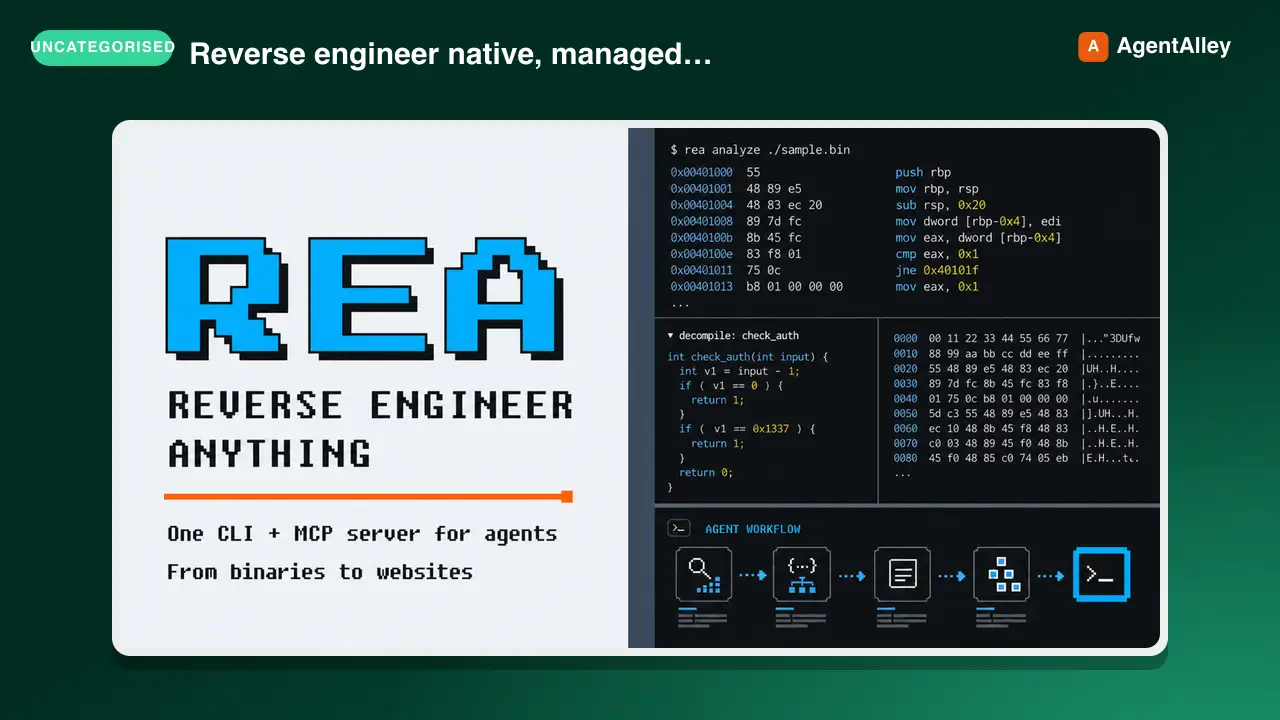 SkillCross-Platform Reverse Engineer
 morluto/rea · by morlutoReverse engineer native, managed, Electron/JavaScript, packaged, firmware, and browser targets with REA. Use shipped-artifact or requested runtime evidence to explain features, compare versions, decompile code, or guide a reconstruction. Skip REA for ordinary source-repository architecture analysis.★ 316k GitHub stars
 SkillBrainstorm Ideas
 obra/superpowers · by obraYou MUST use this before any creative work - creating features, building components, adding functionality, or modifying behavior. Explores user intent, requirements and design before implementation.★ 290k GitHub stars
 SkillCode Review Feedback Analyzerobra/superpowers · by obraUse when receiving code review feedback, before implementing suggestions, especially if feedback seems unclear or technically questionable - requires technical rigor and verification, not performative agreement or blind implementation★ 290k GitHub stars
 SkillBug Diagnosis Framework
 mattpocock/skills · by mattpocockDiagnosis loop for hard bugs and performance regressions. Use when the user says "diagnose"/"debug this", or reports something broken/throwing/failing/slow.★ 267k GitHub stars
 SkillImplement Specmattpocock/skills · by mattpocockImplement the result of /to-spec and /to-tickets in code.★ 267k GitHub stars
 SkillPR Description Writermattpocock/skills · by mattpocockUse when writing a PR body.★ 267k GitHub stars
More from LeadMagic
 SkillFirst-Party Analytics Setup
 LeadMagic/gtm-skills · by LeadMagicSet up first-party tracking and analytics — website pixels, conversion tracking, UTM architecture, cookie consent, server-side tagging vs client-side, 1P vs 3P data strategy, and identity resolution. Use when setting up tracking, implementing pixels, building attribution, or preparing for privacy-first measurement. Triggers on: "pixel", "tracking", "conversion tracking", "first-party data", server-side tagging", "UTM", "cookie consent", "1P vs 3P", "identity resolution", or any tracking implementation request.★ 62 GitHub stars
 SkillStrategic Account MarketingLeadMagic/gtm-skills · by LeadMagicRuns strategic 1-to-1 ABM for 5-15 high-value accounts: account plans, custom microsites, executive engagement, direct mail, and board-level connections. Use when a named enterprise account justifies bespoke content and executive time, or when the user needs a strategic account plan. Triggers on: "1-to-1 ABM", "strategic ABM", "custom ABM", "key account marketing", "named account".★ 62 GitHub stars
 SkillProgrammatic Account TargetingLeadMagic/gtm-skills · by LeadMagicRuns programmatic 1-to-many ABM for 50-200+ accounts: automated personalization, scaled outbound, intent-based targeting, and lookalike expansion. Use when ABM coverage must grow without adding headcount or when the user wants automated account-based outreach. Triggers on: "1-to-many ABM", programmatic ABM", "scaled ABM", "automated ABM".★ 62 GitHub stars
 SkillAccount Strategy DesignerLeadMagic/gtm-skills · by LeadMagicDesigns an account-based marketing program: tier selection, account scoring, channel orchestration, BDR alignment (account-based sales development), and a measurement framework. Use when the user is launching or redesigning ABM, choosing between 1-to-1, 1-to-few, and 1-to-many, or building a target account program. Triggers on: "ABM strategy", "account based marketing", "ABM playbook", "design ABM", "target accounts", "ABSD", "account based sales development", "Lars Nilsson".★ 62 GitHub stars
 SkillTarget Account SelectorLeadMagic/gtm-skills · by LeadMagicBuilds and tiers a target account list: fit and intent scoring models, tier assignment, and TAM segmentation. Use when the user needs to decide which accounts to target, score or tier an account list, or prioritize a TAM for ABM or outbound. Triggers on: "account selection", "target account list", "tier accounts", "prioritize accounts", "TAM segmentation".★ 62 GitHub stars
 SkillAd Creative StrategyLeadMagic/gtm-skills · by LeadMagicDevelop ad creative strategy for B2B campaigns — creative formats per platform, testing methodology, creative fatigue management, UGC/AI-generated creative, and performance measurement. Use when creating ad creative, managing creative production, testing ad variants, or scaling creative output. Triggers on: "ad creative", "creative strategy", "ad copy", "ad design", "creative testing", UGC ads", "ad fatigue", or any ad creative request.★ 62 GitHub stars