Event Strategy Planner
Conference strategy
Plans a conference program: event selection, sponsorship ROI, speaking (CFP) submissions, booth strategy, and team preparation. Use when the user is choosing which events to attend or sponsor, submitting a CFP, or analyzing conference ROI.
---
name: conference-strategy
description: >-
  Plans a conference program: event selection, sponsorship ROI, speaking (CFP)
  submissions, booth strategy, and team preparation. Use when the user is
  choosing which events to attend or sponsor, submitting a CFP, or analyzing
  conference ROI. Triggers on: "conference strategy", "event planning", "trade
  show strategy", "sponsorship ROI", "CFP submissions".
license: MIT
compatibility: Claude Code, Codex, GitHub Copilot, Cursor, Gemini CLI, OpenCode, Goose, Hermes, Windsurf, Zed
metadata:
  version: "1.0.0"
  author: LeadMagic
  category: events
  tags: [events, conferences, event-strategy, sponsorship, speaking]
  frameworks:
    - "Forrester (SiriusDecisions) — Demand Waterfall"
    - "ITSMA — Account-Based Marketing"
Overview
Conferences are the single biggest line item in many B2B marketing budgets — and the least measured. This skill covers event selection, sponsorship evaluation, speaking submission strategy, booth design, and team preparation to maximize ROI.
Manual install (npx, ZIP)
npx skills add LeadMagic/gtm-skills --skill conference-strategy -g -a claude-codenpx degit LeadMagic/gtm-skills/skills/events/conference-strategy#main ~/.claude/skills/conference-strategyConnects with Agent Alley MCP · agentalley.io/mcp
Files included
SKILL.md7.6 KB
Read SKILL.md here
Show the full text172 lines
Conference Strategy
Overview
Conferences are the single biggest line item in many B2B marketing budgets — and the least measured. This skill covers event selection, sponsorship evaluation, speaking submission strategy, booth design, and team preparation to maximize ROI.
Authoritative Foundations
- Forrester (SiriusDecisions) — Demand Waterfall — Measure events by the pipeline stages they create and accelerate, not by badge scans.
- ITSMA — Account-Based Marketing — Choose and staff events by target-account attendance, and pre-book meetings with named accounts.
- Chris Walker — Self-reported attribution — Add a 'How did you hear about us?' field so event influence that never appears in last-touch reporting is still captured.
When to Use
- "Plan our conference strategy"
- "Which events should we sponsor?"
- "Submit a CFP"
- "Conference ROI analysis"
Step-by-Step Process
Phase 1: Event Selection Matrix
Score events on 5 dimensions (1-10 each):
- ICP concentration (×2): % of attendees matching your ICP. Check past attendee lists, ask peers who attended.
- Decision-maker presence (×1.5): Are buyers there or just practitioners? Practitioner conferences build brand; buyer conferences build pipeline.
- Competitor presence: If 3+ competitors sponsor/speak, you should too. If none, you might pioneer a category — or there's no market.
- Cost per qualified conversation: Total cost / expected qualified meetings. Target: <$500 per qualified meeting for $10K+ ACV products.
- Content/PR value: Speaking slot? Press coverage? Industry credibility?
Score >35: Sponsor/speak. Score 25-35: Attend only. Score <25: Skip.
Phase 2: Sponsorship Evaluation
- Booth: Only worth it if you have 2+ dedicated staff and a lead capture process. Badge-scanning without qualification = waste of money.
- Speaking slot: Highest ROI of any sponsorship. Negotiate it into your package. A 30-min talk is worth more than a 10x10 booth.
- Sponsored happy hour / dinner: High cost, high reward for relationship building. Invite specific target accounts, not open bar for randoms.
- Branding only: Logo on lanyard/tote bag. Low ROI unless you're a household name in the industry. Skip.
Phase 3: Speaking Submissions (CFP)
- Submit to 3-5 events: One talk abstract, customized per event theme
- Talk structure: Problem story → counterintuitive insight → framework → results data → specific takeaways. No product pitch.
- Co-speak with a customer: 3x acceptance rate vs solo. Event organizers love practitioner stories.
- Submit early: CFP deadlines are real. Late submissions are ignored.
- Rehearse: Do a dry run with internal team. Record it. Watch it. Fix it.
Phase 4: Booth Strategy
- Lead capture: Badge scan + 1 qualifier question ("What brings you to [Event]?" → scoring). No generic "tell me about your role."
- Booth staff: Train on qualification questions, demo flow, and data entry. No phones. No sitting. No eating. 2-hour shifts max (it's exhausting).
- Giveaway strategy: Something useful (charging brick > stress ball). Require badge scan to get it.
- Demo station: 1-2 dedicated demo stations with good chairs. 5-minute targeted demo, not a full product tour.
Phase 5: Post-Event Debrief
Within 48 hours of event end: what worked, what didn't, revenue influenced, cost per meeting. Update event scores for next year's selection.
Output Format
Conference strategy document with: event selection scores, sponsorship package negotiation points, speaking submission abstracts, booth plan, and post-event debrief template.
Quality Check
Before delivering, verify:
- All required sections are complete
- Output matches the user's stated need
- Named frameworks are cited for key recommendations
- No vague claims — every recommendation has a specific action
- Deliverable is ready for operational use, not just conceptual
Common Pitfalls
- No pre-event outreach. Showing up to a conference without booked meetings wastes the investment. Fix: scrape attendee lists, research targets, and book meetings 2-3 weeks before.
- Booth staff without training. Untrained staff give generic demos and fail to qualify. Fix: train on qualification questions, demo flow, and data entry before the event.
- No post-event follow-up system. Leads go cold within 48 hours. Fix: Day 1 personalized follow-up, Day 3 value-add, Day 7 soft CTA.
Implementation Depth
Use this section when the user asks for a finished asset, not a high-level explanation.
Diagnostic Questions
- What is the primary motion: founder-led, sales-led, product-led, partner-led, or lifecycle-led?
- Which ICP tier is the output for: small business, mid-market, enterprise, or mixed?
- What proof is available today: customer stories, usage data, third-party validation, screenshots, or none?
- What system will execute the work: CRM, sequencer, warehouse, support desk, product analytics, or manual workflow?
- What decision will the user make from this output: launch, prioritize, route, rewrite, score, coach, or measure?
Framework Application
Map the recommendation explicitly to the named frameworks in this skill:
- B2B Event ROI Framework: apply only the part that directly improves the requested deliverable.
- Conference Strategy Playbook: apply only the part that directly improves the requested deliverable.
- Bizzabo — Event Experience Framework: apply only the part that directly improves the requested deliverable.
Deliverable Standard
A strong output from this skill includes:
- A crisp diagnosis of the current situation
- A recommended path with tradeoffs, not a generic list
- A concrete artifact the user can use immediately: table, script, checklist, scorecard, sequence, dashboard spec, or implementation plan
- A measurement plan with leading and lagging indicators
- Risks and edge cases called out before execution
Adaptation Rules
- For small business: reduce complexity, shorten time-to-value, and prioritize owner/operator clarity.
- For mid-market: include workflow ownership, handoffs, integrations, and enablement assets.
- For enterprise: include governance, risk, procurement, stakeholder mapping, and proof requirements.
Execution Artifacts
references/framework-notes.md— Named frameworks and reference tablestemplates/output-template.md— Deliverable shell for agent outputscripts/check-output.py— Lightweight deliverable validator
Related Skills
- event-driven-outreach, field-marketing, pipeline-management, sales-enablement, partnership-strategy
| 1 | |
| 2 | name conference-strategy |
| 3 | description >- |
| 4 | Plans a conference program: event selection, sponsorship ROI, speaking (CFP) |
| 5 | submissions, booth strategy, and team preparation. Use when the user is |
| 6 | choosing which events to attend or sponsor, submitting a CFP, or analyzing |
| 7 | conference ROI. Triggers on: "conference strategy", "event planning", "trade |
| 8 | show strategy", "sponsorship ROI", "CFP submissions". |
| 9 | license MIT |
| 10 | compatibility Claude Code, Codex, GitHub Copilot, Cursor, Gemini CLI, OpenCode, Goose, Hermes, Windsurf, Zed |
| 11 | metadata |
| 12 | version "1.0.0" |
| 13 | author LeadMagic |
| 14 | category events |
| 15 | tags [events, conferences, event-strategy, sponsorship, speaking] |
| 16 | frameworks |
| 17 | - "Forrester (SiriusDecisions) — Demand Waterfall" |
| 18 | - "ITSMA — Account-Based Marketing" |
| 19 | - "Chris Walker — Self-reported attribution" |
| 20 | related_skills |
| 21 | [ |
| 22 | event-driven-outreach, |
| 23 | field-marketing, |
| 24 | pipeline-management, |
| 25 | sales-enablement, |
| 26 | partnership-strategy, |
| 27 | ] |
| 28 | |
| 29 | |
| 30 | # Conference Strategy |
| 31 | |
| 32 | ## Overview |
| 33 | |
| 34 | Conferences are the single biggest line item in many B2B marketing budgets — |
| 35 | and the least measured. This skill covers event selection, sponsorship evaluation, |
| 36 | speaking submission strategy, booth design, and team preparation to maximize ROI. |
| 37 | |
| 38 | ## Authoritative Foundations |
| 39 | **Forrester (SiriusDecisions) — Demand Waterfall** — Measure events by the pipeline stages they create and accelerate, not by badge scans. |
| 40 | **ITSMA — Account-Based Marketing** — Choose and staff events by target-account attendance, and pre-book meetings with named accounts. |
| 41 | **Chris Walker — Self-reported attribution** — Add a 'How did you hear about us?' field so event influence that never appears in last-touch reporting is still captured. |
| 42 | |
| 43 | ## When to Use |
| 44 | |
| 45 | "Plan our conference strategy" |
| 46 | "Which events should we sponsor?" |
| 47 | "Submit a CFP" |
| 48 | "Conference ROI analysis" |
| 49 | |
| 50 | ## Step-by-Step Process |
| 51 | |
| 52 | ### Phase 1: Event Selection Matrix |
| 53 | |
| 54 | Score events on 5 dimensions (1-10 each): |
| 55 | |
| 56 | **ICP concentration (×2):** % of attendees matching your ICP. |
| 57 | Check past attendee lists, ask peers who attended. |
| 58 | **Decision-maker presence (×1.5):** Are buyers there or just practitioners? |
| 59 | Practitioner conferences build brand; buyer conferences build pipeline. |
| 60 | **Competitor presence:** If 3+ competitors sponsor/speak, you should too. |
| 61 | If none, you might pioneer a category — or there's no market. |
| 62 | **Cost per qualified conversation:** Total cost / expected qualified meetings. |
| 63 | Target: <$500 per qualified meeting for $10K+ ACV products. |
| 64 | **Content/PR value:** Speaking slot? Press coverage? Industry credibility? |
| 65 | |
| 66 | Score >35: Sponsor/speak. Score 25-35: Attend only. Score <25: Skip. |
| 67 | |
| 68 | ### Phase 2: Sponsorship Evaluation |
| 69 | |
| 70 | **Booth:** Only worth it if you have 2+ dedicated staff and a lead capture |
| 71 | process. Badge-scanning without qualification = waste of money. |
| 72 | **Speaking slot:** Highest ROI of any sponsorship. Negotiate it into your |
| 73 | package. A 30-min talk is worth more than a 10x10 booth. |
| 74 | **Sponsored happy hour / dinner:** High cost, high reward for relationship |
| 75 | building. Invite specific target accounts, not open bar for randoms. |
| 76 | **Branding only:** Logo on lanyard/tote bag. Low ROI unless you're a |
| 77 | household name in the industry. Skip. |
| 78 | |
| 79 | ### Phase 3: Speaking Submissions (CFP) |
| 80 | |
| 81 | **Submit to 3-5 events:** One talk abstract, customized per event theme |
| 82 | **Talk structure:** Problem story → counterintuitive insight → framework → |
| 83 | results data → specific takeaways. No product pitch. |
| 84 | **Co-speak with a customer:** 3x acceptance rate vs solo. Event organizers |
| 85 | love practitioner stories. |
| 86 | **Submit early:** CFP deadlines are real. Late submissions are ignored. |
| 87 | **Rehearse:** Do a dry run with internal team. Record it. Watch it. Fix it. |
| 88 | |
| 89 | ### Phase 4: Booth Strategy |
| 90 | |
| 91 | **Lead capture:** Badge scan + 1 qualifier question ("What brings you to |
| 92 | [Event]?" → scoring). No generic "tell me about your role." |
| 93 | **Booth staff:** Train on qualification questions, demo flow, and data entry. |
| 94 | No phones. No sitting. No eating. 2-hour shifts max (it's exhausting). |
| 95 | **Giveaway strategy:** Something useful (charging brick > stress ball). |
| 96 | Require badge scan to get it. |
| 97 | **Demo station:** 1-2 dedicated demo stations with good chairs. 5-minute |
| 98 | targeted demo, not a full product tour. |
| 99 | |
| 100 | ### Phase 5: Post-Event Debrief |
| 101 | |
| 102 | Within 48 hours of event end: what worked, what didn't, revenue influenced, |
| 103 | cost per meeting. Update event scores for next year's selection. |
| 104 | |
| 105 | ## Output Format |
| 106 | |
| 107 | Conference strategy document with: event selection scores, sponsorship package |
| 108 | negotiation points, speaking submission abstracts, booth plan, and post-event |
| 109 | debrief template. |
| 110 | |
| 111 | ## Quality Check |
| 112 | |
| 113 | Before delivering, verify: |
| 114 | |
| 115 | [ ] All required sections are complete |
| 116 | [ ] Output matches the user's stated need |
| 117 | [ ] Named frameworks are cited for key recommendations |
| 118 | [ ] No vague claims — every recommendation has a specific action |
| 119 | [ ] Deliverable is ready for operational use, not just conceptual |
| 120 | |
| 121 | ## Common Pitfalls |
| 122 | |
| 123 | **No pre-event outreach.** Showing up to a conference without booked meetings wastes the investment. Fix: scrape attendee lists, research targets, and book meetings 2-3 weeks before. |
| 124 | **Booth staff without training.** Untrained staff give generic demos and fail to qualify. Fix: train on qualification questions, demo flow, and data entry before the event. |
| 125 | **No post-event follow-up system.** Leads go cold within 48 hours. Fix: Day 1 personalized follow-up, Day 3 value-add, Day 7 soft CTA. |
| 126 | |
| 127 | ## Implementation Depth |
| 128 | |
| 129 | Use this section when the user asks for a finished asset, not a high-level explanation. |
| 130 | |
| 131 | ### Diagnostic Questions |
| 132 | |
| 133 | What is the primary motion: founder-led, sales-led, product-led, partner-led, or lifecycle-led? |
| 134 | Which ICP tier is the output for: small business, mid-market, enterprise, or mixed? |
| 135 | What proof is available today: customer stories, usage data, third-party validation, screenshots, or none? |
| 136 | What system will execute the work: CRM, sequencer, warehouse, support desk, product analytics, or manual workflow? |
| 137 | What decision will the user make from this output: launch, prioritize, route, rewrite, score, coach, or measure? |
| 138 | |
| 139 | ### Framework Application |
| 140 | |
| 141 | Map the recommendation explicitly to the named frameworks in this skill: |
| 142 | |
| 143 | B2B Event ROI Framework: apply only the part that directly improves the requested deliverable. |
| 144 | Conference Strategy Playbook: apply only the part that directly improves the requested deliverable. |
| 145 | Bizzabo — Event Experience Framework: apply only the part that directly improves the requested deliverable. |
| 146 | |
| 147 | ### Deliverable Standard |
| 148 | |
| 149 | A strong output from this skill includes: |
| 150 | |
| 151 | A crisp diagnosis of the current situation |
| 152 | A recommended path with tradeoffs, not a generic list |
| 153 | A concrete artifact the user can use immediately: table, script, checklist, scorecard, sequence, dashboard spec, or implementation plan |
| 154 | A measurement plan with leading and lagging indicators |
| 155 | Risks and edge cases called out before execution |
| 156 | |
| 157 | ### Adaptation Rules |
| 158 | |
| 159 | For small business: reduce complexity, shorten time-to-value, and prioritize owner/operator clarity. |
| 160 | For mid-market: include workflow ownership, handoffs, integrations, and enablement assets. |
| 161 | For enterprise: include governance, risk, procurement, stakeholder mapping, and proof requirements. |
| 162 | |
| 163 | ## Execution Artifacts |
| 164 | |
| 165 | `references/framework-notes.md` — Named frameworks and reference tables |
| 166 | `templates/output-template.md` — Deliverable shell for agent output |
| 167 | `scripts/check-output.py` — Lightweight deliverable validator |
| 168 | |
| 169 | ## Related Skills |
| 170 | |
| 171 | event-driven-outreach, field-marketing, pipeline-management, sales-enablement, partnership-strategy |
| 172 |
Details
- License
- MIT
- Stars on the repo
- ★ 62
- Checked
- Source
- LeadMagic/gtm-skills ↗
- Creator
- LeadMagic · 129 listings
Similar skills
See all →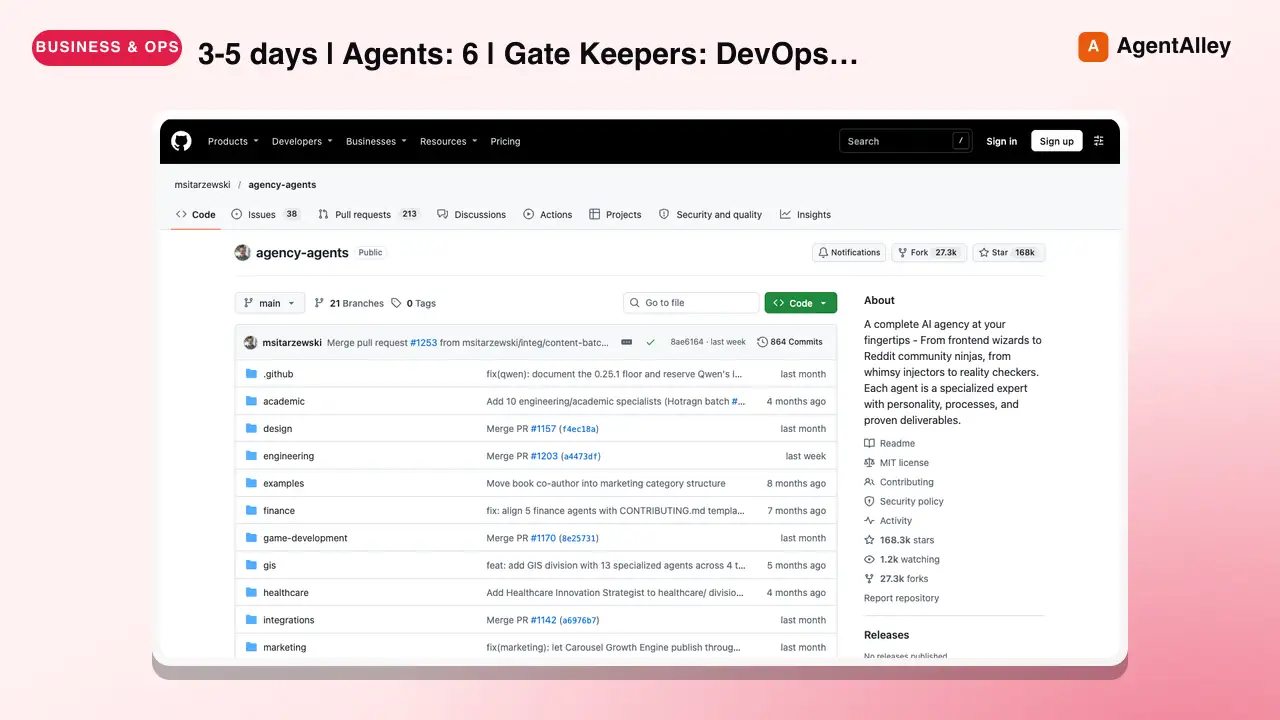 AgentPhase 2: Foundation Scaffolding
 msitarzewski/agency-agents · by msitarzewski> Duration: 3-5 days | Agents: 6 | Gate Keepers: DevOps Automator + Evidence Collector★ 154k GitHub stars
 AgentNEXUS Network Frameworkmsitarzewski/agency-agents · by msitarzewski> NEXUS transforms The Agency's independent AI specialists into a synchronized intelligence network. This is not a prompt collection — it…★ 154k GitHub stars
 SkillAnsoff Matrix Generator
 phuryn/pm-skills · by phurynGenerate an Ansoff Matrix analysis mapping growth strategies across market penetration, market development, product development, and diversification. Use when considering growth options, planning market expansion, or evaluating strategic growth paths.★ 26.6k GitHub stars
 SkillArchitecture Advisor
 shadcn/improve · by shadcnSurvey any codebase as a senior advisor and produce prioritized, self-contained implementation plans for OTHER models/agents to execute. Strictly read-only on source code — never implements, fixes, or refactors anything itself. Use when asked to audit a codebase, find improvement opportunities (bugs, security, performance, test coverage, tech debt, migrations, DX), suggest features or where to take the project next (roadmap, product direction), or generate handoff plans for another agent to implement.★ 9.2k GitHub stars
 SkillCareer Skills Translator
 Paramchoudhary/ResumeSkills · by ParamchoudharyTranslate skills from one industry to another, identify transferable skills★ 2.4k GitHub stars
 SkillMarketing Skills Collection
 LeoYeAI/openclaw-marketing-skills · by LeoYeAIA collection of 37 battle-tested marketing skills for OpenClaw agents. Use when you want to install or reference any marketing skill including: CRO (page-cro, signup-flow-cro, onboarding-cro, form-cro, popup-cro, paywall-upgrade-cro), copywriting, copy-editing, cold-email, email-sequence, social-content, seo-audit, ai-seo, programmatic-seo, site-architecture, schema-markup, content-strategy, paid-ads, ad-creative, ab-test-setup, analytics-tracking, referral-program, free-tool-strategy, churn-prevention, revops, sales-enablement, launch-strategy, pricing-strategy, competitor-alternatives, marketing-ideas, marketing-psychology, lead-magnets, product-marketing-context, and data connectors (google-ads-connect, search-console-connect, meta-ads-connect, x-twitter-connect). Start with product-marketing-context to set up your product context document, then use any other skill naturally. Powered by MyClaw.ai.★ 1k GitHub stars
More from LeadMagic
 SkillFirst-Party Analytics Setup
 LeadMagic/gtm-skills · by LeadMagicSet up first-party tracking and analytics — website pixels, conversion tracking, UTM architecture, cookie consent, server-side tagging vs client-side, 1P vs 3P data strategy, and identity resolution. Use when setting up tracking, implementing pixels, building attribution, or preparing for privacy-first measurement. Triggers on: "pixel", "tracking", "conversion tracking", "first-party data", server-side tagging", "UTM", "cookie consent", "1P vs 3P", "identity resolution", or any tracking implementation request.★ 62 GitHub stars
 SkillStrategic Account MarketingLeadMagic/gtm-skills · by LeadMagicRuns strategic 1-to-1 ABM for 5-15 high-value accounts: account plans, custom microsites, executive engagement, direct mail, and board-level connections. Use when a named enterprise account justifies bespoke content and executive time, or when the user needs a strategic account plan. Triggers on: "1-to-1 ABM", "strategic ABM", "custom ABM", "key account marketing", "named account".★ 62 GitHub stars
 SkillCluster Account MarketingLeadMagic/gtm-skills · by LeadMagicRuns ABM at scale (1-to-few) for 15-50 clustered accounts: industry or persona clusters, semi-custom campaigns, and cluster-level content. Use when named-account ABM needs to reach more accounts without bespoke work per account. Triggers on: "1-to-few ABM", "ABM scale", "cluster ABM", "industry ABM".★ 62 GitHub stars
 SkillProgrammatic Account TargetingLeadMagic/gtm-skills · by LeadMagicRuns programmatic 1-to-many ABM for 50-200+ accounts: automated personalization, scaled outbound, intent-based targeting, and lookalike expansion. Use when ABM coverage must grow without adding headcount or when the user wants automated account-based outreach. Triggers on: "1-to-many ABM", programmatic ABM", "scaled ABM", "automated ABM".★ 62 GitHub stars
 SkillAccount Strategy DesignerLeadMagic/gtm-skills · by LeadMagicDesigns an account-based marketing program: tier selection, account scoring, channel orchestration, BDR alignment (account-based sales development), and a measurement framework. Use when the user is launching or redesigning ABM, choosing between 1-to-1, 1-to-few, and 1-to-many, or building a target account program. Triggers on: "ABM strategy", "account based marketing", "ABM playbook", "design ABM", "target accounts", "ABSD", "account based sales development", "Lars Nilsson".★ 62 GitHub stars
 SkillTarget Account SelectorLeadMagic/gtm-skills · by LeadMagicBuilds and tiers a target account list: fit and intent scoring models, tier assignment, and TAM segmentation. Use when the user needs to decide which accounts to target, score or tier an account list, or prioritize a TAM for ABM or outbound. Triggers on: "account selection", "target account list", "tier accounts", "prioritize accounts", "TAM segmentation".★ 62 GitHub stars