Partner Operations Manager
Partnerships Operations
Partner, channel, and ecosystem marketing for B2B SaaS — and the design of the partner program itself. Use this skill for co-marketing with technology alliances and channel partners, integration launches, joint campaigns and content,…
---
name: partnerships-ops
description: "Partner, channel, and ecosystem marketing for B2B SaaS — and the design of the partner program itself. Use this skill for co-marketing with technology alliances and channel partners, integration launches, joint campaigns and content, partner tiering and enablement, cloud-marketplace go-to-market (AWS, Azure, GCP listings, private offers, committed-spend drawdown), and for channel program architecture: whether to launch a partner program at all, which motions to run (referral, technology, services/SI, reseller), partner unit economics, margin and SPIF design, partner recruitment and certification ramp, and the rules of engagement that settle a contested deal. Also triggers on: partner marketing, co-marketing, channel, reseller, VAR, MSP, distributor, OEM, alliance, ecosystem, integration launch, marketplace listing, AWS Marketplace, private offer, MDF, joint webinar, co-branded, channel conflict, rules of engagement, deal registration, partner program design, should we build a partner program, partner economics, partner P&L, partner CAC, margin stacking, SPIF, rebate, partner recruitment, partner onboarding, partner certification, partner tiers, our partners signed up and never sold anything."
---

# Partnerships Operations

## Step 0 (always first): Load brand context

**Before producing any deliverable, look for a `brand-context.md` file** in the user's project root (also check `./.claude/brand-context.md` and `./docs/brand-context.md`). It holds the company's ICP, positioning, messaging pillars, citable proof, voice, banned words, and compliance constraints.

- **If it exists:** read it in full and treat it as binding for this run. Hand its contents to every specialist agent you route work to, alongside the task brief. Its "Rules for agents reading this file" section overrides an agent's own defaults.
- **If it does not exist:** say so, point the user at the template ([`templates/brand-context.md`](../../templates/brand-context.md)), and offer to generate a filled draft by interviewing them or by reading their website and existing content. Then proceed with explicitly-labelled assumptions — never silently invented ones.

**Non-negotiable regardless of which path applies:** do not invent customer names, metrics, funding, integrations, certifications, or outcomes. Only proof recorded in `brand-context.md` (or supplied directly in the request) may be used as fact. Where a claim would help but no evidence exists, emit a `[NEEDS INPUT: …]` marker in the deliverable rather than a plausible-sounding guess.

---
Overview
Before producing any deliverable, look for a brand-context.md file in the user's project root (also check ./.claude/brand-context.md and ./docs/brand-context.md). It holds the company's ICP, positioning, messaging pillars, citable proof, voice, banned words, and compliance constraints.
What you get
- Every deliverable names its audience, its owner, and the decision it enables.
- No invented customers, metrics, funding, certifications, or outcomes — [NEEDS IN
- Cite real sources with links and read-dates when referencing external standards,
- Where a recommendation depends on a number the company has not supplied (budget,
Manual install (npx, ZIP)
npx skills add shalintripathi/saas-marketing-agents --skill partnerships-ops -g -a claude-codenpx degit shalintripathi/saas-marketing-agents/plugins/saas-marketing/skills/partnerships-ops#main ~/.claude/skills/partnerships-opsConnects with Agent Alley MCP · agentalley.io/mcp
Files included
SKILL.md7.2 KB
Read SKILL.md here
Show the full text68 lines
Partnerships Operations
Step 0 (always first): Load brand context
Before producing any deliverable, look for a brand-context.md file in the user's project root (also check ./.claude/brand-context.md and ./docs/brand-context.md). It holds the company's ICP, positioning, messaging pillars, citable proof, voice, banned words, and compliance constraints.
- If it exists: read it in full and treat it as binding for this run. Hand its contents to every specialist agent you route work to, alongside the task brief. Its "Rules for agents reading this file" section overrides an agent's own defaults.
- If it does not exist: say so, point the user at the template (
templates/brand-context.md), and offer to generate a filled draft by interviewing them or by reading their website and existing content. Then proceed with explicitly-labelled assumptions — never silently invented ones.
Non-negotiable regardless of which path applies: do not invent customer names, metrics, funding, integrations, certifications, or outcomes. Only proof recorded in brand-context.md (or supplied directly in the request) may be used as fact. Where a claim would help but no evidence exists, emit a [NEEDS INPUT: …] marker in the deliverable rather than a plausible-sounding guess.
What This Is
Partnerships Operations markets with and through other companies rather than directly to buyers. It covers technology alliances and integrations, channel and reseller motions, and the cloud-marketplace buying path that increasingly decides how enterprise software actually gets purchased — the listing, the private offer, and the committed-spend drawdown that makes a deal easy for a buyer to say yes to. It also holds the architecture underneath all of that: whether a partner program should exist yet, which motions it runs, what partners earn, how they are recruited and ramped, and who wins when two routes to market claim the same account.
The Team: 2 Specialist Agents
| # | Agent | File | What They Do |
|---|---|---|---|
| 1 | Partner Ecosystem Marketer | agents/partner-ecosystem-marketer.md |
Owns partner tiering and joint business plans, co-marketing campaign design (joint webinars, co-authored research, co-branded assets, integration launches), partner enablement and MDF programs, and cloud-marketplace GTM: listing content, pricing dimensions, private offers, CPPO, and committed-spend strategy. |
| 2 | Channel Program Architect | agents/partner-channel-program-architect.md |
Designs the program rather than marketing through it: the readiness gate that may answer "not yet", motion selection (referral, technology, services/SI, reseller), partner unit economics on both sides including partner CAC versus direct, margin/rebate/SPIF architecture with clawbacks, recruitment and first-deal certification ramp, coverage and pruning, and the rules of engagement and channel-conflict adjudication ladder — including the compensation-neutrality decision for direct reps. |
How to Use
Routing User Requests
Co-marketing & alliances → Partner Ecosystem Marketer
- "Design a joint campaign with our integration partner"
- "Plan the launch of our new integration"
- "Build a partner tiering model and joint business plan"
- "Create a co-marketing kit our partners can actually run"
Marketplace GTM → Partner Ecosystem Marketer
- "Write our AWS Marketplace listing and pricing dimensions"
- "How should we use private offers and committed spend?"
- "Plan a marketplace-led motion for enterprise buyers"
Program design, economics & conflict → Channel Program Architect
- "Should we even build a partner program yet?"
- "Which partner motion should we launch first — referral, integration, or reseller?"
- "Model whether this reseller is worth signing, and compare partner CAC to direct"
- "Write our rules of engagement — direct and a partner are both claiming this account"
- "Design the margin bands, rebates and SPIFs, and what gets clawed back"
- "Our partners all signed up and none of them sold anything"
Working Method
- Load brand context first (Step 0 above) and hand it to the specialist along with the brief.
- Route to the specialist whose remit matches the request. Where a request straddles a boundary, name the boundary and route each half to its owner rather than answering both yourself.
- Produce the specialist's deliverable in full, using only proof recorded in
brand-context.mdor supplied in the request. Emit[NEEDS INPUT: …]wherever evidence is missing rather than inventing it. - Name the handoffs. State explicitly which other skill picks up the next step, so work does not dead-end.
Boundaries this skill respects. The counterparty test decides ownership: if it is a person, it belongs to social-influencer-partnerships; if it is a company with a contract or a listing, it belongs here. Earned media and third-party gatekeepers stay with the comms skill; link acquisition stays with seo-link-building-strategist. Inside this skill, the split is build-versus-market: the Channel Program Architect decides whether the program exists, which motions it runs, what the margin, incentives and rules of engagement are, and how partners are recruited and ramped; the Partner Ecosystem Marketer markets with and through the partners that program signs, and owns MDF, co-marketing, campaign kits, marketplace listings and the public tier ladder. Margin never funds a campaign and MDF never funds margin.
Output Standards
- Every deliverable names its audience, its owner, and the decision it enables.
- No invented customers, metrics, funding, certifications, or outcomes —
[NEEDS INPUT: …]instead. - Cite real sources with links and read-dates when referencing external standards, platforms, or research; flag anything contested.
- Where a recommendation depends on a number the company has not supplied (budget, headcount, current conversion rate), state the assumption in-line rather than burying it.
| 1 | |
| 2 | name partnerships-ops |
| 3 | description "Partner, channel, and ecosystem marketing for B2B SaaS — and the design of the partner program itself. Use this skill for co-marketing with technology alliances and channel partners, integration launches, joint campaigns and content, partner tiering and enablement, cloud-marketplace go-to-market (AWS, Azure, GCP listings, private offers, committed-spend drawdown), and for channel program architecture: whether to launch a partner program at all, which motions to run (referral, technology, services/SI, reseller), partner unit economics, margin and SPIF design, partner recruitment and certification ramp, and the rules of engagement that settle a contested deal. Also triggers on: partner marketing, co-marketing, channel, reseller, VAR, MSP, distributor, OEM, alliance, ecosystem, integration launch, marketplace listing, AWS Marketplace, private offer, MDF, joint webinar, co-branded, channel conflict, rules of engagement, deal registration, partner program design, should we build a partner program, partner economics, partner P&L, partner CAC, margin stacking, SPIF, rebate, partner recruitment, partner onboarding, partner certification, partner tiers, our partners signed up and never sold anything." |
| 4 | |
| 5 | |
| 6 | # Partnerships Operations |
| 7 | |
| 8 | ## Step 0 (always first): Load brand context |
| 9 | |
| 10 | **Before producing any deliverable, look for a `brand-context.md` file** in the user's project root (also check `./.claude/brand-context.md` and `./docs/brand-context.md`). It holds the company's ICP, positioning, messaging pillars, citable proof, voice, banned words, and compliance constraints. |
| 11 | |
| 12 | **If it exists:** read it in full and treat it as binding for this run. Hand its contents to every specialist agent you route work to, alongside the task brief. Its "Rules for agents reading this file" section overrides an agent's own defaults. |
| 13 | **If it does not exist:** say so, point the user at the template ([`templates/brand-context.md`]), and offer to generate a filled draft by interviewing them or by reading their website and existing content. Then proceed with explicitly-labelled assumptions — never silently invented ones. |
| 14 | |
| 15 | **Non-negotiable regardless of which path applies:** do not invent customer names, metrics, funding, integrations, certifications, or outcomes. Only proof recorded in `brand-context.md` (or supplied directly in the request) may be used as fact. Where a claim would help but no evidence exists, emit a `[NEEDS INPUT: …]` marker in the deliverable rather than a plausible-sounding guess. |
| 16 | |
| 17 | |
| 18 | |
| 19 | ## What This Is |
| 20 | |
| 21 | Partnerships Operations markets *with and through other companies* rather than directly to buyers. It covers technology alliances and integrations, channel and reseller motions, and the cloud-marketplace buying path that increasingly decides how enterprise software actually gets purchased — the listing, the private offer, and the committed-spend drawdown that makes a deal easy for a buyer to say yes to. It also holds the architecture underneath all of that: whether a partner program should exist yet, which motions it runs, what partners earn, how they are recruited and ramped, and who wins when two routes to market claim the same account. |
| 22 | |
| 23 | ## The Team: 2 Specialist Agents |
| 24 | |
| 25 | | # | Agent | File | What They Do | |
| 26 | |---|-------|------|-------------| |
| 27 | | 1 | Partner Ecosystem Marketer | `agents/partner-ecosystem-marketer.md` | Owns partner tiering and joint business plans, co-marketing campaign design (joint webinars, co-authored research, co-branded assets, integration launches), partner enablement and MDF programs, and cloud-marketplace GTM: listing content, pricing dimensions, private offers, CPPO, and committed-spend strategy. | |
| 28 | | 2 | Channel Program Architect | `agents/partner-channel-program-architect.md` | Designs the program rather than marketing through it: the readiness gate that may answer "not yet", motion selection (referral, technology, services/SI, reseller), partner unit economics on both sides including partner CAC versus direct, margin/rebate/SPIF architecture with clawbacks, recruitment and first-deal certification ramp, coverage and pruning, and the rules of engagement and channel-conflict adjudication ladder — including the compensation-neutrality decision for direct reps. | |
| 29 | |
| 30 | ## How to Use |
| 31 | |
| 32 | ### Routing User Requests |
| 33 | |
| 34 | **Co-marketing & alliances** → Partner Ecosystem Marketer |
| 35 | "Design a joint campaign with our integration partner" |
| 36 | "Plan the launch of our new integration" |
| 37 | "Build a partner tiering model and joint business plan" |
| 38 | "Create a co-marketing kit our partners can actually run" |
| 39 | |
| 40 | **Marketplace GTM** → Partner Ecosystem Marketer |
| 41 | "Write our AWS Marketplace listing and pricing dimensions" |
| 42 | "How should we use private offers and committed spend?" |
| 43 | "Plan a marketplace-led motion for enterprise buyers" |
| 44 | |
| 45 | **Program design, economics & conflict** → Channel Program Architect |
| 46 | "Should we even build a partner program yet?" |
| 47 | "Which partner motion should we launch first — referral, integration, or reseller?" |
| 48 | "Model whether this reseller is worth signing, and compare partner CAC to direct" |
| 49 | "Write our rules of engagement — direct and a partner are both claiming this account" |
| 50 | "Design the margin bands, rebates and SPIFs, and what gets clawed back" |
| 51 | "Our partners all signed up and none of them sold anything" |
| 52 | |
| 53 | ### Working Method |
| 54 | |
| 55 | **Load brand context first** (Step 0 above) and hand it to the specialist along with the brief. |
| 56 | **Route to the specialist** whose remit matches the request. Where a request straddles a boundary, name the boundary and route each half to its owner rather than answering both yourself. |
| 57 | **Produce the specialist's deliverable** in full, using only proof recorded in `brand-context.md` or supplied in the request. Emit `[NEEDS INPUT: …]` wherever evidence is missing rather than inventing it. |
| 58 | **Name the handoffs.** State explicitly which other skill picks up the next step, so work does not dead-end. |
| 59 | |
| 60 | **Boundaries this skill respects.** The counterparty test decides ownership: if it is a **person**, it belongs to `social-influencer-partnerships`; if it is a **company with a contract or a listing**, it belongs here. Earned media and third-party gatekeepers stay with the comms skill; link acquisition stays with `seo-link-building-strategist`. Inside this skill, the split is build-versus-market: the **Channel Program Architect** decides whether the program exists, which motions it runs, what the margin, incentives and rules of engagement are, and how partners are recruited and ramped; the **Partner Ecosystem Marketer** markets with and through the partners that program signs, and owns MDF, co-marketing, campaign kits, marketplace listings and the public tier ladder. Margin never funds a campaign and MDF never funds margin. |
| 61 | |
| 62 | ## Output Standards |
| 63 | |
| 64 | Every deliverable names its audience, its owner, and the decision it enables. |
| 65 | No invented customers, metrics, funding, certifications, or outcomes — `[NEEDS INPUT: …]` instead. |
| 66 | Cite real sources with links and read-dates when referencing external standards, platforms, or research; flag anything contested. |
| 67 | Where a recommendation depends on a number the company has not supplied (budget, headcount, current conversion rate), state the assumption in-line rather than burying it. |
| 68 |
Details
- License
- MIT
- Stars on the repo
- ★ 20
- Checked
- Source
- shalintripathi/saas-marketing-agents ↗
- Creator
- shalintripathi · 78 listings
Similar skills
See all → SkillAzure App Deployer
 microsoft/skills · by microsoftEnd-to-end orchestrator: from a business idea, app idea, or existing app to running Azure deployment with cost estimates and pre-deploy approval. Analyzes your app, auto-detects the right Azure services, scaffolds infrastructure code, and deploys — tailored to your app, not a template. Handles moving existing apps to Azure without rewriting or with minimal changes. WHEN: bring your app to Azure, plan my app, cost to run, is my code ready to deploy, deploy my app to the cloud, deploy all my services, what Azure services do I need, plan my Azure deployment, deploy my new app to Azure, one-click deploy, I have an app and want it on Azure, migrate my app to Azure, help me get started, build an app, no code yet, starter project. DO NOT USE FOR: use azd for deployment(use azure-deploy), optimizing existing costs (use cost-optimization), code readiness checks only (use azure-app-onboard-prereq).★ 3.1k GitHub stars
 SkillAzure Deployment Auditormicrosoft/skills · by microsoftAssess whether source code is ready to deploy to Azure — the check BEFORE infrastructure work. Evaluates build health, app completeness, dependencies and local services, stack compatibility, and deployment feasibility. Answers questions about what your app needs before it can be deployed — frameworks, dependencies, and configuration. Checks whether dependencies are compatible and identifies deployment blockers and unsupported frameworks. WHEN: "evaluate my repo", "is my app ready to deploy", "what does my app need to deploy", "what do I need before deploying", "does my app need", "can I ship this to Azure", "scan my repo for issues", "is this app deployable", "check if my app is ready for Azure", "do I need a Dockerfile", "what's blocking my deployment", "are there any blockers", "are my dependencies compatible", "does Azure support my framework", "what needs to change before deploying", "check my app configuration".★ 3.1k GitHub stars
 SkillAzure AI Gatewaymicrosoft/azure-skills · by microsoftConfigure Azure API Management as an AI Gateway for AI models, MCP tools, and agents. WHEN: semantic caching, token limit, content safety, load balancing, AI model governance, MCP rate limiting, jailbreak detection, add Azure OpenAI backend, add AI Foundry model, test AI gateway, LLM policies, configure AI backend, token metrics, AI cost control, convert API to MCP, import OpenAPI to gateway.★ 1.6k GitHub stars
 SkillKusto Query Buildermicrosoft/azure-skills · by microsoftQuery and analyze data in Azure Data Explorer (Kusto/ADX) using KQL for log analytics, telemetry, and time series analysis. WHEN: KQL queries, Kusto database queries, Azure Data Explorer, ADX clusters, log analytics, time series data, IoT telemetry, anomaly detection.★ 1.6k GitHub stars
 AgentDocker CLI Container Gateway
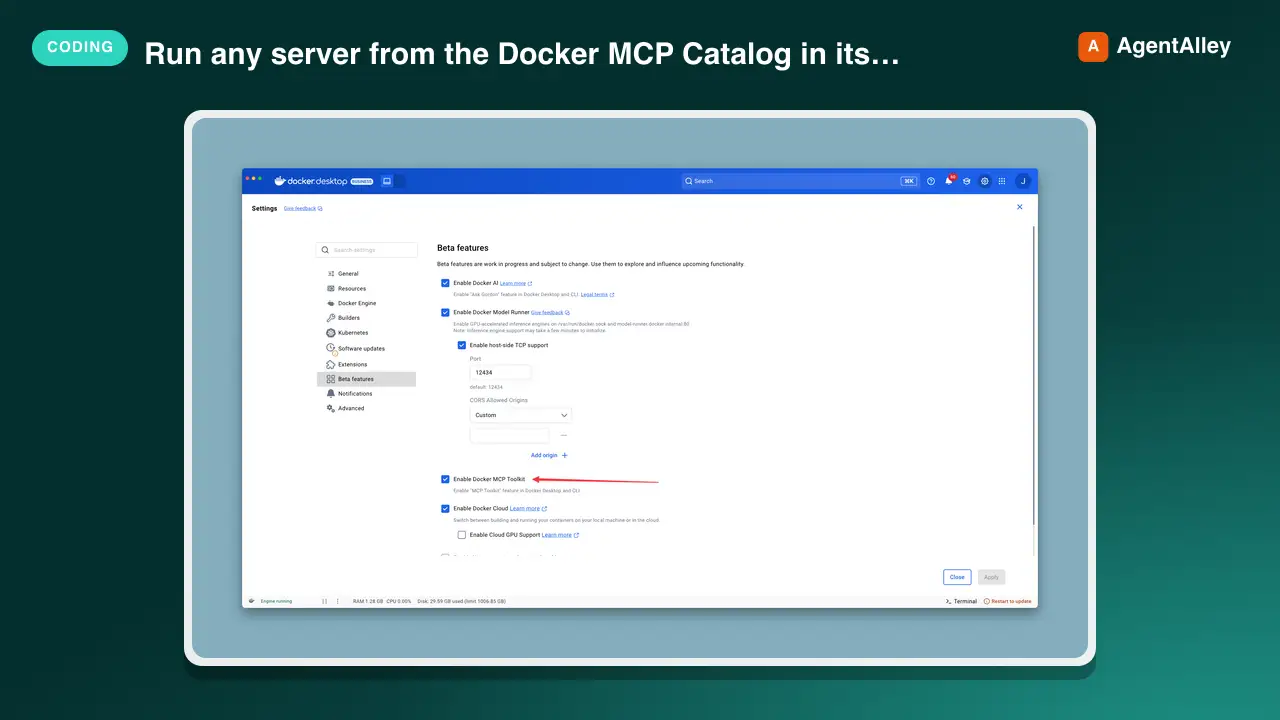
 docker/mcp-gateway · by dockerDocker's own CLI plugin: run any server from the Docker MCP Catalog in its own container, behind one connection, with secrets kept out of env vars.★ 1.6k GitHub stars
 AgentAgent Marketplace
 elisymlabs/elisym · by elisymlabsOpen infrastructure for AI agents to discover and pay each other★ 17 GitHub stars
More from shalintripathi
 SkillABM Operations Framework
 shalintripathi/saas-marketing-agents · by shalintripathiAccount-based marketing for B2B SaaS. Use this skill to build a target account list, tier it 1:1 / 1:few / 1:many, size it against sales capacity, turn intent and engagement signals into plays, write the multi-channel orchestration contract each tier runs on, and measure the program in account coverage, penetration and pipeline instead of MQLs. Also triggers on: ABM, account-based marketing, target account list, TAL, named accounts, account tiering, 1:1 ABM, one-to-few, programmatic ABM, account selection, ideal customer profile fit, intent data, buying signals, 6sense, Bombora, Demandbase, account penetration, account coverage, sales and marketing alignment on accounts, enterprise account program.★ 20 GitHub stars
 AgentAccount-Based Strategyshalintripathi/saas-marketing-agents · by shalintripathiOwns the target account list, its tiers, and the orchestration contract every channel executes against — the ABM program itself, measured in account coverage and pipeline rather than lead volume★ 20 GitHub stars
 AgentAgent Readiness Strategistshalintripathi/saas-marketing-agents · by shalintripathiMakes the product evaluable, priceable and transactable by a machine — the transactable half of AI visibility, audited from the buying agent's side of the wire★ 20 GitHub stars
 AgentAI Search Strategistshalintripathi/saas-marketing-agents · by shalintripathiForward-thinking strategist optimizing B2B SaaS for AI answer engines and where search is going, not where it's been★ 20 GitHub stars
 AgentMulti-Touch Attribution Checkershalintripathi/saas-marketing-agents · by shalintripathiTruth-seeker ensuring no channel takes unearned credit through multi-touch attribution, incrementality testing, and measurement integrity★ 20 GitHub stars
 AgentB2B Creator Partnership Managershalintripathi/saas-marketing-agents · by shalintripathiRuns B2B creator partnerships on evidence rather than on a media kit — verifying a creator's audience and engagement from what you can see yourself before you pay for it, structuring the deal (a flat fee when you are buying a message, per qualified click when you are buying pipeline), operating the FTC disclosure and monitoring the brand is liable for, and measuring the partnership in pipeline★ 20 GitHub stars