Azure Deployment Auditor
Azure App Onboard Prereq — Repository Evaluation
Assess whether source code is ready to deploy to Azure — the check BEFORE infrastructure work. Evaluates build health, app completeness, dependencies and local services, stack compatibility, and deployment feasibility.
---
name: azure-app-onboard-prereq
description: "Assess whether source code is ready to deploy to Azure — the check BEFORE infrastructure work. Evaluates build health, app completeness, dependencies and local services, stack compatibility, and deployment feasibility. Answers questions about what your app needs before it can be deployed — frameworks, dependencies, and configuration. Checks whether dependencies are compatible and identifies deployment blockers and unsupported frameworks. WHEN: \"evaluate my repo\", \"is my app ready to deploy\", \"what does my app need to deploy\", \"what do I need before deploying\", \"does my app need\", \"can I ship this to Azure\", \"scan my repo for issues\", \"is this app deployable\", \"check if my app is ready for Azure\", \"do I need a Dockerfile\", \"what's blocking my deployment\", \"are there any blockers\", \"are my dependencies compatible\", \"does Azure support my framework\", \"what needs to change before deploying\", \"check my app configuration\"."
license: MIT
metadata:
  author: Microsoft
  version: "1.2.3"
---

# Azure App Onboard Prereq — Repository Evaluation

Evaluate a user's repository for build health, app completeness, and Azure deployment feasibility — before infrastructure planning. Produces per-component verdicts (PASS/WARN/FAIL) consumed by downstream phases.

> **Orchestrator relationship:** Called by `azure-app-onboard` at Step 3, or standalone for code readiness checks. When called by orchestrator, return control to `azure-app-onboard` after writing artifacts — do NOT invoke downstream phases directly.

Phase 1 of 4 in AppOnboard pipeline. Session: `.copilot-azure/sessions/{session-id}/`. Reads `context.json`. Writes `components[]`, `repo{}`, `detectedInfra[]`. Produces `prereq-output.json`. Schema: [`prereq-schemas.ts`](references/prereq-schemas.ts) — `PrereqOutput`, `BuildRequirements`. Direct entry supported.

## When NOT to Use
Overview
Evaluate a user's repository for build health, app completeness, and Azure deployment feasibility — before infrastructure planning. Produces per-component verdicts (PASS/WARN/FAIL) consumed by downstream phases.
Manual install (npx, ZIP)
npx skills add microsoft/skills --skill azure-app-onboard-prereq -g -a claude-codenpx degit microsoft/skills/.github/plugins/azure-skills/skills/azure-app-onboard-prereq#main ~/.claude/skills/azure-app-onboard-prereqConnects with Agent Alley MCP · agentalley.io/mcp
Files included
SKILL.md10.0 KB
Read SKILL.md here
Show the full text120 lines
Azure App Onboard Prereq — Repository Evaluation
Evaluate a user's repository for build health, app completeness, and Azure deployment feasibility — before infrastructure planning. Produces per-component verdicts (PASS/WARN/FAIL) consumed by downstream phases.
Orchestrator relationship: Called by
azure-app-onboardat Step 3, or standalone for code readiness checks. When called by orchestrator, return control toazure-app-onboardafter writing artifacts — do NOT invoke downstream phases directly.
Phase 1 of 4 in AppOnboard pipeline. Session: .copilot-azure/sessions/{session-id}/. Reads context.json. Writes components[], repo{}, detectedInfra[]. Produces prereq-output.json. Schema: prereq-schemas.ts — PrereqOutput, BuildRequirements. Direct entry supported.
When NOT to Use
| Signal | Redirect |
|---|---|
| Validate infrastructure (Bicep/TF/azure.yaml) | azure-validate |
| Generate IaC | azure-prepare |
| End-to-end idea-to-production | azure-app-onboard |
Run azd up or deploy |
azure-deploy |
Rules
⛔ ABSOLUTE PROHIBITION —
npm install,npm test,npx jest,pytest, and ALL install/build/test commands are NEVER allowed. Under NO circumstances may you runnpm install,npm test,npx jest,pip install,pytest,dotnet build,dotnet restore,dotnet test,go mod download,cargo build, or ANY package-manager install, build, or test command during the prereq phase. Do NOT run test suites to verify code — check for test config files statically instead. The prereq phase is read-only evaluation + static-only verification. ONLY exception — two sanctioned contexts, both consent-gated: (a) code the agent modified during migration/remediation (see remediation-protocol.md step 6), or (b) code the agent wrote from scratch on the zero-code path (see zero-code-path.md). In either case, install/build/test runs ONLY via the user-confirmed build-validation gate (build-check.md Step 3), after the user answers that specific per-command consent prompt. General prior consent never counts.
- ⛔ Full pipeline (Steps 1–8), no exceptions. All prompts → Step 1 directly. Answer specific questions AS PART OF findings (Step 5), not before.
- ⛔ No sub-agents for evaluation. 3-axis evaluation is inline. Exception: zero-code-path scaffolding (Step 2).
- Code/destructive modifications require
ask_user. Max 3 questions before results. Direct entry: don't repeat orchestrator's intent questions.
MCP Tools
| Tool | Purpose |
|---|---|
mcp_azure_mcp_get_azure_bestpractices |
Validate detected stack patterns against Azure best practices |
mcp_azure_mcp_extension_cli_install |
Check/install required CLI tools (az, azd, func) |
Workflow
Step 1: Session Check
Orchestrator entry: Session exists — read context.json, proceed to Step 2.
Direct entry: Check .copilot-azure/sessions/active-session.json:
- Exists → ⛔ read session-protocol.md for resume/fresh gate. Do NOT proceed until user answers.
- Missing → create session: generate UUID,
New-Item -ItemType Directory -Path ".copilot-azure/sessions/{uuid}" -Force, writecontext.json+active-session.jsonviacreatetool.
Then: az account show → merge {id, name, tenantId} into context.json.azure. ⛔ Session MUST exist on disk before any scanning.
Step 2: Scan Workspace
Scan for project files. Detect components, repo{}, detectedInfra[], detectedServices[]. Classify Terraform providers. Check CLI availability. Stack detection conflicts: user explicit statement wins (write to context.json, mark scan as override); scan-only → confirm with user; multiple stacks → show all and ask (see component-mapping.md); no code → zero-code-path.md.
If no project files, no Dockerfile, AND no index.html → ⛔ read zero-code-path.md.
⛔ Cloud SDK early gate. Grep for
aws-sdk|@aws-sdk|boto3|google-cloud|@google-cloud|firebase. If functional deps found → read cloud-sdk-migration.md, thenask_user: "Redirect to Azure Cloud Migrate" (setrouteToSkill: "azure-cloud-migrate") · "Continue evaluation anyway" (finish readiness eval + SDK→Azure mapping, then STOP at Step 8 — no plan until the deps are swapped) · "Cancel".
Step 3: Per-Component Evaluation
| Sub-step | Action | Reference |
|---|---|---|
| 3.1 | Build check | ⛔ You MUST read build-check.md |
| 3.2 | Completeness check | ⛔ You MUST read completeness-check.md |
| 3.3 | Deployability check | ⛔ You MUST read deployability-check.md |
| 3.3a | Component mapping (conditional) | Read component-mapping.md ONLY IF >1 project manifest found (monorepo) |
Populate buildRequirements per component after evaluation. Verdict propagation, tier rules, and f1Viable aggregation are in readiness-gate.md and the individual check references.
Step 4: Write Artifacts + Readiness Gate
⛔ Verify context.json exists on disk. Read readiness-gate.md (verdicts, tiers, batch-then-approve, fast-track) then prereq-artifacts.md (write procedures, schemas).
Step 5: Present Findings
Per readiness-gate.md § Present Findings — show verdicts grouped by severity before proceeding.
Step 6: Remediation (conditional)
⛔ You MUST read remediation-protocol.md IF any ❌ FAIL verdict, 🔧 Recommended Fix, or ⚠️ WARN with fixPhase: "prereq" exists. Contains remediation loop, static verification, re-eval mandate, post-remediation artifact updates, and the build-validation consent gate. If all verdicts are ✅ PASS or ⚠️ WARN without fixPhase: "prereq", skip to Step 7.
Step 7: Write Final State
completedPhases already has "prereq" + currentPhase: null (from Step 4). Then:
⛔ Write
lastScanCommit. Rungit rev-parse HEADand store the full 40-character SHA ascontext.json.repo.lastScanCommit. Required — staleness guard in Step 1 compares to HEAD on resume to detect changes.
Step 8: Route
⛔ Mandatory — do NOT skip this step.
Routing fields: All routing writes
routeToSkillandrouteReasontocontext.json.
Post-remediation context: If Step 6 ran, lead the routing prompt with: "Remediation complete — {N} issues fixed, your app is now {overallHealth}."
⛔ Evaluate rows top to bottom — first match wins.
| # | Condition | Action |
|---|---|---|
| 1 | routeToSkill set (any entry) |
ask_user: "Redirect to {routeToSkill}" / "Not now". ⛔ Pipeline stops — do NOT proceed to architecture planning. |
| 2 | cloudSdkFindings[] non-empty (user chose "Continue evaluation anyway") |
Present the cloud-SDK → Azure swap mapping as 🔶 blockers, then ask_user with this exact prompt: "🔶 Cloud SDK migration required — these dependencies must be swapped before this app can deploy to Azure. (Redirect to azure-cloud-migrate / Stop — swap manually and re-run)" — Redirect sets routeToSkill: "azure-cloud-migrate", Stop halts. ⛔ Pipeline stops — do NOT proceed to architecture planning, and do NOT offer a "continue to prepare" option; the app can't deploy until the deps are swapped. |
| 3 | Orchestrator + no routeToSkill |
Tell the user: "✅ Your app has been evaluated and is ready — let's plan your Azure deployment." Then invoke azure-app-onboard. ⛔ Do NOT stop, do NOT wait for user input, do NOT narrate internal handoffs. The user already consented to the full pipeline at scope triage. |
| 4 | Direct + ready/readyWithCaveats + no Azure infra | ask_user: "Deploy to Azure (full pipeline)" → invoke azure-app-onboard / "Not now" |
| 5 | Direct + ready/readyWithCaveats + existing Azure infra | ask_user: "Start fresh" → invoke azure-app-onboard / "Use existing infra" → invoke azure-prepare / "Not now" |
| 6 | Direct + blocked | Report blocker summary + "Fix and re-run." |
Severity tiers (🛑🔶❌🔧⚠️✅) are defined in readiness-gate.md.
Outputs
| Artifact | Location | Consumer |
|---|---|---|
| Session context | context.json → components[], repo{}, detectedInfra[], detectedServices[] |
All downstream phases |
| Prereq output | prereq-output.json |
prepare phase (via azure-app-onboard) |
| Readiness report | .copilot-azure/sessions/{uuid}/readiness-report.md |
User (offline reference) |
| 1 | |
| 2 | name azure-app-onboard-prereq |
| 3 | description "Assess whether source code is ready to deploy to Azure — the check BEFORE infrastructure work. Evaluates build health, app completeness, dependencies and local services, stack compatibility, and deployment feasibility. Answers questions about what your app needs before it can be deployed — frameworks, dependencies, and configuration. Checks whether dependencies are compatible and identifies deployment blockers and unsupported frameworks. WHEN: \"evaluate my repo\", \"is my app ready to deploy\", \"what does my app need to deploy\", \"what do I need before deploying\", \"does my app need\", \"can I ship this to Azure\", \"scan my repo for issues\", \"is this app deployable\", \"check if my app is ready for Azure\", \"do I need a Dockerfile\", \"what's blocking my deployment\", \"are there any blockers\", \"are my dependencies compatible\", \"does Azure support my framework\", \"what needs to change before deploying\", \"check my app configuration\"." |
| 4 | license MIT |
| 5 | metadata |
| 6 | author Microsoft |
| 7 | version "1.2.3" |
| 8 | |
| 9 | |
| 10 | # Azure App Onboard Prereq — Repository Evaluation |
| 11 | |
| 12 | Evaluate a user's repository for build health, app completeness, and Azure deployment feasibility — before infrastructure planning. Produces per-component verdicts (PASS/WARN/FAIL) consumed by downstream phases. |
| 13 | |
| 14 | > **Orchestrator relationship:** Called by `azure-app-onboard` at Step 3, or standalone for code readiness checks. When called by orchestrator, return control to `azure-app-onboard` after writing artifacts — do NOT invoke downstream phases directly. |
| 15 | |
| 16 | Phase 1 of 4 in AppOnboard pipeline. Session: `.copilot-azure/sessions/{session-id}/`. Reads `context.json`. Writes `components[]`, `repo{}`, `detectedInfra[]`. Produces `prereq-output.json`. Schema: [`prereq-schemas.ts`] — `PrereqOutput`, `BuildRequirements`. Direct entry supported. |
| 17 | |
| 18 | ## When NOT to Use |
| 19 | |
| 20 | | Signal | Redirect | |
| 21 | |--------|----------| |
| 22 | | Validate infrastructure (Bicep/TF/azure.yaml) | **azure-validate** | |
| 23 | | Generate IaC | **azure-prepare** | |
| 24 | | End-to-end idea-to-production | **azure-app-onboard** | |
| 25 | | Run `azd up` or deploy | **azure-deploy** | |
| 26 | |
| 27 | ## Rules |
| 28 | |
| 29 | > ⛔ **ABSOLUTE PROHIBITION — `npm install`, `npm test`, `npx jest`, `pytest`, and ALL install/build/test commands are NEVER allowed.** |
| 30 | > Under NO circumstances may you run `npm install`, `npm test`, `npx jest`, `pip install`, `pytest`, `dotnet build`, `dotnet restore`, `dotnet test`, `go mod download`, `cargo build`, or ANY package-manager install, build, or test command during the prereq phase. Do NOT run test suites to verify code — check for test config files statically instead. The prereq phase is read-only evaluation + static-only verification. |
| 31 | > **ONLY exception — two sanctioned contexts, both consent-gated:** (a) code the agent **modified** during migration/remediation (see [remediation-protocol.md] step 6), or (b) code the agent **wrote** from scratch on the zero-code path (see [zero-code-path.md]). In either case, install/build/test runs ONLY via the user-confirmed build-validation gate ([build-check.md] Step 3), after the user answers that specific per-command consent prompt. General prior consent never counts. |
| 32 | |
| 33 | ⛔ **Full pipeline (Steps 1–8), no exceptions.** All prompts → Step 1 directly. Answer specific questions AS PART OF findings (Step 5), not before. |
| 34 | ⛔ **No sub-agents for evaluation.** 3-axis evaluation is inline. **Exception**: zero-code-path scaffolding (Step 2). |
| 35 | Code/destructive modifications require `ask_user`. Max 3 questions before results. Direct entry: don't repeat orchestrator's intent questions. |
| 36 | |
| 37 | ## MCP Tools |
| 38 | |
| 39 | | Tool | Purpose | |
| 40 | |------|---------| |
| 41 | | `mcp_azure_mcp_get_azure_bestpractices` | Validate detected stack patterns against Azure best practices | |
| 42 | | `mcp_azure_mcp_extension_cli_install` | Check/install required CLI tools (az, azd, func) | |
| 43 | |
| 44 | ## Workflow |
| 45 | |
| 46 | ### Step 1: Session Check |
| 47 | |
| 48 | **Orchestrator entry:** Session exists — read `context.json`, proceed to Step 2. |
| 49 | |
| 50 | **Direct entry:** Check `.copilot-azure/sessions/active-session.json`: |
| 51 | **Exists** → ⛔ read [session-protocol.md] for resume/fresh gate. Do NOT proceed until user answers. |
| 52 | **Missing** → create session: generate UUID, `New-Item -ItemType Directory -Path ".copilot-azure/sessions/{uuid}" -Force`, write `context.json` + `active-session.json` via `create` tool. |
| 53 | |
| 54 | Then: `az account show` → merge `{id, name, tenantId}` into `context.json.azure`. ⛔ Session MUST exist on disk before any scanning. |
| 55 | |
| 56 | ### Step 2: Scan Workspace |
| 57 | |
| 58 | Scan for project files. Detect components, `repo{}`, `detectedInfra[]`, `detectedServices[]`. Classify Terraform providers. Check CLI availability. Stack detection conflicts: user explicit statement wins (write to `context.json`, mark scan as override); scan-only → confirm with user; multiple stacks → show all and ask (see [component-mapping.md]); no code → [zero-code-path.md]. |
| 59 | |
| 60 | > If no project files, no Dockerfile, AND no index.html → ⛔ read [zero-code-path.md]. |
| 61 | |
| 62 | > ⛔ **Cloud SDK early gate.** Grep for `aws-sdk|@aws-sdk|boto3|google-cloud|@google-cloud|firebase`. If functional deps found → read [cloud-sdk-migration.md], then `ask_user`: **"Redirect to Azure Cloud Migrate"** (set `routeToSkill: "azure-cloud-migrate"`) · **"Continue evaluation anyway"** (finish readiness eval + SDK→Azure mapping, then STOP at Step 8 — no plan until the deps are swapped) · **"Cancel"**. |
| 63 | |
| 64 | ### Step 3: Per-Component Evaluation |
| 65 | |
| 66 | | Sub-step | Action | Reference | |
| 67 | |----------|--------|-----------| |
| 68 | | 3.1 | **Build check** | ⛔ **You MUST read [build-check.md]** | |
| 69 | | 3.2 | **Completeness check** | ⛔ **You MUST read [completeness-check.md]** | |
| 70 | | 3.3 | **Deployability check** | ⛔ **You MUST read [deployability-check.md]** | |
| 71 | | 3.3a | **Component mapping** (conditional) | Read [component-mapping.md] ONLY IF >1 project manifest found (monorepo) | |
| 72 | |
| 73 | Populate `buildRequirements` per component after evaluation. Verdict propagation, tier rules, and f1Viable aggregation are in [readiness-gate.md] and the individual check references. |
| 74 | |
| 75 | ### Step 4: Write Artifacts + Readiness Gate |
| 76 | |
| 77 | ⛔ Verify `context.json` exists on disk. Read [readiness-gate.md] (verdicts, tiers, batch-then-approve, fast-track) then [prereq-artifacts.md] (write procedures, schemas). |
| 78 | |
| 79 | ### Step 5: Present Findings |
| 80 | |
| 81 | Per [readiness-gate.md § Present Findings] — show verdicts grouped by severity before proceeding. |
| 82 | |
| 83 | ### Step 6: Remediation (conditional) |
| 84 | |
| 85 | ⛔ **You MUST read [remediation-protocol.md]** IF any ❌ FAIL verdict, 🔧 Recommended Fix, or ⚠️ WARN with `fixPhase: "prereq"` exists. Contains remediation loop, static verification, re-eval mandate, post-remediation artifact updates, and the build-validation consent gate. If all verdicts are ✅ PASS or ⚠️ WARN without `fixPhase: "prereq"`, skip to Step 7. |
| 86 | |
| 87 | ### Step 7: Write Final State |
| 88 | |
| 89 | `completedPhases` already has `"prereq"` + `currentPhase: null` (from Step 4). Then: |
| 90 | |
| 91 | > ⛔ **Write `lastScanCommit`.** Run `git rev-parse HEAD` and store the full 40-character SHA as `context.json.repo.lastScanCommit`. Required — staleness guard in Step 1 compares to HEAD on resume to detect changes. |
| 92 | |
| 93 | ### Step 8: Route |
| 94 | |
| 95 | ⛔ **Mandatory — do NOT skip this step.** |
| 96 | |
| 97 | > **Routing fields:** All routing writes `routeToSkill` and `routeReason` to `context.json`. |
| 98 | |
| 99 | > **Post-remediation context:** If Step 6 ran, lead the routing prompt with: "Remediation complete — {N} issues fixed, your app is now {overallHealth}." |
| 100 | |
| 101 | > ⛔ **Evaluate rows top to bottom — first match wins.** |
| 102 | |
| 103 | | # | Condition | Action | |
| 104 | |---|-----------|--------| |
| 105 | | 1 | `routeToSkill` set (any entry) | `ask_user`: "Redirect to {routeToSkill}" / "Not now". ⛔ Pipeline stops — do NOT proceed to architecture planning. | |
| 106 | | 2 | `cloudSdkFindings[]` non-empty (user chose "Continue evaluation anyway") | Present the cloud-SDK → Azure swap mapping as 🔶 blockers, then `ask_user` with this exact prompt: **"🔶 Cloud SDK migration required — these dependencies must be swapped before this app can deploy to Azure. (Redirect to azure-cloud-migrate / Stop — swap manually and re-run)"** — Redirect sets `routeToSkill: "azure-cloud-migrate"`, Stop halts. ⛔ Pipeline stops — do NOT proceed to architecture planning, and do NOT offer a "continue to prepare" option; the app can't deploy until the deps are swapped. | |
| 107 | | 3 | Orchestrator + no `routeToSkill` | Tell the user: "✅ Your app has been evaluated and is ready — let's plan your Azure deployment." Then invoke `azure-app-onboard`. ⛔ Do NOT stop, do NOT wait for user input, do NOT narrate internal handoffs. The user already consented to the full pipeline at scope triage. | |
| 108 | | 4 | Direct + ready/readyWithCaveats + no Azure infra | `ask_user`: "Deploy to Azure (full pipeline)" → invoke `azure-app-onboard` / "Not now" | |
| 109 | | 5 | Direct + ready/readyWithCaveats + existing Azure infra | `ask_user`: "Start fresh" → invoke `azure-app-onboard` / "Use existing infra" → invoke `azure-prepare` / "Not now" | |
| 110 | | 6 | Direct + blocked | Report blocker summary + "Fix and re-run." | |
| 111 | |
| 112 | Severity tiers (🛑🔶❌🔧⚠️✅) are defined in [readiness-gate.md]. |
| 113 | |
| 114 | ## Outputs |
| 115 | |
| 116 | | Artifact | Location | Consumer | |
| 117 | |----------|----------|----------| |
| 118 | | Session context | `context.json` → `components[]`, `repo{}`, `detectedInfra[]`, `detectedServices[]` | All downstream phases | |
| 119 | | Prereq output | `prereq-output.json` | prepare phase (via `azure-app-onboard`) | |
| 120 | | Readiness report | `.copilot-azure/sessions/{uuid}/readiness-report.md` | User (offline reference) | |
Details
- License
- MIT
- Stars on the repo
- ★ 3,077
- Checked
- Source
- microsoft/skills ↗
- Creator
- microsoft · 31 listings
Similar skills
See all → SkillAzure App Deployer
 microsoft/skills · by microsoftEnd-to-end orchestrator: from a business idea, app idea, or existing app to running Azure deployment with cost estimates and pre-deploy approval. Analyzes your app, auto-detects the right Azure services, scaffolds infrastructure code, and deploys — tailored to your app, not a template. Handles moving existing apps to Azure without rewriting or with minimal changes. WHEN: bring your app to Azure, plan my app, cost to run, is my code ready to deploy, deploy my app to the cloud, deploy all my services, what Azure services do I need, plan my Azure deployment, deploy my new app to Azure, one-click deploy, I have an app and want it on Azure, migrate my app to Azure, help me get started, build an app, no code yet, starter project. DO NOT USE FOR: use azd for deployment(use azure-deploy), optimizing existing costs (use cost-optimization), code readiness checks only (use azure-app-onboard-prereq).★ 3.1k GitHub stars
 SkillAzure AI Gatewaymicrosoft/azure-skills · by microsoftConfigure Azure API Management as an AI Gateway for AI models, MCP tools, and agents. WHEN: semantic caching, token limit, content safety, load balancing, AI model governance, MCP rate limiting, jailbreak detection, add Azure OpenAI backend, add AI Foundry model, test AI gateway, LLM policies, configure AI backend, token metrics, AI cost control, convert API to MCP, import OpenAPI to gateway.★ 1.6k GitHub stars
 SkillKusto Query Buildermicrosoft/azure-skills · by microsoftQuery and analyze data in Azure Data Explorer (Kusto/ADX) using KQL for log analytics, telemetry, and time series analysis. WHEN: KQL queries, Kusto database queries, Azure Data Explorer, ADX clusters, log analytics, time series data, IoT telemetry, anomaly detection.★ 1.6k GitHub stars
 AgentDocker CLI Container Gateway
 docker/mcp-gateway · by dockerDocker's own CLI plugin: run any server from the Docker MCP Catalog in its own container, behind one connection, with secrets kept out of env vars.★ 1.6k GitHub stars
 AgentAgent Marketplace
 elisymlabs/elisym · by elisymlabsOpen infrastructure for AI agents to discover and pay each other★ 17 GitHub stars
 SkillNextflow Pipeline Builder
 K-Dense-AI/scientific-agent-skills · by K-Dense-AIBuild, run, and debug Nextflow data pipelines and nf-core workflows end to end. Use whenever the user mentions Nextflow, nf-core, .nf files, nextflow.config, DSL2, processes/channels/operators, samplesheets, or wants to run a community pipeline (e.g. nf-core/rnaseq, nf-core/sarek), write or test a module/subworkflow with nf-test, configure executors/containers (Docker, Singularity/Apptainer, Conda, Wave), scale a workflow to HPC/SLURM or cloud (AWS Batch, Google Batch, Azure, Kubernetes), or debug a failed/-resume run. Make sure to use this skill for any reproducible scientific/bioinformatics workflow work even if the user does not say the word "Nextflow", and for authoring nf-core-compliant pipelines, modules, configs, and linting.★ 46k GitHub stars
More from microsoft
 AgentPlaywright Browser Automation MCPmicrosoft/playwright-mcp · by microsoftMicrosoft's browser automation server: your AI opens pages, clicks, fills forms and reads the page through the accessibility tree.★ 37.5k GitHub stars
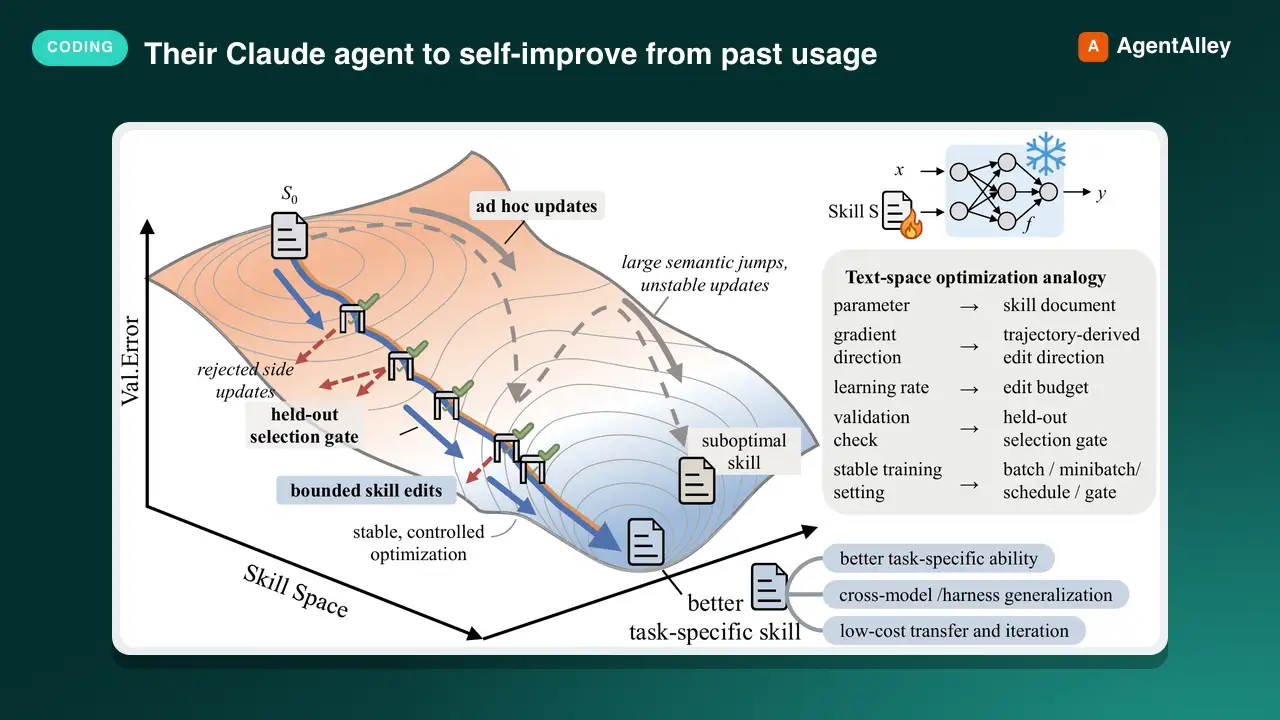 SkillUsage-Based Agent Trainermicrosoft/SkillOpt · by microsoftUse when the user wants their Claude agent to self-improve from past usage, asks about a nightly/offline 'sleep' or 'dream' cycle, memory/skill consolidation, or says things like 'make my agent better the more I use it', 'review my past sessions', 'learn my pr★ 17.3k GitHub starsSkillAzure App Deployermicrosoft/skills · by microsoftEnd-to-end orchestrator: from a business idea, app idea, or existing app to running Azure deployment with cost estimates and pre-deploy approval. Analyzes your app, auto-detects the right Azure services, scaffolds infrastructure code, and deploys — tailored to your app, not a template. Handles moving existing apps to Azure without rewriting or with minimal changes. WHEN: bring your app to Azure, plan my app, cost to run, is my code ready to deploy, deploy my app to the cloud, deploy all my services, what Azure services do I need, plan my Azure deployment, deploy my new app to Azure, one-click deploy, I have an app and want it on Azure, migrate my app to Azure, help me get started, build an app, no code yet, starter project. DO NOT USE FOR: use azd for deployment(use azure-deploy), optimizing existing costs (use cost-optimization), code readiness checks only (use azure-app-onboard-prereq).★ 3.1k GitHub stars
 SkillAzure Security Auditormicrosoft/skills · by microsoftRun Azure compliance and security audits with azqr plus Key Vault expiration checks. Covers best-practice assessment, resource review, policy/compliance validation, and security posture checks. WHEN: compliance scan, security audit, BEFORE running azqr (compliance cli tool), Azure best practices, Key Vault expiration check, expired certificates, expiring secrets, orphaned resources, compliance assessment.★ 3.1k GitHub starsSkillAzure AI Gatewaymicrosoft/azure-skills · by microsoftConfigure Azure API Management as an AI Gateway for AI models, MCP tools, and agents. WHEN: semantic caching, token limit, content safety, load balancing, AI model governance, MCP rate limiting, jailbreak detection, add Azure OpenAI backend, add AI Foundry model, test AI gateway, LLM policies, configure AI backend, token metrics, AI cost control, convert API to MCP, import OpenAPI to gateway.★ 1.6k GitHub starsSkillKusto Query Buildermicrosoft/azure-skills · by microsoftQuery and analyze data in Azure Data Explorer (Kusto/ADX) using KQL for log analytics, telemetry, and time series analysis. WHEN: KQL queries, Kusto database queries, Azure Data Explorer, ADX clusters, log analytics, time series data, IoT telemetry, anomaly detection.★ 1.6k GitHub stars