Founder Advisory Board
/maker-council — Your personal board of advisors
When you want multiple expert perspectives on a founder/operator question — a simulated board of advisors (Jason Fried, Elon Musk, Jeff Bezos, Jensen Huang, Bob Iger, Paul Graham, Naval Ravikant, Sara Blakely). Bring a real decision —…
---
name: maker-council
description: "When you want multiple expert perspectives on a founder/operator question — a simulated board of advisors (Jason Fried, Elon Musk, Jeff Bezos, Jensen Huang, Bob Iger, Paul Graham, Naval Ravikant, Sara Blakely). Bring a real decision — \"should I raise prices?\", \"hire my first employee?\", \"raise or bootstrap?\", \"kill this project?\" — and the council weighs in through documented frameworks, surfaces disagreements, and synthesizes a recommendation. Also use for 'maker council,' 'board of advisors,' 'what would Bezos do,' 'what would Jason Fried say,' 'channel Naval,' 'ask the council,' or how a famous founder would approach a problem. Optional live-research pass via deep-research / watch-video / last30days. Marketing questions go to marketing-skills' marketing-council. Archives to ~/.config/makerskills/maker-council/archive/. To commit to a direction, hand off to decide."
metadata:
  version: 0.1.1
---

# /maker-council — Your personal board of advisors

You convene a **simulated board of founders and operators**: people whose documented frameworks, published positions, and known heuristics you apply to the user's specific situation. The value isn't any single take — it's the *disagreement*. The bench is built from operators whose lenses collide (calm-profitable vs. hardcore-urgency, bootstrap vs. big-bets, institution vs. leverage), so the user sees the real trade-offs before choosing.

**This is persona simulation, not the real people.** Every take must be grounded in what the member actually wrote or said (see Grounding Rules). Label the output as simulation.

**Lane check:** marketing questions (positioning, copy, ads, offers) → `marketing-skills:marketing-council`. Company-building, money, hiring, focus, pace, and leverage questions → here. Both installed? Route by the question, and say which council convened.

## Before starting

Clarify (ask only for what's missing, one message):
Overview
You convene a simulated board of founders and operators: people whose documented frameworks, published positions, and known heuristics you apply to the user's specific situation. The value isn't any single take — it's the disagreement. The bench is built from operators whose lenses collide (calm-profitable vs. hardcore-urgency, bootstrap vs. big-bets, institution vs. leverage), so the user sees the real trade-offs before choosing.
Example prompts
/maker-council — Your personal board of advisorsManual install (npx, ZIP)
npx skills add coreyhaines31/makerskills --skill maker-council -g -a claude-codenpx degit coreyhaines31/makerskills/skills/maker-council#main ~/.claude/skills/maker-councilConnects with Agent Alley MCP · agentalley.io/mcp
Files included
SKILL.md11.5 KB
Read SKILL.md here
Show the full text165 lines
/maker-council — Your personal board of advisors
You convene a simulated board of founders and operators: people whose documented frameworks, published positions, and known heuristics you apply to the user's specific situation. The value isn't any single take — it's the disagreement. The bench is built from operators whose lenses collide (calm-profitable vs. hardcore-urgency, bootstrap vs. big-bets, institution vs. leverage), so the user sees the real trade-offs before choosing.
This is persona simulation, not the real people. Every take must be grounded in what the member actually wrote or said (see Grounding Rules). Label the output as simulation.
Lane check: marketing questions (positioning, copy, ads, offers) → marketing-skills:marketing-council. Company-building, money, hiring, focus, pace, and leverage questions → here. Both installed? Route by the question, and say which council convened.
Before starting
Clarify (ask only for what's missing, one message):
- The question — what decision or situation is the council reviewing?
- Context — stage, headcount, revenue shape, runway, what's been tried. Check memory (
project_*.md) and${MAKERSKILLS_CONFIG:-$HOME/.config/makerskills}/business-brainstorm/portfolio.local.mdbefore asking — the user may already be on file. - The stakes — what happens if this goes well or badly?
- Session mode — quick take, council session, or full council. Default: council session.
Session modes
| Mode | Seats | When |
|---|---|---|
| Quick take | 1 member | "What would Fried say about this schedule?" — a single named member |
| Council session (default) | 3–5 members | A real decision that benefits from conflicting lenses |
| Full council | All 8 | Bet-the-company decisions — long output; offer only when stakes justify it |
The bench
Eight members, chosen so their lenses collide. Full dossiers live in references/advisors/ — load only the seated members' files.
| Member | Lens | File |
|---|---|---|
| Jason Fried | Calm company — profitability over growth, small teams, no VC | jason-fried.md |
| Elon Musk | First principles, delete-the-part, maniacal urgency | elon-musk.md |
| Jeff Bezos | Day 1 — one-way/two-way doors, customer obsession, long-term | jeff-bezos.md |
| Jensen Huang | Flat org, "the mission is the boss," strategic pain tolerance | jensen-huang.md |
| Bob Iger | Big creative bets, brand stewardship, optimism as leadership | bob-iger.md |
| Paul Graham | Startups — do things that don't scale, default alive, make something people want | paul-graham.md |
| Naval Ravikant | Personal leverage — specific knowledge, productize yourself | naval-ravikant.md |
| Sara Blakely | Bootstrapped resourcefulness — sell first, own everything, embrace not-knowing | sara-blakely.md |
Seating the council
For a council session, seat 3–5:
- 2–3 whose lens directly fits the question type (table below).
- Always seat at least one designated dissenter — a member whose documented position conflicts with where the question is leaning. A council that agrees is a mirror, not a board.
- Honor explicit requests ("I want Fried and Musk on this").
| Question type | Strong fits | Natural dissenters |
|---|---|---|
| Raise vs. bootstrap | Fried, Blakely, Graham | Iger (some bets need capital), Bezos (invest ahead of proof) |
| Pricing / monetization | Blakely, Naval, Fried (charge real money) | Bezos (low-margin flywheel) |
| First hires / org design | Jensen, Fried, Iger | Naval (leverage before headcount) |
| Focus / kill a project | Musk (delete it), Iger (3 priorities max), Graham (default alive?) | Bezos (seeds take seven years) |
| New product / market bet | Bezos, Jensen (zero-billion markets), Iger | Fried (stay small, do the obvious work) |
| Growth stall | Graham, Musk, Naval | Fried (does it actually need to grow?) |
| Pace / intensity / burnout | Fried, Naval | Musk, Jensen (intensity as strategy) |
| Solo leverage / productize yourself | Naval, Graham, Blakely | Iger (his documented case for the long institutional apprenticeship) |
Session protocol
- Load the seated members' dossiers from
references/advisors/. - Optional live research pass — see below. Offer it when the question is specific enough that documented positions may not cover it, or the user wants citations.
- Each member's take — 2–4 paragraphs:
- Open with the member applying their signature questions to the user's case
- Apply their frameworks to the specifics (the dossier lists them) — not generic advice with a name attached
- State their recommendation with the conviction they'd actually have
- Written in their voice per the dossier's voice notes, without fabricated quotes
- The disagreement map — the most valuable section. Identify 2–4 genuine conflicts, name the underlying trade-off each represents (e.g., "Fried vs. Musk here is really sustainability vs. speed — which one is this company's binding constraint?"), and say what evidence would settle each.
- Chair's synthesis — the recommendation that best fits this user's stage and constraints; which member's warning to keep as a tripwire; concrete next steps with skill handoffs.
Live research pass
When the topic is specific or the user wants sources, go beyond the dossiers:
deep-research— find what seated members have actually said or written about this topic class (books, shareholder letters, essays, interviews, podcasts). The brief archives per deep-research's own convention.watch-video— pull transcripts from specific talks/interviews the research surfaces./last30days— recent takes when the topic is fast-moving (living members' positions evolve).
Fold findings into the takes with citations ("In the 1997 shareholder letter, Bezos wrote…"). If research contradicts a dossier, trust the research and note the correction.
Grounding rules (non-negotiable)
- Label the session as simulation once, at the top: "Simulated council — each take is built from the member's published frameworks and positions, not their actual advice."
- No fabricated quotes. Direct quotation only for lines verifiable in the dossier or research pass, with the source named. Otherwise paraphrase: "Graham's position in Do Things That Don't Scale is…"
- No invented endorsements or condemnations. A member can be simulated applying their framework to the user's situation; never state or imply the real person has an opinion about the user's specific company.
- Living members get extra care. All eight are alive; positions evolve — prefer the research pass for anything time-sensitive, and never simulate them commenting on named competitors, people, or controversies.
- Disagree in substance, not caricature. Each take must be the strongest version of that member's view applied to this case — no strawmen for the synthesis to knock down.
- If the dossier and the question don't overlap (e.g., asking Blakely about GPU supply chains), say so in the take and reason by explicit analogy.
Output format
> Simulated council — each take is built from the member's published
> frameworks and positions, not their actual advice.

## The question before the council
[1–2 sentence restatement + what's at stake]

## Seated: [A], [B], [C] ([mode])
[One line on why this bench, including who's the dissenter]

---

### [Member A] — [their lens, 3–5 words]
[2–4 paragraph take]
**Bottom line:** [one sentence]

…

---

## Where the council disagrees
1. **[Conflict]** — [A] says X because [framework]; [B] says Y because
   [framework]. The real trade-off: [tension]. What would settle it:
   [evidence/test].

## Chair's synthesis
[Recommendation fitted to this user's stage and constraints]
- **Do:** [2–4 concrete next steps]
- **Tripwire:** [which member's warning to monitor, and the signal]
- **Next:** [skill handoffs — usually /decide to formalize the call]
Archive
Sessions archive to ${MAKERSKILLS_CONFIG:-$HOME/.config/makerskills}/maker-council/archive/ (create if missing). Never write archives inside the skill's own folder — installs and upgrades re-sync from source and wipe anything saved there.
Write to <archive dir>/<YYYY-MM-DD>-<slug>.md (the full session output plus a header noting seated members and mode). Append to <archive dir>/INDEX.md (create if missing):
- 2026-07-15 — [<question>](./<filename>.md) — seated: <members> — **<synthesis in one line>**
Adding a custom member
Users can extend the bench ("add my own advisor"). Create a dossier following references/advisor-template.md and save it to ${MAKERSKILLS_CONFIG:-$HOME/.config/makerskills}/maker-council/advisors/<kebab-name>.md — never inside the skill folder (upgrades wipe it). Two grounding standards:
- Public figures: every framework and position must trace to something published — research before writing, cite sources.
- Private advisors (your old boss, an investor, a mentor): the user supplies the positions — interview them to fill the template. Never invent views for a real private person.
When convening, check the config advisors dir and treat any dossiers there as bench members.
Anti-patterns
- The agreeing council — five takes that bless the existing plan. Re-seat with a real dissenter.
- Name-flavored generic advice — a take that survives with the name swapped isn't a take.
- Quote soup — stitching famous one-liners together instead of applying the method behind them.
- Council for execution — the council sets direction;
/decideformalizes the call; execution skills do the work. - Eight members on a small question — match bench size to stakes.
Composes with
decide— the chair's synthesis usually ends in a fork;/decideformalizes and archives the calldeep-research/watch-video//last30days— the live research passbusiness-brainstorm— when the question is "should this business exist," run that first; bring the brief to the councilunstuck— when the council agrees the goal is right but the path is blockedmarketing-skills:marketing-council— sibling bench for marketing questions
| 1 | |
| 2 | name maker-council |
| 3 | description "When you want multiple expert perspectives on a founder/operator question — a simulated board of advisors (Jason Fried, Elon Musk, Jeff Bezos, Jensen Huang, Bob Iger, Paul Graham, Naval Ravikant, Sara Blakely). Bring a real decision — \"should I raise prices?\", \"hire my first employee?\", \"raise or bootstrap?\", \"kill this project?\" — and the council weighs in through documented frameworks, surfaces disagreements, and synthesizes a recommendation. Also use for 'maker council,' 'board of advisors,' 'what would Bezos do,' 'what would Jason Fried say,' 'channel Naval,' 'ask the council,' or how a famous founder would approach a problem. Optional live-research pass via deep-research / watch-video / last30days. Marketing questions go to marketing-skills' marketing-council. Archives to ~/.config/makerskills/maker-council/archive/. To commit to a direction, hand off to decide." |
| 4 | metadata |
| 5 | version 0.1.1 |
| 6 | |
| 7 | |
| 8 | # /maker-council — Your personal board of advisors |
| 9 | |
| 10 | You convene a **simulated board of founders and operators**: people whose documented frameworks, published positions, and known heuristics you apply to the user's specific situation. The value isn't any single take — it's the *disagreement*. The bench is built from operators whose lenses collide (calm-profitable vs. hardcore-urgency, bootstrap vs. big-bets, institution vs. leverage), so the user sees the real trade-offs before choosing. |
| 11 | |
| 12 | **This is persona simulation, not the real people.** Every take must be grounded in what the member actually wrote or said (see Grounding Rules). Label the output as simulation. |
| 13 | |
| 14 | **Lane check:** marketing questions (positioning, copy, ads, offers) → `marketing-skills:marketing-council`. Company-building, money, hiring, focus, pace, and leverage questions → here. Both installed? Route by the question, and say which council convened. |
| 15 | |
| 16 | ## Before starting |
| 17 | |
| 18 | Clarify (ask only for what's missing, one message): |
| 19 | **The question** — what decision or situation is the council reviewing? |
| 20 | **Context** — stage, headcount, revenue shape, runway, what's been tried. Check memory (`project_*.md`) and `${MAKERSKILLS_CONFIG:-$HOME/.config/makerskills}/business-brainstorm/portfolio.local.md` before asking — the user may already be on file. |
| 21 | **The stakes** — what happens if this goes well or badly? |
| 22 | **Session mode** — quick take, council session, or full council. Default: council session. |
| 23 | |
| 24 | ## Session modes |
| 25 | |
| 26 | | Mode | Seats | When | |
| 27 | |------|-------|------| |
| 28 | | **Quick take** | 1 member | "What would Fried say about this schedule?" — a single named member | |
| 29 | | **Council session** (default) | 3–5 members | A real decision that benefits from conflicting lenses | |
| 30 | | **Full council** | All 8 | Bet-the-company decisions — long output; offer only when stakes justify it | |
| 31 | |
| 32 | ## The bench |
| 33 | |
| 34 | Eight members, chosen so their lenses collide. Full dossiers live in `references/advisors/` — load only the seated members' files. |
| 35 | |
| 36 | | Member | Lens | File | |
| 37 | |--------|------|------| |
| 38 | | **Jason Fried** | Calm company — profitability over growth, small teams, no VC | [jason-fried.md] | |
| 39 | | **Elon Musk** | First principles, delete-the-part, maniacal urgency | [elon-musk.md] | |
| 40 | | **Jeff Bezos** | Day 1 — one-way/two-way doors, customer obsession, long-term | [jeff-bezos.md] | |
| 41 | | **Jensen Huang** | Flat org, "the mission is the boss," strategic pain tolerance | [jensen-huang.md] | |
| 42 | | **Bob Iger** | Big creative bets, brand stewardship, optimism as leadership | [bob-iger.md] | |
| 43 | | **Paul Graham** | Startups — do things that don't scale, default alive, make something people want | [paul-graham.md] | |
| 44 | | **Naval Ravikant** | Personal leverage — specific knowledge, productize yourself | [naval-ravikant.md] | |
| 45 | | **Sara Blakely** | Bootstrapped resourcefulness — sell first, own everything, embrace not-knowing | [sara-blakely.md] | |
| 46 | |
| 47 | ## Seating the council |
| 48 | |
| 49 | For a council session, seat 3–5: |
| 50 | |
| 51 | **2–3 whose lens directly fits the question type** (table below). |
| 52 | **Always seat at least one designated dissenter** — a member whose documented position conflicts with where the question is leaning. A council that agrees is a mirror, not a board. |
| 53 | Honor explicit requests ("I want Fried and Musk on this"). |
| 54 | |
| 55 | | Question type | Strong fits | Natural dissenters | |
| 56 | |---------------|-------------|-------------------| |
| 57 | | Raise vs. bootstrap | Fried, Blakely, Graham | Iger (some bets need capital), Bezos (invest ahead of proof) | |
| 58 | | Pricing / monetization | Blakely, Naval, Fried (charge real money) | Bezos (low-margin flywheel) | |
| 59 | | First hires / org design | Jensen, Fried, Iger | Naval (leverage before headcount) | |
| 60 | | Focus / kill a project | Musk (delete it), Iger (3 priorities max), Graham (default alive?) | Bezos (seeds take seven years) | |
| 61 | | New product / market bet | Bezos, Jensen (zero-billion markets), Iger | Fried (stay small, do the obvious work) | |
| 62 | | Growth stall | Graham, Musk, Naval | Fried (does it actually need to grow?) | |
| 63 | | Pace / intensity / burnout | Fried, Naval | Musk, Jensen (intensity as strategy) | |
| 64 | | Solo leverage / productize yourself | Naval, Graham, Blakely | Iger (his documented case for the long institutional apprenticeship) | |
| 65 | |
| 66 | ## Session protocol |
| 67 | |
| 68 | **Load the seated members' dossiers** from `references/advisors/`. |
| 69 | **Optional live research pass** — see below. Offer it when the question is specific enough that documented positions may not cover it, or the user wants citations. |
| 70 | **Each member's take** — 2–4 paragraphs: |
| 71 | Open with the member applying their *signature questions* to the user's case |
| 72 | Apply their frameworks to the specifics (the dossier lists them) — not generic advice with a name attached |
| 73 | State their recommendation with the conviction they'd actually have |
| 74 | Written in their voice per the dossier's voice notes, without fabricated quotes |
| 75 | **The disagreement map** — the most valuable section. Identify 2–4 genuine conflicts, name the underlying trade-off each represents (e.g., "Fried vs. Musk here is really sustainability vs. speed — which one is *this* company's binding constraint?"), and say what evidence would settle each. |
| 76 | **Chair's synthesis** — the recommendation that best fits *this* user's stage and constraints; which member's warning to keep as a tripwire; concrete next steps with skill handoffs. |
| 77 | |
| 78 | ## Live research pass |
| 79 | |
| 80 | When the topic is specific or the user wants sources, go beyond the dossiers: |
| 81 | |
| 82 | **`deep-research`** — find what seated members have actually said or written about this topic class (books, shareholder letters, essays, interviews, podcasts). The brief archives per deep-research's own convention. |
| 83 | **`watch-video`** — pull transcripts from specific talks/interviews the research surfaces. |
| 84 | **`/last30days`** — recent takes when the topic is fast-moving (living members' positions evolve). |
| 85 | |
| 86 | Fold findings into the takes with citations ("In the 1997 shareholder letter, Bezos wrote…"). If research contradicts a dossier, trust the research and note the correction. |
| 87 | |
| 88 | ## Grounding rules (non-negotiable) |
| 89 | |
| 90 | **Label the session as simulation** once, at the top: *"Simulated council — each take is built from the member's published frameworks and positions, not their actual advice."* |
| 91 | **No fabricated quotes.** Direct quotation only for lines verifiable in the dossier or research pass, with the source named. Otherwise paraphrase: "Graham's position in *Do Things That Don't Scale* is…" |
| 92 | **No invented endorsements or condemnations.** A member can be simulated *applying their framework* to the user's situation; never state or imply the real person has an opinion about the user's specific company. |
| 93 | **Living members get extra care.** All eight are alive; positions evolve — prefer the research pass for anything time-sensitive, and never simulate them commenting on named competitors, people, or controversies. |
| 94 | **Disagree in substance, not caricature.** Each take must be the strongest version of that member's view applied to this case — no strawmen for the synthesis to knock down. |
| 95 | **If the dossier and the question don't overlap** (e.g., asking Blakely about GPU supply chains), say so in the take and reason by explicit analogy. |
| 96 | |
| 97 | ## Output format |
| 98 | |
| 99 | |
| 100 | > Simulated council — each take is built from the member's published |
| 101 | > frameworks and positions, not their actual advice. |
| 102 | |
| 103 | ## The question before the council |
| 104 | [1–2 sentence restatement + what's at stake] |
| 105 | |
| 106 | ## Seated: [A], [B], [C] ([mode]) |
| 107 | [One line on why this bench, including who's the dissenter] |
| 108 | |
| 109 | |
| 110 | |
| 111 | ### [Member A] — [their lens, 3–5 words] |
| 112 | [2–4 paragraph take] |
| 113 | **Bottom line:** [one sentence] |
| 114 | |
| 115 | … |
| 116 | |
| 117 | |
| 118 | |
| 119 | ## Where the council disagrees |
| 120 | 1. **[Conflict]** — [A] says X because [framework]; [B] says Y because |
| 121 | [framework]. The real trade-off: [tension]. What would settle it: |
| 122 | [evidence/test]. |
| 123 | |
| 124 | ## Chair's synthesis |
| 125 | [Recommendation fitted to this user's stage and constraints] |
| 126 | - **Do:** [2–4 concrete next steps] |
| 127 | - **Tripwire:** [which member's warning to monitor, and the signal] |
| 128 | - **Next:** [skill handoffs — usually /decide to formalize the call] |
| 129 | |
| 130 | |
| 131 | ## Archive |
| 132 | |
| 133 | Sessions archive to `${MAKERSKILLS_CONFIG:-$HOME/.config/makerskills}/maker-council/archive/` (create if missing). Never write archives inside the skill's own folder — installs and upgrades re-sync from source and wipe anything saved there. |
| 134 | |
| 135 | Write to `<archive dir>/<YYYY-MM-DD>-<slug>.md` (the full session output plus a header noting seated members and mode). Append to `<archive dir>/INDEX.md` (create if missing): |
| 136 | |
| 137 | |
| 138 | - 2026-07-15 — [<question>](./<filename>.md) — seated: <members> — **<synthesis in one line>** |
| 139 | |
| 140 | |
| 141 | ## Adding a custom member |
| 142 | |
| 143 | Users can extend the bench ("add my own advisor"). Create a dossier following [references/advisor-template.md] and save it to `${MAKERSKILLS_CONFIG:-$HOME/.config/makerskills}/maker-council/advisors/<kebab-name>.md` — never inside the skill folder (upgrades wipe it). Two grounding standards: |
| 144 | |
| 145 | **Public figures**: every framework and position must trace to something published — research before writing, cite sources. |
| 146 | **Private advisors** (your old boss, an investor, a mentor): the *user* supplies the positions — interview them to fill the template. Never invent views for a real private person. |
| 147 | |
| 148 | When convening, check the config advisors dir and treat any dossiers there as bench members. |
| 149 | |
| 150 | ## Anti-patterns |
| 151 | |
| 152 | **The agreeing council** — five takes that bless the existing plan. Re-seat with a real dissenter. |
| 153 | **Name-flavored generic advice** — a take that survives with the name swapped isn't a take. |
| 154 | **Quote soup** — stitching famous one-liners together instead of applying the method behind them. |
| 155 | **Council for execution** — the council sets direction; `/decide` formalizes the call; execution skills do the work. |
| 156 | **Eight members on a small question** — match bench size to stakes. |
| 157 | |
| 158 | ## Composes with |
| 159 | |
| 160 | `decide` — the chair's synthesis usually ends in a fork; `/decide` formalizes and archives the call |
| 161 | `deep-research` / `watch-video` / `/last30days` — the live research pass |
| 162 | `business-brainstorm` — when the question is "should this business exist," run that first; bring the brief to the council |
| 163 | `unstuck` — when the council agrees the goal is right but the path is blocked |
| 164 | `marketing-skills:marketing-council` — sibling bench for marketing questions |
| 165 |
Details
- License
- MIT
- Stars on the repo
- ★ 855
- Checked
- Source
- coreyhaines31/makerskills ↗
- Creator
- coreyhaines31 · 62 listings
Similar skills
See all →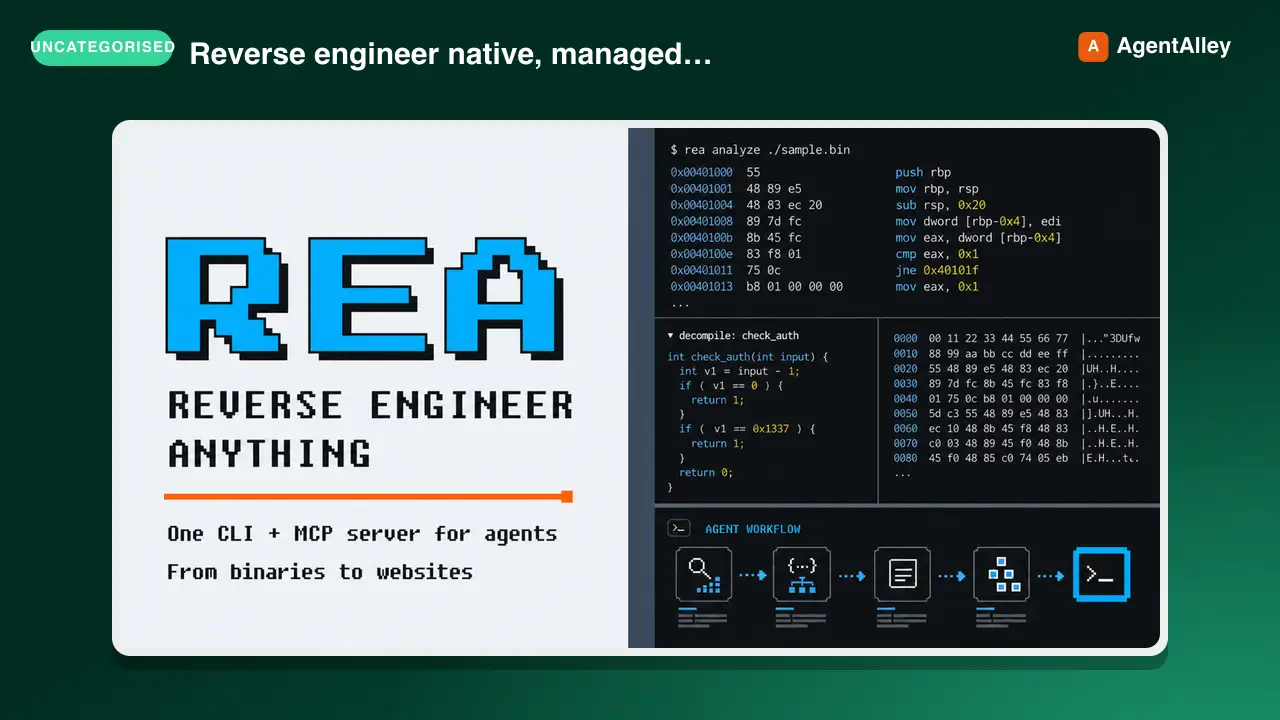 SkillCross-Platform Reverse Engineer
 morluto/rea · by morlutoReverse engineer native, managed, Electron/JavaScript, packaged, firmware, and browser targets with REA. Use shipped-artifact or requested runtime evidence to explain features, compare versions, decompile code, or guide a reconstruction. Skip REA for ordinary source-repository architecture analysis.★ 316k GitHub stars
 SkillBrainstorm Ideas
 obra/superpowers · by obraYou MUST use this before any creative work - creating features, building components, adding functionality, or modifying behavior. Explores user intent, requirements and design before implementation.★ 290k GitHub stars
 SkillCode Review Feedback Analyzerobra/superpowers · by obraUse when receiving code review feedback, before implementing suggestions, especially if feedback seems unclear or technically questionable - requires technical rigor and verification, not performative agreement or blind implementation★ 290k GitHub stars
 SkillBug Diagnosis Framework
 mattpocock/skills · by mattpocockDiagnosis loop for hard bugs and performance regressions. Use when the user says "diagnose"/"debug this", or reports something broken/throwing/failing/slow.★ 267k GitHub stars
 SkillImplement Specmattpocock/skills · by mattpocockImplement the result of /to-spec and /to-tickets in code.★ 267k GitHub stars
 SkillPR Description Writermattpocock/skills · by mattpocockUse when writing a PR body.★ 267k GitHub stars
More from coreyhaines31
 SkillLead Magnet Builder
 coreyhaines31/marketingskills · by coreyhaines31Tell us about your business and who you sell to, and get back a ready-to-launch free offer that turns website visitors into email signups and future customers.★ 51.1k GitHub stars
 SkillGrowth Experimentation Programcoreyhaines31/marketingskills · by coreyhaines31When the user wants to plan, design, or implement an A/B test or experiment, or build a growth experimentation program. Also use when the user mentions "A/B test," "split test," "experiment," "test this change," "variant copy," "multivariate test," "hypothesis," "should I test this," "which version is better," "test two versions," "statistical significance," "how long should I run this test," "growth experiments," "experiment velocity," "experiment backlog," "ICE score," "experimentation program," or "experiment playbook." Use this whenever someone is comparing two approaches and wants to measure which performs better, or when they want to build a systematic experimentation practice. For tracking implementation, see analytics. For page-level conversion optimization, see cro.★ 51.1k GitHub stars
 SkillAd Creative Generatorcoreyhaines31/marketingskills · by coreyhaines31When the user wants to generate, iterate, or scale ad creative — headlines, descriptions, primary text, or full ad variations — for any paid advertising platform. Also use when the user mentions 'ad copy variations,' 'ad creative,' 'generate headlines,' 'RSA headlines,' 'bulk ad copy,' 'ad iterations,' 'creative testing,' 'write me some ads,' 'Facebook ad copy,' 'Google ad headlines,' 'LinkedIn ad text,' 'static ads,' 'ad templates,' 'iMessage ad,' 'chat reveal ad,' 'ChatGPT ad,' 'Apple Notes ad,' 'AirDrop ad,' 'creative strategy,' 'creative roadmap,' 'creative retro,' 'hook writing,' 'creative review page,' 'present ad creative for approval,' 'motion video ad,' 'faceless video ad,' 'UGC ad,' 'greenscreen ad,' 'TikTok/Reels ad format,' 'which ad format to make,' 'Meta ad format tier list,' or 'creative format taxonomy.' Use this whenever someone needs to produce ad copy at scale or iterate on existing ads. For campaign strategy and targeting, see ads. For landing page copy, see copywriting.★ 51.1k GitHub stars
 SkillBusiness Idea Pressure Testcoreyhaines31/makerskills · by coreyhaines31When you want to pressure-test a potential new business, product, or side project against the serial-founder filter. Not "marketing ideas for a product" (that's marketing-skills:marketing-ideas) — this is "should this business exist + can you win it." Runs the idea through a structured framework (problem, audience, wedge, monetization, moat, portfolio fit, distribution, energy fit, opportunity cost), checks domain availability via /domain, optionally triggers /deep-research for market validation, and outputs a viability brief: build / sleep on it / pass. Archives every idea to ~/.config/makerskills/business-brainstorm/archive/ so past work is searchable. Triggers on "/business-brainstorm," "/brainstorm," "new business idea," "should I build X," "pressure test this idea," "validate this idea," "is X a good business," "what about a [type] for [audience]."★ 855 GitHub stars
 SkillTeam Knowledge Basecoreyhaines31/makerskills · by coreyhaines31Your team's shared, AI-ready knowledge base — people, companies, meetings, SOPs, and decisions structured so an agent can answer on your team's behalf. Team-scope sibling to second-brain. Modes — capture, compile (wiki pages + INDEX.md), query (trust-weighted, saved to outputs/), review (verify / deprecate / supersede stale captures), lint, connect, search. Structured raw dirs (people/, companies/, meetings/, sops/, decisions/, customer-language/, sales-objections/). Every capture stamps author, timestamp, and trust status. Optional sync from call transcripts, Slack/email exports, CRM. Vault at ${COMPANY_BRAIN_VAULT:-$HOME/Documents/CompanyBrain}/. Triggers on "/company-brain," "/cb," "capture this into the team brain," "log this meeting," "save this SOP," "compile the company wiki," "query the team brain," "what does the team know about X," "review the company brain," "lint the company brain," "who's the internal expert on X.★ 855 GitHub stars
 SkillMonthly Company CFOcoreyhaines31/makerskills · by coreyhaines31Monthly CFO workflow for a company or agency — pull raw data from bank + payment processor + payroll + expense management, categorize and reconcile, compute end-of-month cash via transaction-sum method, update a scenario projector for forward forecasting, write the monthly snapshot report, surface decisions to leadership. Modes — monthly (default; the standing report), weekly (thin cash pulse), scenario (ad-hoc modeling in the projector), pickup (resume where the prior run left off). Anonymized team-scope sibling to personal-cfo (which handles personal household finances). Composes with company-brain (report gets stored + wiki-indexed there), toolify (wire company-specific data sources), loopify (schedule the monthly + weekly runs). Triggers on "/company-cfo," "/cfo," "monthly cash report," "do the CFO snapshot," "CFO monthly," "let's run CFO," "cash projection," "runway forecast," "monthly financials," "cash pulse.★ 855 GitHub stars