Business Idea Pressure Test
/business-brainstorm — Pressure-test a business idea
When you want to pressure-test a potential new business, product, or side project against the serial-founder filter. Not "marketing ideas for a product" (that's marketing-skills:marketing-ideas) — this is "should this business exist +…
---
name: business-brainstorm
description: "When you want to pressure-test a potential new business, product, or side project against the serial-founder filter. Not \"marketing ideas for a product\" (that's marketing-skills:marketing-ideas) — this is \"should this business exist + can you win it.\" Runs the idea through a structured framework (problem, audience, wedge, monetization, moat, portfolio fit, distribution, energy fit, opportunity cost), checks domain availability via /domain, optionally triggers /deep-research for market validation, and outputs a viability brief: build / sleep on it / pass. Archives every idea to ~/.config/makerskills/business-brainstorm/archive/ so past work is searchable. Triggers on \"/business-brainstorm,\" \"/brainstorm,\" \"new business idea,\" \"should I build X,\" \"pressure test this idea,\" \"validate this idea,\" \"is X a good business,\" \"what about a [type] for [audience].\""
metadata:
  version: 0.2.1
---

# /business-brainstorm — Pressure-test a business idea

Takes a vague idea, runs it through the user's filter, and outputs a structured viability brief. Composes with `deep-research` (for market) and `/domain` (for naming).

## Step 1 — Capture the idea

Get from the user:
- The idea in 1–2 sentences (the *what*)
- The reason it's on their mind (the *why now*)
- Any starting context (a chat where this came up, a tweet that inspired it, a problem they've hit)
Overview
Takes a vague idea, runs it through the user's filter, and outputs a structured viability brief. Composes with deep-research (for market) and /domain (for naming).
Example prompts
/business-brainstorm — Pressure-test a business ideaManual install (npx, ZIP)
npx skills add coreyhaines31/makerskills --skill business-brainstorm -g -a claude-codenpx degit coreyhaines31/makerskills/skills/business-brainstorm#main ~/.claude/skills/business-brainstormConnects with Agent Alley MCP · agentalley.io/mcp
Files included
SKILL.md6.9 KB
Read SKILL.md here
Show the full text139 lines
/business-brainstorm — Pressure-test a business idea
Takes a vague idea, runs it through the user's filter, and outputs a structured viability brief. Composes with deep-research (for market) and /domain (for naming).
Step 1 — Capture the idea
Get from the user:
- The idea in 1–2 sentences (the what)
- The reason it's on their mind (the why now)
- Any starting context (a chat where this came up, a tweet that inspired it, a problem they've hit)
If they point at a past chat / doc, load it first. Memory has project_*.md files for in-flight projects — check there before assuming the idea is brand-new.
If the idea is too vague to score, ask 1–2 clarifying questions and stop. Don't pad the brief with assumptions.
Step 2 — Load the framework + personal overlay
Read references/framework.md — the user's filter. Apply each dimension in order.
Also try to load ${MAKERSKILLS_CONFIG:-$HOME/.config/makerskills}/business-brainstorm/portfolio.local.md if it exists — this is where the user lists their real in-flight businesses, properties, audiences, and partners. When present, use it for the "portfolio fit," "distribution," and "opportunity cost" dimensions instead of asking the user to name each one.
Step 3 — Score each dimension
For each of the 9 dimensions in framework.md, give a 1-line take + a verdict (✅ strong / 🟡 OK / ❌ weak / ❓ unknown — needs research).
Don't BS the unknowns. Mark them ❓ and route to deep-research in Step 4.
Step 4 — Trigger research where needed (optional)
If 2+ dimensions are ❓ unknown, offer the user: "Want me to run /deep-research on [topic] before scoring?"
Useful research targets:
- Market size / who pays signal →
last30daysskill (if installed) + web search - Competitive landscape → search for "alternatives to X", "X vs Y" pages
- ICP signal → forums / Reddit / X where the audience hangs out
- Pricing benchmarks → look at competitor pricing pages
If the user says yes, run the deep-research skill on the topic and incorporate the brief.
Step 5 — Check the .com
Always run /domain on the working name(s). A perfect idea with a $50k domain is a worse idea than a B+ idea with a free .com.
If naming is wide open, brainstorm 5–10 candidate names through /domain and report which are available.
Step 6 — Output the brief
Use this template:
# Business brainstorm: <name or idea slug>

**Date:** <YYYY-MM-DD>
**Idea:** <1–2 sentences>
**Why now:** <1 sentence>

## Verdict
**Build** / **Sleep on it** / **Pass** / **Steal an angle for [existing property]**

<2–3 sentence rationale>

## Score

| Dimension | Take | Verdict |
|---|---|---|
| 1. Problem | … | ✅ |
| 2. Audience | … | 🟡 |
| 3. Wedge | … | ❓ |
| 4. Monetization | … | ✅ |
| 5. Moat | … | ❌ |
| 6. Portfolio fit | … | ✅ |
| 7. Distribution | … | ✅ |
| 8. Energy fit | … | 🟡 |
| 9. Opportunity cost | … | ❌ |

## Domain
- <name>.com — available / taken / aftermarket $<price>
- (other candidates if relevant)

## Research applied
- <link to deep-research brief in ~/.config/makerskills/deep-research/archive/, if run>

## Open questions
- <what would change the verdict>

## If you build it (sketch)
- **First 100 customers:** <how>
- **Wedge offer:** <what>
- **Price:** <range>
- **MVP scope:** <1–3 features>

## If you don't build it
- **Angle to steal for existing properties:**
  - Property A: …
  - Property B: …
  - Property C: …
  - (etc., only where relevant)
Step 7 — Archive
Archives live in ${MAKERSKILLS_CONFIG:-$HOME/.config/makerskills}/business-brainstorm/archive/ (create the directory if missing). Never write archives inside the skill's own folder — skill installs and upgrades re-sync from source and wipe anything saved there. Migration: if this skill's folder contains an old references/ideas-archive/ with user entries, move those files into the archive directory first.
Write to <archive dir>/<YYYY-MM-DD>-<slug>.md. Append to <archive dir>/INDEX.md (create if missing):
- 2026-06-16 — [<idea>](./<filename>.md) — **<verdict>** — <one-line rationale>
Step 8 — Surface
Show the brief in chat. Tell the user the archive path. Offer:
- "Want to push to Notion as a positioning canvas?"
- "Want me to scaffold a project repo / landing page?" (if verdict = Build)
- "Want me to revisit in 30 days?" (if verdict = Sleep on it)
Composes with
deep-research— for market validation when dimensions are ❓/domain— for .com availability and naming brainstorm/last30days— for audience/market recency signal (via deep-research)- Memory (
project_*.md) — for portfolio context (don't pitch an idea that already exists)
Notes on quality
- Nine dimensions, not one hero metric. Ideas fail because one dimension quietly rots even when the rest score high. Force each dimension to be scored — no "we'll figure that out later" cop-outs.
- Verdict discipline: Ship / Sleep on it / Kill. Not "maybe." Ambiguity in the verdict compounds into ambiguity in the commit; the brief exists to prevent that.
- Portfolio-context check is non-negotiable. Before writing, grep memory + wiki for existing property overlap. If the new idea is 80% one of your existing properties, propose extending the existing property instead of forking a new one — 4x cheaper to compound.
- Archive every brief, even Kills. Killed ideas resurface — the brief with rationale prevents re-litigating. The archive dir + INDEX.md makes revisit trivial.
- "Angle to steal" section forces value from Kills. Even ideas you won't build often have an angle that improves an existing property. Don't skip this section — it's the highest-leverage output of a Kill verdict.
- 30-day revisit for "Sleep on it." Set the calendar reminder. Sleep-on-it ideas that never get revisited become dead weight in the archive; ideas that get revisited resurface with better context.
| 1 | |
| 2 | name business-brainstorm |
| 3 | description "When you want to pressure-test a potential new business, product, or side project against the serial-founder filter. Not \"marketing ideas for a product\" (that's marketing-skills:marketing-ideas) — this is \"should this business exist + can you win it.\" Runs the idea through a structured framework (problem, audience, wedge, monetization, moat, portfolio fit, distribution, energy fit, opportunity cost), checks domain availability via /domain, optionally triggers /deep-research for market validation, and outputs a viability brief: build / sleep on it / pass. Archives every idea to ~/.config/makerskills/business-brainstorm/archive/ so past work is searchable. Triggers on \"/business-brainstorm,\" \"/brainstorm,\" \"new business idea,\" \"should I build X,\" \"pressure test this idea,\" \"validate this idea,\" \"is X a good business,\" \"what about a [type] for [audience].\"" |
| 4 | metadata |
| 5 | version 0.2.1 |
| 6 | |
| 7 | |
| 8 | # /business-brainstorm — Pressure-test a business idea |
| 9 | |
| 10 | Takes a vague idea, runs it through the user's filter, and outputs a structured viability brief. Composes with `deep-research` (for market) and `/domain` (for naming). |
| 11 | |
| 12 | ## Step 1 — Capture the idea |
| 13 | |
| 14 | Get from the user: |
| 15 | The idea in 1–2 sentences (the *what*) |
| 16 | The reason it's on their mind (the *why now*) |
| 17 | Any starting context (a chat where this came up, a tweet that inspired it, a problem they've hit) |
| 18 | |
| 19 | If they point at a past chat / doc, load it first. Memory has `project_*.md` files for in-flight projects — check there before assuming the idea is brand-new. |
| 20 | |
| 21 | If the idea is too vague to score, ask 1–2 clarifying questions and stop. Don't pad the brief with assumptions. |
| 22 | |
| 23 | ## Step 2 — Load the framework + personal overlay |
| 24 | |
| 25 | Read `references/framework.md` — the user's filter. Apply each dimension in order. |
| 26 | |
| 27 | Also try to load `${MAKERSKILLS_CONFIG:-$HOME/.config/makerskills}/business-brainstorm/portfolio.local.md` if it exists — this is where the user lists their real in-flight businesses, properties, audiences, and partners. When present, use it for the "portfolio fit," "distribution," and "opportunity cost" dimensions instead of asking the user to name each one. |
| 28 | |
| 29 | ## Step 3 — Score each dimension |
| 30 | |
| 31 | For each of the 9 dimensions in `framework.md`, give a 1-line take + a verdict (✅ strong / 🟡 OK / ❌ weak / ❓ unknown — needs research). |
| 32 | |
| 33 | Don't BS the unknowns. Mark them ❓ and route to deep-research in Step 4. |
| 34 | |
| 35 | ## Step 4 — Trigger research where needed (optional) |
| 36 | |
| 37 | If 2+ dimensions are ❓ unknown, offer the user: *"Want me to run `/deep-research` on [topic] before scoring?"* |
| 38 | |
| 39 | Useful research targets: |
| 40 | Market size / who pays signal → `last30days` skill (if installed) + web search |
| 41 | Competitive landscape → search for "alternatives to X", "X vs Y" pages |
| 42 | ICP signal → forums / Reddit / X where the audience hangs out |
| 43 | Pricing benchmarks → look at competitor pricing pages |
| 44 | |
| 45 | If the user says yes, run the `deep-research` skill on the topic and incorporate the brief. |
| 46 | |
| 47 | ## Step 5 — Check the .com |
| 48 | |
| 49 | Always run `/domain` on the working name(s). A perfect idea with a $50k domain is a worse idea than a B+ idea with a free .com. |
| 50 | |
| 51 | If naming is wide open, brainstorm 5–10 candidate names through `/domain` and report which are available. |
| 52 | |
| 53 | ## Step 6 — Output the brief |
| 54 | |
| 55 | Use this template: |
| 56 | |
| 57 | |
| 58 | # Business brainstorm: <name or idea slug> |
| 59 | |
| 60 | **Date:** <YYYY-MM-DD> |
| 61 | **Idea:** <1–2 sentences> |
| 62 | **Why now:** <1 sentence> |
| 63 | |
| 64 | ## Verdict |
| 65 | **Build** / **Sleep on it** / **Pass** / **Steal an angle for [existing property]** |
| 66 | |
| 67 | <2–3 sentence rationale> |
| 68 | |
| 69 | ## Score |
| 70 | |
| 71 | | Dimension | Take | Verdict | |
| 72 | |---|---|---| |
| 73 | | 1. Problem | … | ✅ | |
| 74 | | 2. Audience | … | 🟡 | |
| 75 | | 3. Wedge | … | ❓ | |
| 76 | | 4. Monetization | … | ✅ | |
| 77 | | 5. Moat | … | ❌ | |
| 78 | | 6. Portfolio fit | … | ✅ | |
| 79 | | 7. Distribution | … | ✅ | |
| 80 | | 8. Energy fit | … | 🟡 | |
| 81 | | 9. Opportunity cost | … | ❌ | |
| 82 | |
| 83 | ## Domain |
| 84 | - <name>.com — available / taken / aftermarket $<price> |
| 85 | - (other candidates if relevant) |
| 86 | |
| 87 | ## Research applied |
| 88 | - <link to deep-research brief in ~/.config/makerskills/deep-research/archive/, if run> |
| 89 | |
| 90 | ## Open questions |
| 91 | - <what would change the verdict> |
| 92 | |
| 93 | ## If you build it (sketch) |
| 94 | - **First 100 customers:** <how> |
| 95 | - **Wedge offer:** <what> |
| 96 | - **Price:** <range> |
| 97 | - **MVP scope:** <1–3 features> |
| 98 | |
| 99 | ## If you don't build it |
| 100 | - **Angle to steal for existing properties:** |
| 101 | - Property A: … |
| 102 | - Property B: … |
| 103 | - Property C: … |
| 104 | - (etc., only where relevant) |
| 105 | |
| 106 | |
| 107 | ## Step 7 — Archive |
| 108 | |
| 109 | Archives live in `${MAKERSKILLS_CONFIG:-$HOME/.config/makerskills}/business-brainstorm/archive/` (create the directory if missing). Never write archives inside the skill's own folder — skill installs and upgrades re-sync from source and wipe anything saved there. **Migration:** if this skill's folder contains an old `references/ideas-archive/` with user entries, move those files into the archive directory first. |
| 110 | |
| 111 | Write to `<archive dir>/<YYYY-MM-DD>-<slug>.md`. Append to `<archive dir>/INDEX.md` (create if missing): |
| 112 | |
| 113 | |
| 114 | - 2026-06-16 — [<idea>](./<filename>.md) — **<verdict>** — <one-line rationale> |
| 115 | |
| 116 | |
| 117 | ## Step 8 — Surface |
| 118 | |
| 119 | Show the brief in chat. Tell the user the archive path. Offer: |
| 120 | *"Want to push to Notion as a positioning canvas?"* |
| 121 | *"Want me to scaffold a project repo / landing page?"* (if verdict = Build) |
| 122 | *"Want me to revisit in 30 days?"* (if verdict = Sleep on it) |
| 123 | |
| 124 | ## Composes with |
| 125 | |
| 126 | `deep-research` — for market validation when dimensions are ❓ |
| 127 | `/domain` — for .com availability and naming brainstorm |
| 128 | `/last30days` — for audience/market recency signal (via deep-research) |
| 129 | Memory (`project_*.md`) — for portfolio context (don't pitch an idea that already exists) |
| 130 | |
| 131 | ## Notes on quality |
| 132 | |
| 133 | **Nine dimensions, not one hero metric.** Ideas fail because one dimension quietly rots even when the rest score high. Force each dimension to be scored — no "we'll figure that out later" cop-outs. |
| 134 | **Verdict discipline: Ship / Sleep on it / Kill.** Not "maybe." Ambiguity in the verdict compounds into ambiguity in the commit; the brief exists to prevent that. |
| 135 | **Portfolio-context check is non-negotiable.** Before writing, grep memory + wiki for existing property overlap. If the new idea is 80% one of your existing properties, propose extending the existing property instead of forking a new one — 4x cheaper to compound. |
| 136 | **Archive every brief, even Kills.** Killed ideas resurface — the brief with rationale prevents re-litigating. The archive dir + INDEX.md makes revisit trivial. |
| 137 | **"Angle to steal" section forces value from Kills.** Even ideas you won't build often have an angle that improves an existing property. Don't skip this section — it's the highest-leverage output of a Kill verdict. |
| 138 | **30-day revisit for "Sleep on it."** Set the calendar reminder. Sleep-on-it ideas that never get revisited become dead weight in the archive; ideas that get revisited resurface with better context. |
| 139 |
Details
- License
- MIT
- Stars on the repo
- ★ 855
- Checked
- Source
- coreyhaines31/makerskills ↗
- Creator
- coreyhaines31 · 62 listings
Similar skills
See all →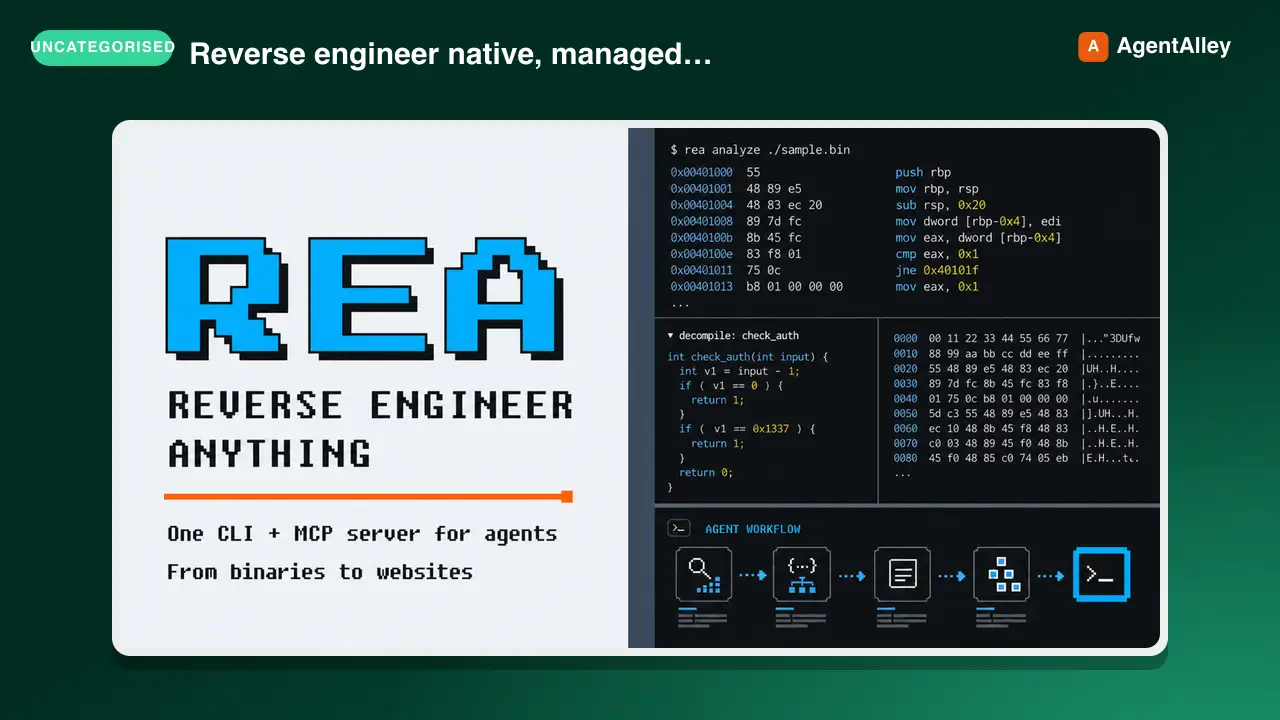 SkillCross-Platform Reverse Engineer
 morluto/rea · by morlutoReverse engineer native, managed, Electron/JavaScript, packaged, firmware, and browser targets with REA. Use shipped-artifact or requested runtime evidence to explain features, compare versions, decompile code, or guide a reconstruction. Skip REA for ordinary source-repository architecture analysis.★ 316k GitHub stars
 SkillBrainstorm Ideas
 obra/superpowers · by obraYou MUST use this before any creative work - creating features, building components, adding functionality, or modifying behavior. Explores user intent, requirements and design before implementation.★ 290k GitHub stars
 SkillCode Review Feedback Analyzerobra/superpowers · by obraUse when receiving code review feedback, before implementing suggestions, especially if feedback seems unclear or technically questionable - requires technical rigor and verification, not performative agreement or blind implementation★ 290k GitHub stars
 SkillBug Diagnosis Framework
 mattpocock/skills · by mattpocockDiagnosis loop for hard bugs and performance regressions. Use when the user says "diagnose"/"debug this", or reports something broken/throwing/failing/slow.★ 267k GitHub stars
 SkillImplement Specmattpocock/skills · by mattpocockImplement the result of /to-spec and /to-tickets in code.★ 267k GitHub stars
 SkillPR Description Writermattpocock/skills · by mattpocockUse when writing a PR body.★ 267k GitHub stars
More from coreyhaines31
 SkillLead Magnet Builder
 coreyhaines31/marketingskills · by coreyhaines31Tell us about your business and who you sell to, and get back a ready-to-launch free offer that turns website visitors into email signups and future customers.★ 51.1k GitHub stars
 SkillGrowth Experimentation Programcoreyhaines31/marketingskills · by coreyhaines31When the user wants to plan, design, or implement an A/B test or experiment, or build a growth experimentation program. Also use when the user mentions "A/B test," "split test," "experiment," "test this change," "variant copy," "multivariate test," "hypothesis," "should I test this," "which version is better," "test two versions," "statistical significance," "how long should I run this test," "growth experiments," "experiment velocity," "experiment backlog," "ICE score," "experimentation program," or "experiment playbook." Use this whenever someone is comparing two approaches and wants to measure which performs better, or when they want to build a systematic experimentation practice. For tracking implementation, see analytics. For page-level conversion optimization, see cro.★ 51.1k GitHub stars
 SkillAd Creative Generatorcoreyhaines31/marketingskills · by coreyhaines31When the user wants to generate, iterate, or scale ad creative — headlines, descriptions, primary text, or full ad variations — for any paid advertising platform. Also use when the user mentions 'ad copy variations,' 'ad creative,' 'generate headlines,' 'RSA headlines,' 'bulk ad copy,' 'ad iterations,' 'creative testing,' 'write me some ads,' 'Facebook ad copy,' 'Google ad headlines,' 'LinkedIn ad text,' 'static ads,' 'ad templates,' 'iMessage ad,' 'chat reveal ad,' 'ChatGPT ad,' 'Apple Notes ad,' 'AirDrop ad,' 'creative strategy,' 'creative roadmap,' 'creative retro,' 'hook writing,' 'creative review page,' 'present ad creative for approval,' 'motion video ad,' 'faceless video ad,' 'UGC ad,' 'greenscreen ad,' 'TikTok/Reels ad format,' 'which ad format to make,' 'Meta ad format tier list,' or 'creative format taxonomy.' Use this whenever someone needs to produce ad copy at scale or iterate on existing ads. For campaign strategy and targeting, see ads. For landing page copy, see copywriting.★ 51.1k GitHub stars
 SkillTeam Knowledge Basecoreyhaines31/makerskills · by coreyhaines31Your team's shared, AI-ready knowledge base — people, companies, meetings, SOPs, and decisions structured so an agent can answer on your team's behalf. Team-scope sibling to second-brain. Modes — capture, compile (wiki pages + INDEX.md), query (trust-weighted, saved to outputs/), review (verify / deprecate / supersede stale captures), lint, connect, search. Structured raw dirs (people/, companies/, meetings/, sops/, decisions/, customer-language/, sales-objections/). Every capture stamps author, timestamp, and trust status. Optional sync from call transcripts, Slack/email exports, CRM. Vault at ${COMPANY_BRAIN_VAULT:-$HOME/Documents/CompanyBrain}/. Triggers on "/company-brain," "/cb," "capture this into the team brain," "log this meeting," "save this SOP," "compile the company wiki," "query the team brain," "what does the team know about X," "review the company brain," "lint the company brain," "who's the internal expert on X.★ 855 GitHub stars
 SkillMonthly Company CFOcoreyhaines31/makerskills · by coreyhaines31Monthly CFO workflow for a company or agency — pull raw data from bank + payment processor + payroll + expense management, categorize and reconcile, compute end-of-month cash via transaction-sum method, update a scenario projector for forward forecasting, write the monthly snapshot report, surface decisions to leadership. Modes — monthly (default; the standing report), weekly (thin cash pulse), scenario (ad-hoc modeling in the projector), pickup (resume where the prior run left off). Anonymized team-scope sibling to personal-cfo (which handles personal household finances). Composes with company-brain (report gets stored + wiki-indexed there), toolify (wire company-specific data sources), loopify (schedule the monthly + weekly runs). Triggers on "/company-cfo," "/cfo," "monthly cash report," "do the CFO snapshot," "CFO monthly," "let's run CFO," "cash projection," "runway forecast," "monthly financials," "cash pulse.★ 855 GitHub stars
 SkillAI Search Content Optimizercoreyhaines31/marketingskills · by coreyhaines31When the user wants to optimize content for AI search engines, get cited by LLMs, or appear in AI-generated answers. Also use when the user mentions 'AI SEO,' 'AEO,' 'GEO,' 'LLMO,' 'answer engine optimization,' 'generative engine optimization,' 'LLM optimizati★ 51.1k GitHub stars