Company Lookalike Finder
Lookalike accounts
Lookalike company API skill for Claude Code and Codex: find companies that resemble a seed account by reconstructing its firmographic, technographic, and industry profile, then surfacing similar companies from Explorium's 150M+ business…
---
name: lookalike-accounts
description: "Lookalike company API skill for Claude Code and Codex: find companies that resemble a seed account by reconstructing its firmographic, technographic, and industry profile, then surfacing similar companies from Explorium's 150M+ business dataset. Use for territory expansion, TAM analysis, competitive mapping, account list extension, and finding audience twins. Triggers on 'find companies like', 'lookalike accounts', 'similar companies to', 'expand my territory', 'audience twins'. Works in Claude Code, Codex, and Hermes-Agent."
---

# Lookalike Accounts

Reconstruct the profile of one seed company, then surface other companies that share its industry, size, region, and tech stack.

## Input

The user supplies via `$ARGUMENTS`:
- A seed company name or domain (required).
- Optional: how many lookalikes to return (default 25, ceiling 100).
- Optional overrides: country focus (country codes or grouped regions, pick one), size or revenue bucket, public-only flag, additional named tech stack components.

If the user gives only a person or asks for similar contacts, redirect them to a prospecting flow. This skill returns accounts.
Overview
Reconstruct the profile of one seed company, then surface other companies that share its industry, size, region, and tech stack.
Manual install (npx, ZIP)
npx skills add explorium-ai/gtm-skills --skill lookalike-accounts -g -a claude-codenpx degit explorium-ai/gtm-skills/skills/lookalike-accounts#main ~/.claude/skills/lookalike-accountsConnects with Agent Alley MCP · agentalley.io/mcp
Files included
SKILL.md5.9 KB
Read SKILL.md here
Show the full text69 lines
Lookalike Accounts
Reconstruct the profile of one seed company, then surface other companies that share its industry, size, region, and tech stack.
Input
The user supplies via $ARGUMENTS:
- A seed company name or domain (required).
- Optional: how many lookalikes to return (default 25, ceiling 100).
- Optional overrides: country focus (country codes or grouped regions, pick one), size or revenue bucket, public-only flag, additional named tech stack components.
If the user gives only a person or asks for similar contacts, redirect them to a prospecting flow. This skill returns accounts.
Workflow
Resolve the seed. Match the supplied name or domain. If multiple candidates return, pick the highest-confidence match whose domain aligns with the user input and confirm the chosen company back in the final output. If nothing resolves, stop and ask for a clearer identifier (domain preferred).
Domain-variant sanity check. After firmographics land, if a major-brand input resolves to a row with headcount 1-50 and NAICS
551114(Corporate Managing Offices) or SICHotels and motels, the match likely routed to a registered-agent shell. Re-try with the alternate domain or with the company name string. A broken seed produces garbage lookalikes.Reconstruct the seed profile. Enrich firmographics and technographics on the seed. Extract:
- Industry category (LinkedIn or NAICS, whichever is populated; the two are mutually exclusive as filters).
- Headcount bucket and revenue bucket.
- Country code (or regional grouping if the seed is multinational and the user asked for regional scope).
- Top 3-5 tech stack values, biased toward category-defining tools (CRM, MAP, data warehouse, primary cloud) over ubiquitous infrastructure (Analytics, jQuery). Skip any field that comes back empty: never fabricate a value.
Discover canonical values for the reconstructed industry and each tech token. Drop any value that does not resolve cleanly. Bucket enums and country codes do not need discovery.
Apply user overrides. If the user specified country, size, revenue, public-only, or extra tech filters, replace or extend the reconstructed values with the overrides. Honor the mutual exclusivity rule between LinkedIn and NAICS industry, and between country code and grouped region.
Size the candidate pool. Get a total count for the assembled filters. If below the requested return size, relax the most restrictive filter first: drop the 5th tech, then 4th, then 3rd, then collapse the headcount bucket to an adjacent one. Re-size after each step. If the count exceeds 5,000, tighten by adding back a tech filter or narrowing region. Report the final candidate count in the output.
Fetch lookalikes. Sample the validated filter set to surface candidates, then export the user-requested count via the paid export path for the full materialized list. Exclude the seed before display.
Output Format
Header
Lookalikes for [Seed Company Name] ([seed domain]) Reconstructed profile: [industry] | [headcount bucket] | [revenue bucket] | [country or region] | Tech: [comma-separated tech list]. Candidate pool: [N] companies matching this profile. Returning top [requested count].
Results Table
| Rank | Company | Domain | Industry | Employees | Revenue | Country |
|---|
Show the user-requested count (default 25, cap 100). Always exclude the seed.
Pattern Notes
2-4 bullets covering dominant geography, size concentration, tech-overlap density (tech filters are not fully populated on every row), and any adjacency the filter set introduced (e.g. "industry widened because LinkedIn category was empty on seed").
Suggested Next Steps
Pull contacts at any of these accounts via the list-builder flow scoped by the businesses table; deepen one row with the enrich-company flow; watch the list for growth events on the reconstructed cohort.
Limitations
- No native similarity model. There is no lookalike API or ML similarity score. This skill approximates similarity by reconstructing the seed's firmographics, technographics, and industry, then doing a filtered company fetch on those reconstructed attributes. The native flow is match-seed, enrich attributes, then re-fetch with attributes. Results are ranked by default fetch order, NOT by a true similarity score.
- No similarity ranking column. No per-row similarity score is computed: rank reflects fetch order.
- Industry classification gaps. If neither LinkedIn nor NAICS category is populated, the skill falls back to size + region + tech, producing a looser approximation. Flag this in the output.
- Tech stack coverage is partial. Tech tokens are not exhaustively populated, so filtering on multiple values can collapse the candidate pool faster than expected. The relaxation logic in step 6 handles this.
- Bucketed size and revenue. A seed at the high edge of one bucket and a candidate at the low edge of the next can look further apart than they are.
- Region taxonomy is country-level. No metro or sub-country scope.
- High-profile execs at these accounts often have suppressed contact data: if the user pivots to "who runs these", recommend LinkedIn outreach for top execs.
- No contact-level lookalikes. This skill returns accounts only.
| 1 | |
| 2 | name lookalike-accounts |
| 3 | description "Lookalike company API skill for Claude Code and Codex: find companies that resemble a seed account by reconstructing its firmographic, technographic, and industry profile, then surfacing similar companies from Explorium's 150M+ business dataset. Use for territory expansion, TAM analysis, competitive mapping, account list extension, and finding audience twins. Triggers on 'find companies like', 'lookalike accounts', 'similar companies to', 'expand my territory', 'audience twins'. Works in Claude Code, Codex, and Hermes-Agent." |
| 4 | |
| 5 | |
| 6 | # Lookalike Accounts |
| 7 | |
| 8 | Reconstruct the profile of one seed company, then surface other companies that share its industry, size, region, and tech stack. |
| 9 | |
| 10 | ## Input |
| 11 | |
| 12 | The user supplies via `$ARGUMENTS`: |
| 13 | A seed company name or domain (required). |
| 14 | Optional: how many lookalikes to return (default 25, ceiling 100). |
| 15 | Optional overrides: country focus (country codes or grouped regions, pick one), size or revenue bucket, public-only flag, additional named tech stack components. |
| 16 | |
| 17 | If the user gives only a person or asks for similar contacts, redirect them to a prospecting flow. This skill returns accounts. |
| 18 | |
| 19 | ## Workflow |
| 20 | |
| 21 | **Resolve the seed.** Match the supplied name or domain. If multiple candidates return, pick the highest-confidence match whose domain aligns with the user input and confirm the chosen company back in the final output. If nothing resolves, stop and ask for a clearer identifier (domain preferred). |
| 22 | |
| 23 | **Domain-variant sanity check.** After firmographics land, if a major-brand input resolves to a row with headcount 1-50 and NAICS `551114` (Corporate Managing Offices) or SIC `Hotels and motels`, the match likely routed to a registered-agent shell. Re-try with the alternate domain or with the company name string. A broken seed produces garbage lookalikes. |
| 24 | |
| 25 | **Reconstruct the seed profile.** Enrich firmographics and technographics on the seed. Extract: |
| 26 | Industry category (LinkedIn or NAICS, whichever is populated; the two are mutually exclusive as filters). |
| 27 | Headcount bucket and revenue bucket. |
| 28 | Country code (or regional grouping if the seed is multinational and the user asked for regional scope). |
| 29 | Top 3-5 tech stack values, biased toward category-defining tools (CRM, MAP, data warehouse, primary cloud) over ubiquitous infrastructure (Analytics, jQuery). |
| 30 | Skip any field that comes back empty: never fabricate a value. |
| 31 | |
| 32 | **Discover canonical values** for the reconstructed industry and each tech token. Drop any value that does not resolve cleanly. Bucket enums and country codes do not need discovery. |
| 33 | |
| 34 | **Apply user overrides.** If the user specified country, size, revenue, public-only, or extra tech filters, replace or extend the reconstructed values with the overrides. Honor the mutual exclusivity rule between LinkedIn and NAICS industry, and between country code and grouped region. |
| 35 | |
| 36 | **Size the candidate pool.** Get a total count for the assembled filters. If below the requested return size, relax the most restrictive filter first: drop the 5th tech, then 4th, then 3rd, then collapse the headcount bucket to an adjacent one. Re-size after each step. If the count exceeds 5,000, tighten by adding back a tech filter or narrowing region. Report the final candidate count in the output. |
| 37 | |
| 38 | **Fetch lookalikes.** Sample the validated filter set to surface candidates, then export the user-requested count via the paid export path for the full materialized list. Exclude the seed before display. |
| 39 | |
| 40 | ## Output Format |
| 41 | |
| 42 | ### Header |
| 43 | **Lookalikes for [Seed Company Name] ([seed domain])** |
| 44 | Reconstructed profile: [industry] | [headcount bucket] | [revenue bucket] | [country or region] | Tech: [comma-separated tech list]. |
| 45 | Candidate pool: [N] companies matching this profile. Returning top [requested count]. |
| 46 | |
| 47 | ### Results Table |
| 48 | | Rank | Company | Domain | Industry | Employees | Revenue | Country | |
| 49 | |------|---------|--------|----------|-----------|---------|---------| |
| 50 | |
| 51 | Show the user-requested count (default 25, cap 100). Always exclude the seed. |
| 52 | |
| 53 | ### Pattern Notes |
| 54 | 2-4 bullets covering dominant geography, size concentration, tech-overlap density (tech filters are not fully populated on every row), and any adjacency the filter set introduced (e.g. "industry widened because LinkedIn category was empty on seed"). |
| 55 | |
| 56 | ### Suggested Next Steps |
| 57 | Pull contacts at any of these accounts via the list-builder flow scoped by the businesses table; deepen one row with the enrich-company flow; watch the list for growth events on the reconstructed cohort. |
| 58 | |
| 59 | ## Limitations |
| 60 | |
| 61 | **No native similarity model.** There is no lookalike API or ML similarity score. This skill approximates similarity by reconstructing the seed's firmographics, technographics, and industry, then doing a filtered company fetch on those reconstructed attributes. The native flow is match-seed, enrich attributes, then re-fetch with attributes. Results are ranked by default fetch order, NOT by a true similarity score. |
| 62 | **No similarity ranking column.** No per-row similarity score is computed: rank reflects fetch order. |
| 63 | **Industry classification gaps.** If neither LinkedIn nor NAICS category is populated, the skill falls back to size + region + tech, producing a looser approximation. Flag this in the output. |
| 64 | **Tech stack coverage is partial.** Tech tokens are not exhaustively populated, so filtering on multiple values can collapse the candidate pool faster than expected. The relaxation logic in step 6 handles this. |
| 65 | **Bucketed size and revenue.** A seed at the high edge of one bucket and a candidate at the low edge of the next can look further apart than they are. |
| 66 | **Region taxonomy is country-level.** No metro or sub-country scope. |
| 67 | **High-profile execs at these accounts** often have suppressed contact data: if the user pivots to "who runs these", recommend LinkedIn outreach for top execs. |
| 68 | **No contact-level lookalikes.** This skill returns accounts only. |
| 69 |
Details
- License
- MIT
- Stars on the repo
- ★ 197
- Checked
- Source
- explorium-ai/gtm-skills ↗
- Creator
- explorium-ai · 17 listings
Similar skills
See all →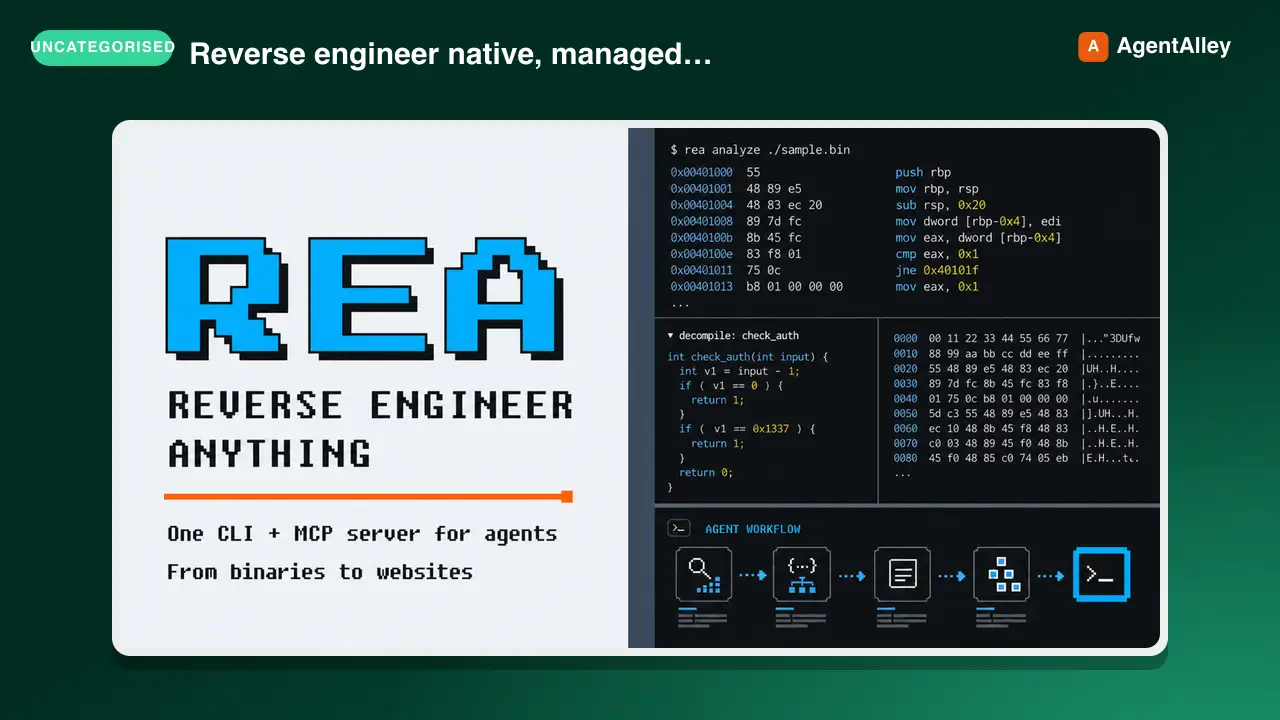 SkillCross-Platform Reverse Engineer
 morluto/rea · by morlutoReverse engineer native, managed, Electron/JavaScript, packaged, firmware, and browser targets with REA. Use shipped-artifact or requested runtime evidence to explain features, compare versions, decompile code, or guide a reconstruction. Skip REA for ordinary source-repository architecture analysis.★ 316k GitHub stars
 SkillBrainstorm Ideas
 obra/superpowers · by obraYou MUST use this before any creative work - creating features, building components, adding functionality, or modifying behavior. Explores user intent, requirements and design before implementation.★ 290k GitHub stars
 SkillCode Review Feedback Analyzerobra/superpowers · by obraUse when receiving code review feedback, before implementing suggestions, especially if feedback seems unclear or technically questionable - requires technical rigor and verification, not performative agreement or blind implementation★ 290k GitHub stars
 SkillBug Diagnosis Framework
 mattpocock/skills · by mattpocockDiagnosis loop for hard bugs and performance regressions. Use when the user says "diagnose"/"debug this", or reports something broken/throwing/failing/slow.★ 267k GitHub stars
 SkillImplement Specmattpocock/skills · by mattpocockImplement the result of /to-spec and /to-tickets in code.★ 267k GitHub stars
 SkillPR Description Writermattpocock/skills · by mattpocockUse when writing a PR body.★ 267k GitHub stars
More from explorium-ai
 SkillABM Campaign Playbook
 explorium-ai/gtm-skills · by explorium-aiABM campaign skill for Claude Code: run a full Account-Based Marketing campaign end-to-end — from ICP definition to live LinkedIn Ads. Builds targeted account lists with Vibe Prospecting, enriches and scores companies with real-time B2B data, generates personalized ad creatives with Claude Code and Figma, pushes matched audiences to LinkedIn Ads, and monitors campaigns daily at scale. The complete GTM skill for AI-driven account-based marketing in Claude Code, Codex, Hermes-Agent, and OpenClaw. No agency needed.★ 197 GitHub stars
 SkillDecision-Maker Shortlistexplorium-ai/gtm-skills · by explorium-aiContact data skill for Claude Code and Codex: build a ranked shortlist of decision-makers and contacts at a target company for outbound prospecting, deal acceleration, or renewal/expansion plays. Returns verified contact data including email, phone, LinkedIn profile, title, seniority, and department. Provide a company name or domain plus optional seniority focus or use case. Use for contact data enrichment, LinkedIn profile lookup, and building outbound contact lists. Works in Claude Code, Codex, Hermes-Agent, and OpenClaw.★ 197 GitHub stars
 SkillAccount Fit Scorerexplorium-ai/gtm-skills · by explorium-aiLead scoring and buying signals skill for Claude Code and Codex: rank a list of accounts by ICP fit, buying intent, real-time trigger events, and workforce momentum. Returns composite score (0-100), tier (A/B/C), and a 'why now' signal per account. Use for account-based selling, ABM list prioritization, territory planning, signal-based selling, and buyer-intent ranking. Triggers on 'score these accounts', 'rank by ICP fit and intent', 'prioritize this account list', 'which accounts have the strongest buying signals', 'ICP scoring', 'account prioritization'. Works in Claude Code, Codex, Hermes-Agent, OpenClaw, and Claude Cowork.★ 197 GitHub stars
 SkillCompany Intelligence Briefexplorium-ai/gtm-skills · by explorium-aiAccount research skill for Claude Code and Codex: generate a high-signal company intelligence brief including firmographics, technographics, funding history, hiring signals, business events, recent website and LinkedIn moves, and a peer cohort. Identify the account by business_id, company name, or domain. Use for pre-call research, QBR prep, competitive analysis, cold outbound targeting, and renewal risk assessment. The go-to account research skill for Claude Code, Codex, Hermes-Agent, and OpenClaw.★ 197 GitHub stars
 SkillB2B Data Cleanerexplorium-ai/gtm-skills · by explorium-aiData cleaning, entity matching, and deduplication skill for Claude Code and Codex: triage, standardize, and validate a CSV, Excel, or JSON list of B2B companies or contacts before enrichment. Normalizes company names and domains, validates emails and phone numbers, matches and deduplicates records, and tags invalid rows non-destructively. Run before enrichment or CRM import to avoid paying for noisy records. Use for CRM enrichment prep, company name and website matching, entity matching, and contact deduplication. Works in Claude Code, Codex, and n8n via MCP.★ 197 GitHub stars
 SkillVibe-Lemlist Outreachexplorium-ai/gtm-skills · by explorium-aiCold email skill for Claude Code and Codex: build a targeted B2B prospect list with Vibe Prospecting, enrich it with firmographics and verified work emails, write a personalized icebreaker and email per prospect from their real company data, and push every lead into a live Lemlist campaign with personalization variables pre-filled. Use for cold outbound, email personalization at scale, and Lemlist campaign setup. Triggers on 'cold email campaign', 'push leads to Lemlist', 'write personalized outbound emails', 'build a Lemlist sequence'. Works in Claude Code, Codex, Grok, and Claude Cowork.★ 197 GitHub stars