LinkedIn AI Detection Guide
Linkedin rules explainer
The educational backbone for the humanizer package.
# LinkedIn Rules Explainer

The educational backbone for the humanizer package. Every rule in `linkedin-humanizer` came from somewhere — Wikipedia's "Signs of AI writing" taxonomy, OriginalityAI's heuristics, GPTZero's stylometry, or 2026 LinkedIn-specific patterns. Some are real forensics (a `[oaicite:0]` marker is undefendable). Some are corporate-speak bans the user wants out for taste reasons. Some are aesthetic overreach — patterns Lincoln, Dickinson, and Didion built careers on, now flagged because GPT-4 happens to use them too.

This skill answers a simple question: **for any given rule, is the AI-tell verdict forensic, strict, or aesthetic — and how strong is the defense?**

## When to use

- Defending a stylistic choice that a detector flagged ("but Emily Dickinson uses em dashes")
- Arguing the controversial post about AI-rule overreach
- Auditing humanizer output before applying a rewrite
- Teaching a team which rules are real signals vs which are taste calls
- Reviewing a false positive from OriginalityAI / GPTZero / Pangram

## Input

Either:
- A specific rule name ("em dashes", "rule of three", "robust")
Overview
The educational backbone for the humanizer package. Every rule in linkedin-humanizer came from somewhere — Wikipedia's "Signs of AI writing" taxonomy, OriginalityAI's heuristics, GPTZero's stylometry, or 2026 LinkedIn-specific patterns. Some are real forensics (a [oaicite:0] marker is undefendable). Some are corporate-speak bans the user wants out for taste reasons. Some are aesthetic overreach — patterns Lincoln, Dickinson, and Didion built careers on, now flagged because GPT-4 happens to use them too.
What you get
- The rule(what gets flagged)
- Tier(forensic / strict / aesthetic)
- One-line summary(why it's flagged)
- Famous human writerwho uses this pattern (with example)
- Defense strength(low / medium / high)
- Citation(when available)
Manual install (npx, ZIP)
npx skills add sergebulaev/linkedin-skills --skill linkedin-rules-explainer -g -a claude-codeConnects with Agent Alley MCP · agentalley.io/mcp
Files included
rules-explainer.md5.2 KB
Read rules-explainer.md here
sergebulaev/
Show the full text85 lines
LinkedIn Rules Explainer
The educational backbone for the humanizer package. Every rule in linkedin-humanizer came from somewhere — Wikipedia's "Signs of AI writing" taxonomy, OriginalityAI's heuristics, GPTZero's stylometry, or 2026 LinkedIn-specific patterns. Some are real forensics (a [oaicite:0] marker is undefendable). Some are corporate-speak bans the user wants out for taste reasons. Some are aesthetic overreach — patterns Lincoln, Dickinson, and Didion built careers on, now flagged because GPT-4 happens to use them too.
This skill answers a simple question: for any given rule, is the AI-tell verdict forensic, strict, or aesthetic — and how strong is the defense?
When to use
- Defending a stylistic choice that a detector flagged ("but Emily Dickinson uses em dashes")
- Arguing the controversial post about AI-rule overreach
- Auditing humanizer output before applying a rewrite
- Teaching a team which rules are real signals vs which are taste calls
- Reviewing a false positive from OriginalityAI / GPTZero / Pangram
Input
Either:
- A specific rule name ("em dashes", "rule of three", "robust")
- A flagged passage from a detector
- A request to walk the full taxonomy
Output
For each rule:
- The rule (what gets flagged)
- Tier (forensic / strict / aesthetic)
- One-line summary (why it's flagged)
- Famous human writer who uses this pattern (with example)
- Defense strength (low / medium / high)
- Citation (when available)
The three tiers
Forensic — real AI signals, undefendable
These are leakage from the model itself or the prompt template. No human writer ever produces them by accident. If the humanizer flags one, accept the rewrite.
Examples: oaicite markers, contentReference tokens, turn0search0 artifacts, knowledge-cutoff disclaimers ("As of my last update January 2022..."), Mad-Libs blanks, phrasal templates with literal [Your Name] placeholders.
Defense strength: zero. Citation: Wikipedia "Signs of AI writing".
Strict — corporate-speak, easy to ban for taste
These are real human patterns, but they're patterns the user explicitly wants out. The rule isn't "this proves AI wrote it" — it's "I find this voice cheap and want it gone." Defending these is possible but pointless inside a brand voice that has already rejected them.
Examples: leverage / utilize / harness / delve / foster / cultivate, filler adverbs (fundamentally, essentially, ultimately), filler openers ("In today's fast-paced world"), cliché closers ("What do you think?"), negative parallelism ("X isn't Y, it's Z").
Defense strength: medium (someone could defend "leverage" as 1980s management vocabulary). Brand-voice strength: zero — the user banned them.
Aesthetic — overreach, defendable
These are patterns flagged because LLMs happen to use them, not because they signal AI. Famous human writers built careers on them. Detectors over-fire on these and produce false positives — see Stanford HAI / Liang et al. (2023) showing detectors are biased against non-native English writers, and the Adelphi University lawsuit over an AI false-positive accusation.
Examples: a single em dash (Emily Dickinson, Cormac McCarthy), the rule of three (Lincoln, Caesar, Churchill), passive voice (Watson & Crick, Joan Didion, all scientific writing), the word "robust" (a century of epidemiology and engineering papers), curly quotes (automatic in Word/Pages, New Yorker house style since 1925).
Defense strength: high. These are the rules Sergey's controversial post is built on.
Non-negotiable rules
- Don't conflate tiers. A
[oaicite]marker and a single em dash are not the same kind of evidence. - When defending, name the writer and give the example. "Lincoln" is weaker than "Lincoln, Gettysburg Address, 1863: 'of the people, by the people, for the people'."
- Cite when available. Stanford HAI and the OpenAI classifier shutdown are the strongest external receipts.
- Don't defend a rule the user has personally banned (em dashes in his own voice, even though Dickinson used them). Brand voice overrides aesthetic defense.
Example
Input: "OriginalityAI flagged my post for using 'robust' — should I rewrite?"
Output: Tier: aesthetic. The word "robust" has been used by epidemiologists, engineers, and statisticians for over a century — it has a precise meaning ("insensitive to assumption violations") that no synonym carries. OriginalityAI flags it because GPT-4 over-uses it, not because it signals AI. Defense strength: high.
Recommendation: keep "robust" if you're describing a statistical model, a system architecture, or an immune response. Rewrite to "solid" only if you're using it as generic praise — that's the corporate-speak overuse the humanizer is actually targeting.
Citation: Wikipedia "Signs of AI writing" lists "robust" under AI vocabulary; Stanford HAI shows detectors over-fire on technical English.
Files
../references/rules-explainer.md— full table of all 15 rules organized by tier, with famous-writer examples and citations
Related skills
linkedin-humanizer— applies the rules (this skill explains them)post-audit.md(sibling) — flags rules in a draftdetector-tester.md(sibling) — runs OriginalityAI / GPTZero / Pangram against drafts
| 1 | # LinkedIn Rules Explainer |
| 2 | |
| 3 | The educational backbone for the humanizer package. Every rule in `linkedin-humanizer` came from somewhere — Wikipedia's "Signs of AI writing" taxonomy, OriginalityAI's heuristics, GPTZero's stylometry, or 2026 LinkedIn-specific patterns. Some are real forensics (a `[oaicite:0]` marker is undefendable). Some are corporate-speak bans the user wants out for taste reasons. Some are aesthetic overreach — patterns Lincoln, Dickinson, and Didion built careers on, now flagged because GPT-4 happens to use them too. |
| 4 | |
| 5 | This skill answers a simple question: **for any given rule, is the AI-tell verdict forensic, strict, or aesthetic — and how strong is the defense?** |
| 6 | |
| 7 | ## When to use |
| 8 | |
| 9 | Defending a stylistic choice that a detector flagged ("but Emily Dickinson uses em dashes") |
| 10 | Arguing the controversial post about AI-rule overreach |
| 11 | Auditing humanizer output before applying a rewrite |
| 12 | Teaching a team which rules are real signals vs which are taste calls |
| 13 | Reviewing a false positive from OriginalityAI / GPTZero / Pangram |
| 14 | |
| 15 | ## Input |
| 16 | |
| 17 | Either: |
| 18 | A specific rule name ("em dashes", "rule of three", "robust") |
| 19 | A flagged passage from a detector |
| 20 | A request to walk the full taxonomy |
| 21 | |
| 22 | ## Output |
| 23 | |
| 24 | For each rule: |
| 25 | **The rule** (what gets flagged) |
| 26 | **Tier** (forensic / strict / aesthetic) |
| 27 | **One-line summary** (why it's flagged) |
| 28 | **Famous human writer** who uses this pattern (with example) |
| 29 | **Defense strength** (low / medium / high) |
| 30 | **Citation** (when available) |
| 31 | |
| 32 | ## The three tiers |
| 33 | |
| 34 | ### Forensic — real AI signals, undefendable |
| 35 | |
| 36 | These are leakage from the model itself or the prompt template. No human writer ever produces them by accident. If the humanizer flags one, accept the rewrite. |
| 37 | |
| 38 | Examples: `oaicite` markers, `contentReference` tokens, `turn0search0` artifacts, knowledge-cutoff disclaimers ("As of my last update January 2022..."), Mad-Libs blanks, phrasal templates with literal `[Your Name]` placeholders. |
| 39 | |
| 40 | **Defense strength: zero.** Citation: Wikipedia "Signs of AI writing". |
| 41 | |
| 42 | ### Strict — corporate-speak, easy to ban for taste |
| 43 | |
| 44 | These are real human patterns, but they're patterns the user explicitly wants out. The rule isn't "this proves AI wrote it" — it's "I find this voice cheap and want it gone." Defending these is possible but pointless inside a brand voice that has already rejected them. |
| 45 | |
| 46 | Examples: leverage / utilize / harness / delve / foster / cultivate, filler adverbs (fundamentally, essentially, ultimately), filler openers ("In today's fast-paced world"), cliché closers ("What do you think?"), negative parallelism ("X isn't Y, it's Z"). |
| 47 | |
| 48 | **Defense strength: medium** (someone could defend "leverage" as 1980s management vocabulary). **Brand-voice strength: zero** — the user banned them. |
| 49 | |
| 50 | ### Aesthetic — overreach, defendable |
| 51 | |
| 52 | These are patterns flagged because LLMs happen to use them, not because they signal AI. Famous human writers built careers on them. Detectors over-fire on these and produce false positives — see Stanford HAI / Liang et al. (2023) showing detectors are biased against non-native English writers, and the Adelphi University lawsuit over an AI false-positive accusation. |
| 53 | |
| 54 | Examples: a single em dash (Emily Dickinson, Cormac McCarthy), the rule of three (Lincoln, Caesar, Churchill), passive voice (Watson & Crick, Joan Didion, all scientific writing), the word "robust" (a century of epidemiology and engineering papers), curly quotes (automatic in Word/Pages, New Yorker house style since 1925). |
| 55 | |
| 56 | **Defense strength: high.** These are the rules Sergey's controversial post is built on. |
| 57 | |
| 58 | ## Non-negotiable rules |
| 59 | |
| 60 | Don't conflate tiers. A `[oaicite]` marker and a single em dash are not the same kind of evidence. |
| 61 | When defending, name the writer and give the example. "Lincoln" is weaker than "Lincoln, Gettysburg Address, 1863: 'of the people, by the people, for the people'." |
| 62 | Cite when available. Stanford HAI and the OpenAI classifier shutdown are the strongest external receipts. |
| 63 | Don't defend a rule the user has personally banned (em dashes in his own voice, even though Dickinson used them). Brand voice overrides aesthetic defense. |
| 64 | |
| 65 | ## Example |
| 66 | |
| 67 | > **Input:** "OriginalityAI flagged my post for using 'robust' — should I rewrite?" |
| 68 | > |
| 69 | > **Output:** |
| 70 | > Tier: aesthetic. The word "robust" has been used by epidemiologists, engineers, and statisticians for over a century — it has a precise meaning ("insensitive to assumption violations") that no synonym carries. OriginalityAI flags it because GPT-4 over-uses it, not because it signals AI. Defense strength: high. |
| 71 | > |
| 72 | > Recommendation: keep "robust" if you're describing a statistical model, a system architecture, or an immune response. Rewrite to "solid" only if you're using it as generic praise — that's the corporate-speak overuse the humanizer is actually targeting. |
| 73 | > |
| 74 | > Citation: Wikipedia "Signs of AI writing" lists "robust" under AI vocabulary; Stanford HAI shows detectors over-fire on technical English. |
| 75 | |
| 76 | ## Files |
| 77 | |
| 78 | `../references/rules-explainer.md` — full table of all 15 rules organized by tier, with famous-writer examples and citations |
| 79 | |
| 80 | ## Related skills |
| 81 | |
| 82 | `linkedin-humanizer` — applies the rules (this skill explains them) |
| 83 | `post-audit.md` (sibling) — flags rules in a draft |
| 84 | `detector-tester.md` (sibling) — runs OriginalityAI / GPTZero / Pangram against drafts |
| 85 |
Details
- Updated
- Sep 18, 2026
- License
- MIT
- Stars on the repo
- ★ 3,059
- Checked
- Source
- sergebulaev/linkedin-skills ↗
- Creator
- sergebulaev · 76 listings
Similar skills
See all →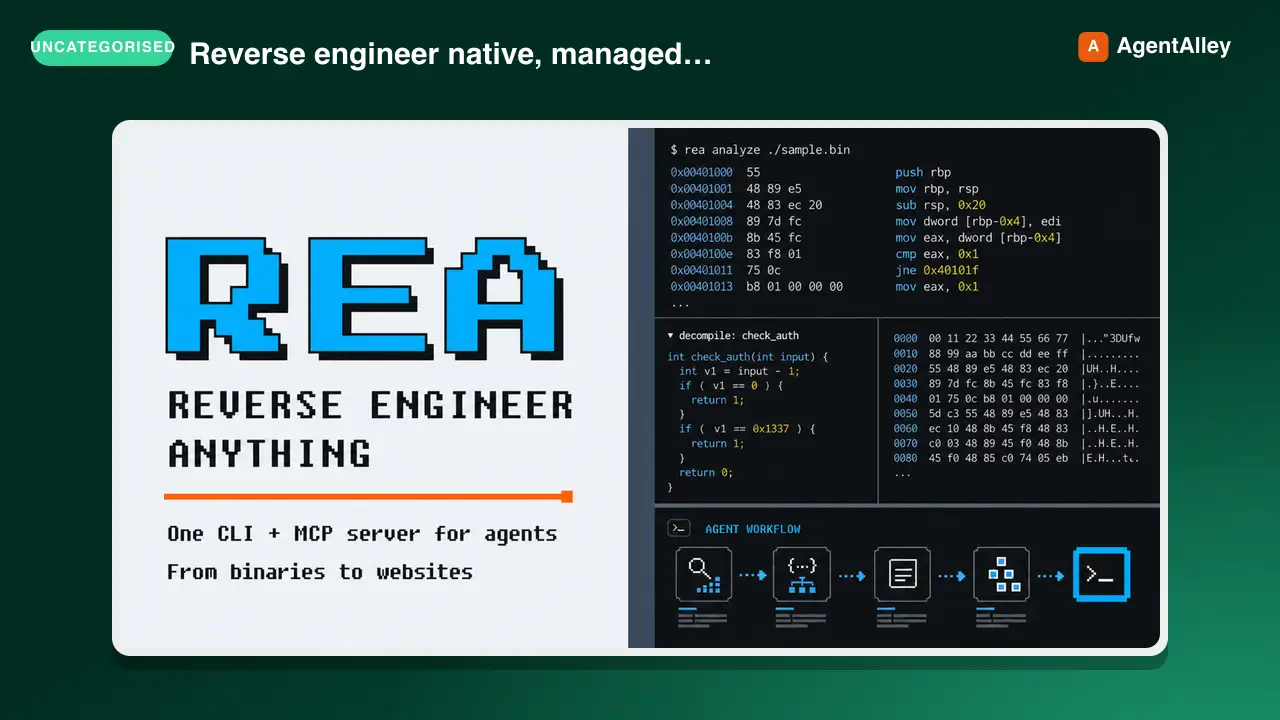 SkillCross-Platform Reverse Engineer
 morluto/rea · by morlutoReverse engineer native, managed, Electron/JavaScript, packaged, firmware, and browser targets with REA. Use shipped-artifact or requested runtime evidence to explain features, compare versions, decompile code, or guide a reconstruction. Skip REA for ordinary source-repository architecture analysis.★ 316k GitHub stars
 SkillBrainstorm Ideas
 obra/superpowers · by obraYou MUST use this before any creative work - creating features, building components, adding functionality, or modifying behavior. Explores user intent, requirements and design before implementation.★ 290k GitHub stars
 SkillCode Review Feedback Analyzerobra/superpowers · by obraUse when receiving code review feedback, before implementing suggestions, especially if feedback seems unclear or technically questionable - requires technical rigor and verification, not performative agreement or blind implementation★ 290k GitHub stars
 SkillBug Diagnosis Framework
 mattpocock/skills · by mattpocockDiagnosis loop for hard bugs and performance regressions. Use when the user says "diagnose"/"debug this", or reports something broken/throwing/failing/slow.★ 267k GitHub stars
 SkillImplement Specmattpocock/skills · by mattpocockImplement the result of /to-spec and /to-tickets in code.★ 267k GitHub stars
 SkillPR Description Writermattpocock/skills · by mattpocockUse when writing a PR body.★ 267k GitHub stars
More from sergebulaev
 SkillAI Writing Tells Detector
 sergebulaev/linkedin-skills · by sergebulaevScored the way readers read: by density per paragraph, not per word. One marker in a paragraph is English. Three is a signature. The…★ 3.1k GitHub stars
 SkillAI Writing Tells Referencesergebulaev/linkedin-skills · by sergebulaevFifteen rules from the linkedin-humanizer package, sorted by what kind of evidence each one actually represents.★ 3.1k GitHub stars
 SkillEmoji Pattern Analysissergebulaev/linkedin-skills · by sergebulaevPattern data from MagicPost LinkedIn analysis (Feb 2026, viral post with 220 engagement).★ 3.1k GitHub stars
 SkillIG Niche Analyzersergebulaev/instagram-skills · by sergebulaevRead your Instagram niche and profile from real data via Apify, no login. Scan a hashtag for the posts traveling now (likes, comments, owner) to see the format and hook that works. Pull profile stats for any handle, yours or a competitor's: followers, posts, bio, category. Instagram hides who liked or commented on other accounts, so this is discovery plus profiles, not engagers. Triggers on "what works in my niche", "scan the hashtag", "competitor stats". Not for writing captions (use ig-caption-writer).★ 138 GitHub stars
 SkillIG Caption Writersergebulaev/instagram-skills · by sergebulaevDraft an Instagram caption with the hook in the first 125 characters, a skimmable body, and one clear CTA, using a 2026 hook formula chosen by goal (saves, shares, comments, follows). Runs the humanizer pass and, on approval, publishes with the image or video you supply via the Publora media flow. Use to caption a single image or a Reel. Not for slide-by-slide carousels (use ig-carousel-planner) or auditing a draft (use ig-humanizer --mode audit).★ 138 GitHub stars
 SkillIG Carousel Plannersergebulaev/instagram-skills · by sergebulaevPlan an Instagram carousel slide by slide, up to 10 slides, with a hook slide that opens a loop, value slides that front-load the payoff, and a payoff slide that earns the save and follow. Picks a 2026 carousel formula (listicle, before/after, myth-buster, framework) by goal (saves, shares, follows), drafts each slide's text plus the caption, then publishes the images you supply via Publora. Use to structure a multi-slide carousel. Not for single-image captions (use ig-caption-writer).★ 138 GitHub stars