AI Writing Tells Reference
AI-Tell Rules: Tier-Classified Reference
Fifteen rules from the linkedin-humanizer package, sorted by what kind of evidence each one actually represents.
# AI-Tell Rules: Tier-Classified Reference

Fifteen rules from the `linkedin-humanizer` package, sorted by what kind of evidence each one actually represents.

**Tiers:**
- **Forensic** - real AI signal, undefendable. The model or its template leaked.
- **Strict** - real human pattern, but the user banned it for taste. Defending it inside this brand voice is pointless.
- **Aesthetic** - pattern flagged because LLMs use it, not because it signals AI. Famous human writers built careers on these.

**Defense strength:** how well the rule survives a "but a human wrote that" challenge. Low = the rule wins. High = the writer wins.

## Contents

- Tier 1 - Forensic (real AI signals)
- Tier 2 - Strict (corporate-speak, easy ban)
- Tier 3 - Aesthetic (overreach, defendable)
- Summary table
- Key citations
Overview
Fifteen rules from the linkedin-humanizer package, sorted by what kind of evidence each one actually represents.
Manual install (npx, ZIP)
npx skills add sergebulaev/linkedin-skills --skill ai-tell-rules-tier-classified-reference -g -a claude-codeConnects with Agent Alley MCP · agentalley.io/mcp
Files included
rules-explainer.md14.8 KB
Read rules-explainer.md here
sergebulaev/
Show the full text205 lines
AI-Tell Rules: Tier-Classified Reference
Fifteen rules from the linkedin-humanizer package, sorted by what kind of evidence each one actually represents.
Tiers:
- Forensic - real AI signal, undefendable. The model or its template leaked.
- Strict - real human pattern, but the user banned it for taste. Defending it inside this brand voice is pointless.
- Aesthetic - pattern flagged because LLMs use it, not because it signals AI. Famous human writers built careers on these.
Defense strength: how well the rule survives a "but a human wrote that" challenge. Low = the rule wins. High = the writer wins.
Contents
- Tier 1 - Forensic (real AI signals)
- Tier 2 - Strict (corporate-speak, easy ban)
- Tier 3 - Aesthetic (overreach, defendable)
- Summary table
- Key citations
Tier 1 - Forensic (real AI signals)
Rule 1. oaicite / contentReference / turn0search0 markers
- Tier: forensic
- Why flagged: These are internal tokens from OpenAI's tool-use scaffold (citation pills, search-result handles). They appear when someone copy-pastes from ChatGPT without cleaning the output. No human types
:contentReference[oaicite:0]{index=0}by hand. - Famous human user: none. Zero recorded cases.
- Defense strength: zero
- Citation: Wikipedia, "Signs of AI writing" - https://en.wikipedia.org/wiki/Wikipedia:Signs_of_AI_writing
Rule 2. Knowledge-cutoff disclaimers
- Tier: forensic
- Why flagged: Phrases like "As of my last update in January 2022..." or "I don't have access to real-time information..." are GPT-3.5/4 training-cutoff boilerplate. A human would write "as of last year" or just give the date.
- Famous human user: none.
- Defense strength: zero
- Citation: Wikipedia "Signs of AI writing"; TechCrunch on OpenAI's discontinued classifier - https://techcrunch.com/2023/07/25/openai-scuttles-ai-written-text-detector-over-low-rate-of-accuracy/
Rule 3. Phrasal templates left unfilled
- Tier: forensic
- Why flagged: Visible scaffolding like
[Your Name],2025-XX-XX,[Describe section X],[Insert metric here]. These are prompt-template artifacts where the human forgot to fill the slot. - Famous human user: none.
- Defense strength: zero
- Citation: Wikipedia "Signs of AI writing"
Rule 4. Mad-Libs blanks
- Tier: forensic
- Why flagged: Adjacent to rule 3. Sentences like "I [verb] the [noun] every [time period]" or "The result was a [adjective] [outcome]." These come from instruction-tuned outputs where the model echoed the prompt structure instead of resolving it.
- Famous human user: none.
- Defense strength: zero
- Citation: Wikipedia "Signs of AI writing"
Rule 5. Em dash overuse - above ~1 per 100 words (3+ in a short post)
- Tier: forensic (at the overuse threshold)
- Why flagged: A single em dash is a stylistic choice (see rule 11). But three or more em dashes in a 200-word LinkedIn post was one of the strongest stylometric signals GPT-4 emitted: the model glued clauses where a human would split into two sentences. V3 keeps the density cap (~1 per 100 words, 1-2 per post) and replaces only the excess, with a comma, colon or parentheses, never a period.
- Famous human user: Emily Dickinson is the famous defense, but Dickinson used em dashes in poetry across hundreds of poems - not three in a single 200-word business post. Density matters.
- Defense strength: low (at the overuse threshold). The single-use defense (rule 11) is high; the overuse case is forensic.
- Citation: Wikipedia "Signs of AI writing"; GPT-5.4 corpus rate 1.43 per 1,000 words vs. human 3.23 (2026)
Tier 2 - Strict (corporate-speak, easy ban)
Rule 6. AI vocabulary: leverage, utilize, harness, delve, foster, cultivate
- Tier: strict
- Why flagged: Each of these has a one-syllable Anglo-Saxon equivalent (use, use, use, look, build, grow). LLMs over-use the Latinate version because RLHF training samples skewed corporate. Humans use them too - but the user has banned them in his own voice for taste.
- Famous human user: any McKinsey deck, any HBR article from 1995-2015. "Leverage" was the management-consulting verb of the 1990s.
- Defense strength: medium in the abstract, zero inside this brand voice - the user explicitly rejected this register.
- Citation: Wikipedia "Signs of AI writing" lists all six under AI vocabulary
Rule 7. Filler adverbs: fundamentally, essentially, ultimately, crucially
- Tier: strict
- Why flagged: These are sentence-opener crutches that add no information. "Fundamentally, the issue is X" reduces to "the issue is X." LLMs use them as soft hedges; the user wants them deleted.
- Famous human user: academic philosophy papers (Daniel Dennett uses "fundamentally" constantly). Academic register is fine in academia, not in a LinkedIn post.
- Defense strength: medium in academic prose, zero in this voice.
- Citation: Wikipedia "Signs of AI writing"
Rule 8. Filler openers: "In today's fast-paced world", "In the age of AI"
- Tier: strict
- Why flagged: These are pure throat-clearing. The post hasn't started yet. LLMs deploy them because the training data is full of corporate blog intros that did the same thing.
- Famous human user: every LinkedIn ghost-writer from 2015-2022. The pattern predates GPT.
- Defense strength: low. Even before AI, copywriting style guides killed these openers.
- Citation: Wikipedia "Signs of AI writing"; Ann Handley, Everybody Writes (2014) on opener filler
Rule 9. Cliché closers: "What do you think?", "Tag someone who needs this"
- Tier: strict
- Why flagged: Generic engagement bait. LinkedIn's algorithm explicitly penalizes engagement bait under its 2024+ heuristics, and these closers signal the post wasn't written for a specific reader.
- Famous human user: every LinkedInfluencer 2016-2022. Pre-dates AI.
- Defense strength: low. Even pre-AI, the algorithm hated them.
- Citation: LinkedIn engagement-bait policy (in-app community guidelines); Wikipedia "Signs of AI writing"
Rule 10. Negative parallelism: "X isn't Y, it's Z"
- Tier: strict (Sergey's hard ban)
- Why flagged: "It's not a bug, it's a feature" / "It's not what you say, it's how you say it." LLMs over-deploy this because RLHF reward models favor it as quotable. The user has explicitly banned it as a personal pattern - too clean, too pat, no friction.
- Famous human user: every TED talk 2010-2020. Tony Robbins, Simon Sinek. The pattern is real human rhetoric, but the user rejected it.
- Defense strength: medium in oratory, zero in this voice (hard ban).
- Citation: Wikipedia "Signs of AI writing" under "negative parallelism"
Tier 3 - Aesthetic (overreach, defendable)
Rule 11. Em dashes - single use
- Tier: aesthetic
- Why flagged: Leftover 2023-24 folklore. In 2026 the frontier models emit fewer em dashes than humans (GPT-5.4: 1.43 per 1,000 words vs. human 3.23) and The Economist called the dash "no longer a reliable sign." The signal only exists above ~1 per 100 words (rule 5). Zero dashes across a long post is now itself the tell of someone trying to look human.
- Famous human users:
- Emily Dickinson - built her entire poetic style on em dashes. "Because I could not stop for Death - / He kindly stopped for me -" (1863). Roughly 1,800 poems, em dashes throughout.
- Cormac McCarthy - uses em dashes in Blood Meridian, The Road, No Country for Old Men. McCarthy famously refuses quotation marks; em dashes do dialogue work.
- Joan Didion, The Year of Magical Thinking (2005) - em dashes for parenthetical grief.
- Defense strength: high (single use). The overuse threshold (3+ in a short post) flips to forensic - see rule 5.
- Citation: Stanford HAI / Liang et al. (2023) on detector bias - https://hai.stanford.edu/news/ai-detectors-biased-against-non-native-english-writers ; TechCrunch on OpenAI classifier shutdown for low accuracy - https://techcrunch.com/2023/07/25/openai-scuttles-ai-written-text-detector-over-low-rate-of-accuracy/
Rule 12. Rule of three
- Tier: aesthetic for the one natural triad; strict for stacked / perfectly parallel triads and any third triad in a post
- Why flagged: Triadic structure ("X, Y, and Z") runs at 2x expert-human density across 2026 frontier models (arXiv 2604.19768). The tell is the density and the interchangeable items, not the form: 26% of top human tweets contain exactly one.
- Famous human users:
- Lincoln, Gettysburg Address, 1863: "of the people, by the people, for the people."
- Julius Caesar, 47 BCE: veni, vidi, vici - "I came, I saw, I conquered."
- Winston Churchill, House of Commons, 13 May 1940: "blood, toil, tears and sweat" (technically four, but the cadence is built on threes throughout the speech).
- Thomas Jefferson, Declaration of Independence, 1776: "life, liberty, and the pursuit of happiness."
- Aristotle, Rhetoric, 4th century BCE - formally identified the rule of three as a foundational rhetorical device.
- Defense strength: high. This is 2,400 years of human rhetoric. Flagging it as AI is detector overreach.
- Citation: Aristotle, Rhetoric, Book III; Stanford HAI on detector false positives
Rule 13. Passive voice
- Tier: aesthetic
- Why flagged: GPT-4 over-uses passive constructions. Humanizers strip them by default. But passive voice has legitimate uses - agent-obscuring, formal register, scientific neutrality.
- Famous human users:
- Watson & Crick, Nature, 25 April 1953: "It has not escaped our notice that the specific pairing we have postulated immediately suggests a possible copying mechanism for the genetic material." Pure passive understatement - the most famous sentence in 20th-century biology.
- Joan Didion, Slouching Towards Bethlehem (1968) - uses passive deliberately for narrative distance.
- The entire scientific literature - passive voice is journal house style for a reason. "The samples were treated with..." is correct; "We treated the samples with..." reads as informal.
- Defense strength: high in technical/scientific contexts, medium in business writing. Don't strip passive in a research summary.
- Citation: Watson & Crick, Nature 171:737-738 (1953); Wikipedia "Signs of AI writing" notes passive voice as flagged but contested
Rule 14. AI vocabulary: "robust"
- Tier: aesthetic
- Why flagged: Lumped in with leverage/utilize/harness in OriginalityAI's vocabulary list.
- Famous human users:
- Every epidemiologist for a century - "robust" has a precise statistical meaning: insensitive to assumption violations. "A robust estimator" is a 1960s term of art (Peter J. Huber, Robust Statistics, 1964).
- Software engineers - "robust system" means tolerant of edge cases. Replacing it with "solid" loses meaning.
- Immunologists - "robust immune response" is standard vocabulary in Nature and Cell.
- Defense strength: high in technical writing, medium in business writing. Keep "robust" if it's doing technical work; replace with "solid" only when it's generic praise.
- Citation: Peter J. Huber, "Robust Estimation of a Location Parameter," Annals of Mathematical Statistics (1964); Stanford HAI on detector bias against technical English
Rule 15. Curly quotes ("smart quotes")
- Tier: aesthetic
- Why flagged: Some detectors weight
""''as AI signal because LLM outputs preserve them and human typing usually produces straight"and'. - Famous human users:
- Microsoft Word, Google Docs, Apple Pages - all auto-convert straight quotes to curly by default. Anyone typing in those tools produces curly quotes without thinking.
- The New Yorker - house style since 1925 mandates curly quotes. Every published piece uses them.
- Every traditionally typeset book since the invention of moveable type - curly quotes are correct typography. Straight quotes are an ASCII compromise.
- Defense strength: high. Flagging curly quotes as AI is detector incompetence - it's flagging Microsoft Word's defaults.
- Citation: The Chicago Manual of Style, 17th ed., §6.115 on quotation marks; Adelphi University lawsuit illustrating cost of false positives - https://www.plagiarismtoday.com/2025/10/14/adelphi-university-sued-over-ai-allegation/
Summary table
| # | Rule | Tier | Defense | Famous defender |
|---|---|---|---|---|
| 1 | oaicite markers |
forensic | zero | none |
| 2 | Knowledge-cutoff disclaimers | forensic | zero | none |
| 3 | Phrasal templates [Your Name] |
forensic | zero | none |
| 4 | Mad-Libs blanks | forensic | zero | none |
| 5 | Em dash overuse (above ~1 per 100 words) | forensic | low | none at this density |
| 6 | leverage / utilize / harness / delve / foster / cultivate | strict | medium | McKinsey decks |
| 7 | fundamentally / essentially / ultimately / crucially | strict | medium | Daniel Dennett |
| 8 | "In today's fast-paced world" | strict | low | LinkedIn ghosts 2015-2022 |
| 9 | "What do you think?" / "Tag someone" | strict | low | Influencer playbook |
| 10 | "X isn't Y, it's Z" | strict | medium | TED talks |
| 11 | Em dash (single use) | aesthetic | high | Dickinson, McCarthy, Didion |
| 12 | Rule of three (one natural) / stacked or 3+ per post | aesthetic / strict | high / low | Lincoln, Caesar, Churchill, Aristotle |
| 13 | Passive voice | aesthetic | high | Watson & Crick, Didion, all science |
| 14 | "robust" | aesthetic | high | Huber 1964, all epidemiology |
| 15 | Curly quotes | aesthetic | high | Word/Pages defaults, New Yorker |
Key citations
- Stanford HAI / Liang et al. (2023) - AI detectors are biased against non-native English writers. Single most-cited paper for "detectors over-fire on aesthetic patterns." https://hai.stanford.edu/news/ai-detectors-biased-against-non-native-english-writers
- TechCrunch (25 July 2023) - OpenAI shut down its own AI-text classifier, citing low rate of accuracy. The company that built GPT couldn't reliably detect GPT. https://techcrunch.com/2023/07/25/openai-scuttles-ai-written-text-detector-over-low-rate-of-accuracy/
- Wikipedia, "Signs of AI writing" - community-maintained taxonomy. Source for forensic markers (oaicite, knowledge-cutoff) and the strict vocabulary list. https://en.wikipedia.org/wiki/Wikipedia:Signs_of_AI_writing
- Adelphi University lawsuit (Oct 2025) - student sued the university after a false-positive AI accusation. The legal cost of trusting detectors on aesthetic signals. https://www.plagiarismtoday.com/2025/10/14/adelphi-university-sued-over-ai-allegation/
Last Updated: 2026-04-25 Maintained By: Claude Code and Codex, for Sergey Bulaev Purpose: Educational backbone for the controversial post arguing that AI-writing rules are forensic in some cases and aesthetic overreach in others.
| 1 | # AI-Tell Rules: Tier-Classified Reference |
| 2 | |
| 3 | Fifteen rules from the `linkedin-humanizer` package, sorted by what kind of evidence each one actually represents. |
| 4 | |
| 5 | **Tiers:** |
| 6 | **Forensic** - real AI signal, undefendable. The model or its template leaked. |
| 7 | **Strict** - real human pattern, but the user banned it for taste. Defending it inside this brand voice is pointless. |
| 8 | **Aesthetic** - pattern flagged because LLMs use it, not because it signals AI. Famous human writers built careers on these. |
| 9 | |
| 10 | **Defense strength:** how well the rule survives a "but a human wrote that" challenge. Low = the rule wins. High = the writer wins. |
| 11 | |
| 12 | ## Contents |
| 13 | |
| 14 | Tier 1 - Forensic (real AI signals) |
| 15 | Tier 2 - Strict (corporate-speak, easy ban) |
| 16 | Tier 3 - Aesthetic (overreach, defendable) |
| 17 | Summary table |
| 18 | Key citations |
| 19 | |
| 20 | |
| 21 | |
| 22 | ## Tier 1 - Forensic (real AI signals) |
| 23 | |
| 24 | ### Rule 1. `oaicite` / `contentReference` / `turn0search0` markers |
| 25 | |
| 26 | **Tier:** forensic |
| 27 | **Why flagged:** These are internal tokens from OpenAI's tool-use scaffold (citation pills, search-result handles). They appear when someone copy-pastes from ChatGPT without cleaning the output. No human types `:contentReference[oaicite:0]{index=0}` by hand. |
| 28 | **Famous human user:** none. Zero recorded cases. |
| 29 | **Defense strength:** zero |
| 30 | **Citation:** Wikipedia, "Signs of AI writing" - https://en.wikipedia.org/wiki/Wikipedia:Signs_of_AI_writing |
| 31 | |
| 32 | ### Rule 2. Knowledge-cutoff disclaimers |
| 33 | |
| 34 | **Tier:** forensic |
| 35 | **Why flagged:** Phrases like "As of my last update in January 2022..." or "I don't have access to real-time information..." are GPT-3.5/4 training-cutoff boilerplate. A human would write "as of last year" or just give the date. |
| 36 | **Famous human user:** none. |
| 37 | **Defense strength:** zero |
| 38 | **Citation:** Wikipedia "Signs of AI writing"; TechCrunch on OpenAI's discontinued classifier - https://techcrunch.com/2023/07/25/openai-scuttles-ai-written-text-detector-over-low-rate-of-accuracy/ |
| 39 | |
| 40 | ### Rule 3. Phrasal templates left unfilled |
| 41 | |
| 42 | **Tier:** forensic |
| 43 | **Why flagged:** Visible scaffolding like `[Your Name]`, `2025-XX-XX`, `[Describe section X]`, `[Insert metric here]`. These are prompt-template artifacts where the human forgot to fill the slot. |
| 44 | **Famous human user:** none. |
| 45 | **Defense strength:** zero |
| 46 | **Citation:** Wikipedia "Signs of AI writing" |
| 47 | |
| 48 | ### Rule 4. Mad-Libs blanks |
| 49 | |
| 50 | **Tier:** forensic |
| 51 | **Why flagged:** Adjacent to rule 3. Sentences like "I [verb] the [noun] every [time period]" or "The result was a [adjective] [outcome]." These come from instruction-tuned outputs where the model echoed the prompt structure instead of resolving it. |
| 52 | **Famous human user:** none. |
| 53 | **Defense strength:** zero |
| 54 | **Citation:** Wikipedia "Signs of AI writing" |
| 55 | |
| 56 | ### Rule 5. Em dash overuse - above ~1 per 100 words (3+ in a short post) |
| 57 | |
| 58 | **Tier:** forensic (at the overuse threshold) |
| 59 | **Why flagged:** A single em dash is a stylistic choice (see rule 11). But three or more em dashes in a 200-word LinkedIn post was one of the strongest stylometric signals GPT-4 emitted: the model glued clauses where a human would split into two sentences. V3 keeps the density cap (~1 per 100 words, 1-2 per post) and replaces only the excess, with a comma, colon or parentheses, never a period. |
| 60 | **Famous human user:** Emily Dickinson is the famous defense, but Dickinson used em dashes in poetry across hundreds of poems - not three in a single 200-word business post. Density matters. |
| 61 | **Defense strength:** low (at the overuse threshold). The single-use defense (rule 11) is high; the overuse case is forensic. |
| 62 | **Citation:** Wikipedia "Signs of AI writing"; GPT-5.4 corpus rate 1.43 per 1,000 words vs. human 3.23 (2026) |
| 63 | |
| 64 | |
| 65 | |
| 66 | ## Tier 2 - Strict (corporate-speak, easy ban) |
| 67 | |
| 68 | ### Rule 6. AI vocabulary: leverage, utilize, harness, delve, foster, cultivate |
| 69 | |
| 70 | **Tier:** strict |
| 71 | **Why flagged:** Each of these has a one-syllable Anglo-Saxon equivalent (use, use, use, look, build, grow). LLMs over-use the Latinate version because RLHF training samples skewed corporate. Humans use them too - but the user has banned them in his own voice for taste. |
| 72 | **Famous human user:** any McKinsey deck, any HBR article from 1995-2015. "Leverage" was the management-consulting verb of the 1990s. |
| 73 | **Defense strength:** medium in the abstract, **zero inside this brand voice** - the user explicitly rejected this register. |
| 74 | **Citation:** Wikipedia "Signs of AI writing" lists all six under AI vocabulary |
| 75 | |
| 76 | ### Rule 7. Filler adverbs: fundamentally, essentially, ultimately, crucially |
| 77 | |
| 78 | **Tier:** strict |
| 79 | **Why flagged:** These are sentence-opener crutches that add no information. "Fundamentally, the issue is X" reduces to "the issue is X." LLMs use them as soft hedges; the user wants them deleted. |
| 80 | **Famous human user:** academic philosophy papers (Daniel Dennett uses "fundamentally" constantly). Academic register is fine in academia, not in a LinkedIn post. |
| 81 | **Defense strength:** medium in academic prose, **zero in this voice**. |
| 82 | **Citation:** Wikipedia "Signs of AI writing" |
| 83 | |
| 84 | ### Rule 8. Filler openers: "In today's fast-paced world", "In the age of AI" |
| 85 | |
| 86 | **Tier:** strict |
| 87 | **Why flagged:** These are pure throat-clearing. The post hasn't started yet. LLMs deploy them because the training data is full of corporate blog intros that did the same thing. |
| 88 | **Famous human user:** every LinkedIn ghost-writer from 2015-2022. The pattern predates GPT. |
| 89 | **Defense strength:** low. Even before AI, copywriting style guides killed these openers. |
| 90 | **Citation:** Wikipedia "Signs of AI writing"; Ann Handley, *Everybody Writes* (2014) on opener filler |
| 91 | |
| 92 | ### Rule 9. Cliché closers: "What do you think?", "Tag someone who needs this" |
| 93 | |
| 94 | **Tier:** strict |
| 95 | **Why flagged:** Generic engagement bait. LinkedIn's algorithm explicitly penalizes engagement bait under its 2024+ heuristics, and these closers signal the post wasn't written for a specific reader. |
| 96 | **Famous human user:** every LinkedInfluencer 2016-2022. Pre-dates AI. |
| 97 | **Defense strength:** low. Even pre-AI, the algorithm hated them. |
| 98 | **Citation:** LinkedIn engagement-bait policy (in-app community guidelines); Wikipedia "Signs of AI writing" |
| 99 | |
| 100 | ### Rule 10. Negative parallelism: "X isn't Y, it's Z" |
| 101 | |
| 102 | **Tier:** strict (Sergey's hard ban) |
| 103 | **Why flagged:** "It's not a bug, it's a feature" / "It's not what you say, it's how you say it." LLMs over-deploy this because RLHF reward models favor it as quotable. The user has explicitly banned it as a personal pattern - too clean, too pat, no friction. |
| 104 | **Famous human user:** every TED talk 2010-2020. Tony Robbins, Simon Sinek. The pattern is real human rhetoric, but the user rejected it. |
| 105 | **Defense strength:** medium in oratory, **zero in this voice** (hard ban). |
| 106 | **Citation:** Wikipedia "Signs of AI writing" under "negative parallelism" |
| 107 | |
| 108 | |
| 109 | |
| 110 | ## Tier 3 - Aesthetic (overreach, defendable) |
| 111 | |
| 112 | ### Rule 11. Em dashes - single use |
| 113 | |
| 114 | **Tier:** aesthetic |
| 115 | **Why flagged:** Leftover 2023-24 folklore. In 2026 the frontier models emit fewer em dashes than humans (GPT-5.4: 1.43 per 1,000 words vs. human 3.23) and The Economist called the dash "no longer a reliable sign." The signal only exists above ~1 per 100 words (rule 5). Zero dashes across a long post is now itself the tell of someone trying to look human. |
| 116 | **Famous human users:** |
| 117 | **Emily Dickinson** - built her entire poetic style on em dashes. "Because I could not stop for Death - / He kindly stopped for me -" (1863). Roughly 1,800 poems, em dashes throughout. |
| 118 | **Cormac McCarthy** - uses em dashes in *Blood Meridian*, *The Road*, *No Country for Old Men*. McCarthy famously refuses quotation marks; em dashes do dialogue work. |
| 119 | **Joan Didion**, *The Year of Magical Thinking* (2005) - em dashes for parenthetical grief. |
| 120 | **Defense strength:** high (single use). The overuse threshold (3+ in a short post) flips to forensic - see rule 5. |
| 121 | **Citation:** Stanford HAI / Liang et al. (2023) on detector bias - https://hai.stanford.edu/news/ai-detectors-biased-against-non-native-english-writers ; TechCrunch on OpenAI classifier shutdown for low accuracy - https://techcrunch.com/2023/07/25/openai-scuttles-ai-written-text-detector-over-low-rate-of-accuracy/ |
| 122 | |
| 123 | ### Rule 12. Rule of three |
| 124 | |
| 125 | **Tier:** aesthetic for the one natural triad; strict for stacked / perfectly parallel triads and any third triad in a post |
| 126 | **Why flagged:** Triadic structure ("X, Y, and Z") runs at 2x expert-human density across 2026 frontier models (arXiv 2604.19768). The tell is the density and the interchangeable items, not the form: 26% of top human tweets contain exactly one. |
| 127 | **Famous human users:** |
| 128 | **Lincoln**, Gettysburg Address, 1863: "of the people, by the people, for the people." |
| 129 | **Julius Caesar**, 47 BCE: *veni, vidi, vici* - "I came, I saw, I conquered." |
| 130 | **Winston Churchill**, House of Commons, 13 May 1940: "blood, toil, tears and sweat" (technically four, but the cadence is built on threes throughout the speech). |
| 131 | **Thomas Jefferson**, Declaration of Independence, 1776: "life, liberty, and the pursuit of happiness." |
| 132 | **Aristotle**, *Rhetoric*, 4th century BCE - formally identified the rule of three as a foundational rhetorical device. |
| 133 | **Defense strength:** high. This is 2,400 years of human rhetoric. Flagging it as AI is detector overreach. |
| 134 | **Citation:** Aristotle, *Rhetoric*, Book III; Stanford HAI on detector false positives |
| 135 | |
| 136 | ### Rule 13. Passive voice |
| 137 | |
| 138 | **Tier:** aesthetic |
| 139 | **Why flagged:** GPT-4 over-uses passive constructions. Humanizers strip them by default. But passive voice has legitimate uses - agent-obscuring, formal register, scientific neutrality. |
| 140 | **Famous human users:** |
| 141 | **Watson & Crick**, *Nature*, 25 April 1953: "It has not escaped our notice that the specific pairing we have postulated immediately suggests a possible copying mechanism for the genetic material." Pure passive understatement - the most famous sentence in 20th-century biology. |
| 142 | **Joan Didion**, *Slouching Towards Bethlehem* (1968) - uses passive deliberately for narrative distance. |
| 143 | **The entire scientific literature** - passive voice is journal house style for a reason. "The samples were treated with..." is correct; "We treated the samples with..." reads as informal. |
| 144 | **Defense strength:** high in technical/scientific contexts, medium in business writing. Don't strip passive in a research summary. |
| 145 | **Citation:** Watson & Crick, *Nature* 171:737-738 (1953); Wikipedia "Signs of AI writing" notes passive voice as flagged but contested |
| 146 | |
| 147 | ### Rule 14. AI vocabulary: "robust" |
| 148 | |
| 149 | **Tier:** aesthetic |
| 150 | **Why flagged:** Lumped in with leverage/utilize/harness in OriginalityAI's vocabulary list. |
| 151 | **Famous human users:** |
| 152 | **Every epidemiologist for a century** - "robust" has a precise statistical meaning: insensitive to assumption violations. "A robust estimator" is a 1960s term of art (Peter J. Huber, *Robust Statistics*, 1964). |
| 153 | **Software engineers** - "robust system" means tolerant of edge cases. Replacing it with "solid" loses meaning. |
| 154 | **Immunologists** - "robust immune response" is standard vocabulary in *Nature* and *Cell*. |
| 155 | **Defense strength:** high in technical writing, medium in business writing. Keep "robust" if it's doing technical work; replace with "solid" only when it's generic praise. |
| 156 | **Citation:** Peter J. Huber, "Robust Estimation of a Location Parameter," *Annals of Mathematical Statistics* (1964); Stanford HAI on detector bias against technical English |
| 157 | |
| 158 | ### Rule 15. Curly quotes ("smart quotes") |
| 159 | |
| 160 | **Tier:** aesthetic |
| 161 | **Why flagged:** Some detectors weight `"` `"` `'` `'` as AI signal because LLM outputs preserve them and human typing usually produces straight `"` and `'`. |
| 162 | **Famous human users:** |
| 163 | **Microsoft Word**, **Google Docs**, **Apple Pages** - all auto-convert straight quotes to curly by default. Anyone typing in those tools produces curly quotes without thinking. |
| 164 | **The New Yorker** - house style since 1925 mandates curly quotes. Every published piece uses them. |
| 165 | **Every traditionally typeset book since the invention of moveable type** - curly quotes are correct typography. Straight quotes are an ASCII compromise. |
| 166 | **Defense strength:** high. Flagging curly quotes as AI is detector incompetence - it's flagging Microsoft Word's defaults. |
| 167 | **Citation:** *The Chicago Manual of Style*, 17th ed., §6.115 on quotation marks; Adelphi University lawsuit illustrating cost of false positives - https://www.plagiarismtoday.com/2025/10/14/adelphi-university-sued-over-ai-allegation/ |
| 168 | |
| 169 | |
| 170 | |
| 171 | ## Summary table |
| 172 | |
| 173 | | # | Rule | Tier | Defense | Famous defender | |
| 174 | |---|------|------|---------|------------------| |
| 175 | | 1 | `oaicite` markers | forensic | zero | none | |
| 176 | | 2 | Knowledge-cutoff disclaimers | forensic | zero | none | |
| 177 | | 3 | Phrasal templates `[Your Name]` | forensic | zero | none | |
| 178 | | 4 | Mad-Libs blanks | forensic | zero | none | |
| 179 | | 5 | Em dash overuse (above ~1 per 100 words) | forensic | low | none at this density | |
| 180 | | 6 | leverage / utilize / harness / delve / foster / cultivate | strict | medium | McKinsey decks | |
| 181 | | 7 | fundamentally / essentially / ultimately / crucially | strict | medium | Daniel Dennett | |
| 182 | | 8 | "In today's fast-paced world" | strict | low | LinkedIn ghosts 2015-2022 | |
| 183 | | 9 | "What do you think?" / "Tag someone" | strict | low | Influencer playbook | |
| 184 | | 10 | "X isn't Y, it's Z" | strict | medium | TED talks | |
| 185 | | 11 | Em dash (single use) | aesthetic | high | Dickinson, McCarthy, Didion | |
| 186 | | 12 | Rule of three (one natural) / stacked or 3+ per post | aesthetic / strict | high / low | Lincoln, Caesar, Churchill, Aristotle | |
| 187 | | 13 | Passive voice | aesthetic | high | Watson & Crick, Didion, all science | |
| 188 | | 14 | "robust" | aesthetic | high | Huber 1964, all epidemiology | |
| 189 | | 15 | Curly quotes | aesthetic | high | Word/Pages defaults, New Yorker | |
| 190 | |
| 191 | |
| 192 | |
| 193 | ## Key citations |
| 194 | |
| 195 | **Stanford HAI / Liang et al. (2023)** - AI detectors are biased against non-native English writers. Single most-cited paper for "detectors over-fire on aesthetic patterns." https://hai.stanford.edu/news/ai-detectors-biased-against-non-native-english-writers |
| 196 | **TechCrunch (25 July 2023)** - OpenAI shut down its own AI-text classifier, citing low rate of accuracy. The company that built GPT couldn't reliably detect GPT. https://techcrunch.com/2023/07/25/openai-scuttles-ai-written-text-detector-over-low-rate-of-accuracy/ |
| 197 | **Wikipedia, "Signs of AI writing"** - community-maintained taxonomy. Source for forensic markers (oaicite, knowledge-cutoff) and the strict vocabulary list. https://en.wikipedia.org/wiki/Wikipedia:Signs_of_AI_writing |
| 198 | **Adelphi University lawsuit (Oct 2025)** - student sued the university after a false-positive AI accusation. The legal cost of trusting detectors on aesthetic signals. https://www.plagiarismtoday.com/2025/10/14/adelphi-university-sued-over-ai-allegation/ |
| 199 | |
| 200 | |
| 201 | |
| 202 | **Last Updated:** 2026-04-25 |
| 203 | **Maintained By:** Claude Code and Codex, for Sergey Bulaev |
| 204 | **Purpose:** Educational backbone for the controversial post arguing that AI-writing rules are forensic in some cases and aesthetic overreach in others. |
| 205 |
Details
- Updated
- Sep 18, 2026
- License
- MIT
- Stars on the repo
- ★ 3,059
- Checked
- Source
- sergebulaev/linkedin-skills ↗
- Creator
- sergebulaev · 76 listings
Similar skills
See all →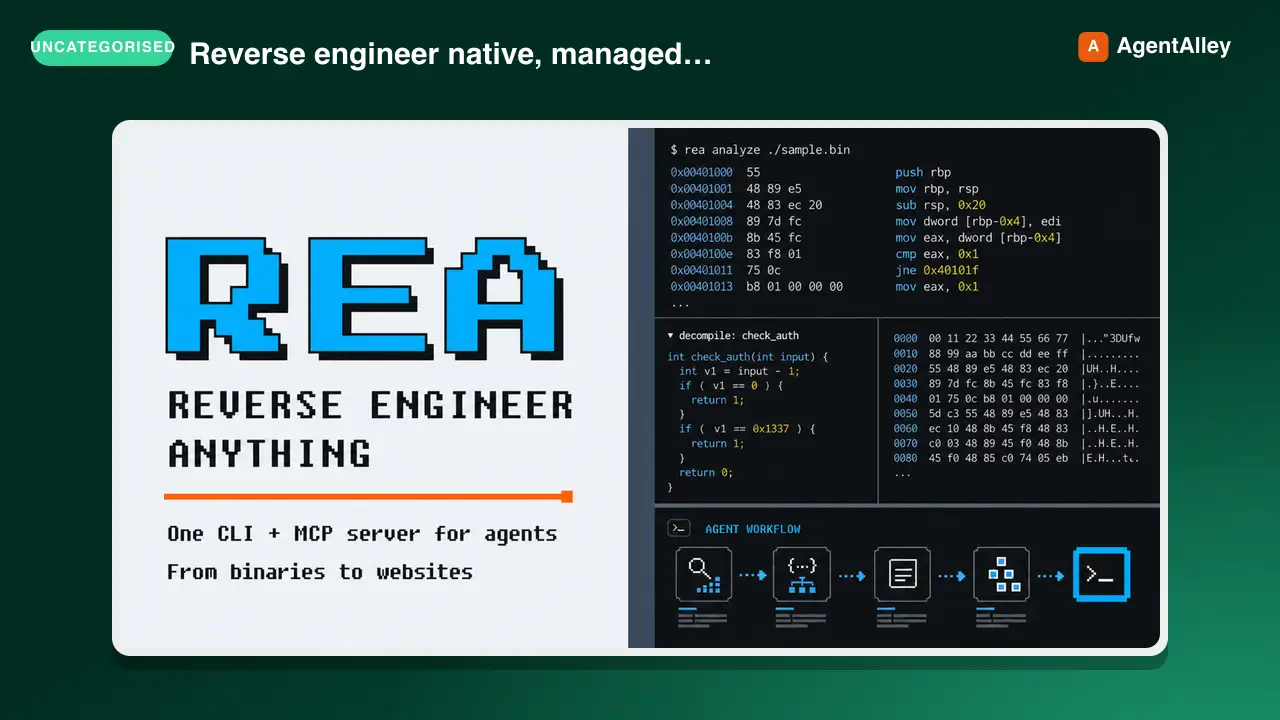 SkillCross-Platform Reverse Engineer
 morluto/rea · by morlutoReverse engineer native, managed, Electron/JavaScript, packaged, firmware, and browser targets with REA. Use shipped-artifact or requested runtime evidence to explain features, compare versions, decompile code, or guide a reconstruction. Skip REA for ordinary source-repository architecture analysis.★ 316k GitHub stars
 SkillBrainstorm Ideas
 obra/superpowers · by obraYou MUST use this before any creative work - creating features, building components, adding functionality, or modifying behavior. Explores user intent, requirements and design before implementation.★ 290k GitHub stars
 SkillCode Review Feedback Analyzerobra/superpowers · by obraUse when receiving code review feedback, before implementing suggestions, especially if feedback seems unclear or technically questionable - requires technical rigor and verification, not performative agreement or blind implementation★ 290k GitHub stars
 SkillBug Diagnosis Framework
 mattpocock/skills · by mattpocockDiagnosis loop for hard bugs and performance regressions. Use when the user says "diagnose"/"debug this", or reports something broken/throwing/failing/slow.★ 267k GitHub stars
 SkillImplement Specmattpocock/skills · by mattpocockImplement the result of /to-spec and /to-tickets in code.★ 267k GitHub stars
 SkillPR Description Writermattpocock/skills · by mattpocockUse when writing a PR body.★ 267k GitHub stars
More from sergebulaev
 SkillAI Writing Tells Detector
 sergebulaev/linkedin-skills · by sergebulaevScored the way readers read: by density per paragraph, not per word. One marker in a paragraph is English. Three is a signature. The…★ 3.1k GitHub stars
 SkillEmoji Pattern Analysissergebulaev/linkedin-skills · by sergebulaevPattern data from MagicPost LinkedIn analysis (Feb 2026, viral post with 220 engagement).★ 3.1k GitHub stars
 SkillIG Niche Analyzersergebulaev/instagram-skills · by sergebulaevRead your Instagram niche and profile from real data via Apify, no login. Scan a hashtag for the posts traveling now (likes, comments, owner) to see the format and hook that works. Pull profile stats for any handle, yours or a competitor's: followers, posts, bio, category. Instagram hides who liked or commented on other accounts, so this is discovery plus profiles, not engagers. Triggers on "what works in my niche", "scan the hashtag", "competitor stats". Not for writing captions (use ig-caption-writer).★ 138 GitHub stars
 SkillIG Caption Writersergebulaev/instagram-skills · by sergebulaevDraft an Instagram caption with the hook in the first 125 characters, a skimmable body, and one clear CTA, using a 2026 hook formula chosen by goal (saves, shares, comments, follows). Runs the humanizer pass and, on approval, publishes with the image or video you supply via the Publora media flow. Use to caption a single image or a Reel. Not for slide-by-slide carousels (use ig-carousel-planner) or auditing a draft (use ig-humanizer --mode audit).★ 138 GitHub stars
 SkillIG Carousel Plannersergebulaev/instagram-skills · by sergebulaevPlan an Instagram carousel slide by slide, up to 10 slides, with a hook slide that opens a loop, value slides that front-load the payoff, and a payoff slide that earns the save and follow. Picks a 2026 carousel formula (listicle, before/after, myth-buster, framework) by goal (saves, shares, follows), drafts each slide's text plus the caption, then publishes the images you supply via Publora. Use to structure a multi-slide carousel. Not for single-image captions (use ig-caption-writer).★ 138 GitHub stars
 SkillX Marketing Skills Hubsergebulaev/x-skills · by sergebulaevPlan, draft, audit, and publish posts and threads for X (Twitter). Use when the user wants to write a single tweet or an auto-numbered thread, build a long-form tweetstorm, remove AI tells from a draft, reverse-engineer the hook from a viral tweet, draft a reply or quote tweet, or plan a week of X content. Tweets and threads publish via the Publora API, which auto-splits long content into a numbered thread. User provides notes or a tweet URL, the skill drafts, the user approves, then it publishes.★ 95 GitHub stars