Job Change Outbound Play
Runs outbound triggered by contact job changes: champion
Runs outbound triggered by contact job changes: champion tracking, new-role outreach, and "new broom" timing in the first 90 days. Use when a champion or past buyer moves to a new company, or the user wants to set up job-change detection.
---
name: job-change-play
description: >-
  Runs outbound triggered by contact job changes: champion tracking, new-role
  outreach, and "new broom" timing in the first 90 days. Use when a champion or
  past buyer moves to a new company, or the user wants to set up job-change
  detection. Triggers on: "job change", "new role", "champion moved", "job
  change outreach", "contact changed jobs".
license: MIT
compatibility: Claude Code, Codex, GitHub Copilot, Cursor, Gemini CLI, OpenCode, Goose, Hermes, Windsurf, Zed
metadata:
  version: "1.0.0"
  author: LeadMagic
  category: sales-plays
  tags: [sales-plays, job-change, champion-tracking, trigger-based, new-role]
  frameworks:
    - "Winning by Design — SPICED"
    - "UserGems — Champion tracking"
Overview
When a contact changes jobs, three opportunities open simultaneously: (1) the old company lost a champion and may need replacement support, (2) the contact is now at a new company with new budget and tool evaluation, and (3) you have a timely, personal reason to reconnect. This play covers all three.
Manual install (npx, ZIP)
npx skills add LeadMagic/gtm-skills --skill job-change-play -g -a claude-codenpx degit LeadMagic/gtm-skills/skills/sales-plays/job-change-play#main ~/.claude/skills/job-change-playConnects with Agent Alley MCP · agentalley.io/mcp
Files included
SKILL.md8.3 KB
Read SKILL.md here
Show the full text168 lines
Job Change Outbound Play
Overview
When a contact changes jobs, three opportunities open simultaneously: (1) the old company lost a champion and may need replacement support, (2) the contact is now at a new company with new budget and tool evaluation, and (3) you have a timely, personal reason to reconnect. This play covers all three.
Authoritative Foundations
- Winning by Design — SPICED — Discovery framework — Situation, Pain, Impact, Critical Event, Decision; a champion's new role is the critical event.
- UserGems — Champion tracking — Track past buyers and users as they change companies and reach out in their first months, when they set new priorities.
- LinkedIn Sales Navigator — Lead alerts — Save champions as leads to get job-change alerts without manual monitoring.
When to Use
- "Champion left the company"
- "Contact changed jobs"
- "Job change detection outreach"
- "New role outbound"
Core Principle
A job change is the highest-permission outreach event in B2B. It's personal, timely, and relevant. Nobody ignores a "congrats on the new role" email. And at their new company, they have influence over tool selection in their first 90 days.
Step-by-Step Process
Phase 1: Job Change Detection
Monitor via:
- LinkedIn notifications (connections)
- CRM enrichment triggers (Apollo, LeadMagic job change detection)
- Sales Navigator alerts on saved leads
- Newsletter/announcement monitoring
- User/contact list re-verification (monthly)
Phase 2: Old Company — Champion Replacement
When a champion leaves:
- Immediately identify who inherited their responsibilities
- Reach out to the new contact within 5 days
- Acknowledge the transition, provide value (usage summary, ROI to date)
- Frame yourself as a resource during the transition
- Don't pitch — help them look good by knowing the account history
Phase 3: New Company — New Role Outreach
When a contact starts a new role, reach out Day 14-21 (after onboarding chaos):
Subject: "New role at [NewCo] — congrats" Body: Reference their move, connect to what they accomplished at the old company with your product, suggest how it applies here. "At [OldCo] you [achieved X with our product]. Curious if [NewCo] is dealing with similar challenges."
Phase 4: Sequence Architecture
7-day, 3-touch sequence for new role:
- Day 1: Email (congrats, bridge from old to new)
- Day 3: LinkedIn message (more casual, "how's the first few weeks?")
- Day 7: Email (value-add: "I compiled some data on [their new industry]")
- Day 14+: Move to standard nurture if no reply
Phase 5: CRM Hygiene
- Update contact records: new title, new company, new email
- Create new opportunity at new company (linked to past success)
- Flag old company account for champion replacement outreach
- Tag as "job change — warm re-engagement" for future campaigns
Output Format
Job change playbook with: detection setup, champion replacement templates, new role outreach sequence, CRM update workflow, and tracking dashboard.
Quality Check
Before delivering, verify:
- Job change detection covers at least 4 sources: LinkedIn notifications, CRM enrichment triggers, Sales Navigator alerts, and monthly contact re-verification
- Old company champion replacement: new contact identified and reached within 5 days with account history transfer
- New company outreach: first touch at Day 14-21 (after onboarding chaos settles), not Day 1
- Sequence architecture: 7-day 3-touch sequence (email → LinkedIn → email with value-add) with Day 14+ fallback to standard nurture
- CRM hygiene: contact records updated (title, company, email), new opportunity created at new company, old company flagged for champion replacement
- Job change signals tiered by seniority: exec moves get immediate personal outreach, IC moves get automated nurture
Common Pitfalls
- Contacting Day 1 of the new role. The first week is onboarding chaos — they're not evaluating tools. Fix: wait until Day 14-21 when they've surfaced what's broken and are assessing what they need.
- 'Congrats on the new role' as the entire opener. This wastes the warm permission a job change creates. Fix: bridge past success to new context — reference what they accomplished at the old company and connect it to challenges their new company likely faces.
- Forgetting the old company. When a champion leaves, the replacement inherits a relationship they didn't build. Fix: reach out to the new contact within 5 days with account history, usage data, and an offer to help them look good during the transition.
- CRM records left stale. A changed contact with old company data means outreach goes to dead email and pipeline attribution breaks. Fix: update contact records, create the new opportunity at the new company, and tag both records for appropriate follow-up.
- Treating every job change as equal. A SDR moving to a new SDR role carries less buying power than a VP Sales moving to a CRO role. Fix: tier signals by seniority and function — exec moves get immediate personal outreach; IC moves get automated nurture.
Execution Artifacts
references/framework-notes.md— named frameworks, citation anchors, and operating assumptionstemplates/output-template.md— copy-paste deliverable structure for the userscripts/check-output.py— local checklist validator for required sections This skill includes lightweight artifacts the agent can load on demand: Use the artifacts when the user asks for an implementation-ready deliverable, a repeatable workflow, or a quality check rather than generic advice.
Implementation Depth
Use this section when the user asks for a finished asset, not a high-level explanation.
Diagnostic Questions
- What is the primary motion: founder-led, sales-led, product-led, partner-led, or lifecycle-led?
- Which ICP tier is the output for: small business, mid-market, enterprise, or mixed?
- What proof is available today: customer stories, usage data, third-party validation, screenshots, or none?
- What system will execute the work: CRM, sequencer, warehouse, support desk, product analytics, or manual workflow?
- What decision will the user make from this output: launch, prioritize, route, rewrite, score, coach, or measure?
Framework Application
Map the recommendation explicitly to the named frameworks in this skill:
- Signal-Based Selling: apply only the part that directly improves the requested deliverable.
- Champion Tracking Methodology: apply only the part that directly improves the requested deliverable.
- Winning by Design — SPICED: apply only the part that directly improves the requested deliverable.
Deliverable Standard
A strong output from this skill includes:
- A crisp diagnosis of the current situation
- A recommended path with tradeoffs, not a generic list
- A concrete artifact the user can use immediately: table, script, checklist, scorecard, sequence, dashboard spec, or implementation plan
- A measurement plan with leading and lagging indicators
- Risks and edge cases called out before execution
Adaptation Rules
- For small business: reduce complexity, shorten time-to-value, and prioritize owner/operator clarity.
- For mid-market: include workflow ownership, handoffs, integrations, and enablement assets.
- For enterprise: include governance, risk, procurement, stakeholder mapping, and proof requirements.
Related Skills
- cold-email-strategy, reply-handling, pipeline-management, leadmagic-job-change, crm-integration
| 1 | |
| 2 | name job-change-play |
| 3 | description >- |
| 4 | Runs outbound triggered by contact job changes: champion tracking, new-role |
| 5 | outreach, and "new broom" timing in the first 90 days. Use when a champion or |
| 6 | past buyer moves to a new company, or the user wants to set up job-change |
| 7 | detection. Triggers on: "job change", "new role", "champion moved", "job |
| 8 | change outreach", "contact changed jobs". |
| 9 | license MIT |
| 10 | compatibility Claude Code, Codex, GitHub Copilot, Cursor, Gemini CLI, OpenCode, Goose, Hermes, Windsurf, Zed |
| 11 | metadata |
| 12 | version "1.0.0" |
| 13 | author LeadMagic |
| 14 | category sales-plays |
| 15 | tags [sales-plays, job-change, champion-tracking, trigger-based, new-role] |
| 16 | frameworks |
| 17 | - "Winning by Design — SPICED" |
| 18 | - "UserGems — Champion tracking" |
| 19 | - "LinkedIn Sales Navigator — Lead alerts" |
| 20 | |
| 21 | |
| 22 | # Job Change Outbound Play |
| 23 | |
| 24 | ## Overview |
| 25 | |
| 26 | When a contact changes jobs, three opportunities open simultaneously: (1) the old |
| 27 | company lost a champion and may need replacement support, (2) the contact is now |
| 28 | at a new company with new budget and tool evaluation, and (3) you have a timely, |
| 29 | personal reason to reconnect. This play covers all three. |
| 30 | |
| 31 | ## Authoritative Foundations |
| 32 | **Winning by Design — SPICED** — Discovery framework — Situation, Pain, Impact, Critical Event, Decision; a champion's new role is the critical event. |
| 33 | **UserGems — Champion tracking** — Track past buyers and users as they change companies and reach out in their first months, when they set new priorities. |
| 34 | **LinkedIn Sales Navigator — Lead alerts** — Save champions as leads to get job-change alerts without manual monitoring. |
| 35 | |
| 36 | ## When to Use |
| 37 | |
| 38 | "Champion left the company" |
| 39 | "Contact changed jobs" |
| 40 | "Job change detection outreach" |
| 41 | "New role outbound" |
| 42 | |
| 43 | ## Core Principle |
| 44 | |
| 45 | > A job change is the highest-permission outreach event in B2B. It's personal, |
| 46 | > timely, and relevant. Nobody ignores a "congrats on the new role" email. |
| 47 | > And at their new company, they have influence over tool selection in their |
| 48 | > first 90 days. |
| 49 | |
| 50 | ## Step-by-Step Process |
| 51 | |
| 52 | ### Phase 1: Job Change Detection |
| 53 | |
| 54 | Monitor via: |
| 55 | |
| 56 | LinkedIn notifications (connections) |
| 57 | CRM enrichment triggers (Apollo, LeadMagic job change detection) |
| 58 | Sales Navigator alerts on saved leads |
| 59 | Newsletter/announcement monitoring |
| 60 | User/contact list re-verification (monthly) |
| 61 | |
| 62 | ### Phase 2: Old Company — Champion Replacement |
| 63 | |
| 64 | When a champion leaves: |
| 65 | |
| 66 | Immediately identify who inherited their responsibilities |
| 67 | Reach out to the new contact within 5 days |
| 68 | Acknowledge the transition, provide value (usage summary, ROI to date) |
| 69 | Frame yourself as a resource during the transition |
| 70 | Don't pitch — help them look good by knowing the account history |
| 71 | |
| 72 | ### Phase 3: New Company — New Role Outreach |
| 73 | |
| 74 | When a contact starts a new role, reach out Day 14-21 (after onboarding chaos): |
| 75 | |
| 76 | Subject: "New role at [NewCo] — congrats" |
| 77 | Body: Reference their move, connect to what they accomplished at the old company |
| 78 | with your product, suggest how it applies here. "At [OldCo] you [achieved X |
| 79 | with our product]. Curious if [NewCo] is dealing with similar challenges." |
| 80 | |
| 81 | ### Phase 4: Sequence Architecture |
| 82 | |
| 83 | 7-day, 3-touch sequence for new role: |
| 84 | |
| 85 | **Day 1:** Email (congrats, bridge from old to new) |
| 86 | **Day 3:** LinkedIn message (more casual, "how's the first few weeks?") |
| 87 | **Day 7:** Email (value-add: "I compiled some data on [their new industry]") |
| 88 | **Day 14+:** Move to standard nurture if no reply |
| 89 | |
| 90 | ### Phase 5: CRM Hygiene |
| 91 | |
| 92 | Update contact records: new title, new company, new email |
| 93 | Create new opportunity at new company (linked to past success) |
| 94 | Flag old company account for champion replacement outreach |
| 95 | Tag as "job change — warm re-engagement" for future campaigns |
| 96 | |
| 97 | ## Output Format |
| 98 | |
| 99 | Job change playbook with: detection setup, champion replacement templates, new |
| 100 | role outreach sequence, CRM update workflow, and tracking dashboard. |
| 101 | |
| 102 | ## Quality Check |
| 103 | |
| 104 | Before delivering, verify: |
| 105 | |
| 106 | [ ] Job change detection covers at least 4 sources: LinkedIn notifications, CRM enrichment triggers, Sales Navigator alerts, and monthly contact re-verification |
| 107 | [ ] Old company champion replacement: new contact identified and reached within 5 days with account history transfer |
| 108 | [ ] New company outreach: first touch at Day 14-21 (after onboarding chaos settles), not Day 1 |
| 109 | [ ] Sequence architecture: 7-day 3-touch sequence (email → LinkedIn → email with value-add) with Day 14+ fallback to standard nurture |
| 110 | [ ] CRM hygiene: contact records updated (title, company, email), new opportunity created at new company, old company flagged for champion replacement |
| 111 | [ ] Job change signals tiered by seniority: exec moves get immediate personal outreach, IC moves get automated nurture |
| 112 | |
| 113 | ## Common Pitfalls |
| 114 | |
| 115 | **Contacting Day 1 of the new role.** The first week is onboarding chaos — they're not evaluating tools. Fix: wait until Day 14-21 when they've surfaced what's broken and are assessing what they need. |
| 116 | **'Congrats on the new role' as the entire opener.** This wastes the warm permission a job change creates. Fix: bridge past success to new context — reference what they accomplished at the old company and connect it to challenges their new company likely faces. |
| 117 | **Forgetting the old company.** When a champion leaves, the replacement inherits a relationship they didn't build. Fix: reach out to the new contact within 5 days with account history, usage data, and an offer to help them look good during the transition. |
| 118 | **CRM records left stale.** A changed contact with old company data means outreach goes to dead email and pipeline attribution breaks. Fix: update contact records, create the new opportunity at the new company, and tag both records for appropriate follow-up. |
| 119 | **Treating every job change as equal.** A SDR moving to a new SDR role carries less buying power than a VP Sales moving to a CRO role. Fix: tier signals by seniority and function — exec moves get immediate personal outreach; IC moves get automated nurture. |
| 120 | |
| 121 | ## Execution Artifacts |
| 122 | |
| 123 | `references/framework-notes.md` — named frameworks, citation anchors, and operating assumptions |
| 124 | `templates/output-template.md` — copy-paste deliverable structure for the user |
| 125 | `scripts/check-output.py` — local checklist validator for required sections |
| 126 | This skill includes lightweight artifacts the agent can load on demand: |
| 127 | Use the artifacts when the user asks for an implementation-ready deliverable, a repeatable workflow, or a quality check rather than generic advice. |
| 128 | |
| 129 | ## Implementation Depth |
| 130 | |
| 131 | Use this section when the user asks for a finished asset, not a high-level explanation. |
| 132 | |
| 133 | ### Diagnostic Questions |
| 134 | |
| 135 | What is the primary motion: founder-led, sales-led, product-led, partner-led, or lifecycle-led? |
| 136 | Which ICP tier is the output for: small business, mid-market, enterprise, or mixed? |
| 137 | What proof is available today: customer stories, usage data, third-party validation, screenshots, or none? |
| 138 | What system will execute the work: CRM, sequencer, warehouse, support desk, product analytics, or manual workflow? |
| 139 | What decision will the user make from this output: launch, prioritize, route, rewrite, score, coach, or measure? |
| 140 | |
| 141 | ### Framework Application |
| 142 | |
| 143 | Map the recommendation explicitly to the named frameworks in this skill: |
| 144 | |
| 145 | Signal-Based Selling: apply only the part that directly improves the requested deliverable. |
| 146 | Champion Tracking Methodology: apply only the part that directly improves the requested deliverable. |
| 147 | Winning by Design — SPICED: apply only the part that directly improves the requested deliverable. |
| 148 | |
| 149 | ### Deliverable Standard |
| 150 | |
| 151 | A strong output from this skill includes: |
| 152 | |
| 153 | A crisp diagnosis of the current situation |
| 154 | A recommended path with tradeoffs, not a generic list |
| 155 | A concrete artifact the user can use immediately: table, script, checklist, scorecard, sequence, dashboard spec, or implementation plan |
| 156 | A measurement plan with leading and lagging indicators |
| 157 | Risks and edge cases called out before execution |
| 158 | |
| 159 | ### Adaptation Rules |
| 160 | |
| 161 | For small business: reduce complexity, shorten time-to-value, and prioritize owner/operator clarity. |
| 162 | For mid-market: include workflow ownership, handoffs, integrations, and enablement assets. |
| 163 | For enterprise: include governance, risk, procurement, stakeholder mapping, and proof requirements. |
| 164 | |
| 165 | ## Related Skills |
| 166 | |
| 167 | cold-email-strategy, reply-handling, pipeline-management, leadmagic-job-change, crm-integration |
| 168 |
Details
- License
- MIT
- Stars on the repo
- ★ 62
- Checked
- Source
- LeadMagic/gtm-skills ↗
- Creator
- LeadMagic · 129 listings
Similar skills
See all →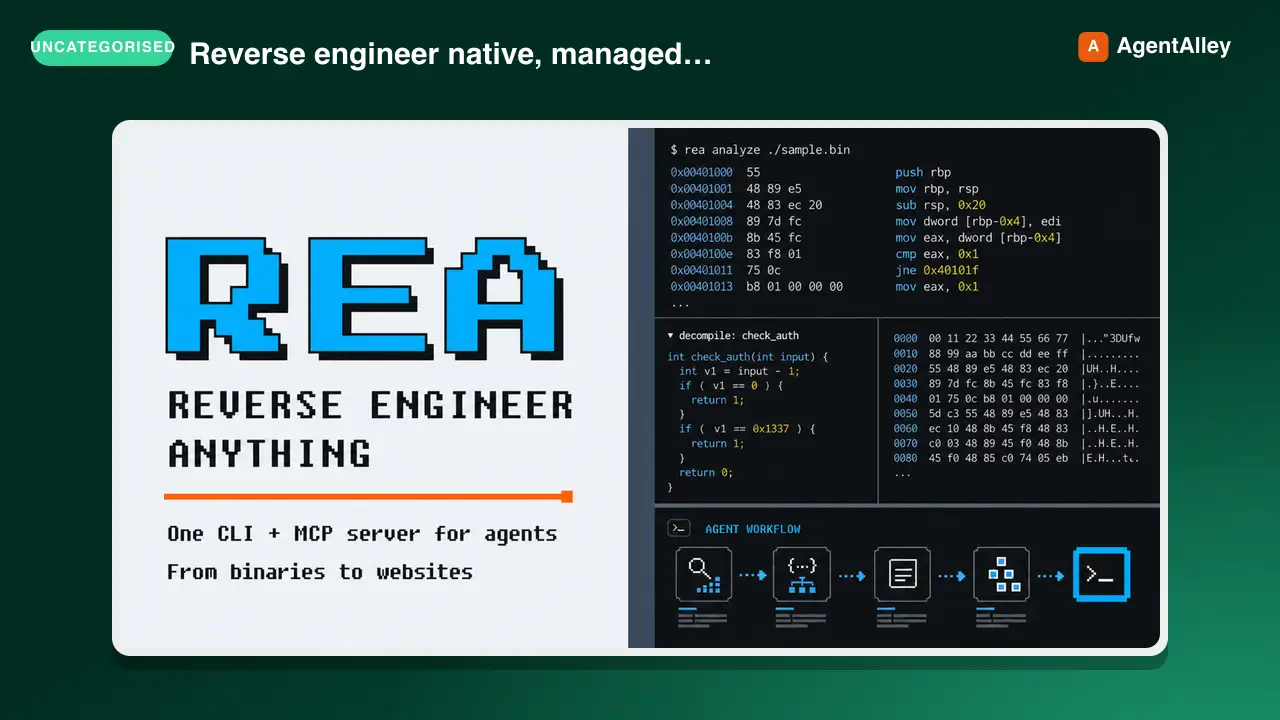 SkillCross-Platform Reverse Engineer
 morluto/rea · by morlutoReverse engineer native, managed, Electron/JavaScript, packaged, firmware, and browser targets with REA. Use shipped-artifact or requested runtime evidence to explain features, compare versions, decompile code, or guide a reconstruction. Skip REA for ordinary source-repository architecture analysis.★ 316k GitHub stars
 SkillBrainstorm Ideas
 obra/superpowers · by obraYou MUST use this before any creative work - creating features, building components, adding functionality, or modifying behavior. Explores user intent, requirements and design before implementation.★ 290k GitHub stars
 SkillCode Review Feedback Analyzerobra/superpowers · by obraUse when receiving code review feedback, before implementing suggestions, especially if feedback seems unclear or technically questionable - requires technical rigor and verification, not performative agreement or blind implementation★ 290k GitHub stars
 SkillBug Diagnosis Framework
 mattpocock/skills · by mattpocockDiagnosis loop for hard bugs and performance regressions. Use when the user says "diagnose"/"debug this", or reports something broken/throwing/failing/slow.★ 267k GitHub stars
 SkillImplement Specmattpocock/skills · by mattpocockImplement the result of /to-spec and /to-tickets in code.★ 267k GitHub stars
 SkillPR Description Writermattpocock/skills · by mattpocockUse when writing a PR body.★ 267k GitHub stars
More from LeadMagic
 SkillFirst-Party Analytics Setup
 LeadMagic/gtm-skills · by LeadMagicSet up first-party tracking and analytics — website pixels, conversion tracking, UTM architecture, cookie consent, server-side tagging vs client-side, 1P vs 3P data strategy, and identity resolution. Use when setting up tracking, implementing pixels, building attribution, or preparing for privacy-first measurement. Triggers on: "pixel", "tracking", "conversion tracking", "first-party data", server-side tagging", "UTM", "cookie consent", "1P vs 3P", "identity resolution", or any tracking implementation request.★ 62 GitHub stars
 SkillStrategic Account MarketingLeadMagic/gtm-skills · by LeadMagicRuns strategic 1-to-1 ABM for 5-15 high-value accounts: account plans, custom microsites, executive engagement, direct mail, and board-level connections. Use when a named enterprise account justifies bespoke content and executive time, or when the user needs a strategic account plan. Triggers on: "1-to-1 ABM", "strategic ABM", "custom ABM", "key account marketing", "named account".★ 62 GitHub stars
 SkillCluster Account MarketingLeadMagic/gtm-skills · by LeadMagicRuns ABM at scale (1-to-few) for 15-50 clustered accounts: industry or persona clusters, semi-custom campaigns, and cluster-level content. Use when named-account ABM needs to reach more accounts without bespoke work per account. Triggers on: "1-to-few ABM", "ABM scale", "cluster ABM", "industry ABM".★ 62 GitHub stars
 SkillProgrammatic Account TargetingLeadMagic/gtm-skills · by LeadMagicRuns programmatic 1-to-many ABM for 50-200+ accounts: automated personalization, scaled outbound, intent-based targeting, and lookalike expansion. Use when ABM coverage must grow without adding headcount or when the user wants automated account-based outreach. Triggers on: "1-to-many ABM", programmatic ABM", "scaled ABM", "automated ABM".★ 62 GitHub stars
 SkillAccount Strategy DesignerLeadMagic/gtm-skills · by LeadMagicDesigns an account-based marketing program: tier selection, account scoring, channel orchestration, BDR alignment (account-based sales development), and a measurement framework. Use when the user is launching or redesigning ABM, choosing between 1-to-1, 1-to-few, and 1-to-many, or building a target account program. Triggers on: "ABM strategy", "account based marketing", "ABM playbook", "design ABM", "target accounts", "ABSD", "account based sales development", "Lars Nilsson".★ 62 GitHub stars
 SkillTarget Account SelectorLeadMagic/gtm-skills · by LeadMagicBuilds and tiers a target account list: fit and intent scoring models, tier assignment, and TAM segmentation. Use when the user needs to decide which accounts to target, score or tier an account list, or prioritize a TAM for ABM or outbound. Triggers on: "account selection", "target account list", "tier accounts", "prioritize accounts", "TAM segmentation".★ 62 GitHub stars