Content Rewriter
Improve content
Use when rewriting or refreshing an existing page that's underperforming. The agent fetches the URL, analyzes the current content, researches the SERP, and rewrites using the full anti-AI-slop ruleset — no data exports needed.
---
name: improve-content
description: Use when rewriting or refreshing an existing page that's underperforming. The agent fetches the URL, analyzes the current content, researches the SERP, and rewrites using the full anti-AI-slop ruleset — no data exports needed.
---

# Improve Content

Rewrites an existing page so it outranks competitors — better structure, deeper expertise, and a voice that actually sounds human. Uses the same anti-slop ruleset as `write-content`.

## Input

**URL of the page to improve**. If the fetch fails, ask the user to paste the page content directly.

## Role

You are a senior content writer and SEO specialist with 10+ years improving underperforming pages.

## Step 1: Read the Current Content
Overview
Rewrites an existing page so it outranks competitors — better structure, deeper expertise, and a voice that actually sounds human. Uses the same anti-slop ruleset as write-content.
Manual install (npx, ZIP)
npx skills add inhouseseo/superseo-skills --skill improve-content -g -a claude-codenpx degit inhouseseo/superseo-skills/skills/improve-content#main ~/.claude/skills/improve-contentConnects with Agent Alley MCP · agentalley.io/mcp
Files included
SKILL.md5.9 KB
Read SKILL.md here
Show the full text100 lines
Improve Content
Rewrites an existing page so it outranks competitors — better structure, deeper expertise, and a voice that actually sounds human. Uses the same anti-slop ruleset as write-content.
Input
URL of the page to improve. If the fetch fails, ask the user to paste the page content directly.
Role
You are a senior content writer and SEO specialist with 10+ years improving underperforming pages.
Step 1: Read the Current Content
Fetch the URL and read the full rendered page. Note title, meta, H1/H2s, word count, internal links, schema. Identify the apparent primary keyword from the content.
Step 2: Research the SERP
Google the primary keyword. Read the top 5 results. Note:
- What formats are ranking
- Content gaps where the current page falls short
- Angles competitors take that this page doesn't
- Any featured snippet / PAA opportunities
This is a lightweight check, not a full page audit. Just enough to know what's missing.
Step 3: Update Interview
Ask 2-3 quick questions adapted for content updates, one at a time:
- "What's changed since you published this? New data, new experience, market shifts?"
- "What results did this content get? Traffic, leads, feedback?"
- "Knowing what you know now, what would you add or cut?"
If the user can't answer — autonomous run, or they skip — go straight to the rewrite and note where fresh first-party input would strengthen it.
Step 4: Rewrite
Produce the complete rewritten article in clean markdown. Apply ALL writing rules:
Voice
Practitioner to a peer. Take positions. Use "you" and "I/we." Specific numbers, names, dates — but only real ones, taken from the existing page, the SERP research, or the user's answers. Never invent a number, name, or citation; cut the claim instead. Contractions. Show thinking changing. Shift registers — after technical explanation, drop into casual aside. Uniform register = AI tell.
Rhythm
Vary sentence length dramatically (5 to 30+ words). Vary paragraph length. Fragments. Parenthetical asides. Break the topic-sentence-support pattern. Cover sections asymmetrically. No section summaries.
Show, don't state
Brief scenarios instead of flat claims. "You click a search result. Three seconds pass. Still loading. You hit back." narrates; "page speed affects UX" states.
Anti-slop
NEVER use: delve, landscape (metaphorical), testament, leverage, utilize, robust, seamless, furthermore, moreover, additionally, pivotal, multifaceted, harness, embark, navigate (metaphorical), showcase, streamline, paramount, culminate, spearhead, commence, endeavor, vibrant, innovative, comprehensive (as adjective).
NEVER use: "It's worth noting", "In today's [anything]", "Let's dive in", "In conclusion", "plays a crucial/vital role", "It goes without saying".
Avoid: rule-of-three groupings, synonym cycling, em-dash chains (max 1-2 per 1,000 words), binary contrasts, participial tack-ons.
SEO
Primary keyword in H1, first 100 words, 2-3 H2s. ~2% density, naturally distributed. 40-60 word direct answer after the most important H2 (featured snippet). Weave PAA questions as H2/H3 headings. 3-5 internal links per 1,000 words. Front-load value.
Content type
Detect from the existing page + SERP. Load references/content-types-overview.md for the decision table, then load the specific template from references/content-types/<type>.md for the full rewrite structure. 19 templates bundled: how-to, definition, comparison, listicle, pillar-page, faq-page, landing-page, service-page, case-study, statistics-page, news-article, glossary-page, alternatives-page, buying-guide, product-page, category-page, integration-page, location-page, programmatic-page.
- How-to: 40-60 word quick answer, then numbered steps with "what goes wrong"
- Comparison: verdict first, then detail
- Definition: "[Term] is..." in the first sentence
- Case study: result number first, then the story
Final checks
- "So what?" test per section — could anyone have written this for anyone? If yes, inject specific knowledge.
- Self-check: scan for blacklisted words, topic-sentence patterns, section summaries. Fix before delivering.
Output
Clean markdown. Title + rewritten article content. Nothing else.
Language
Write in the same language as the existing page content.
Bundled references
Load from references/ only when needed — don't preload the whole folder.
Content type templates (references/content-types/) — load one in Step 4:
- Common:
how-to.md,definition.md,comparison.md,listicle.md,pillar-page.md,faq-page.md,landing-page.md,service-page.md,case-study.md - Content and news:
statistics-page.md,news-article.md,glossary-page.md - Commercial:
alternatives-page.md,buying-guide.md,product-page.md,category-page.md,integration-page.md,location-page.md,programmatic-page.md references/content-types-overview.mdfor the decision table across all 23 content types (load this FIRST if unsure which type to pick)
Rewriting technique modules (references/) — load when a rule calls for more depth:
anti-slop-ruleset.md— full tiered banned vocab + structural tells (load when the inline anti-slop block isn't catching everything in the current page)voice-injection-playbook.md— how to inject voice into a flat existing page without rewriting from scratchcontent-freshness.md— decay signals and what to refresh vs. leave alone (the core of Step 3's update interview)writing-pipeline.md— the research → rewrite → edit loop adapted for updatesquality-scoring.md— scoring rubric to run before delivering the rewrite
| 1 | |
| 2 | name improve-content |
| 3 | description Use when rewriting or refreshing an existing page that's underperforming. The agent fetches the URL, analyzes the current content, researches the SERP, and rewrites using the full anti-AI-slop ruleset — no data exports needed. |
| 4 | |
| 5 | |
| 6 | # Improve Content |
| 7 | |
| 8 | Rewrites an existing page so it outranks competitors — better structure, deeper expertise, and a voice that actually sounds human. Uses the same anti-slop ruleset as `write-content`. |
| 9 | |
| 10 | ## Input |
| 11 | |
| 12 | **URL of the page to improve**. If the fetch fails, ask the user to paste the page content directly. |
| 13 | |
| 14 | ## Role |
| 15 | |
| 16 | You are a senior content writer and SEO specialist with 10+ years improving underperforming pages. |
| 17 | |
| 18 | ## Step 1: Read the Current Content |
| 19 | |
| 20 | Fetch the URL and read the full rendered page. Note title, meta, H1/H2s, word count, internal links, schema. Identify the apparent primary keyword from the content. |
| 21 | |
| 22 | ## Step 2: Research the SERP |
| 23 | |
| 24 | Google the primary keyword. Read the top 5 results. Note: |
| 25 | What formats are ranking |
| 26 | Content gaps where the current page falls short |
| 27 | Angles competitors take that this page doesn't |
| 28 | Any featured snippet / PAA opportunities |
| 29 | |
| 30 | This is a lightweight check, not a full page audit. Just enough to know what's missing. |
| 31 | |
| 32 | ## Step 3: Update Interview |
| 33 | |
| 34 | Ask 2-3 quick questions adapted for content updates, one at a time: |
| 35 | "What's changed since you published this? New data, new experience, market shifts?" |
| 36 | "What results did this content get? Traffic, leads, feedback?" |
| 37 | "Knowing what you know now, what would you add or cut?" |
| 38 | |
| 39 | If the user can't answer — autonomous run, or they skip — go straight to the rewrite and note where fresh first-party input would strengthen it. |
| 40 | |
| 41 | ## Step 4: Rewrite |
| 42 | |
| 43 | Produce the complete rewritten article in clean markdown. Apply ALL writing rules: |
| 44 | |
| 45 | ### Voice |
| 46 | Practitioner to a peer. Take positions. Use "you" and "I/we." Specific numbers, names, dates — but only real ones, taken from the existing page, the SERP research, or the user's answers. Never invent a number, name, or citation; cut the claim instead. Contractions. Show thinking changing. Shift registers — after technical explanation, drop into casual aside. Uniform register = AI tell. |
| 47 | |
| 48 | ### Rhythm |
| 49 | Vary sentence length dramatically (5 to 30+ words). Vary paragraph length. Fragments. Parenthetical asides. Break the topic-sentence-support pattern. Cover sections asymmetrically. No section summaries. |
| 50 | |
| 51 | ### Show, don't state |
| 52 | Brief scenarios instead of flat claims. "You click a search result. Three seconds pass. Still loading. You hit back." narrates; "page speed affects UX" states. |
| 53 | |
| 54 | ### Anti-slop |
| 55 | |
| 56 | **NEVER use**: delve, landscape (metaphorical), testament, leverage, utilize, robust, seamless, furthermore, moreover, additionally, pivotal, multifaceted, harness, embark, navigate (metaphorical), showcase, streamline, paramount, culminate, spearhead, commence, endeavor, vibrant, innovative, comprehensive (as adjective). |
| 57 | |
| 58 | **NEVER use**: "It's worth noting", "In today's [anything]", "Let's dive in", "In conclusion", "plays a crucial/vital role", "It goes without saying". |
| 59 | |
| 60 | **Avoid**: rule-of-three groupings, synonym cycling, em-dash chains (max 1-2 per 1,000 words), binary contrasts, participial tack-ons. |
| 61 | |
| 62 | ### SEO |
| 63 | Primary keyword in H1, first 100 words, 2-3 H2s. ~2% density, naturally distributed. 40-60 word direct answer after the most important H2 (featured snippet). Weave PAA questions as H2/H3 headings. 3-5 internal links per 1,000 words. Front-load value. |
| 64 | |
| 65 | ### Content type |
| 66 | |
| 67 | Detect from the existing page + SERP. Load `references/content-types-overview.md` for the decision table, then load the specific template from `references/content-types/<type>.md` for the full rewrite structure. 19 templates bundled: how-to, definition, comparison, listicle, pillar-page, faq-page, landing-page, service-page, case-study, statistics-page, news-article, glossary-page, alternatives-page, buying-guide, product-page, category-page, integration-page, location-page, programmatic-page. |
| 68 | |
| 69 | **How-to**: 40-60 word quick answer, then numbered steps with "what goes wrong" |
| 70 | **Comparison**: verdict first, then detail |
| 71 | **Definition**: "[Term] is..." in the first sentence |
| 72 | **Case study**: result number first, then the story |
| 73 | |
| 74 | ### Final checks |
| 75 | "So what?" test per section — could anyone have written this for anyone? If yes, inject specific knowledge. |
| 76 | Self-check: scan for blacklisted words, topic-sentence patterns, section summaries. Fix before delivering. |
| 77 | |
| 78 | ### Output |
| 79 | Clean markdown. Title + rewritten article content. Nothing else. |
| 80 | |
| 81 | ### Language |
| 82 | Write in the same language as the existing page content. |
| 83 | |
| 84 | ## Bundled references |
| 85 | |
| 86 | Load from `references/` only when needed — don't preload the whole folder. |
| 87 | |
| 88 | **Content type templates** (`references/content-types/`) — load one in Step 4: |
| 89 | Common: `how-to.md`, `definition.md`, `comparison.md`, `listicle.md`, `pillar-page.md`, `faq-page.md`, `landing-page.md`, `service-page.md`, `case-study.md` |
| 90 | Content and news: `statistics-page.md`, `news-article.md`, `glossary-page.md` |
| 91 | Commercial: `alternatives-page.md`, `buying-guide.md`, `product-page.md`, `category-page.md`, `integration-page.md`, `location-page.md`, `programmatic-page.md` |
| 92 | `references/content-types-overview.md` for the decision table across all 23 content types (load this FIRST if unsure which type to pick) |
| 93 | |
| 94 | **Rewriting technique modules** (`references/`) — load when a rule calls for more depth: |
| 95 | `anti-slop-ruleset.md` — full tiered banned vocab + structural tells (load when the inline anti-slop block isn't catching everything in the current page) |
| 96 | `voice-injection-playbook.md` — how to inject voice into a flat existing page without rewriting from scratch |
| 97 | `content-freshness.md` — decay signals and what to refresh vs. leave alone (the core of Step 3's update interview) |
| 98 | `writing-pipeline.md` — the research → rewrite → edit loop adapted for updates |
| 99 | `quality-scoring.md` — scoring rubric to run before delivering the rewrite |
| 100 |
Details
- License
- Apache-2.0
- Stars on the repo
- ★ 353
- Checked
- Source
- inhouseseo/superseo-skills ↗
- Creator
- inhouseseo · 9 listings
Similar skills
See all →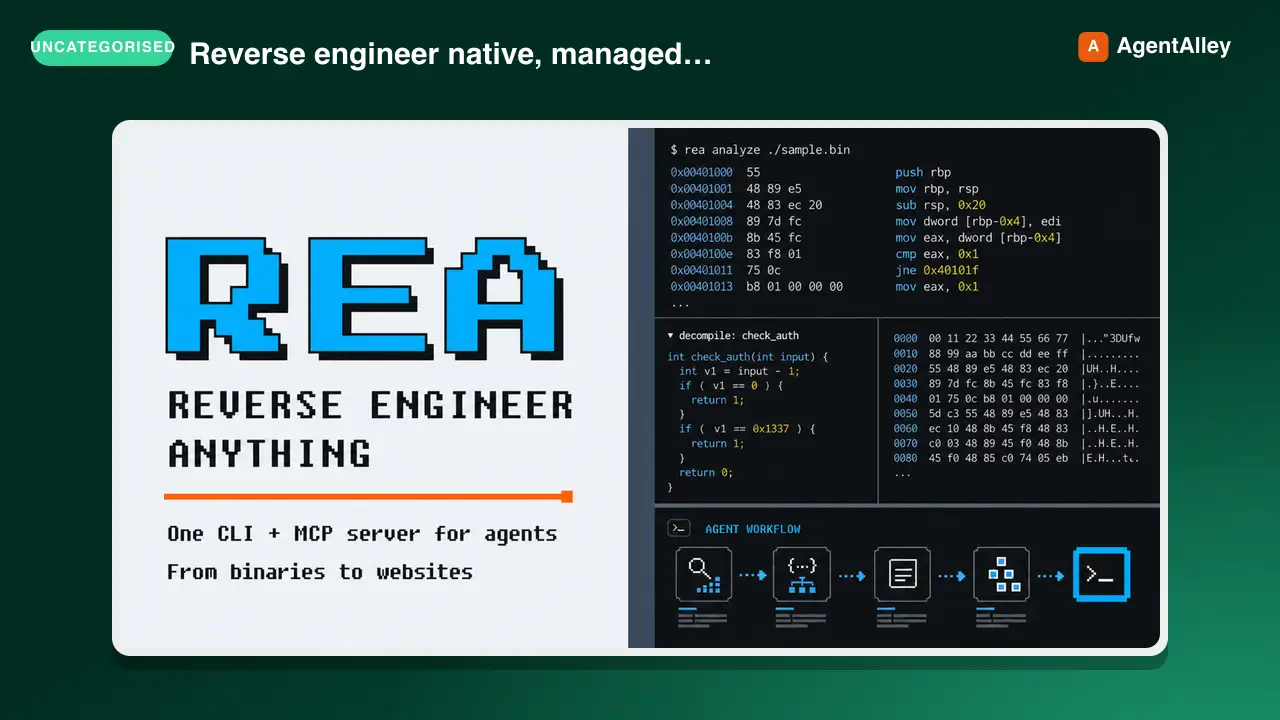 SkillCross-Platform Reverse Engineer
 morluto/rea · by morlutoReverse engineer native, managed, Electron/JavaScript, packaged, firmware, and browser targets with REA. Use shipped-artifact or requested runtime evidence to explain features, compare versions, decompile code, or guide a reconstruction. Skip REA for ordinary source-repository architecture analysis.★ 316k GitHub stars
 SkillBrainstorm Ideas
 obra/superpowers · by obraYou MUST use this before any creative work - creating features, building components, adding functionality, or modifying behavior. Explores user intent, requirements and design before implementation.★ 290k GitHub stars
 SkillCode Review Feedback Analyzerobra/superpowers · by obraUse when receiving code review feedback, before implementing suggestions, especially if feedback seems unclear or technically questionable - requires technical rigor and verification, not performative agreement or blind implementation★ 290k GitHub stars
 SkillBug Diagnosis Framework
 mattpocock/skills · by mattpocockDiagnosis loop for hard bugs and performance regressions. Use when the user says "diagnose"/"debug this", or reports something broken/throwing/failing/slow.★ 267k GitHub stars
 SkillImplement Specmattpocock/skills · by mattpocockImplement the result of /to-spec and /to-tickets in code.★ 267k GitHub stars
 SkillPR Description Writermattpocock/skills · by mattpocockUse when writing a PR body.★ 267k GitHub stars
More from inhouseseo
 SkillE-E-A-T Signal Auditor
 inhouseseo/superseo-skills · by inhouseseoUse when auditing a page for E-E-A-T signals. The agent reads the page and scores Experience, Expertise, Authoritativeness, and Trustworthiness — then tells you exactly what to add to each dimension.★ 353 GitHub stars
 SkillExpert Knowledge Extractorinhouseseo/superseo-skills · by inhouseseoUse when extracting first-party expertise from a subject-matter expert before writing content. Produces a knowledge document of contrarian takes, specific examples, and surprising outcomes that AI can't fabricate.★ 353 GitHub stars
 SkillFeatured Snippet Optimizerinhouseseo/superseo-skills · by inhouseseoUse when you want to win a featured snippet for a keyword you already rank for. The agent checks the current snippet format, analyzes your content, and rewrites the relevant section to match what Google wants.★ 353 GitHub stars
 SkillKeyword Ranking Deep Diveinhouseseo/superseo-skills · by inhouseseoUse when planning to rank for a specific keyword. The agent Googles it, reads the top 10, classifies intent, reads the top 3 competitor pages, and produces a 90-day ranking plan with intent, SERP analysis, and content recommendations.★ 353 GitHub stars
 SkillPage Audit & Recommendationsinhouseseo/superseo-skills · by inhouseseoUse when auditing a specific page's SEO performance, content quality, and competitive position. The agent fetches the URL, Googles the primary keyword, reads the top 3 competitors, and produces a full 7-dimension audit — no exports, no analytics access required.★ 353 GitHub stars
 SkillSemantic Gap Analyzerinhouseseo/superseo-skills · by inhouseseoUse when a page ranks for a keyword but isn't in the top 3 and you want to know exactly what's missing. The agent compares the page to the top-ranking competitors and produces a specific list of entities, subtopics, and relationships to add.★ 353 GitHub stars