GitHub Stars Tracker
Github stars
Show a GitHub repo's star growth as CLI charts — by day and by hour, in any timezone. Use when the user asks to "check GitHub stars", "stars by hour/day for <repo>", "star growth", "how many stars did <repo> get today", or shares a repo…
---
name: github-stars
description: Show a GitHub repo's star growth as CLI charts — by day and by hour, in any timezone. Use when the user asks to "check GitHub stars", "stars by hour/day for <repo>", "star growth", "how many stars did <repo> get today", or shares a repo name and wants its starring activity over time.
---

# github-stars

Fetch a repo's per-star timestamps from the GitHub API and render two ASCII charts in the terminal: **stars by day** and **stars by hour** (for the most recent day(s)). Useful for tracking a launch, a Show HN / Product Hunt spike, or DevRel growth.

## Requirements

- The [`gh` CLI](https://cli.github.com/) installed and authenticated (`gh auth status`). Unauthenticated calls hit a low rate limit and large repos fail mid-pagination.
- Python 3.9+ (uses the stdlib `zoneinfo` for correct DST handling).

## How it works

The script calls `gh api` with the `application/vnd.github.star+json` Accept header, which adds a `starred_at` timestamp to each stargazer. It paginates through all stargazers, converts each timestamp to the target timezone, and buckets them by day and by hour.
Overview
Fetch a repo's per-star timestamps from the GitHub API and render two ASCII charts in the terminal: stars by day and stars by hour (for the most recent day(s)). Useful for tracking a launch, a Show HN / Product Hunt spike, or DevRel growth.
Manual install (npx, ZIP)
npx skills add OpenClaudia/openclaudia-skills --skill github-stars -g -a claude-codenpx degit OpenClaudia/openclaudia-skills/skills/github-stars#main ~/.claude/skills/github-starsConnects with Agent Alley MCP · agentalley.io/mcp
Files included
SKILL.md3.5 KB
Read SKILL.md here
Show the full text72 lines
github-stars
Fetch a repo's per-star timestamps from the GitHub API and render two ASCII charts in the terminal: stars by day and stars by hour (for the most recent day(s)). Useful for tracking a launch, a Show HN / Product Hunt spike, or DevRel growth.
Requirements
- The
ghCLI installed and authenticated (gh auth status). Unauthenticated calls hit a low rate limit and large repos fail mid-pagination. - Python 3.9+ (uses the stdlib
zoneinfofor correct DST handling).
How it works
The script calls gh api with the application/vnd.github.star+json Accept header, which adds a starred_at timestamp to each stargazer. It paginates through all stargazers, converts each timestamp to the target timezone, and buckets them by day and by hour.
Usage
The script lives next to this file. From the skill directory:
bash github-stars.sh <owner/repo | search-term> [--tz <IANA tz>] [--days N] [--hours-days N]
<owner/repo>— exact repo (e.g.facebook/react). Skips the search.<search-term>— a bare word (no/) is resolved to the top repo by stars.--tz— IANA timezone for all buckets. DefaultAmerica/Los_Angeles. Use e.g.UTC,America/New_York,Asia/Shanghai,Europe/Berlin.--days N— how many recent days to show in the daily chart (default 14).--hours-days N— how many recent days to break out hourly (default 2).
Examples
# default: last 14 days daily + last 2 days hourly
bash github-stars.sh vercel/next.js

# resolve a search term, show UTC
bash github-stars.sh next.js --tz UTC

# zoom in: only today hourly, 7-day daily window
bash github-stars.sh facebook/react --days 7 --hours-days 1
Sample output
owner/repo — 284 stars (with timestamps)
newest: 2026-06-15 02:03 PM PDT   |   now: 2026-06-15 02:11 PM PDT

STARS BY DAY (PDT)
  2026-06-13    16  █████████
  2026-06-14    69  ████████████████████████████████████████  ← peak
  2026-06-15    22  █████████████

STARS BY HOUR — 2026-06-15 (PDT)   total 22
  06:00     5  ██████████████████████████████
  07:00     2  ████████████
  14:00     2  ████████████
Caveats — surface these to the user when relevant
- 40,000-star cap: GitHub only returns
starred_atfor the first 40k stargazers. Past that, the hourly/daily breakdown is incomplete (the script warns). The plain total stays accurate. - Net, not gross: the stargazer list reflects stars currently in place. Un-stars don't appear, so a flat total between two checks can hide +1/−1 churn. If the live
stargazers_countdisagrees with the timestamp count, an un-star happened. - DST is handled automatically via
zoneinfo— don't hardcode UTC offsets.
Re-checking / live polling
Just run the script again — it re-fetches live each time. To watch a launch, re-run on an interval and report the delta; don't poll faster than every ~15 minutes (rate limits + politeness).
| 1 | |
| 2 | name github-stars |
| 3 | description Show a GitHub repo's star growth as CLI charts — by day and by hour, in any timezone. Use when the user asks to "check GitHub stars", "stars by hour/day for <repo>", "star growth", "how many stars did <repo> get today", or shares a repo name and wants its starring activity over time. |
| 4 | |
| 5 | |
| 6 | # github-stars |
| 7 | |
| 8 | Fetch a repo's per-star timestamps from the GitHub API and render two ASCII charts in the terminal: **stars by day** and **stars by hour** (for the most recent day(s)). Useful for tracking a launch, a Show HN / Product Hunt spike, or DevRel growth. |
| 9 | |
| 10 | ## Requirements |
| 11 | |
| 12 | The [`gh` CLI] installed and authenticated (`gh auth status`). Unauthenticated calls hit a low rate limit and large repos fail mid-pagination. |
| 13 | Python 3.9+ (uses the stdlib `zoneinfo` for correct DST handling). |
| 14 | |
| 15 | ## How it works |
| 16 | |
| 17 | The script calls `gh api` with the `application/vnd.github.star+json` Accept header, which adds a `starred_at` timestamp to each stargazer. It paginates through all stargazers, converts each timestamp to the target timezone, and buckets them by day and by hour. |
| 18 | |
| 19 | ## Usage |
| 20 | |
| 21 | The script lives next to this file. From the skill directory: |
| 22 | |
| 23 | |
| 24 | bash github-stars.sh <owner/repo | search-term> [--tz <IANA tz>] [--days N] [--hours-days N] |
| 25 | |
| 26 | |
| 27 | **`<owner/repo>`** — exact repo (e.g. `facebook/react`). Skips the search. |
| 28 | **`<search-term>`** — a bare word (no `/`) is resolved to the top repo by stars. |
| 29 | **`--tz`** — IANA timezone for all buckets. Default `America/Los_Angeles`. Use e.g. `UTC`, `America/New_York`, `Asia/Shanghai`, `Europe/Berlin`. |
| 30 | **`--days N`** — how many recent days to show in the daily chart (default 14). |
| 31 | **`--hours-days N`** — how many recent days to break out hourly (default 2). |
| 32 | |
| 33 | ## Examples |
| 34 | |
| 35 | |
| 36 | # default: last 14 days daily + last 2 days hourly |
| 37 | bash github-stars.sh vercel/next.js |
| 38 | |
| 39 | # resolve a search term, show UTC |
| 40 | bash github-stars.sh next.js --tz UTC |
| 41 | |
| 42 | # zoom in: only today hourly, 7-day daily window |
| 43 | bash github-stars.sh facebook/react --days 7 --hours-days 1 |
| 44 | |
| 45 | |
| 46 | ## Sample output |
| 47 | |
| 48 | |
| 49 | owner/repo — 284 stars (with timestamps) |
| 50 | newest: 2026-06-15 02:03 PM PDT | now: 2026-06-15 02:11 PM PDT |
| 51 | |
| 52 | STARS BY DAY (PDT) |
| 53 | 2026-06-13 16 █████████ |
| 54 | 2026-06-14 69 ████████████████████████████████████████ ← peak |
| 55 | 2026-06-15 22 █████████████ |
| 56 | |
| 57 | STARS BY HOUR — 2026-06-15 (PDT) total 22 |
| 58 | 06:00 5 ██████████████████████████████ |
| 59 | 07:00 2 ████████████ |
| 60 | 14:00 2 ████████████ |
| 61 | |
| 62 | |
| 63 | ## Caveats — surface these to the user when relevant |
| 64 | |
| 65 | **40,000-star cap:** GitHub only returns `starred_at` for the first 40k stargazers. Past that, the hourly/daily breakdown is incomplete (the script warns). The plain total stays accurate. |
| 66 | **Net, not gross:** the stargazer list reflects stars currently in place. Un-stars don't appear, so a flat total between two checks can hide +1/−1 churn. If the live `stargazers_count` disagrees with the timestamp count, an un-star happened. |
| 67 | **DST is handled** automatically via `zoneinfo` — don't hardcode UTC offsets. |
| 68 | |
| 69 | ## Re-checking / live polling |
| 70 | |
| 71 | Just run the script again — it re-fetches live each time. To watch a launch, re-run on an interval and report the delta; don't poll faster than every ~15 minutes (rate limits + politeness). |
| 72 |
Details
- License
- MIT
- Stars on the repo
- ★ 705
- Checked
- Source
- OpenClaudia/openclaudia-skills ↗
- Creator
- OpenClaudia · 78 listings
Similar skills
See all → SkillCross-Platform Reverse Engineer
 morluto/rea · by morlutoReverse engineer native, managed, Electron/JavaScript, packaged, firmware, and browser targets with REA. Use shipped-artifact or requested runtime evidence to explain features, compare versions, decompile code, or guide a reconstruction. Skip REA for ordinary source-repository architecture analysis.★ 316k GitHub stars
 SkillBrainstorm Ideas
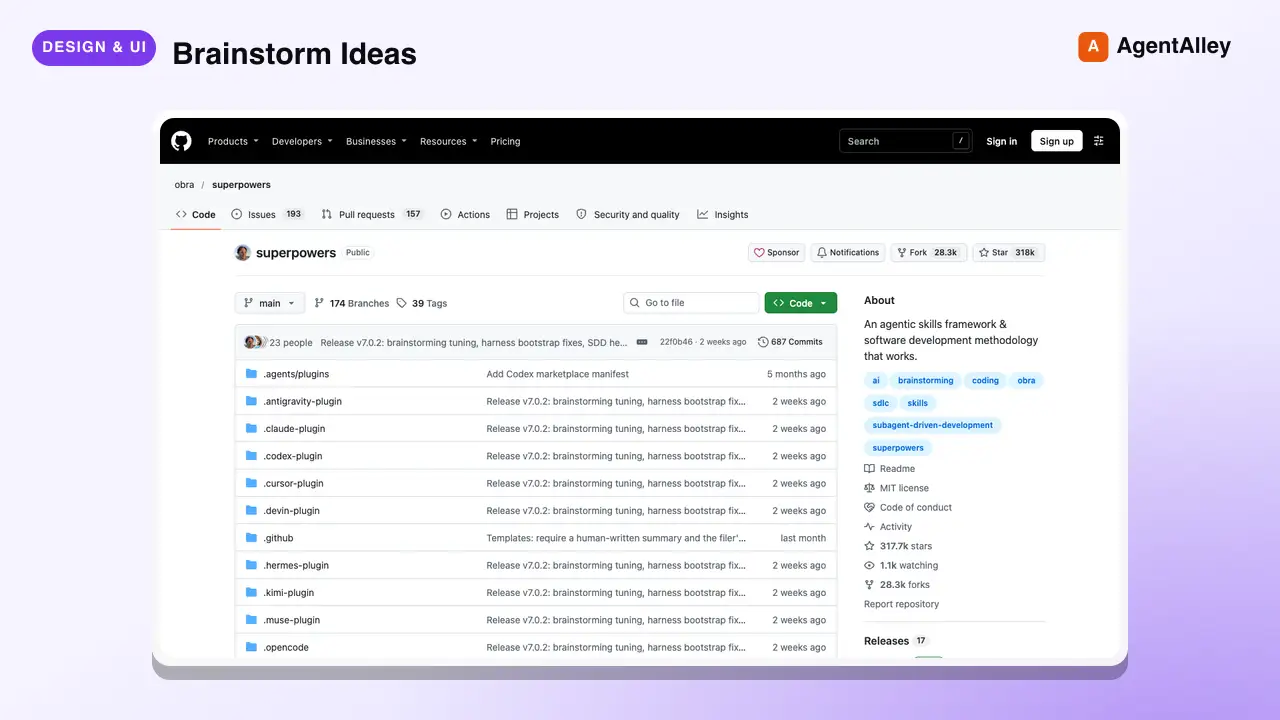
 obra/superpowers · by obraYou MUST use this before any creative work - creating features, building components, adding functionality, or modifying behavior. Explores user intent, requirements and design before implementation.★ 290k GitHub stars
 SkillCode Review Feedback Analyzerobra/superpowers · by obraUse when receiving code review feedback, before implementing suggestions, especially if feedback seems unclear or technically questionable - requires technical rigor and verification, not performative agreement or blind implementation★ 290k GitHub stars
 SkillBug Diagnosis Framework
 mattpocock/skills · by mattpocockDiagnosis loop for hard bugs and performance regressions. Use when the user says "diagnose"/"debug this", or reports something broken/throwing/failing/slow.★ 267k GitHub stars
 SkillImplement Specmattpocock/skills · by mattpocockImplement the result of /to-spec and /to-tickets in code.★ 267k GitHub stars
 SkillPR Description Writermattpocock/skills · by mattpocockUse when writing a PR body.★ 267k GitHub stars
More from OpenClaudia
 SkillA/B Testing Framework
 OpenClaudia/openclaudia-skills · by OpenClaudiaDesign, plan, and analyze A/B tests with statistical rigor. Use when the user asks about A/B testing, split testing, experiment design, statistical significance, sample size calculation, test duration, multivariate testing, or conversion experiments. Trigger phrases include "A/B test", "split test", "experiment", "statistical significance", "sample size", "test duration", "which version wins", "conversion experiment", "hypothesis test", "variant testing".★ 705 GitHub stars
 SkillAffiliate Marketing ProgramOpenClaudia/openclaudia-skills · by OpenClaudiaBuild and manage an affiliate marketing program. Use when the user says "affiliate program", "affiliate marketing", "affiliate partners", "referral commissions", "affiliate network", "partner program", "affiliate tracking", or asks about creating, managing, or growing an affiliate or partner program.★ 705 GitHub stars
 SkillAhrefs API ManagerOpenClaudia/openclaudia-skills · by OpenClaudiaManages Ahrefs API usage in Python using `ahrefs-python` library. Use when working with SEO / marketing related tasks or with data including backlinks, keywords, domain ratings, organic traffic, site audits, rank tracking, and brand monitoring. Covers `ahrefs-python` usage including AhrefsClient / AsyncAhrefsClient, typed request/response models, error handling, and all API sections.★ 705 GitHub stars
 SkillAI Citations Report GeneratorOpenClaudia/openclaudia-skills · by OpenClaudiaGenerate an AI Citations Report (GEO) for a domain — which AI-search prompts cite the site across Google AI Overview and ChatGPT, plus organic-traffic context and per-article citation coverage. Use when the user asks for an 'AI citations report', 'GEO citations report', or 'which AI prompts cite <domain>'.★ 705 GitHub stars
 SkillB2B Lead EnricherOpenClaudia/openclaudia-skills · by OpenClaudiaResearch and enrich B2B leads using the Apollo.io API. Use when the user says "find leads", "prospect research", "company enrichment", "find decision makers", "B2B leads", "lead research", "enrich contacts", "find VP of marketing at", or asks about finding people at specific companies or in specific roles.★ 705 GitHub stars
 SkillBacklink Health CheckerOpenClaudia/openclaudia-skills · by OpenClaudiaAudit a domain's backlink profile using the SemRush API. Use when the user says "audit backlinks", "check my backlinks", "backlink analysis", "link profile", "toxic links", "disavow", "link building opportunities", "referring domains", "anchor text", or asks about a site's link authority.★ 705 GitHub stars