Domain Structure Planner
Domain architecture
When the user wants to decide domain structure for multiple products or brands—subfolder vs subdomain vs independent domain. Also use when the user mentions "subfolder vs subdomain," "subdirectory vs subdomain," "multiple products…
---
name: domain-architecture
description: When the user wants to decide domain structure for multiple products or brands—subfolder vs subdomain vs independent domain. Also use when the user mentions "subfolder vs subdomain," "subdirectory vs subdomain," "multiple products domain," "multiple websites," "brand architecture," "branded house," "house of brands," "where to host product," "domain structure," or "hub-spoke domain." For brand SERP, use multi-domain-brand-seo.
metadata:
  version: 1.0.1
---

# Strategy: Domain Architecture

Guides domain structure decisions for multiple products or brands: subfolder (subdirectory), subdomain, or independent domain. Covers brand architecture (Branded House vs House of Brands) and Hub-Spoke principles when multiple domains coexist. See **domain-selection** for initial domain choice (Brand/PMD/EMD, TLD); **website-structure** for single-domain page planning; **rebranding-strategy** for domain change and migration; **multi-domain-brand-seo** for brand search optimization.

**When invoking**: On **first use**, if helpful, open with 1–2 sentences on what this skill covers and why it matters, then provide the main output. On **subsequent use** or when the user asks to skip, go directly to the main output.

## Initial Assessment

**Project context:** Read root `contextus.md` when present and load only the modules relevant to this task. Without Contextus, use available project material or user-provided facts and ask for missing information; do not create a parallel context system.

Identify:
Overview
Guides domain structure decisions for multiple products or brands: subfolder (subdirectory), subdomain, or independent domain. Covers brand architecture (Branded House vs House of Brands) and Hub-Spoke principles when multiple domains coexist. See domain-selection for initial domain choice (Brand/PMD/EMD, TLD); website-structure for single-domain page planning; rebranding-strategy for domain change and migration; multi-domain-brand-seo for brand search optimization.
What you get
- Recommendation(subfolder / subdomain / independent) with rationale
- Brand architecturefit (Branded House / House of Brands / Sub-brands)
- Domain mapping(e.g., product A → company.com/product-a)
- Hub-Spokeguidance (if multiple domains)
- Relatednext steps (website-structure, rebranding-strategy)
Manual install (npx, ZIP)
npx skills add kostja94/marketing-skills --skill domain-architecture -g -a claude-codenpx degit kostja94/marketing-skills/skills/strategies/commercial/domain/domain-architecture#main ~/.claude/skills/domain-architectureConnects with Agent Alley MCP · agentalley.io/mcp
Files included
SKILL.md4.9 KB
Read SKILL.md here
Show the full text81 lines
Strategy: Domain Architecture
Guides domain structure decisions for multiple products or brands: subfolder (subdirectory), subdomain, or independent domain. Covers brand architecture (Branded House vs House of Brands) and Hub-Spoke principles when multiple domains coexist. See domain-selection for initial domain choice (Brand/PMD/EMD, TLD); website-structure for single-domain page planning; rebranding-strategy for domain change and migration; multi-domain-brand-seo for brand search optimization.
When invoking: On first use, if helpful, open with 1–2 sentences on what this skill covers and why it matters, then provide the main output. On subsequent use or when the user asks to skip, go directly to the main output.
Initial Assessment
Project context: Read root contextus.md when present and load only the modules relevant to this task. Without Contextus, use available project material or user-provided facts and ask for missing information; do not create a parallel context system.
Identify:
- Product count: Single product vs multiple products/brands
- Brand strategy: Unified brand vs distinct brands
- Current state: Planning from scratch vs consolidating existing domains
- Constraints: Tech stack, team, budget
Domain Structure Options
| Structure | Example | SEO Authority | Brand Independence | Typical Use |
|---|---|---|---|---|
| Subfolder | company.com/product-a | Shared with main domain | Low | Products under one brand; SMB; content consolidation |
| Subdomain | product.company.com | Treated separately by Google | Medium | Separate product experience; tech isolation; support/docs |
| Independent domain | product.ai | None shared | High | Acquired brands; different markets; distinct brand identity |
When to Use Each
| Choose | When |
|---|---|
| Subfolder | Products share value proposition; want to strengthen main domain; SMB; blog, tools, features under one brand |
| Subdomain | Need separate tech stack (e.g., app vs marketing); support portal; docs; distinct UX but same brand |
| Independent domain | House of Brands; acquired company; different audience; different TLD (e.g., .ai for AI product) |
SEO consensus: Subfolders typically outperform subdomains for most cases—authority flows to the main domain. Subdomains require separate SEO effort.
Brand Architecture
| Model | Description | Domain Tendency | Examples |
|---|---|---|---|
| Branded House | One master brand; products use functional descriptors | Subfolder or subdomain | Google (google.com/search, google.com/maps), FedEx |
| House of Brands | Each brand independent; parent hidden | Independent domains | Unilever (dove.com, axe.com) |
| Sub-brands / Endorsed | Sub-brands with parent endorsement | Subdomain or independent | FedEx Express, Marriott Bonvoy |
Decision factors: Business strategy, market positioning, product overlap, resource availability.
Hub-Spoke (Multiple Domains Coexist)
When company main site (company.com) and product site (product.ai) both exist:
| Role | Domain | Focus |
|---|---|---|
| Hub | company.com | Brand, About, Research, product matrix; brand queries |
| Spoke | product.ai | Product features, pricing, signup; product queries |
Principles:
- Hub links to Spoke (Products section); Spoke links back (About, Footer, "A [Company] product")
- Spoke avoids competing for brand queries in Title; Hub avoids competing for product keywords
- See multi-domain-brand-seo for brand search optimization.
Output Format
- Recommendation (subfolder / subdomain / independent) with rationale
- Brand architecture fit (Branded House / House of Brands / Sub-brands)
- Domain mapping (e.g., product A → company.com/product-a)
- Hub-Spoke guidance (if multiple domains)
- Related next steps (website-structure, rebranding-strategy)
Related Skills
- domain-selection: Initial domain choice (Brand/PMD/EMD, TLD); single-site use case
- website-structure: Plan pages within a domain; single-domain structure
- rebranding-strategy: Domain change, 301 redirects, migration
- multi-domain-brand-seo: Brand search control when Hub and Spoke coexist
- branding: Brand strategy, positioning; domain architecture implements brand structure
| 1 | |
| 2 | name domain-architecture |
| 3 | description When the user wants to decide domain structure for multiple products or brands—subfolder vs subdomain vs independent domain. Also use when the user mentions "subfolder vs subdomain," "subdirectory vs subdomain," "multiple products domain," "multiple websites," "brand architecture," "branded house," "house of brands," "where to host product," "domain structure," or "hub-spoke domain." For brand SERP, use multi-domain-brand-seo. |
| 4 | metadata |
| 5 | version 1.0.1 |
| 6 | |
| 7 | |
| 8 | # Strategy: Domain Architecture |
| 9 | |
| 10 | Guides domain structure decisions for multiple products or brands: subfolder (subdirectory), subdomain, or independent domain. Covers brand architecture (Branded House vs House of Brands) and Hub-Spoke principles when multiple domains coexist. See **domain-selection** for initial domain choice (Brand/PMD/EMD, TLD); **website-structure** for single-domain page planning; **rebranding-strategy** for domain change and migration; **multi-domain-brand-seo** for brand search optimization. |
| 11 | |
| 12 | **When invoking**: On **first use**, if helpful, open with 1–2 sentences on what this skill covers and why it matters, then provide the main output. On **subsequent use** or when the user asks to skip, go directly to the main output. |
| 13 | |
| 14 | ## Initial Assessment |
| 15 | |
| 16 | **Project context:** Read root `contextus.md` when present and load only the modules relevant to this task. Without Contextus, use available project material or user-provided facts and ask for missing information; do not create a parallel context system. |
| 17 | |
| 18 | Identify: |
| 19 | **Product count**: Single product vs multiple products/brands |
| 20 | **Brand strategy**: Unified brand vs distinct brands |
| 21 | **Current state**: Planning from scratch vs consolidating existing domains |
| 22 | **Constraints**: Tech stack, team, budget |
| 23 | |
| 24 | ## Domain Structure Options |
| 25 | |
| 26 | | Structure | Example | SEO Authority | Brand Independence | Typical Use | |
| 27 | |-----------|---------|---------------|-------------------|-------------| |
| 28 | | **Subfolder** | company.com/product-a | Shared with main domain | Low | Products under one brand; SMB; content consolidation | |
| 29 | | **Subdomain** | product.company.com | Treated separately by Google | Medium | Separate product experience; tech isolation; support/docs | |
| 30 | | **Independent domain** | product.ai | None shared | High | Acquired brands; different markets; distinct brand identity | |
| 31 | |
| 32 | ### When to Use Each |
| 33 | |
| 34 | | Choose | When | |
| 35 | |--------|------| |
| 36 | | **Subfolder** | Products share value proposition; want to strengthen main domain; SMB; blog, tools, features under one brand | |
| 37 | | **Subdomain** | Need separate tech stack (e.g., app vs marketing); support portal; docs; distinct UX but same brand | |
| 38 | | **Independent domain** | House of Brands; acquired company; different audience; different TLD (e.g., .ai for AI product) | |
| 39 | |
| 40 | **SEO consensus**: Subfolders typically outperform subdomains for most cases—authority flows to the main domain. Subdomains require separate SEO effort. |
| 41 | |
| 42 | ## Brand Architecture |
| 43 | |
| 44 | | Model | Description | Domain Tendency | Examples | |
| 45 | |-------|-------------|-----------------|----------| |
| 46 | | **Branded House** | One master brand; products use functional descriptors | Subfolder or subdomain | Google (google.com/search, google.com/maps), FedEx | |
| 47 | | **House of Brands** | Each brand independent; parent hidden | Independent domains | Unilever (dove.com, axe.com) | |
| 48 | | **Sub-brands / Endorsed** | Sub-brands with parent endorsement | Subdomain or independent | FedEx Express, Marriott Bonvoy | |
| 49 | |
| 50 | **Decision factors**: Business strategy, market positioning, product overlap, resource availability. |
| 51 | |
| 52 | ## Hub-Spoke (Multiple Domains Coexist) |
| 53 | |
| 54 | When company main site (company.com) and product site (product.ai) both exist: |
| 55 | |
| 56 | | Role | Domain | Focus | |
| 57 | |------|--------|-------| |
| 58 | | **Hub** | company.com | Brand, About, Research, product matrix; brand queries | |
| 59 | | **Spoke** | product.ai | Product features, pricing, signup; product queries | |
| 60 | |
| 61 | **Principles**: |
| 62 | Hub links to Spoke (Products section); Spoke links back (About, Footer, "A [Company] product") |
| 63 | Spoke avoids competing for brand queries in Title; Hub avoids competing for product keywords |
| 64 | See **multi-domain-brand-seo** for brand search optimization. |
| 65 | |
| 66 | ## Output Format |
| 67 | |
| 68 | **Recommendation** (subfolder / subdomain / independent) with rationale |
| 69 | **Brand architecture** fit (Branded House / House of Brands / Sub-brands) |
| 70 | **Domain mapping** (e.g., product A → company.com/product-a) |
| 71 | **Hub-Spoke** guidance (if multiple domains) |
| 72 | **Related** next steps (website-structure, rebranding-strategy) |
| 73 | |
| 74 | ## Related Skills |
| 75 | |
| 76 | **domain-selection**: Initial domain choice (Brand/PMD/EMD, TLD); single-site use case |
| 77 | **website-structure**: Plan pages within a domain; single-domain structure |
| 78 | **rebranding-strategy**: Domain change, 301 redirects, migration |
| 79 | **multi-domain-brand-seo**: Brand search control when Hub and Spoke coexist |
| 80 | **branding**: Brand strategy, positioning; domain architecture implements brand structure |
| 81 |
Details
- License
- MIT
- Stars on the repo
- ★ 1,006
- Checked
- Source
- kostja94/marketing-skills ↗
- Creator
- kostja94 · 106 listings
Similar skills
See all →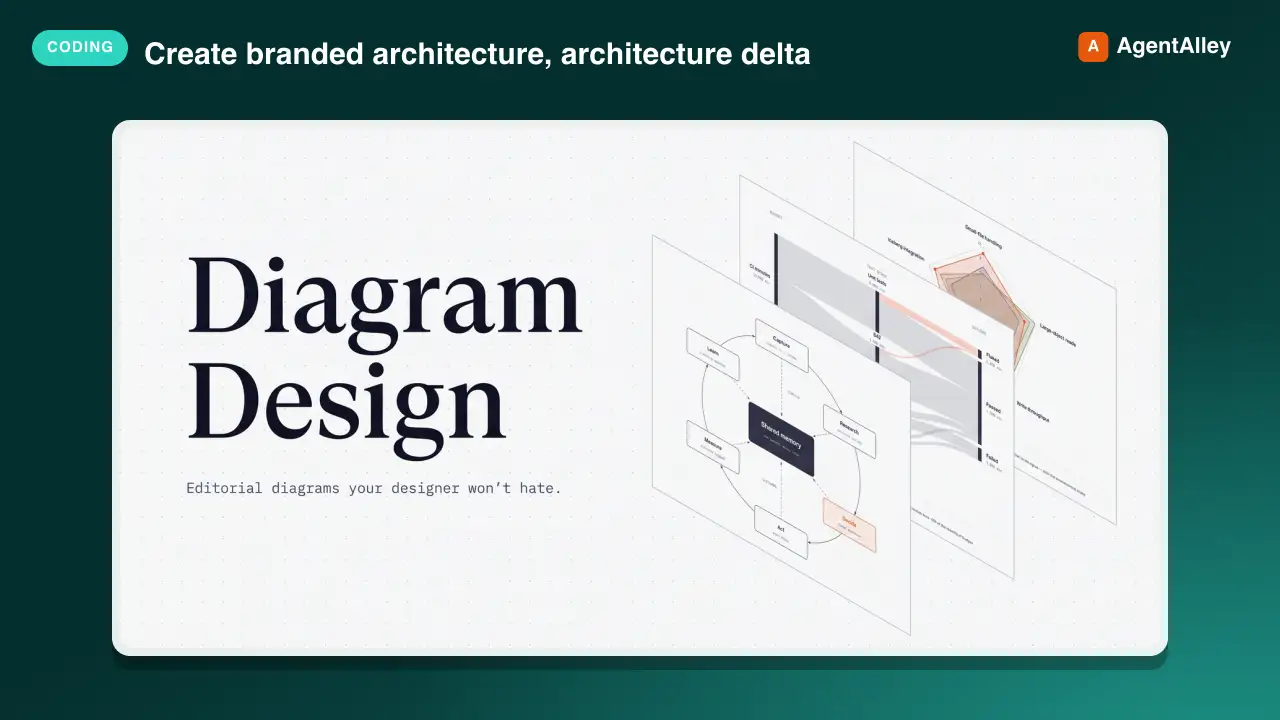 SkillCustom Diagram Designer
 cathrynlavery/diagram-design · by cathrynlaveryCreate branded architecture, architecture delta, IT current-state, flowchart, sequence, state machine, ER/data model, timeline, swimlane, quadrant, radar/spider, polar chart (polar/radial lollipop), loop/flywheel, nested, tree, org chart, layer stack, Venn, pyramid/funnel, treemap and marimekko, heatmap, bar and dumbbell, waterfall, line (slopegraph, ridgeline, streamgraph, bump), Gantt and scatter charts (bubble, beeswarm), high-level, process, medallion, data flow, DP integration, DP security matrix, Sankey, fishbone, Wardley map, kanban, user journey, deployment, dependency graph, UML class, story map, or database schema diagrams as HTML/SVG/PNG, with .drawio, Mermaid, and .excalidraw import, plus lifecycle phase maps, block decomposition trees, and onboarding guidance.★ 43.2k GitHub stars
 SkillArchitecture Pattern Reviewer
 pascalorg/editor · by pascalorgReview a PR against the Pascal architectural rules — package boundaries (core/viewer/editor/nodes), the registry-driven composition model (def.geometry / def.renderer / def.system), legacy-dispatch regressions, the slots + world-scale-UV convention for new nodes/geometry, hook hygiene (useEditor/useScene/useViewer), and selector performance. Use when the user asks to review a PR, audit a branch, or check that changes respect the codebase's architecture.★ 24.6k GitHub stars
 SkillArchitecture Diagram Creator
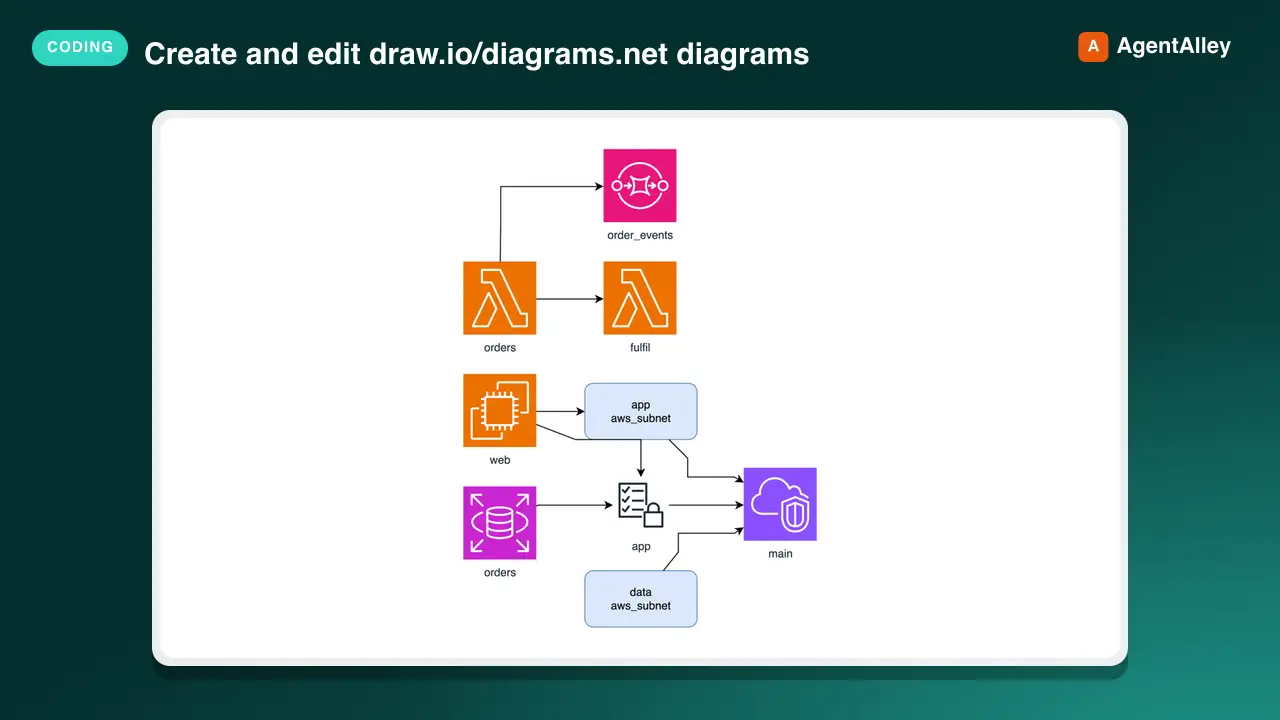
 Agents365-ai/drawio-skill · by Agents365-aiCreate and edit draw.io/diagrams.net diagrams as editable `.drawio` files. Covers architecture, UML/ERD/sequence, BPMN, network, and swimlane views authored from a description or converted from code, IaC, SQL, and API schemas, plus sync, query, test, review, export, and publish of existing diagrams. Use when the user asks for draw.io/diagrams.net or an editable diagram; prefer Mermaid/PlantUML when diagrams-as-code is enough.★ 9.8k GitHub stars
 SkillArchitecture Diagram Generator
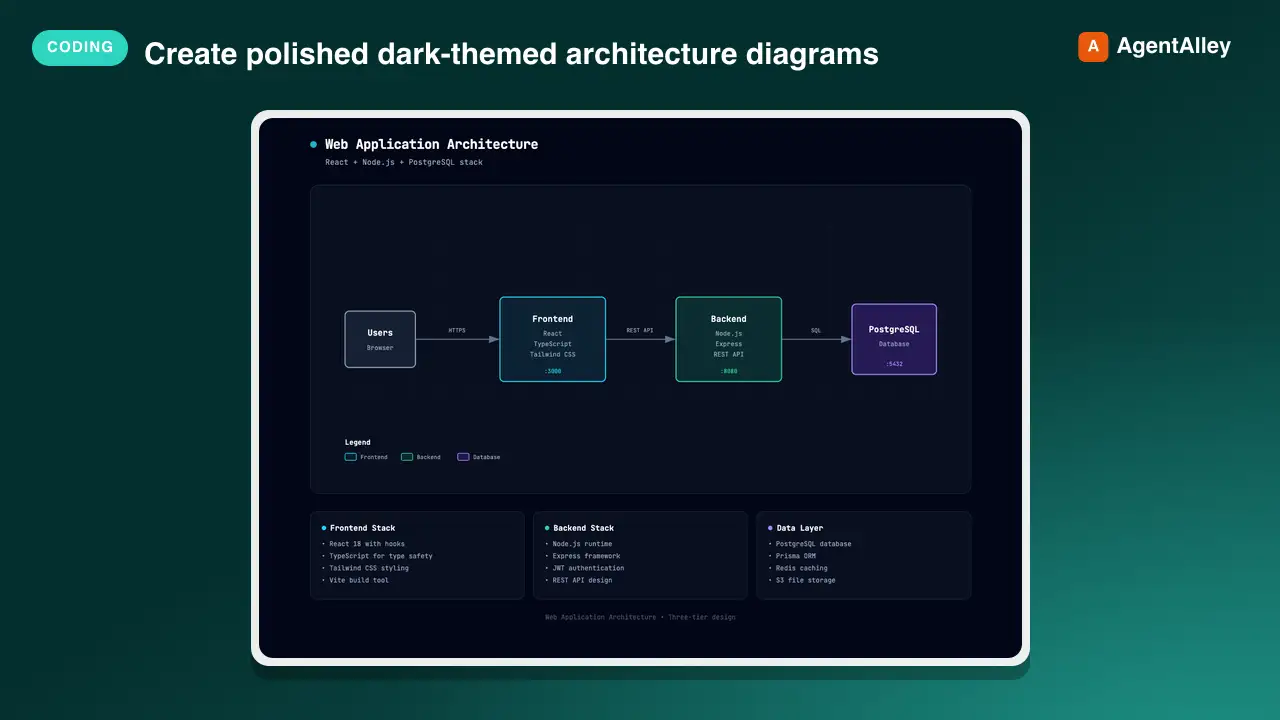
 Cocoon-AI/architecture-diagram-generator · by Cocoon-AICreate polished dark-themed architecture diagrams as self-contained HTML+SVG files. Use when the user asks for system, infrastructure, cloud, security, or network topology diagrams.★ 7.4k GitHub stars
 SkillLLM Knowledge Distillation
 Ar9av/obsidian-wiki · by Ar9avThe foundational knowledge distillation pattern for building and maintaining an AI-powered Obsidian wiki. Based on Andrej Karpathy's LLM Wiki architecture. Use this skill whenever the user wants to understand the wiki pattern, set up a new knowledge base, or needs guidance on the three-layer architecture (raw sources → wiki → schema). Also use when discussing knowledge management strategy, wiki structure decisions, or how to organize distilled knowledge. This is the "theory" skill — other skills handle specific operations (ingesting, querying, linting).★ 3.5k GitHub stars
 SkillSoftware Design Philosophy
 wondelai/skills · by wondelaiManage software complexity through deep modules, information hiding, and strategic programming. Use when the user mentions "module design", "API too complex", "shallow class", "complexity budget", "strategic vs tactical", "deep module", "information leakage", "pass-through method", "this code is over-engineered", or "simplify this design". Also trigger when reviewing an interface for simplicity, evaluating whether an abstraction is pulling its weight, deciding whether a comment is worth writing, or choosing between general-purpose and special-purpose approaches. Covers deep vs shallow modules, red flags for complexity, and comments as design documentation. For code quality, see clean-code. For architecture boundaries, see clean-architecture.★ 2.2k GitHub stars
More from kostja94
 SkillAffiliate Marketing Strategy
 kostja94/marketing-skills · by kostja94When the user wants to plan, implement, or optimize affiliate marketing strategy. Also use when the user mentions "affiliate marketing," "affiliate program strategy," "CPS model," "affiliate recruitment," "commission structure," "affiliate partners," "affiliate network," "affiliate tracking," "affiliate commission," or "partner marketing." For affiliate page, use affiliate-page-generator.★ 1k GitHub stars
 SkillAI Search Traffic Trackerkostja94/marketing-skills · by kostja94When the user wants to track AI search traffic in GA4 or GSC. Also use when the user mentions "AI traffic," "ChatGPT referral," "Perplexity traffic," "AI Overviews," "GA4 AI sources," "AI search analytics," "track AI referrals," "AI search traffic," "Claude traffic," or "how to track AI traffic." For AI SEO strategy, use generative-engine-optimization.★ 1k GitHub stars
 SkillGA4 Analytics Optimizerkostja94/marketing-skills · by kostja94When the user wants to set up, audit, or optimize analytics tracking (GA4, events, conversions). Also use when the user mentions "Google Analytics," "GA4," "event tracking," "conversions," "attribution model," "gtag," "data layer," "GA4 setup," "conversion tracking," "event setup," "User ID tracking," or "CTA attribution." For traffic insights, use traffic-analysis.★ 1k GitHub stars
 SkillMobile App Campaign Managerkostja94/marketing-skills · by kostja94When the user wants to run app install ads, user acquisition (UA), or promote mobile apps. Also use when the user mentions "app ads," "app install ads," "UA," "user acquisition," "Google App Campaigns," "Apple Search Ads," "ASA," "UAC," "App Store ads," "Play Store ads," "CPI," or "app promotion." For store listings, use distribution-channels.★ 1k GitHub stars
 SkillLong-Form Article Writerkostja94/marketing-skills · by kostja94When the user wants to write, generate, or create article body content—blog post body, long-form content, how-to guide, listicle. Also use when the user mentions "write article," "article content," "blog post content," "article body," "long-form content creation," "generate article," "article draft," "how-to guide content," "listicle content," "information gain," or "content density." For single post page structure, schema, and SEO metadata, use article-page-generator. For blog index/listing page, use blog-page-generator. For short ad, landing, or email copy, use copywriting.★ 1k GitHub stars
 SkillBacklink Profile Analyzerkostja94/marketing-skills · by kostja94When the user wants to analyze backlinks, audit link profile, or identify link issues. Also use when the user mentions "backlink analysis," "backlink audit," "referring domains," "toxic links," "link profile," or "disavow file." For acquisition, use link-building.★ 1k GitHub stars