Buying Committee Mapper
Decision makers map
Decision-makers mapping skill for Claude Code and Codex: map the buying committee at a target account — economic buyers, champions, technical evaluators, and influencers. Prioritizes who to engage first, surfaces coverage gaps and…
---
name: decision-makers-map
description: "Decision-makers mapping skill for Claude Code and Codex: map the buying committee at a target account — economic buyers, champions, technical evaluators, and influencers. Prioritizes who to engage first, surfaces coverage gaps and single-thread risk, and flags recently appointed leaders. Use for outbound prospecting, deal acceleration, and multi-thread selling strategies. Identify accounts by domain or company name. Works in Claude Code, Codex, Hermes-Agent, and Claude Cowork."
---

# Decision-Makers Map
Map the buying committee at one target account: who matters, what role they play, and who to engage first.

## Input
`$ARGUMENTS` is an account identifier plus optional context.

- Account identifier (required): a company domain (preferred) or a company name.
- Research context (strongly recommended): why this map is being pulled and what decision it supports. Capture as much as is true: deal stage and value, offering in play, recent activity or stalls, who is already engaged, who is missing, competitive pressure, persona priorities, timing, and any working hypothesis to test.

Example phrasings:
- "Map the buying committee at acme.com. Stage 3 deal, $400K ARR, security platform. We talked to the Director of SecOps but the CISO is quiet: find the economic buyer and any procurement blockers."
- "Decision-makers at Globex for a Data Platform pitch. Cold prospecting, likely Eng or Data leadership, flag CFO if cost story applies."
- "Renewal in 90 days at initech.com, champion left last quarter. Find the new owner and anyone who could block renewal."
Overview
Example phrasings: - "Map the buying committee at acme.com. Stage 3 deal, $400K ARR, security platform. We talked to the Director of SecOps but the CISO is quiet: find the economic buyer and any procurement blockers." - "Decision-makers at Globex for a Data Platform pitch. Cold prospecting, likely Eng or Data leadership, flag CFO if cost story applies." - "Renewal in 90 days at initech.com, champion left last quarter. Find the new owner and anyone who could block renewal."
Manual install (npx, ZIP)
npx skills add explorium-ai/gtm-skills --skill decision-makers-map -g -a claude-codenpx degit explorium-ai/gtm-skills/skills/decision-makers-map#main ~/.claude/skills/decision-makers-mapConnects with Agent Alley MCP · agentalley.io/mcp
Files included
SKILL.md9.5 KB
Read SKILL.md here
Show the full text91 lines
Decision-Makers Map
Map the buying committee at one target account: who matters, what role they play, and who to engage first.
Input
$ARGUMENTS is an account identifier plus optional context.
- Account identifier (required): a company domain (preferred) or a company name.
- Research context (strongly recommended): why this map is being pulled and what decision it supports. Capture as much as is true: deal stage and value, offering in play, recent activity or stalls, who is already engaged, who is missing, competitive pressure, persona priorities, timing, and any working hypothesis to test.
Example phrasings:
- "Map the buying committee at acme.com. Stage 3 deal, $400K ARR, security platform. We talked to the Director of SecOps but the CISO is quiet: find the economic buyer and any procurement blockers."
- "Decision-makers at Globex for a Data Platform pitch. Cold prospecting, likely Eng or Data leadership, flag CFO if cost story applies."
- "Renewal in 90 days at initech.com, champion left last quarter. Find the new owner and anyone who could block renewal."
If only a bare token is supplied with no context, ask once. If declined, default to general committee mapping for prospecting and state that assumption in the TL;DR.
Workflow
Anchor on purpose. Restate the research context in 1-2 sentences as the map purpose. Derive priority personas (3-6 titles or functions), priority seniority levels, priority departments, and any named hypotheses ("find the economic buyer").
Resolve the account: match a business from domain or name, then enrich a business with firmographics for company name, headcount, revenue range, industry, and HQ. Domain-variant sanity check: if a major-brand input resolves to a tiny headcount with a "Corporate Managing Offices" or "Hotels and motels" classification, the match likely routed to a registered-agent shell entity. Re-try with the alternate domain or company-name string. If no confident match, surface the ambiguity rather than guessing.
Discover canonical values for the committee search. For every priority title, discover canonical job-title strings the filter surface accepts. Title-only filters are NOT enforced as strict exact-match: combine title with a seniority filter to tighten.
Size the committee. Run a count (statistics, not retrieval) scoped to the resolved company plus the priority title and seniority filters. Country caveat: country scoping is approximate at the statistics layer; read the per-location category breakdown and sum the requested ISO-2 codes. If the total is very large (above ~500), tighten with department or higher seniority; if very small (under ~10), loosen by dropping seniority or adding adjacent titles.
Sample the committee broadly (retrieval, not filtering). Sample a small slice of prospects matching the resolved account plus the title and seniority filters, using presence-of-email as a contact-quality proxy. Treat the preview as a sample, not a ranked top-N. Run a second sample for adjacent functions named in the context (Procurement, Legal, Finance) so coverage gaps are visible.
Account-context signals. Fetch business events for the resolved account scoped to the last 90 days. There is no executive-move or departure enum: closest signals are an undifferentiated
employee_joined_companyand department-level hiring events. Flag this as a capability gap in the brief. Also triage funding and strategy signals that change the buying dynamic. Optionally enrich the account with strategic insights, challenges, and competitive landscape when a named hypothesis ties to a strategic theme. Event-attribution sanity check: confirm any event row actually names the target account before quoting it.Enrich and deep-research the top contacts. Merge prospects from step 5, dedupe, and rank by seniority, persona fit, hypothesis fit, and presence of email or LinkedIn URL. Enrich the top contacts with contacts and profiles, defaulting to email-only (cheaper; switch on phone only for SDR dialer flows). For the top 3-5 stakeholders, surface recent activity from the business-side LinkedIn-posts enrichment (per-prospect LinkedIn-posts is not exposed).
Synthesize. Each retrieval is raw context; decide what makes the map.
- Events triage: keep new-hire, executive-move, and promotion signals at director-level and above, especially in priority or adjacent functions. For each newly-named person, match a prospect if not already enriched and add to the committee with a RECENTLY APPOINTED flag and event date.
- Role classification (conservative): Champions require explicit engagement evidence (CRM activity, demo, prior emails); title alone is never sufficient, default to Potential Champions under Influencers. Technical Evaluators are director-and-above in Engineering, IT, or the function being sold to. Economic Buyers hold budget: C-Level Finance, the sponsoring function head, or CEO for strategic deals. Influencers use named sub-buckets (Procurement, Legal / Compliance, Operations, Adjacent Marketing, HR / Talent, Potential Champions).
- Hypothesis check: address each named hypothesis as confirmed, contradicted, or unresolved.
- Source tagging: tag every contact with where it came from (committee sample, event-derived, freshly matched).
Write the exec summary last. Re-read the body, then write the TL;DR at the top, framed by the map purpose.
Output Format
Decision-Makers Map: [Company Name]
Header line: industry | headcount / size bucket | revenue bucket | HQ.
TL;DR
Map purpose (restated in one line, or "general committee mapping for prospecting" if defaulted). One paragraph with: top 3 contacts to engage (named, one-line reasoning each), biggest coverage gap, single-thread risk, and a one-line answer to each named hypothesis. Sample preview phrasing for committee tables: "Sample preview (top 20 of <total> matches)."
Company Snapshot
One paragraph: what they do, where they sit, key firmographic and strategic signals.
Account Context
Deal status, engaged stakeholders, key signals (leadership moves, funding, strategic shifts), open issues / blockers. Pull from user context where available.
Committee Map (tables)
Per category, a 5-column table with columns: Name, Title, Email, Status, Source. Skip empty categories.
- Economic Buyers
- Champions (only if explicit engagement evidence exists; otherwise "No Champions identified. See Potential Champions under Influencers.")
- Technical Evaluators
- Influencers (one table per sub-bucket that has contacts: Procurement, Legal / Compliance, Operations, Adjacent Marketing, HR / Talent, Potential Champions)
- Recently Appointed (last 90 days): same 5 columns plus Appointment Date; these also appear in their primary category with a RECENTLY APPOINTED flag.
Key Stakeholders (top 3-5)
Per stakeholder: Role classification, Background (career summary, time in role), Engagement history (or "No prior engagement recorded"), Why they matter, Flags (no email on file, RECENTLY APPOINTED, source disagreements), Recommended approach tied to the hypothesis or coverage need.
Engagement Strategy
Specific to this account, not a generic playbook. Anchor each step to a named person and a real signal.
- Immediate priorities (next 2 weeks): top 3 actions tied to specific people and signals.
- Coverage gaps: specific empty persona slots ("No Finance stakeholder below the CFO; director-level FP&A search recommended").
- Sequencing: ordered outreach with named people and reasons.
- Single-thread risk: current dependencies and the moves to fix them.
Excluded / Needs Verification
Table with Name, Reason, Recommended Action. Use for prospects with no email and no LinkedIn URL, ambiguous title matches, or names returned only by events that could not be resolved.
Next Steps
Concrete next actions, each referencing a specific person, persona gap, hypothesis, or signal, and tied to the map purpose.
Limitations
- Strategic-insights and challenges are sourced from SEC 10-K filings: all-null for private companies, and can be 12-18 months stale for public ones. Use events, funding, workforce trends, and LinkedIn posts for current-state signals.
- No native contact data-quality sort. Use presence-of-email as a proxy for reachable contacts.
- No executive-move or departure event enum. Closest signals are undifferentiated new-hire and department-level hiring; executive-level moves must be inferred from other sources and flagged as a capability gap.
- No sub-department job-function filter. Combine canonical title values with department to approximate functions like "FP&A" or "SecOps".
- No CRM-engagement signal in the data surface. Champion designation depends on engagement evidence supplied in the user context; without it, default to Potential Champions under Influencers.
- Bucket-only company size and revenue. Use bucket labels when describing the account snapshot.
- Department is null for many cross-functional senior roles (Chief X Officer, President, Founder). Group under "Unattributed" rather than dropping.
| 1 | |
| 2 | name decision-makers-map |
| 3 | description "Decision-makers mapping skill for Claude Code and Codex: map the buying committee at a target account — economic buyers, champions, technical evaluators, and influencers. Prioritizes who to engage first, surfaces coverage gaps and single-thread risk, and flags recently appointed leaders. Use for outbound prospecting, deal acceleration, and multi-thread selling strategies. Identify accounts by domain or company name. Works in Claude Code, Codex, Hermes-Agent, and Claude Cowork." |
| 4 | |
| 5 | |
| 6 | # Decision-Makers Map |
| 7 | Map the buying committee at one target account: who matters, what role they play, and who to engage first. |
| 8 | |
| 9 | ## Input |
| 10 | `$ARGUMENTS` is an account identifier plus optional context. |
| 11 | |
| 12 | Account identifier (required): a company domain (preferred) or a company name. |
| 13 | Research context (strongly recommended): why this map is being pulled and what decision it supports. Capture as much as is true: deal stage and value, offering in play, recent activity or stalls, who is already engaged, who is missing, competitive pressure, persona priorities, timing, and any working hypothesis to test. |
| 14 | |
| 15 | Example phrasings: |
| 16 | "Map the buying committee at acme.com. Stage 3 deal, $400K ARR, security platform. We talked to the Director of SecOps but the CISO is quiet: find the economic buyer and any procurement blockers." |
| 17 | "Decision-makers at Globex for a Data Platform pitch. Cold prospecting, likely Eng or Data leadership, flag CFO if cost story applies." |
| 18 | "Renewal in 90 days at initech.com, champion left last quarter. Find the new owner and anyone who could block renewal." |
| 19 | |
| 20 | If only a bare token is supplied with no context, ask once. If declined, default to general committee mapping for prospecting and state that assumption in the TL;DR. |
| 21 | |
| 22 | ## Workflow |
| 23 | Anchor on purpose. Restate the research context in 1-2 sentences as the map purpose. Derive priority personas (3-6 titles or functions), priority seniority levels, priority departments, and any named hypotheses ("find the economic buyer"). |
| 24 | |
| 25 | Resolve the account: **match a business** from domain or name, then **enrich a business** with firmographics for company name, headcount, revenue range, industry, and HQ. Domain-variant sanity check: if a major-brand input resolves to a tiny headcount with a "Corporate Managing Offices" or "Hotels and motels" classification, the match likely routed to a registered-agent shell entity. Re-try with the alternate domain or company-name string. If no confident match, surface the ambiguity rather than guessing. |
| 26 | |
| 27 | Discover canonical values for the committee search. For every priority title, discover canonical job-title strings the filter surface accepts. Title-only filters are NOT enforced as strict exact-match: combine title with a seniority filter to tighten. |
| 28 | |
| 29 | Size the committee. Run a count (statistics, not retrieval) scoped to the resolved company plus the priority title and seniority filters. Country caveat: country scoping is approximate at the statistics layer; read the per-location category breakdown and sum the requested ISO-2 codes. If the total is very large (above ~500), tighten with department or higher seniority; if very small (under ~10), loosen by dropping seniority or adding adjacent titles. |
| 30 | |
| 31 | Sample the committee broadly (retrieval, not filtering). Sample a small slice of prospects matching the resolved account plus the title and seniority filters, using presence-of-email as a contact-quality proxy. Treat the preview as a sample, not a ranked top-N. Run a second sample for adjacent functions named in the context (Procurement, Legal, Finance) so coverage gaps are visible. |
| 32 | |
| 33 | Account-context signals. Fetch business events for the resolved account scoped to the last 90 days. There is no executive-move or departure enum: closest signals are an undifferentiated `employee_joined_company` and department-level hiring events. Flag this as a capability gap in the brief. Also triage funding and strategy signals that change the buying dynamic. Optionally enrich the account with strategic insights, challenges, and competitive landscape when a named hypothesis ties to a strategic theme. Event-attribution sanity check: confirm any event row actually names the target account before quoting it. |
| 34 | |
| 35 | Enrich and deep-research the top contacts. Merge prospects from step 5, dedupe, and rank by seniority, persona fit, hypothesis fit, and presence of email or LinkedIn URL. Enrich the top contacts with contacts and profiles, defaulting to email-only (cheaper; switch on phone only for SDR dialer flows). For the top 3-5 stakeholders, surface recent activity from the business-side LinkedIn-posts enrichment (per-prospect LinkedIn-posts is not exposed). |
| 36 | |
| 37 | Synthesize. Each retrieval is raw context; decide what makes the map. |
| 38 | Events triage: keep new-hire, executive-move, and promotion signals at director-level and above, especially in priority or adjacent functions. For each newly-named person, **match a prospect** if not already enriched and add to the committee with a RECENTLY APPOINTED flag and event date. |
| 39 | Role classification (conservative): Champions require explicit engagement evidence (CRM activity, demo, prior emails); title alone is never sufficient, default to Potential Champions under Influencers. Technical Evaluators are director-and-above in Engineering, IT, or the function being sold to. Economic Buyers hold budget: C-Level Finance, the sponsoring function head, or CEO for strategic deals. Influencers use named sub-buckets (Procurement, Legal / Compliance, Operations, Adjacent Marketing, HR / Talent, Potential Champions). |
| 40 | Hypothesis check: address each named hypothesis as confirmed, contradicted, or unresolved. |
| 41 | Source tagging: tag every contact with where it came from (committee sample, event-derived, freshly matched). |
| 42 | |
| 43 | Write the exec summary last. Re-read the body, then write the TL;DR at the top, framed by the map purpose. |
| 44 | |
| 45 | ## Output Format |
| 46 | |
| 47 | ### Decision-Makers Map: [Company Name] |
| 48 | Header line: **industry** | **headcount / size bucket** | **revenue bucket** | **HQ**. |
| 49 | |
| 50 | ### TL;DR |
| 51 | Map purpose (restated in one line, or "general committee mapping for prospecting" if defaulted). One paragraph with: top 3 contacts to engage (named, one-line reasoning each), biggest coverage gap, single-thread risk, and a one-line answer to each named hypothesis. Sample preview phrasing for committee tables: "Sample preview (top 20 of <total> matches)." |
| 52 | |
| 53 | ### Company Snapshot |
| 54 | One paragraph: what they do, where they sit, key firmographic and strategic signals. |
| 55 | |
| 56 | ### Account Context |
| 57 | Deal status, engaged stakeholders, key signals (leadership moves, funding, strategic shifts), open issues / blockers. Pull from user context where available. |
| 58 | |
| 59 | ### Committee Map (tables) |
| 60 | Per category, a 5-column table with columns: Name, Title, Email, Status, Source. Skip empty categories. |
| 61 | Economic Buyers |
| 62 | Champions (only if explicit engagement evidence exists; otherwise "No Champions identified. See Potential Champions under Influencers.") |
| 63 | Technical Evaluators |
| 64 | Influencers (one table per sub-bucket that has contacts: Procurement, Legal / Compliance, Operations, Adjacent Marketing, HR / Talent, Potential Champions) |
| 65 | Recently Appointed (last 90 days): same 5 columns plus Appointment Date; these also appear in their primary category with a RECENTLY APPOINTED flag. |
| 66 | |
| 67 | ### Key Stakeholders (top 3-5) |
| 68 | Per stakeholder: Role classification, Background (career summary, time in role), Engagement history (or "No prior engagement recorded"), Why they matter, Flags (`no email on file`, `RECENTLY APPOINTED`, source disagreements), Recommended approach tied to the hypothesis or coverage need. |
| 69 | |
| 70 | ### Engagement Strategy |
| 71 | Specific to this account, not a generic playbook. Anchor each step to a named person and a real signal. |
| 72 | Immediate priorities (next 2 weeks): top 3 actions tied to specific people and signals. |
| 73 | Coverage gaps: specific empty persona slots ("No Finance stakeholder below the CFO; director-level FP&A search recommended"). |
| 74 | Sequencing: ordered outreach with named people and reasons. |
| 75 | Single-thread risk: current dependencies and the moves to fix them. |
| 76 | |
| 77 | ### Excluded / Needs Verification |
| 78 | Table with Name, Reason, Recommended Action. Use for prospects with no email and no LinkedIn URL, ambiguous title matches, or names returned only by events that could not be resolved. |
| 79 | |
| 80 | ### Next Steps |
| 81 | Concrete next actions, each referencing a specific person, persona gap, hypothesis, or signal, and tied to the map purpose. |
| 82 | |
| 83 | ## Limitations |
| 84 | Strategic-insights and challenges are sourced from SEC 10-K filings: all-null for private companies, and can be 12-18 months stale for public ones. Use events, funding, workforce trends, and LinkedIn posts for current-state signals. |
| 85 | No native contact data-quality sort. Use presence-of-email as a proxy for reachable contacts. |
| 86 | No executive-move or departure event enum. Closest signals are undifferentiated new-hire and department-level hiring; executive-level moves must be inferred from other sources and flagged as a capability gap. |
| 87 | No sub-department job-function filter. Combine canonical title values with department to approximate functions like "FP&A" or "SecOps". |
| 88 | No CRM-engagement signal in the data surface. Champion designation depends on engagement evidence supplied in the user context; without it, default to Potential Champions under Influencers. |
| 89 | Bucket-only company size and revenue. Use bucket labels when describing the account snapshot. |
| 90 | Department is null for many cross-functional senior roles (Chief X Officer, President, Founder). Group under "Unattributed" rather than dropping. |
| 91 |
Details
- License
- MIT
- Stars on the repo
- ★ 197
- Checked
- Source
- explorium-ai/gtm-skills ↗
- Creator
- explorium-ai · 17 listings
Similar skills
See all → SkillPlan Weakness Analyzer
 Jeffallan/claude-skills · by https://github.com/JeffallanPaste the plan or decision you're about to make and get back its strongest weaknesses, blind spots, and hidden assumptions — plus a tougher version of the plan.★ 11.6k GitHub stars
 SkillHTML Explainer Builder
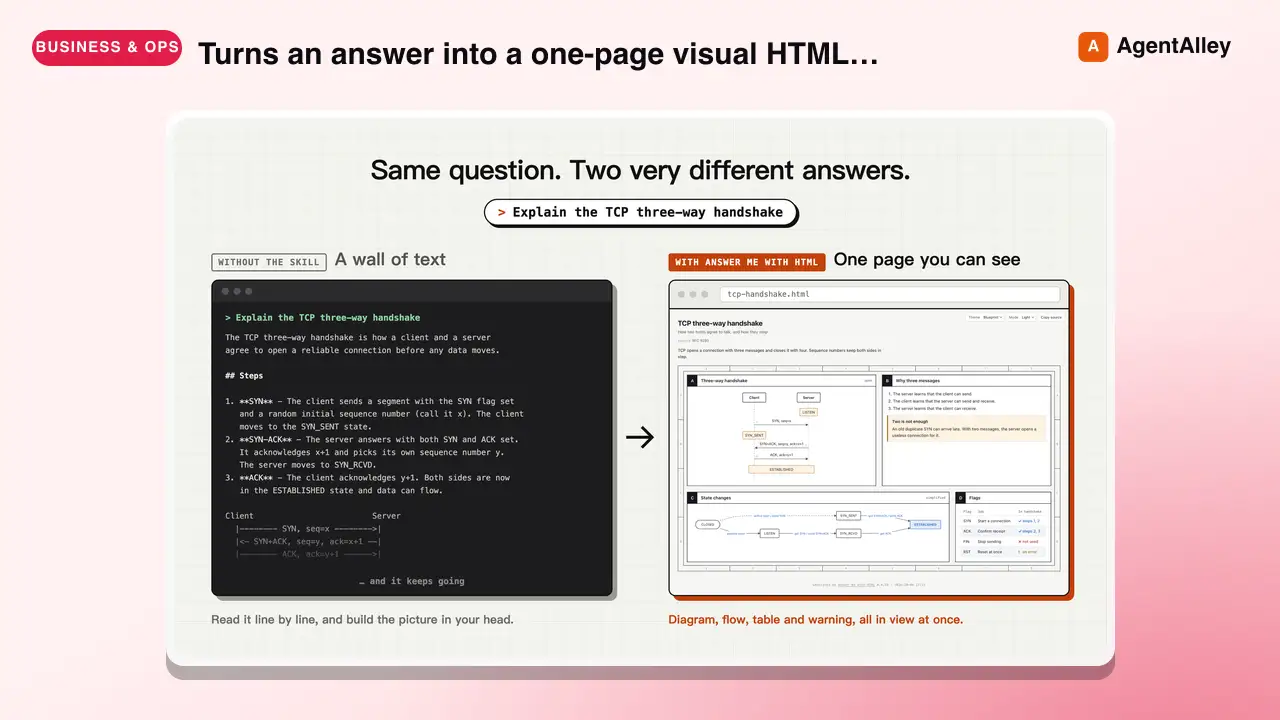
 QingYunA/answer-me-with-html · by QingYunATurns an answer into a one-page visual HTML explainer: the model writes a short Markdown draft and the bundled CLI builds one page. Use it proactively and liberally, without being asked, whenever a page would help the reader more than plain text, even if plain text would also work: any explanation of how something works or how parts relate (flow, request path, architecture, code or folder structure, state machine, lifecycle, history); any comparison, trade-off or decision with pros and cons; any diagnosis, review or investigation, especially with several causes or findings to rank; any answer with a table, a numbered or ranked list, steps, branches or several sections; or when the user says "I don't get it / draw it / explain visually / 讲讲原理 / 没看懂 / 画个图". When in doubt, use it: a page is quick and cheap to make. Also for explainer videos ("make a video", "做个视频") and for changing its settings. Skip only for small talk, a trivial one-line answer, or when the user asks for plain text.★ 3.7k GitHub stars
 SkillClinical Decision Support
 K-Dense-AI/scientific-agent-skills · by K-Dense-AIPrepare and validate research-only clinical decision-support evaluation, evidence-profile, cohort, survival, biomarker/model, privacy, and governance artifacts. Use for aggregate or synthetic research documentation and traceability—not patient care or live clinical operation.★ 46k GitHub stars
 SkillDecision Analysis AdvisorK-Dense-AI/scientific-agent-skills · by K-Dense-AIHand in a decision you're stuck on. Get back a clear breakdown of every angle — the trade-offs, the risks, the blind spot, and a recommended path.★ 46k GitHub stars
 SkillADR Documentation Writer
 wshobson/agents · by wshobsonWrite and maintain Architecture Decision Records (ADRs) following best practices for technical decision documentation. Use when documenting significant technical decisions, reviewing past architectural choices, or establishing decision processes.★ 39.9k GitHub stars
 SkillLaunch Risk Pre-Mortem
 phuryn/pm-skills · by phurynRun a pre-mortem risk analysis on a PRD or launch plan. Categorizes risks as Tigers (real problems), Paper Tigers (overblown concerns), and Elephants (unspoken worries), then classifies as launch-blocking, fast-follow, or track. Use when preparing for launch, stress-testing a product plan, or identifying what could go wrong.★ 26.6k GitHub stars
More from explorium-ai
 SkillABM Campaign Playbook
 explorium-ai/gtm-skills · by explorium-aiABM campaign skill for Claude Code: run a full Account-Based Marketing campaign end-to-end — from ICP definition to live LinkedIn Ads. Builds targeted account lists with Vibe Prospecting, enriches and scores companies with real-time B2B data, generates personalized ad creatives with Claude Code and Figma, pushes matched audiences to LinkedIn Ads, and monitors campaigns daily at scale. The complete GTM skill for AI-driven account-based marketing in Claude Code, Codex, Hermes-Agent, and OpenClaw. No agency needed.★ 197 GitHub stars
 SkillDecision-Maker Shortlistexplorium-ai/gtm-skills · by explorium-aiContact data skill for Claude Code and Codex: build a ranked shortlist of decision-makers and contacts at a target company for outbound prospecting, deal acceleration, or renewal/expansion plays. Returns verified contact data including email, phone, LinkedIn profile, title, seniority, and department. Provide a company name or domain plus optional seniority focus or use case. Use for contact data enrichment, LinkedIn profile lookup, and building outbound contact lists. Works in Claude Code, Codex, Hermes-Agent, and OpenClaw.★ 197 GitHub stars
 SkillAccount Fit Scorerexplorium-ai/gtm-skills · by explorium-aiLead scoring and buying signals skill for Claude Code and Codex: rank a list of accounts by ICP fit, buying intent, real-time trigger events, and workforce momentum. Returns composite score (0-100), tier (A/B/C), and a 'why now' signal per account. Use for account-based selling, ABM list prioritization, territory planning, signal-based selling, and buyer-intent ranking. Triggers on 'score these accounts', 'rank by ICP fit and intent', 'prioritize this account list', 'which accounts have the strongest buying signals', 'ICP scoring', 'account prioritization'. Works in Claude Code, Codex, Hermes-Agent, OpenClaw, and Claude Cowork.★ 197 GitHub stars
 SkillCompany Intelligence Briefexplorium-ai/gtm-skills · by explorium-aiAccount research skill for Claude Code and Codex: generate a high-signal company intelligence brief including firmographics, technographics, funding history, hiring signals, business events, recent website and LinkedIn moves, and a peer cohort. Identify the account by business_id, company name, or domain. Use for pre-call research, QBR prep, competitive analysis, cold outbound targeting, and renewal risk assessment. The go-to account research skill for Claude Code, Codex, Hermes-Agent, and OpenClaw.★ 197 GitHub stars
 SkillB2B Data Cleanerexplorium-ai/gtm-skills · by explorium-aiData cleaning, entity matching, and deduplication skill for Claude Code and Codex: triage, standardize, and validate a CSV, Excel, or JSON list of B2B companies or contacts before enrichment. Normalizes company names and domains, validates emails and phone numbers, matches and deduplicates records, and tags invalid rows non-destructively. Run before enrichment or CRM import to avoid paying for noisy records. Use for CRM enrichment prep, company name and website matching, entity matching, and contact deduplication. Works in Claude Code, Codex, and n8n via MCP.★ 197 GitHub stars
 SkillVibe-Lemlist Outreachexplorium-ai/gtm-skills · by explorium-aiCold email skill for Claude Code and Codex: build a targeted B2B prospect list with Vibe Prospecting, enrich it with firmographics and verified work emails, write a personalized icebreaker and email per prospect from their real company data, and push every lead into a live Lemlist campaign with personalization variables pre-filled. Use for cold outbound, email personalization at scale, and Lemlist campaign setup. Triggers on 'cold email campaign', 'push leads to Lemlist', 'write personalized outbound emails', 'build a Lemlist sequence'. Works in Claude Code, Codex, Grok, and Claude Cowork.★ 197 GitHub stars