RELION Cryo-EM Refinement
RELION single-particle refinement
Validates and executes RELION single-particle cryo-EM refinement and half-map postprocessing. Supports STAR optics/acquisition checks, particle-stack consistency, gold-standard half sets, soft-mask validation, diagnostic Fourier shell…
---
name: relion
description: Validates and executes RELION single-particle cryo-EM refinement and half-map postprocessing. Supports STAR optics/acquisition checks, particle-stack consistency, gold-standard half sets, soft-mask validation, diagnostic Fourier shell correlation, and restart guidance.
license: MIT
compatibility: Python 3.12+ with numpy, mrcfile and starfile for bundled validation; RELION 5.0.1 CPU/MPI executables for refinement and postprocessing. Native workflows require MPI, OpenMP and an FFT library (FFTW or MKL). GPU builds require their supported accelerator stack. Network is needed for installation only.
metadata:
  version: "1.1"
  skill-author: K-Dense Inc.
  upstream-version: "5.0.1"
  last-reviewed: "2026-10-01"
---

# RELION single-particle refinement

Use for a RELION single-particle project, especially extracted particles → homogeneous selected
particle subset → gold-standard refinement → half-map validation and postprocessing. The bundled
runner starts from **CTF-annotated extracted particles and an initial 3D reference**. It does not
replace motion correction, picking, 2D/3D selection, or a biological interpretation of map quality.
Overview
Use for a RELION single-particle project, especially extracted particles → homogeneous selected particle subset → gold-standard refinement → half-map validation and postprocessing. The bundled runner starts from CTF-annotated extracted particles and an initial 3D reference. It does not replace motion correction, picking, 2D/3D selection, or a biological interpretation of map quality. For tomography, helical reconstruction, Blush, or heterogeneous-state modeling, use the appropriate upstream workflow rather than forcing those data into this bounded SPA runner.
Manual install (npx, ZIP)
npx skills add K-Dense-AI/scientific-agent-skills --skill relion -g -a claude-codenpx degit K-Dense-AI/scientific-agent-skills/skills/relion#main ~/.claude/skills/relionConnects with Agent Alley MCP · agentalley.io/mcp
Files included
SKILL.md7.9 KB
Read SKILL.md here
Show the full text130 lines
RELION single-particle refinement
Use for a RELION single-particle project, especially extracted particles → homogeneous selected particle subset → gold-standard refinement → half-map validation and postprocessing. The bundled runner starts from CTF-annotated extracted particles and an initial 3D reference. It does not replace motion correction, picking, 2D/3D selection, or a biological interpretation of map quality. For tomography, helical reconstruction, Blush, or heterogeneous-state modeling, use the appropriate upstream workflow rather than forcing those data into this bounded SPA runner.
Preserve acquisition and coordinate conventions
Read references/acquisition-and-restarts.md when starting from movies or resuming jobs. Confirm pixel size in Å/pixel, voltage in kV, spherical aberration in mm, defocus in Å, amplitude contrast as a fraction, and the symmetry justified by the specimen. Do not “correct” a suspicious value by guessing its units.
data_optics describes acquisition/image groups; data_particles references them through
_rlnOpticsGroup. Particle filenames use one-based index@stack.mrcs; leading zeros such as
00000001@stack.mrcs are valid. Relative paths resolve
from the RELION project directory, not the STAR file's directory. Keep optics groups when merging
or subsetting STAR files. _rlnOriginXAngst/_rlnOriginYAngst are Å translations, not pixels.
Run from this skill directory with paths to the real project:
python scripts/spa_workflow.py validate-star project/particles.star --project project
This opens referenced stacks and checks optics membership, finite acquisition/CTF values, indices,
box sizes, duplicate particle references and existing half-set assignments. Use --metadata-only
only when stacks are genuinely unavailable; the JSON records stack_checks_performed: false.
It does not scan every particle pixel for corruption or establish correct image normalization.
Physical-range warnings are review prompts, not proof that unusual microscope settings are wrong.
Refine a selected particle population
Before running, inspect representative particles and class averages, defocus distributions, CTF fits, particle orientation distribution, and the initial reference. Ensure the map and particle boxes/pixel sizes agree after any downsampling. The runner deliberately supports one effective box/pixel size across optics groups; handle heterogeneous sampling with an explicit upstream resampling workflow. Use conventionally extracted, normalized particles that have not already been phase-flipped or Wiener-filtered; this runner does not configure those special input cases.
python scripts/spa_workflow.py refine \
  --star project/particles.star --reference project/initial.mrc \
  --project project --diameter 180 --symmetry C1 \
  --initial-lowpass 40 --mpi-ranks 3 --threads 2 --output project/RefinePilot
The diameter and low-pass filter above are illustrative Å values. Use specimen-appropriate
values. Refinement executes mpirun -np 3 relion_refine_mpi with --auto_refine,
--split_random_halves, --ctf, and a low-pass starting reference. Gold-standard splitting
requires MPI; the plain sequential relion_refine executable cannot perform this split.
Use odd ranks ≥3 (master plus balanced half-set workers), with a matching MPI installation.
The CPU command is useful for a bounded pilot; choose a documented GPU/MPI launch for full data.
The runner keeps the command, native version and log in a new output directory, records an
explicit random seed (default 1), surfaces runtime warnings, stops on process failure, and
requires converged unfiltered half maps before reporting success. It does not automatically retry
expensive jobs or silently discard failed-job artifacts. Keep _optimiser.star, model/sampling
STAR files, and referenced particle paths for restart. Use the original job's optimiser rather
than starting a new random split from a partially processed table.
Inspect independent half maps
Use the two independently refined unfiltered half maps, never two copies of the combined, sharpened map. Matching headers cannot establish statistical independence; the independent particle assignments and refinement history provide that evidence. Inspect directional anisotropy, preferred orientation and local resolution as well as a global FSC curve.
python scripts/spa_workflow.py fsc \
  project/RefinePilot/run_half1_class001_unfil.mrc \
  project/RefinePilot/run_half2_class001_unfil.mrc --output diagnostic-fsc.tsv
This checks map dimensions, finite values, pixel size, origin, axis order and duplicate maps, then
writes an unmasked diagnostic FSC. The reported 0.143 crossing uses linear interpolation;
null means no downward crossing was detected, not infinite resolution. Nyquist resolution is
2 × pixel size. This diagnostic is limited to even cubic maps ≤256³; use RELION's native
relion_image_handler --fsc for larger maps. It does not substitute for mask-corrected FSC.
The helper requires real-space maps with canonical axes, zero MRC start indices and orthogonal
cell angles. Convert other grids explicitly with provenance; merely editing headers can misalign
density. Matching headers and FSC cannot determine absolute handedness.
Postprocess with a soft mask
Construct the solvent mask from an appropriately low-pass-filtered density, with an expanded boundary and a smooth edge. Inspect all slices; a tight mask can inflate correlation. Avoid a mask derived from high-frequency noise shared between half maps.
python scripts/spa_workflow.py postprocess \
  --half1 project/RefinePilot/run_half1_class001_unfil.mrc \
  --half2 project/RefinePilot/run_half2_class001_unfil.mrc \
  --mask project/soft_mask.mrc --output project/PostProcessPilot
The helper checks a nonconstant mask in [0,1], soft-edge voxels and matching map grids, then runs
relion_postprocess with explicit half maps, mask and pixel size. RELION performs its own
mask/randomization correction and writes postprocess.star. The bounded command leaves the
B-factor at zero (no automatic B-factor estimation); add automatic/manual sharpening only after choosing a defensible fit
range and inspecting map quality. A valid range and some fractional mask voxels do not prove the
mask is scientifically appropriate. Inspect the phase-randomized masked FSC near the reported
resolution: residual correlation calls for a smoother/wider mask and another postprocessing run.
See references/runtime-and-validation.md for the tested native utilities and the distinction between pipeline execution and reconstruction validation.
Primary references
| 1 | |
| 2 | name relion |
| 3 | description Validates and executes RELION single-particle cryo-EM refinement and half-map postprocessing. Supports STAR optics/acquisition checks, particle-stack consistency, gold-standard half sets, soft-mask validation, diagnostic Fourier shell correlation, and restart guidance. |
| 4 | license MIT |
| 5 | compatibility Python 3.12+ with numpy, mrcfile and starfile for bundled validation; RELION 5.0.1 CPU/MPI executables for refinement and postprocessing. Native workflows require MPI, OpenMP and an FFT library (FFTW or MKL). GPU builds require their supported accelerator stack. Network is needed for installation only. |
| 6 | metadata |
| 7 | version "1.1" |
| 8 | skill-author K-Dense Inc. |
| 9 | upstream-version "5.0.1" |
| 10 | last-reviewed "2026-10-01" |
| 11 | |
| 12 | |
| 13 | # RELION single-particle refinement |
| 14 | |
| 15 | Use for a RELION single-particle project, especially extracted particles → homogeneous selected |
| 16 | particle subset → gold-standard refinement → half-map validation and postprocessing. The bundled |
| 17 | runner starts from **CTF-annotated extracted particles and an initial 3D reference**. It does not |
| 18 | replace motion correction, picking, 2D/3D selection, or a biological interpretation of map quality. |
| 19 | For tomography, helical reconstruction, Blush, or heterogeneous-state modeling, use the appropriate |
| 20 | upstream workflow rather than forcing those data into this bounded SPA runner. |
| 21 | |
| 22 | ## Preserve acquisition and coordinate conventions |
| 23 | |
| 24 | Read [references/acquisition-and-restarts.md] when starting |
| 25 | from movies or resuming jobs. Confirm pixel size in **Å/pixel**, voltage in **kV**, spherical |
| 26 | aberration in **mm**, defocus in **Å**, amplitude contrast as a fraction, and the symmetry justified |
| 27 | by the specimen. Do not “correct” a suspicious value by guessing its units. |
| 28 | |
| 29 | `data_optics` describes acquisition/image groups; `data_particles` references them through |
| 30 | `_rlnOpticsGroup`. Particle filenames use **one-based** `index@stack.mrcs`; leading zeros such as |
| 31 | `00000001@stack.mrcs` are valid. Relative paths resolve |
| 32 | from the RELION project directory, not the STAR file's directory. Keep optics groups when merging |
| 33 | or subsetting STAR files. `_rlnOriginXAngst`/`_rlnOriginYAngst` are Å translations, not pixels. |
| 34 | |
| 35 | Run from this skill directory with paths to the real project: |
| 36 | |
| 37 | |
| 38 | python scripts/spa_workflow.py validate-star project/particles.star --project project |
| 39 | |
| 40 | |
| 41 | This opens referenced stacks and checks optics membership, finite acquisition/CTF values, indices, |
| 42 | box sizes, duplicate particle references and existing half-set assignments. Use `--metadata-only` |
| 43 | only when stacks are genuinely unavailable; the JSON records `stack_checks_performed: false`. |
| 44 | It does not scan every particle pixel for corruption or establish correct image normalization. |
| 45 | Physical-range warnings are review prompts, not proof that unusual microscope settings are wrong. |
| 46 | |
| 47 | ## Refine a selected particle population |
| 48 | |
| 49 | Before running, inspect representative particles and class averages, defocus distributions, CTF |
| 50 | fits, particle orientation distribution, and the initial reference. Ensure the map and particle |
| 51 | boxes/pixel sizes agree after any downsampling. The runner deliberately supports one effective |
| 52 | box/pixel size across optics groups; handle heterogeneous sampling with an explicit upstream |
| 53 | resampling workflow. Use conventionally extracted, normalized particles that have not already |
| 54 | been phase-flipped or Wiener-filtered; this runner does not configure those special input cases. |
| 55 | |
| 56 | |
| 57 | python scripts/spa_workflow.py refine \ |
| 58 | --star project/particles.star --reference project/initial.mrc \ |
| 59 | --project project --diameter 180 --symmetry C1 \ |
| 60 | --initial-lowpass 40 --mpi-ranks 3 --threads 2 --output project/RefinePilot |
| 61 | |
| 62 | |
| 63 | The diameter and low-pass filter above are illustrative **Å** values. Use specimen-appropriate |
| 64 | values. Refinement executes `mpirun -np 3 relion_refine_mpi` with `--auto_refine`, |
| 65 | `--split_random_halves`, `--ctf`, and a low-pass starting reference. Gold-standard splitting |
| 66 | requires MPI; the plain sequential `relion_refine` executable cannot perform this split. |
| 67 | Use odd ranks ≥3 (master plus balanced half-set workers), with a matching MPI installation. |
| 68 | The CPU command is useful for a bounded pilot; choose a documented GPU/MPI launch for full data. |
| 69 | |
| 70 | The runner keeps the command, native version and log in a new output directory, records an |
| 71 | explicit random seed (default 1), surfaces runtime warnings, stops on process failure, and |
| 72 | requires converged unfiltered half maps before reporting success. It does not automatically retry |
| 73 | expensive jobs or silently discard failed-job artifacts. Keep `_optimiser.star`, model/sampling |
| 74 | STAR files, and referenced particle paths for restart. Use the original job's optimiser rather |
| 75 | than starting a new random split from a partially processed table. |
| 76 | |
| 77 | ## Inspect independent half maps |
| 78 | |
| 79 | Use the two independently refined **unfiltered** half maps, never two copies of the combined, |
| 80 | sharpened map. Matching headers cannot establish statistical independence; the independent |
| 81 | particle assignments and refinement history provide that evidence. Inspect directional |
| 82 | anisotropy, preferred orientation and local resolution as well as a global FSC curve. |
| 83 | |
| 84 | |
| 85 | python scripts/spa_workflow.py fsc \ |
| 86 | project/RefinePilot/run_half1_class001_unfil.mrc \ |
| 87 | project/RefinePilot/run_half2_class001_unfil.mrc --output diagnostic-fsc.tsv |
| 88 | |
| 89 | |
| 90 | This checks map dimensions, finite values, pixel size, origin, axis order and duplicate maps, then |
| 91 | writes an **unmasked diagnostic FSC**. The reported 0.143 crossing uses linear interpolation; |
| 92 | `null` means no downward crossing was detected, not infinite resolution. Nyquist resolution is |
| 93 | 2 × pixel size. This diagnostic is limited to even cubic maps ≤256³; use RELION's native |
| 94 | `relion_image_handler --fsc` for larger maps. It does not substitute for mask-corrected FSC. |
| 95 | The helper requires real-space maps with canonical axes, zero MRC start indices and orthogonal |
| 96 | cell angles. Convert other grids explicitly with provenance; merely editing headers can misalign |
| 97 | density. Matching headers and FSC cannot determine absolute handedness. |
| 98 | |
| 99 | ## Postprocess with a soft mask |
| 100 | |
| 101 | Construct the solvent mask from an appropriately low-pass-filtered density, with an expanded |
| 102 | boundary and a smooth edge. Inspect all slices; a tight mask can inflate correlation. Avoid a |
| 103 | mask derived from high-frequency noise shared between half maps. |
| 104 | |
| 105 | |
| 106 | python scripts/spa_workflow.py postprocess \ |
| 107 | --half1 project/RefinePilot/run_half1_class001_unfil.mrc \ |
| 108 | --half2 project/RefinePilot/run_half2_class001_unfil.mrc \ |
| 109 | --mask project/soft_mask.mrc --output project/PostProcessPilot |
| 110 | |
| 111 | |
| 112 | The helper checks a nonconstant mask in [0,1], soft-edge voxels and matching map grids, then runs |
| 113 | `relion_postprocess` with explicit half maps, mask and pixel size. RELION performs its own |
| 114 | mask/randomization correction and writes `postprocess.star`. The bounded command leaves the |
| 115 | B-factor at zero (no automatic B-factor estimation); add automatic/manual sharpening only after choosing a defensible fit |
| 116 | range and inspecting map quality. A valid range and some fractional mask voxels do not prove the |
| 117 | mask is scientifically appropriate. Inspect the phase-randomized masked FSC near the reported |
| 118 | resolution: residual correlation calls for a smoother/wider mask and another postprocessing run. |
| 119 | |
| 120 | See [references/runtime-and-validation.md] for the tested |
| 121 | native utilities and the distinction between pipeline execution and reconstruction validation. |
| 122 | |
| 123 | ## Primary references |
| 124 | |
| 125 | [RELION 5.0 installation]. |
| 126 | [STAR and map conventions]. |
| 127 | [Single-particle tutorial]. |
| 128 | [Gold-standard refinement]. |
| 129 | [Mask creation and postprocessing]. |
| 130 |
Details
- Updated
- Sep 21, 2026
- License
- MIT
- Stars on the repo
- ★ 45,977
- Checked
- Source
- K-Dense-AI/scientific-agent-skills ↗
- Creator
- K-Dense-AI · 168 listings
Similar skills
See all →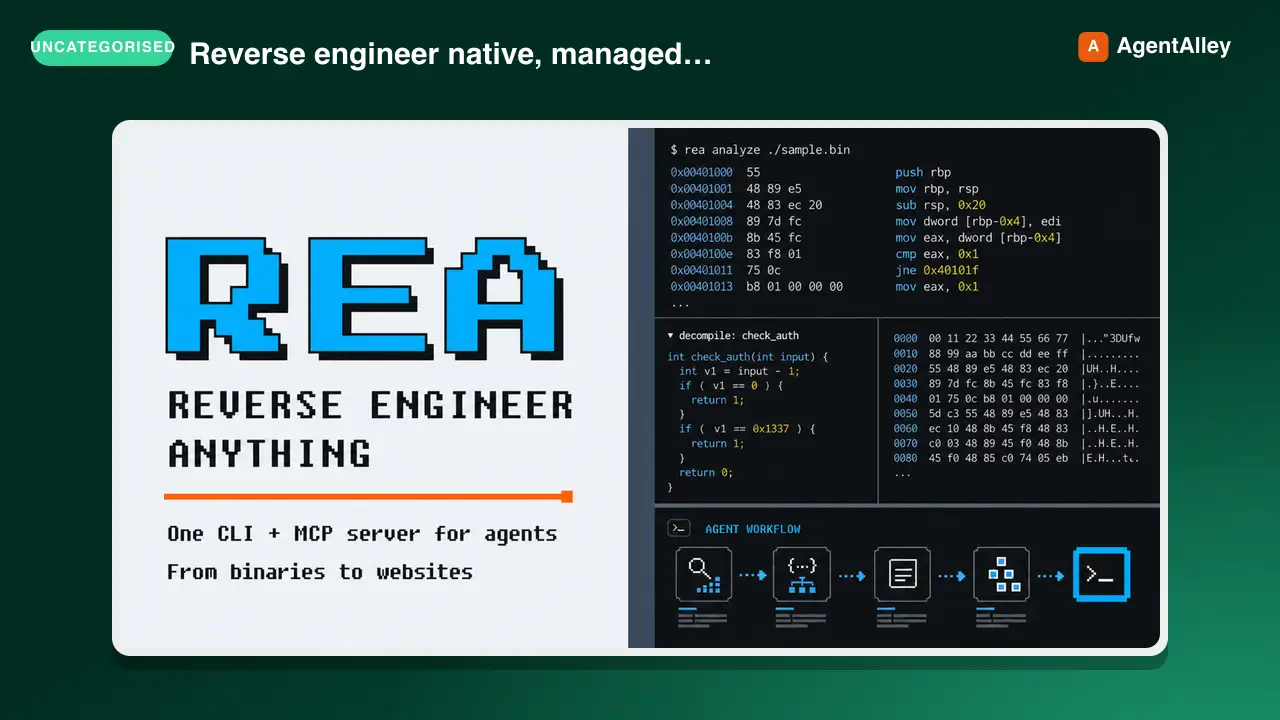 SkillCross-Platform Reverse Engineer
 morluto/rea · by morlutoReverse engineer native, managed, Electron/JavaScript, packaged, firmware, and browser targets with REA. Use shipped-artifact or requested runtime evidence to explain features, compare versions, decompile code, or guide a reconstruction. Skip REA for ordinary source-repository architecture analysis.★ 316k GitHub stars
 SkillBrainstorm Ideas
 obra/superpowers · by obraYou MUST use this before any creative work - creating features, building components, adding functionality, or modifying behavior. Explores user intent, requirements and design before implementation.★ 290k GitHub stars
 SkillCode Review Feedback Analyzerobra/superpowers · by obraUse when receiving code review feedback, before implementing suggestions, especially if feedback seems unclear or technically questionable - requires technical rigor and verification, not performative agreement or blind implementation★ 290k GitHub stars
 SkillBug Diagnosis Framework
 mattpocock/skills · by mattpocockDiagnosis loop for hard bugs and performance regressions. Use when the user says "diagnose"/"debug this", or reports something broken/throwing/failing/slow.★ 267k GitHub stars
 SkillImplement Specmattpocock/skills · by mattpocockImplement the result of /to-spec and /to-tickets in code.★ 267k GitHub stars
 SkillPR Description Writermattpocock/skills · by mattpocockUse when writing a PR body.★ 267k GitHub stars
More from K-Dense-AI
 SkillAdaptyv Bio Foundry API
 K-Dense-AI/scientific-agent-skills · by K-Dense-AIHow to use the Adaptyv Bio Foundry API and Python SDK for protein experiment design, submission, and results retrieval. Use this skill whenever the user mentions Adaptyv, Foundry API, protein binding assays, protein screening experiments, BLI/SPR assays, thermostability assays, or wants to submit protein sequences for experimental characterization. Also trigger when code imports `adaptyv`, `adaptyv_sdk`, or `FoundryClient`, or references `foundry-api-public.adaptyvbio.com`.★ 46k GitHub stars
 SkillTime Series MLK-Dense-AI/scientific-agent-skills · by K-Dense-AIThis skill should be used for time series machine learning tasks including classification, regression, clustering, forecasting, anomaly detection, segmentation, and similarity search. Use when working with temporal data, sequential patterns, or time-indexed observations requiring specialized algorithms beyond standard ML approaches. Particularly suited for univariate and multivariate time series analysis with scikit-learn compatible APIs.★ 46k GitHub stars
 SkillAnalytical Method ValidatorK-Dense-AI/scientific-agent-skills · by K-Dense-AIPlan, execute, and document validation, verification, and transfer of analytical procedures under the governing framework - ICH Q2(R2) and Q14, USP <1220>/<1225>/<1226>, ICH M10 bioanalytical, CLSI EP, or ISO/IEC 17025. Use for HPLC, LC-MS/MS, GC, CE, ICP-MS, dissolution, qNMR, qPCR, NIR, and ligand binding or cell-based assays whenever the question is whether a procedure is fit for its intended purpose. Triggers include "method validation", "analytical method validation", "AMV", "validation protocol", "acceptance criteria", "linearity", "reportable range", "accuracy and precision", "repeatability", "intermediate precision", "recovery", "LOD", "LOQ", "detection limit", "quantitation limit", "specificity", "robustness", "method transfer", "method comparison", "Deming", "Passing-Bablok", "Bland-Altman", "equivalence testing", "OOS investigation", "ICH Q2", "Q2(R2)", "Q14", "USP 1225", "ICH M10", "incurred sample reanalysis", "ISR", "CLSI EP", and any request to show that an assay works.★ 46k GitHub stars
 SkillSingle-Cell Data StructureK-Dense-AI/scientific-agent-skills · by K-Dense-AIData structure for annotated matrices in single-cell analysis. Use when working with .h5ad files or integrating with the scverse ecosystem. This is the data format skill—for analysis workflows use scanpy; for probabilistic models use scvi-tools; for population-scale queries use cellxgene-census.★ 46k GitHub stars
 SkillAutonomous Artifact OptimizerK-Dense-AI/scientific-agent-skills · by K-Dense-AIAutonomously improve a real artifact (code, training recipe, agent harness, data pipeline, prompt) against an objective and an evaluator, using Hypothesis Tree Refinement (HTR) from the Arbor paper. Use this whenever someone wants to iteratively optimize something over many experiments without overfitting — e.g. "get my model's eval score up", "improve this agent/harness", "tune this pipeline", "beat the baseline on this benchmark", "run a search over approaches and keep the best", "do an MLE-bench / Kaggle-style optimization", or any long-horizon "make this artifact better and don't just memorize the dev set" task. Trigger it even when the user doesn't say "Arbor" or "hypothesis tree" but describes repeated experiment-and-evaluate loops, branching exploration of competing ideas, or worries about a dev/test gap. Runs Claude itself as the coordinator with subagent executors in isolated git worktrees; for the standalone `arbor` CLI tool see references/arbor-upstream.md.★ 46k GitHub stars
 SkillGene Regulatory Network InferrerK-Dense-AI/scientific-agent-skills · by K-Dense-AIInfer gene regulatory networks (GRNs) from gene expression data using scalable algorithms (GRNBoost2, GENIE3). Use when analyzing transcriptomics data (bulk RNA-seq, single-cell RNA-seq) to identify transcription factor-target gene relationships and regulatory interactions. Supports distributed computation for large-scale datasets.★ 46k GitHub stars