Notion Knowledge Capture
Notion knowledge capture
Capture conversations and decisions into structured Notion pages; use when turning chats/notes into wiki entries, how-tos, decisions, or FAQs with proper linking.
---
name: notion-knowledge-capture
description: Capture conversations and decisions into structured Notion pages; use when turning chats/notes into wiki entries, how-tos, decisions, or FAQs with proper linking.
metadata:
  short-description: Capture conversations into structured Notion pages
---

# Knowledge Capture

Convert conversations and notes into structured, linkable Notion pages for easy reuse.

## Quick start
1) Clarify what to capture (decision, how-to, FAQ, learning, documentation) and target audience.
2) Identify the right database/template in `reference/` (team wiki, how-to, FAQ, decision log, learning, documentation).
3) Pull any prior context from Notion with `Notion:notion-search` → `Notion:notion-fetch` (existing pages to update/link).
4) Draft the page with `Notion:notion-create-pages` using the database's schema; include summary, context, source links, and tags/owners.
5) Link from hub pages and related records; update status/owners with `Notion:notion-update-page` as the source evolves.
Overview
Convert conversations and notes into structured, linkable Notion pages for easy reuse.
Manual install (npx, ZIP)
Claude Code
npx skills add davila7/claude-code-templates --skill notion-knowledge-capture -g -a claude-codeClaude Code (degit)
npx degit davila7/claude-code-templates/cli-tool/components/skills/productivity/notion-knowledge-capture#main ~/.claude/skills/notion-knowledge-captureClaude.ai / desktop
Codex, Cursor, other agents
Connects with Agent Alley MCP · agentalley.io/mcp
Files included
SKILL.md3.2 KB
Read SKILL.md here
SKILL.md
Show the full text57 lines
Knowledge Capture
Convert conversations and notes into structured, linkable Notion pages for easy reuse.
Quick start
- Clarify what to capture (decision, how-to, FAQ, learning, documentation) and target audience.
- Identify the right database/template in
reference/(team wiki, how-to, FAQ, decision log, learning, documentation). - Pull any prior context from Notion with
Notion:notion-search→Notion:notion-fetch(existing pages to update/link). - Draft the page with
Notion:notion-create-pagesusing the database's schema; include summary, context, source links, and tags/owners. - Link from hub pages and related records; update status/owners with
Notion:notion-update-pageas the source evolves.
Workflow
0) If any MCP call fails because Notion MCP is not connected, pause and set it up:
- Add the Notion MCP:
codex mcp add notion --url https://mcp.notion.com/mcp
- Enable remote MCP client:
- Set
[features].rmcp_client = trueinconfig.tomlor runcodex --enable rmcp_client
- Set
- Log in with OAuth:
codex mcp login notion
After successful login, the user will have to restart codex. You should finish your answer and tell them so when they try again they can continue with Step 1.
1) Define the capture
- Ask purpose, audience, freshness, and whether this is new or an update.
- Determine content type: decision, how-to, FAQ, concept/wiki entry, learning/note, documentation page.
2) Locate destination
- Pick the correct database using
reference/*-database.mdguides; confirm required properties (title, tags, owner, status, date, relations). - If multiple candidate databases, ask the user which to use; otherwise, create in the primary wiki/documentation DB.
3) Extract and structure
- Extract facts, decisions, actions, and rationale from the conversation.
- For decisions, record alternatives, rationale, and outcomes.
- For how-tos/docs, capture steps, pre-reqs, links to assets/code, and edge cases.
- For FAQs, phrase as Q&A with concise answers and links to deeper docs.
4) Create/update in Notion
- Use
Notion:notion-create-pageswith the correctdata_source_id; set properties (title, tags, owner, status, dates, relations). - Use templates in
reference/to structure content (section headers, checklists). - If updating an existing page, fetch then edit via
Notion:notion-update-page.
5) Link and surface
- Add relations/backlinks to hub pages, related specs/docs, and teams.
- Add a short summary/changelog for future readers.
- If follow-up tasks exist, create tasks in the relevant database and link them.
References and examples
reference/— database schemas and templates (e.g.,team-wiki-database.md,how-to-guide-database.md,faq-database.md,decision-log-database.md,documentation-database.md,learning-database.md,database-best-practices.md).examples/— capture patterns in practice (e.g.,decision-capture.md,how-to-guide.md,conversation-to-faq.md).
| 1 | |
| 2 | name notion-knowledge-capture |
| 3 | description Capture conversations and decisions into structured Notion pages; use when turning chats/notes into wiki entries, how-tos, decisions, or FAQs with proper linking. |
| 4 | metadata |
| 5 | short-description Capture conversations into structured Notion pages |
| 6 | |
| 7 | |
| 8 | # Knowledge Capture |
| 9 | |
| 10 | Convert conversations and notes into structured, linkable Notion pages for easy reuse. |
| 11 | |
| 12 | ## Quick start |
| 13 | 1) Clarify what to capture (decision, how-to, FAQ, learning, documentation) and target audience. |
| 14 | 2) Identify the right database/template in `reference/` (team wiki, how-to, FAQ, decision log, learning, documentation). |
| 15 | 3) Pull any prior context from Notion with `Notion:notion-search` → `Notion:notion-fetch` (existing pages to update/link). |
| 16 | 4) Draft the page with `Notion:notion-create-pages` using the database's schema; include summary, context, source links, and tags/owners. |
| 17 | 5) Link from hub pages and related records; update status/owners with `Notion:notion-update-page` as the source evolves. |
| 18 | |
| 19 | ## Workflow |
| 20 | ### 0) If any MCP call fails because Notion MCP is not connected, pause and set it up: |
| 21 | Add the Notion MCP: |
| 22 | `codex mcp add notion --url https://mcp.notion.com/mcp` |
| 23 | Enable remote MCP client: |
| 24 | Set `[features].rmcp_client = true` in `config.toml` **or** run `codex --enable rmcp_client` |
| 25 | Log in with OAuth: |
| 26 | `codex mcp login notion` |
| 27 | |
| 28 | After successful login, the user will have to restart codex. You should finish your answer and tell them so when they try again they can continue with Step 1. |
| 29 | |
| 30 | ### 1) Define the capture |
| 31 | Ask purpose, audience, freshness, and whether this is new or an update. |
| 32 | Determine content type: decision, how-to, FAQ, concept/wiki entry, learning/note, documentation page. |
| 33 | |
| 34 | ### 2) Locate destination |
| 35 | Pick the correct database using `reference/*-database.md` guides; confirm required properties (title, tags, owner, status, date, relations). |
| 36 | If multiple candidate databases, ask the user which to use; otherwise, create in the primary wiki/documentation DB. |
| 37 | |
| 38 | ### 3) Extract and structure |
| 39 | Extract facts, decisions, actions, and rationale from the conversation. |
| 40 | For decisions, record alternatives, rationale, and outcomes. |
| 41 | For how-tos/docs, capture steps, pre-reqs, links to assets/code, and edge cases. |
| 42 | For FAQs, phrase as Q&A with concise answers and links to deeper docs. |
| 43 | |
| 44 | ### 4) Create/update in Notion |
| 45 | Use `Notion:notion-create-pages` with the correct `data_source_id`; set properties (title, tags, owner, status, dates, relations). |
| 46 | Use templates in `reference/` to structure content (section headers, checklists). |
| 47 | If updating an existing page, fetch then edit via `Notion:notion-update-page`. |
| 48 | |
| 49 | ### 5) Link and surface |
| 50 | Add relations/backlinks to hub pages, related specs/docs, and teams. |
| 51 | Add a short summary/changelog for future readers. |
| 52 | If follow-up tasks exist, create tasks in the relevant database and link them. |
| 53 | |
| 54 | ## References and examples |
| 55 | `reference/` — database schemas and templates (e.g., `team-wiki-database.md`, `how-to-guide-database.md`, `faq-database.md`, `decision-log-database.md`, `documentation-database.md`, `learning-database.md`, `database-best-practices.md`). |
| 56 | `examples/` — capture patterns in practice (e.g., `decision-capture.md`, `how-to-guide.md`, `conversation-to-faq.md`). |
| 57 |
Details
- License
- MIT
- Stars on the repo
- ★ 32,299
- Checked
- Source
- davila7/claude-code-templates ↗
- Creator
- davila7 · 212 listings
Similar skills
See all →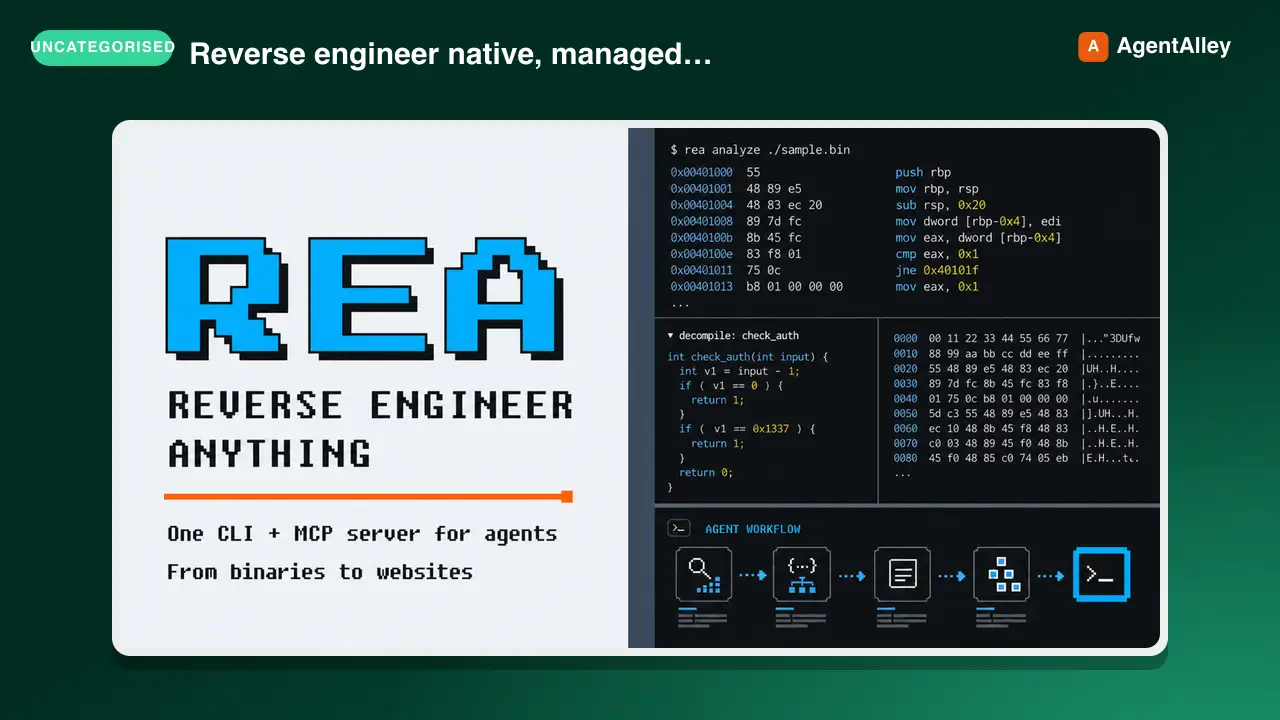 SkillCross-Platform Reverse Engineer
 morluto/rea · by morlutoReverse engineer native, managed, Electron/JavaScript, packaged, firmware, and browser targets with REA. Use shipped-artifact or requested runtime evidence to explain features, compare versions, decompile code, or guide a reconstruction. Skip REA for ordinary source-repository architecture analysis.★ 316k GitHub stars
 SkillBrainstorm Ideas
 obra/superpowers · by obraYou MUST use this before any creative work - creating features, building components, adding functionality, or modifying behavior. Explores user intent, requirements and design before implementation.★ 290k GitHub stars
 SkillCode Review Feedback Analyzerobra/superpowers · by obraUse when receiving code review feedback, before implementing suggestions, especially if feedback seems unclear or technically questionable - requires technical rigor and verification, not performative agreement or blind implementation★ 290k GitHub stars
 SkillBug Diagnosis Framework
 mattpocock/skills · by mattpocockDiagnosis loop for hard bugs and performance regressions. Use when the user says "diagnose"/"debug this", or reports something broken/throwing/failing/slow.★ 267k GitHub stars
 SkillImplement Specmattpocock/skills · by mattpocockImplement the result of /to-spec and /to-tickets in code.★ 267k GitHub stars
 SkillPR Description Writermattpocock/skills · by mattpocockUse when writing a PR body.★ 267k GitHub stars
More from davila7
 Skill2D Game Development
 davila7/claude-code-templates · by davila72D game development principles. Sprites, tilemaps, physics, camera.★ 32.3k GitHub stars
 Skill3D Game Development Principlesdavila7/claude-code-templates · by davila73D game development principles. Rendering, shaders, physics, cameras.★ 32.3k GitHub stars
 Skill3D Web Experience Builderdavila7/claude-code-templates · by davila7Expert in building 3D experiences for the web - Three.js, React Three Fiber, Spline, WebGL, and interactive 3D scenes. Covers product configurators, 3D portfolios, immersive websites, and bringing depth to web experiences. Use when: 3D website, three.js, WebGL, react three fiber, 3D experience.★ 32.3k GitHub stars
 SkillSplit Test Setupdavila7/claude-code-templates · by davila7When the user wants to plan, design, or implement an A/B test or experiment. Also use when the user mentions "A/B test," "split test," "experiment," "test this change," "variant copy," "multivariate test," or "hypothesis." For tracking implementation, see analytics-tracking.★ 32.3k GitHub stars
 AgentResearch Literature Synthesizerdavila7/claude-code-templates · by davila7Academic research synthesis specialist. Use PROACTIVELY for comprehensive research on academic topics, literature reviews, technical investigations, and well-cited analysis combining multiple sources. <example>Context: A podcast episode needs a segment grounded in peer-reviewed evidence with formal citations. user: "Research the current state of transformer efficiency techniques for the episode, with proper academic citations." assistant: "I'll use the academic-research-synthesizer agent to search arXiv and Semantic Scholar, extract full-text findings via WebFetch, and produce a cited literature synthesis with confidence levels." <commentary>Use academic-research-synthesizer (not comprehensive-researcher) when the episode segment needs peer-reviewed sourcing, formal citation format, and explicit confidence tagging rather than general-purpose multi-source coverage.</commentary></example> <example>Context: The episode-orchestrator has routed a "literature review" request for a technical deep-dive segment. user: "Summarize the research landscape on federated learning privacy guarantees." assistant: "I'll invoke academic-research-synthesizer to systematically search academic sources, note peer-review status per source, and synthesize consensus vs. open debates."</example>★ 32.3k GitHub stars
 AgentAcademic Research Specialistdavila7/claude-code-templates · by davila7Academic research specialist for scholarly sources, peer-reviewed papers, and academic literature. Use PROACTIVELY for research paper analysis, literature reviews, citation tracking, and academic methodology evaluation. <example>Context: The research-orchestrator has kicked off Phase 4 parallel research on 'efficacy of intermittent fasting' and needs peer-reviewed evidence. user: "Find the academic evidence on intermittent fasting outcomes." assistant: "I'll use the academic-researcher agent to search Semantic Scholar, PubMed, and OpenAlex for peer-reviewed studies and write structured findings to academic-research.md." <commentary>The request is specifically for scholarly/peer-reviewed evidence rather than general web coverage or code, so academic-researcher (not web-researcher or technical-researcher) is the right specialist.</commentary></example> <example>Context: The user wants a literature review comparing methodologies across studies on a topic. user: "Can you review the literature on transformer model interpretability and identify research gaps?" assistant: "Let me invoke the academic-researcher agent to pull foundational and recent papers, extract methodologies, and surface open research gaps." <commentary>Literature review, methodology extraction, and research-gap identification are core academic-researcher capabilities, distinct from technical-researcher's focus on code repositories and implementations.</commentary></example>★ 32.3k GitHub stars