Mac Storage Optimizer
Mac storage cleaner
Safely reclaim disk space on a Mac — the trustworthy, transparent, reversible alternative to CleanMyMac and similar tools. Use whenever the user says their Mac disk or storage is full or nearly full, gets a "startup disk almost full" /…
---
name: mac-storage-cleaner
description: Safely reclaim disk space on a Mac — the trustworthy, transparent, reversible alternative to CleanMyMac and similar tools. Use whenever the user says their Mac disk or storage is full or nearly full, gets a "startup disk almost full" / low-storage warning, asks to free up space, clean/clear caches, remove junk, delete leftover files from apps they uninstalled, or find what's eating their disk — in any language (e.g. English "my mac is out of space", "free up disk", "clear caches", "what's taking up my storage"; Georgian "ქეში გაასუფთავე", "მეხსიერება გადამევსო", "ადგილი აღარ მაქვს"). Surveys usage first, auto-clears only pure caches, moves anything riskier to the Trash (restorable), asks before anything expensive, logs every deletion, and reports what was freed. Do NOT use for cloud storage, RAM/memory-pressure, or a single named app's own in-app cache button.
---

# Mac Storage Cleaner

Free disk space the way a careful engineer would, and earn the trust one-click
cleaners lose: **measure first, delete only what provably regenerates, make
anything riskier reversible, ask before anything expensive, log every action,
and report honestly.** The differentiator over CleanMyMac-style tools is
judgment and transparency — the user sees what will go and why, and can undo it.

Scripts live in `scripts/`; the full tiered inventory, exact reclaim commands,
and gotchas are in `references/cache-catalog.md`. Read the catalog whenever you
hit something a script didn't classify or you need the precise command.

## Core principles
Overview
Free disk space the way a careful engineer would, and earn the trust one-click cleaners lose: measure first, delete only what provably regenerates, make anything riskier reversible, ask before anything expensive, log every action, and report honestly. The differentiator over CleanMyMac-style tools is judgment and transparency — the user sees what will go and why, and can undo it.
Manual install (npx, ZIP)
npx skills add davila7/claude-code-templates --skill mac-storage-cleaner -g -a claude-codenpx degit davila7/claude-code-templates/cli-tool/components/skills/productivity/mac-storage-cleaner#main ~/.claude/skills/mac-storage-cleanerConnects with Agent Alley MCP · agentalley.io/mcp
Files included
SKILL.md8.1 KB
Read SKILL.md here
Show the full text144 lines
Mac Storage Cleaner
Free disk space the way a careful engineer would, and earn the trust one-click cleaners lose: measure first, delete only what provably regenerates, make anything riskier reversible, ask before anything expensive, log every action, and report honestly. The differentiator over CleanMyMac-style tools is judgment and transparency — the user sees what will go and why, and can undo it.
Scripts live in scripts/; the full tiered inventory, exact reclaim commands,
and gotchas are in references/cache-catalog.md. Read the catalog whenever you
hit something a script didn't classify or you need the precise command.
Core principles
- Safe tier → delete outright (space back immediately). These are pure caches; the only cost is a slower next build/install.
- Everything else → Trash, not
rm. Ask-tier items, app leftovers, big files — move them to the Trash withtrash-items.shso the user can restore them. Reversibility is the whole point; never hard-delete a user's data. - When unsure, demote a tier. A slower rebuild is trivial; deleting a license, an unpushable Xcode archive, or someone's only local backup is not.
- Every destructive run is logged to
~/Library/Logs/mac-storage-cleaner/operations.log.
Workflow
Locating the scripts. The commands below resolve $D to this skill's own
directory so they work whether the skill was installed as a plugin
($CLAUDE_PLUGIN_ROOT is set) or as a standalone skill (~/.claude/skills/…).
Shell state doesn't persist between commands, so each block re-resolves $D.
1. Survey — caches (always first, read-only)
D="${CLAUDE_PLUGIN_ROOT:+$CLAUDE_PLUGIN_ROOT/skills/mac-storage-cleaner}"; D="${D:-$HOME/.claude/skills/mac-storage-cleaner}"
bash "$D/scripts/survey.sh"
Prints free space and sizes every cache that exists on this machine, grouped safe / ask / never / app-data. Never skip it — locations and sizes differ on every Mac. Note current free space for the before/after report.
2. Clear the safe tier (no per-item permission needed)
Tell the user briefly what the safe tier removes and roughly how much it frees, then:
D="${CLAUDE_PLUGIN_ROOT:+$CLAUDE_PLUGIN_ROOT/skills/mac-storage-cleaner}"; D="${D:-$HOME/.claude/skills/mac-storage-cleaner}"
bash "$D/scripts/clean-safe.sh"
Removes only the vetted safe allowlist (nothing else — the survey's "other large
caches" list is for the user to review, not for auto-deletion), handles read-only
files, skips anything macOS protects (reporting rather than failing), runs
brew cleanup -s --prune=all and removes unavailable simulators, logs each
deletion, and prints what it reclaimed. If the user only wanted specific items,
delete those directly instead.
Browser & Electron app caches (Chrome/Arc/Slack/VS Code/…) are safe but live
inside app-data folders — clear only the Cache/Code Cache/GPUCache
subfolders the survey lists, ideally with the app quit, and never the whole
app folder. Exact paths: references/cache-catalog.md.
3. Surface the "ask" tier — recommend, don't delete
Big but not free caches (Docker images, ML models, simulator devices, Xcode Archives, module stores). List each with size + a specific recommendation; let the user choose. Use the tool-native command, and prefer Trash for file deletions. Key ones (full detail in the catalog):
- Docker —
docker system prune -a, neverrmthe VM disk. - ML models (HuggingFace/Ollama) — often duplicated variants; offer to remove unused ones.
- Simulators — only
xcrun simctl delete unavailableis safe; deleting active devices wipes state. - Xcode Archives — warn: holds dSYMs for crash symbolication and shippable builds.
4. Go beyond caches — the space the cleaners miss (read-only scan)
D="${CLAUDE_PLUGIN_ROOT:+$CLAUDE_PLUGIN_ROOT/skills/mac-storage-cleaner}"; D="${D:-$HOME/.claude/skills/mac-storage-cleaner}"
bash "$D/scripts/find-extras.sh"
Surfaces the real hogs a cache sweep ignores: leftover data from uninstalled apps, big files (>500MB), stale installers (.dmg/.pkg), and old Downloads. Everything here is ask-tier — present candidates, let the user pick, then remove reversibly:
D="${CLAUDE_PLUGIN_ROOT:+$CLAUDE_PLUGIN_ROOT/skills/mac-storage-cleaner}"; D="${D:-$HOME/.claude/skills/mac-storage-cleaner}"
bash "$D/scripts/trash-items.sh" "/path/one" "/path/two"
If trashing reports "could NOT trash (permissions/TCC?)" for every item, the
controlling app hasn't been granted Automation control of Finder — a normal
first-run state. Tell the user to allow it in System Settings › Privacy &
Security › Automation (enable Finder for the terminal/app), then re-run; or move
the item to the Trash manually in Finder. Don't report space as freed when items
logged trash-failed — nothing was actually removed.
App leftovers need verification. The scan lists containers whose owning app a
quick check couldn't confirm is installed — but Spotlight misses un-indexed apps,
so some candidates are still installed. Before proposing to remove any leftover,
confirm the app is really gone (check /Applications, mdfind, or just ask
the user "do you still use X?"), and always Trash it, never rm. To also clear a
confirmed-uninstalled app's other leftovers (Preferences, Application Support,
Logs, Saved State, etc.), see the leftover-location list in the catalog.
5. Report
In the user's language: before → after free space
(df -h /System/Volumes/Data), a short list of what was cleared/trashed with
sizes, a one-line note that the first build/install afterward will be slower, the
still-large "ask" items each with a recommendation, and the log path.
If free space rose less than the reclaimed size suggests, explain APFS
purgeable space: macOS may hold freed space as purgeable (often behind Time
Machine local snapshots) and release it on demand — the space is genuinely
recovered. Don't chase it with sudo.
Safety rules
Read references/cache-catalog.md for the full tiered inventory and gotchas. The essentials:
- Never delete user data that looks like storage: iOS backups
(
~/Library/Application Support/MobileSync/Backup), Photos library, Mail/Messages data, whole app-support folders,~/.ssh/~/.aws/keychains, Time Machine snapshots. Report their size so the user knows, but don't touch them. - Messaging-app media is user data, not cache. Telegram/WhatsApp/Slack store downloaded photos/videos in their caches. Don't bulk-delete these; point the user to the app's own "Clear Cache" (e.g. Telegram › Settings › Data and Storage › Storage Usage) so they choose what to drop.
- Never
sudointo/System,/Library/Caches,/private/var/folders, or SIP-protected areas — that's macOS's job. - Watch mixed directories:
~/.cargo(has installed binaries — only clearregistry/),~/.m2(hassettings.xml— only clearrepository/),~/.gradle(onlycaches/).~/.npmis pure cache so it's fine whole. - Continue past errors and verify with
du;rm -rfon multiple paths keeps going after a failure, so never assume total success or total failure.
| 1 | |
| 2 | name mac-storage-cleaner |
| 3 | description Safely reclaim disk space on a Mac — the trustworthy, transparent, reversible alternative to CleanMyMac and similar tools. Use whenever the user says their Mac disk or storage is full or nearly full, gets a "startup disk almost full" / low-storage warning, asks to free up space, clean/clear caches, remove junk, delete leftover files from apps they uninstalled, or find what's eating their disk — in any language (e.g. English "my mac is out of space", "free up disk", "clear caches", "what's taking up my storage"; Georgian "ქეში გაასუფთავე", "მეხსიერება გადამევსო", "ადგილი აღარ მაქვს"). Surveys usage first, auto-clears only pure caches, moves anything riskier to the Trash (restorable), asks before anything expensive, logs every deletion, and reports what was freed. Do NOT use for cloud storage, RAM/memory-pressure, or a single named app's own in-app cache button. |
| 4 | |
| 5 | |
| 6 | # Mac Storage Cleaner |
| 7 | |
| 8 | Free disk space the way a careful engineer would, and earn the trust one-click |
| 9 | cleaners lose: **measure first, delete only what provably regenerates, make |
| 10 | anything riskier reversible, ask before anything expensive, log every action, |
| 11 | and report honestly.** The differentiator over CleanMyMac-style tools is |
| 12 | judgment and transparency — the user sees what will go and why, and can undo it. |
| 13 | |
| 14 | Scripts live in `scripts/`; the full tiered inventory, exact reclaim commands, |
| 15 | and gotchas are in `references/cache-catalog.md`. Read the catalog whenever you |
| 16 | hit something a script didn't classify or you need the precise command. |
| 17 | |
| 18 | ## Core principles |
| 19 | |
| 20 | **Safe tier → delete outright** (space back immediately). These are pure |
| 21 | caches; the only cost is a slower next build/install. |
| 22 | **Everything else → Trash, not `rm`.** Ask-tier items, app leftovers, big |
| 23 | files — move them to the Trash with `trash-items.sh` so the user can restore |
| 24 | them. Reversibility is the whole point; never hard-delete a user's data. |
| 25 | **When unsure, demote a tier.** A slower rebuild is trivial; deleting a |
| 26 | license, an unpushable Xcode archive, or someone's only local backup is not. |
| 27 | **Every destructive run is logged** to `~/Library/Logs/mac-storage-cleaner/operations.log`. |
| 28 | |
| 29 | ## Workflow |
| 30 | |
| 31 | **Locating the scripts.** The commands below resolve `$D` to this skill's own |
| 32 | directory so they work whether the skill was installed as a plugin |
| 33 | (`$CLAUDE_PLUGIN_ROOT` is set) or as a standalone skill (`~/.claude/skills/…`). |
| 34 | Shell state doesn't persist between commands, so each block re-resolves `$D`. |
| 35 | |
| 36 | ### 1. Survey — caches (always first, read-only) |
| 37 | |
| 38 | |
| 39 | D="${CLAUDE_PLUGIN_ROOT:+$CLAUDE_PLUGIN_ROOT/skills/mac-storage-cleaner}"; D="${D:-$HOME/.claude/skills/mac-storage-cleaner}" |
| 40 | bash "$D/scripts/survey.sh" |
| 41 | |
| 42 | |
| 43 | Prints free space and sizes every cache that exists on *this* machine, grouped |
| 44 | **safe / ask / never / app-data**. Never skip it — locations and sizes differ on |
| 45 | every Mac. Note current free space for the before/after report. |
| 46 | |
| 47 | ### 2. Clear the safe tier (no per-item permission needed) |
| 48 | |
| 49 | Tell the user briefly what the safe tier removes and roughly how much it frees, |
| 50 | then: |
| 51 | |
| 52 | |
| 53 | D="${CLAUDE_PLUGIN_ROOT:+$CLAUDE_PLUGIN_ROOT/skills/mac-storage-cleaner}"; D="${D:-$HOME/.claude/skills/mac-storage-cleaner}" |
| 54 | bash "$D/scripts/clean-safe.sh" |
| 55 | |
| 56 | |
| 57 | Removes only the vetted safe allowlist (nothing else — the survey's "other large |
| 58 | caches" list is for the user to review, not for auto-deletion), handles read-only |
| 59 | files, skips anything macOS protects (reporting rather than failing), runs |
| 60 | `brew cleanup -s --prune=all` and removes unavailable simulators, logs each |
| 61 | deletion, and prints what it reclaimed. If the user only wanted specific items, |
| 62 | delete those directly instead. |
| 63 | |
| 64 | **Browser & Electron app caches** (Chrome/Arc/Slack/VS Code/…) are safe but live |
| 65 | inside app-data folders — clear only the `Cache`/`Code Cache`/`GPUCache` |
| 66 | subfolders the survey lists, ideally with the app quit, and **never** the whole |
| 67 | app folder. Exact paths: `references/cache-catalog.md`. |
| 68 | |
| 69 | ### 3. Surface the "ask" tier — recommend, don't delete |
| 70 | |
| 71 | Big but not free caches (Docker images, ML models, simulator devices, Xcode |
| 72 | Archives, module stores). List each with size + a specific recommendation; let |
| 73 | the user choose. Use the tool-native command, and prefer Trash for file |
| 74 | deletions. Key ones (full detail in the catalog): |
| 75 | |
| 76 | **Docker** — `docker system prune -a`, never `rm` the VM disk. |
| 77 | **ML models** (HuggingFace/Ollama) — often duplicated variants; offer to remove unused ones. |
| 78 | **Simulators** — only `xcrun simctl delete unavailable` is safe; deleting active devices wipes state. |
| 79 | **Xcode Archives** — warn: holds dSYMs for crash symbolication and shippable builds. |
| 80 | |
| 81 | ### 4. Go beyond caches — the space the cleaners miss (read-only scan) |
| 82 | |
| 83 | |
| 84 | D="${CLAUDE_PLUGIN_ROOT:+$CLAUDE_PLUGIN_ROOT/skills/mac-storage-cleaner}"; D="${D:-$HOME/.claude/skills/mac-storage-cleaner}" |
| 85 | bash "$D/scripts/find-extras.sh" |
| 86 | |
| 87 | |
| 88 | Surfaces the real hogs a cache sweep ignores: **leftover data from uninstalled |
| 89 | apps**, **big files (>500MB)**, **stale installers** (.dmg/.pkg), and **old |
| 90 | Downloads**. Everything here is ask-tier — present candidates, let the user pick, |
| 91 | then remove reversibly: |
| 92 | |
| 93 | |
| 94 | D="${CLAUDE_PLUGIN_ROOT:+$CLAUDE_PLUGIN_ROOT/skills/mac-storage-cleaner}"; D="${D:-$HOME/.claude/skills/mac-storage-cleaner}" |
| 95 | bash "$D/scripts/trash-items.sh" "/path/one" "/path/two" |
| 96 | |
| 97 | |
| 98 | **If trashing reports "could NOT trash (permissions/TCC?)"** for every item, the |
| 99 | controlling app hasn't been granted Automation control of Finder — a normal |
| 100 | first-run state. Tell the user to allow it in System Settings › Privacy & |
| 101 | Security › Automation (enable Finder for the terminal/app), then re-run; or move |
| 102 | the item to the Trash manually in Finder. Don't report space as freed when items |
| 103 | logged `trash-failed` — nothing was actually removed. |
| 104 | |
| 105 | **App leftovers need verification.** The scan lists containers whose owning app a |
| 106 | quick check couldn't confirm is installed — but Spotlight misses un-indexed apps, |
| 107 | so some candidates *are* still installed. Before proposing to remove any leftover, |
| 108 | **confirm the app is really gone** (check `/Applications`, `mdfind`, or just ask |
| 109 | the user "do you still use X?"), and always Trash it, never `rm`. To also clear a |
| 110 | confirmed-uninstalled app's *other* leftovers (Preferences, Application Support, |
| 111 | Logs, Saved State, etc.), see the leftover-location list in the catalog. |
| 112 | |
| 113 | ### 5. Report |
| 114 | |
| 115 | In the user's language: before → after free space |
| 116 | (`df -h /System/Volumes/Data`), a short list of what was cleared/trashed with |
| 117 | sizes, a one-line note that the first build/install afterward will be slower, the |
| 118 | still-large "ask" items each with a recommendation, and the log path. |
| 119 | |
| 120 | If free space rose less than the reclaimed size suggests, explain **APFS |
| 121 | purgeable space**: macOS may hold freed space as purgeable (often behind Time |
| 122 | Machine local snapshots) and release it on demand — the space is genuinely |
| 123 | recovered. Don't chase it with `sudo`. |
| 124 | |
| 125 | ## Safety rules |
| 126 | |
| 127 | Read `references/cache-catalog.md` for the full tiered inventory and gotchas. The essentials: |
| 128 | |
| 129 | **Never delete** user data that looks like storage: iOS backups |
| 130 | (`~/Library/Application Support/MobileSync/Backup`), Photos library, Mail/Messages |
| 131 | data, whole app-support folders, `~/.ssh`/`~/.aws`/keychains, Time Machine |
| 132 | snapshots. Report their size so the user knows, but don't touch them. |
| 133 | **Messaging-app media is user data, not cache.** Telegram/WhatsApp/Slack store |
| 134 | downloaded photos/videos in their caches. Don't bulk-delete these; point the |
| 135 | user to the app's own "Clear Cache" (e.g. Telegram › Settings › Data and |
| 136 | Storage › Storage Usage) so they choose what to drop. |
| 137 | **Never `sudo`** into `/System`, `/Library/Caches`, `/private/var/folders`, or |
| 138 | SIP-protected areas — that's macOS's job. |
| 139 | **Watch mixed directories**: `~/.cargo` (has installed binaries — only clear |
| 140 | `registry/`), `~/.m2` (has `settings.xml` — only clear `repository/`), `~/.gradle` |
| 141 | (only `caches/`). `~/.npm` is pure cache so it's fine whole. |
| 142 | **Continue past errors and verify** with `du`; `rm -rf` on multiple paths keeps |
| 143 | going after a failure, so never assume total success or total failure. |
| 144 |
Details
- License
- MIT
- Stars on the repo
- ★ 32,299
- Checked
- Source
- davila7/claude-code-templates ↗
- Creator
- davila7 · 212 listings
Similar skills
See all →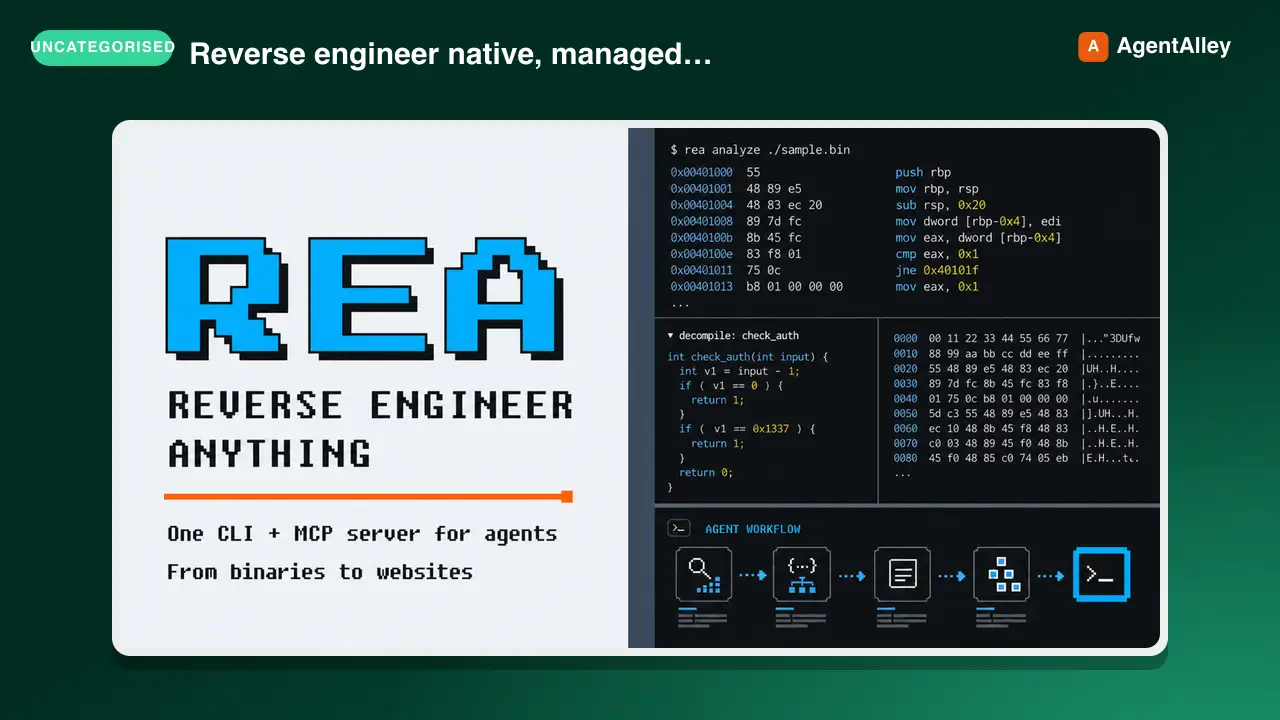 SkillCross-Platform Reverse Engineer
 morluto/rea · by morlutoReverse engineer native, managed, Electron/JavaScript, packaged, firmware, and browser targets with REA. Use shipped-artifact or requested runtime evidence to explain features, compare versions, decompile code, or guide a reconstruction. Skip REA for ordinary source-repository architecture analysis.★ 316k GitHub stars
 SkillBrainstorm Ideas
 obra/superpowers · by obraYou MUST use this before any creative work - creating features, building components, adding functionality, or modifying behavior. Explores user intent, requirements and design before implementation.★ 290k GitHub stars
 SkillCode Review Feedback Analyzerobra/superpowers · by obraUse when receiving code review feedback, before implementing suggestions, especially if feedback seems unclear or technically questionable - requires technical rigor and verification, not performative agreement or blind implementation★ 290k GitHub stars
 SkillBug Diagnosis Framework
 mattpocock/skills · by mattpocockDiagnosis loop for hard bugs and performance regressions. Use when the user says "diagnose"/"debug this", or reports something broken/throwing/failing/slow.★ 267k GitHub stars
 SkillImplement Specmattpocock/skills · by mattpocockImplement the result of /to-spec and /to-tickets in code.★ 267k GitHub stars
 SkillPR Description Writermattpocock/skills · by mattpocockUse when writing a PR body.★ 267k GitHub stars
More from davila7
 Skill2D Game Development
 davila7/claude-code-templates · by davila72D game development principles. Sprites, tilemaps, physics, camera.★ 32.3k GitHub stars
 Skill3D Game Development Principlesdavila7/claude-code-templates · by davila73D game development principles. Rendering, shaders, physics, cameras.★ 32.3k GitHub stars
 Skill3D Web Experience Builderdavila7/claude-code-templates · by davila7Expert in building 3D experiences for the web - Three.js, React Three Fiber, Spline, WebGL, and interactive 3D scenes. Covers product configurators, 3D portfolios, immersive websites, and bringing depth to web experiences. Use when: 3D website, three.js, WebGL, react three fiber, 3D experience.★ 32.3k GitHub stars
 SkillSplit Test Setupdavila7/claude-code-templates · by davila7When the user wants to plan, design, or implement an A/B test or experiment. Also use when the user mentions "A/B test," "split test," "experiment," "test this change," "variant copy," "multivariate test," or "hypothesis." For tracking implementation, see analytics-tracking.★ 32.3k GitHub stars
 AgentResearch Literature Synthesizerdavila7/claude-code-templates · by davila7Academic research synthesis specialist. Use PROACTIVELY for comprehensive research on academic topics, literature reviews, technical investigations, and well-cited analysis combining multiple sources. <example>Context: A podcast episode needs a segment grounded in peer-reviewed evidence with formal citations. user: "Research the current state of transformer efficiency techniques for the episode, with proper academic citations." assistant: "I'll use the academic-research-synthesizer agent to search arXiv and Semantic Scholar, extract full-text findings via WebFetch, and produce a cited literature synthesis with confidence levels." <commentary>Use academic-research-synthesizer (not comprehensive-researcher) when the episode segment needs peer-reviewed sourcing, formal citation format, and explicit confidence tagging rather than general-purpose multi-source coverage.</commentary></example> <example>Context: The episode-orchestrator has routed a "literature review" request for a technical deep-dive segment. user: "Summarize the research landscape on federated learning privacy guarantees." assistant: "I'll invoke academic-research-synthesizer to systematically search academic sources, note peer-review status per source, and synthesize consensus vs. open debates."</example>★ 32.3k GitHub stars
 AgentAcademic Research Specialistdavila7/claude-code-templates · by davila7Academic research specialist for scholarly sources, peer-reviewed papers, and academic literature. Use PROACTIVELY for research paper analysis, literature reviews, citation tracking, and academic methodology evaluation. <example>Context: The research-orchestrator has kicked off Phase 4 parallel research on 'efficacy of intermittent fasting' and needs peer-reviewed evidence. user: "Find the academic evidence on intermittent fasting outcomes." assistant: "I'll use the academic-researcher agent to search Semantic Scholar, PubMed, and OpenAlex for peer-reviewed studies and write structured findings to academic-research.md." <commentary>The request is specifically for scholarly/peer-reviewed evidence rather than general web coverage or code, so academic-researcher (not web-researcher or technical-researcher) is the right specialist.</commentary></example> <example>Context: The user wants a literature review comparing methodologies across studies on a topic. user: "Can you review the literature on transformer model interpretability and identify research gaps?" assistant: "Let me invoke the academic-researcher agent to pull foundational and recent papers, extract methodologies, and surface open research gaps." <commentary>Literature review, methodology extraction, and research-gap identification are core academic-researcher capabilities, distinct from technical-researcher's focus on code repositories and implementations.</commentary></example>★ 32.3k GitHub stars