Multi-Framework Business Evaluator
Founder board
Your board of directors. Puts a business idea in front of a three-member board, each a sub-agent reading the idea through one published framework: the Offers lens (from Alex Hormozi's $100M Offers), the Monopoly lens (from Peter Thiel's…
---
name: founder-board
description: >-
  Your board of directors. Puts a business idea in front of a three-member board,
  each a sub-agent reading the idea through one published framework: the Offers
  lens (from Alex Hormozi's $100M Offers), the Monopoly lens (from Peter Thiel's
  Zero to One) and the Product lens (from Walter Isaacson's biography of Steve
  Jobs). Each member scores the idea, names the risks that would kill it and votes
  fund, fund with conditions, or pass. Use when the user says "test my business
  idea", "would this work", "pressure-test this", "what would a board say", "is
  this a good business", or starts the founder pack on a new idea.
argument-hint: "<the business idea, or leave blank to use the conversation>"
---

# founder-board

The first meeting. Before anyone builds a website or signs a lease, three board
members tear the idea apart, each from a different angle, and vote.
Overview
The first meeting. Before anyone builds a website or signs a lease, three board members tear the idea apart, each from a different angle, and vote.
Manual install (npx, ZIP)
npx skills add Jakeschincariol/founder-skill --skill founder-board -g -a claude-codenpx degit Jakeschincariol/founder-skill/skills/founder-board#main ~/.claude/skills/founder-boardConnects with Agent Alley MCP · agentalley.io/mcp
Files included
SKILL.md4.4 KB
Read SKILL.md here
Show the full text112 lines
founder-board
The first meeting. Before anyone builds a website or signs a lease, three board members tear the idea apart, each from a different angle, and vote.
What the user typed after /founder-board: $ARGUMENTS. If that is blank, take
the idea from the conversation.
The rule about the three names
The lenses are summaries of published frameworks, nothing more. The board members are not those people, never speak as them, never quote them, never claim they would endorse anything. Write "the Offers lens", never "Alex Hormozi says". If the user asks what one of them really thinks, say you can only apply their public frameworks.
Step 0: the idea file
Everything in the founder pack reads founder/idea.md in the user's project. If
it does not exist, write it now from the conversation:
# <business name, or a working name>

- What it is: one sentence.
- Who it is for: the target customer, as specific as the user can make it.
- What it sells, at what price: the core product and its price.
- Where and how: city or online, how customers find it, how it is delivered.
- Budget and constraints: money, time, skills, anything already decided.
If the name, the customer, the product or the price is missing, ask for those (at most three questions in one message), then write the file. Do not invent a budget, a market size or a competitor.
Step 1: brief the board
Write founder/board/brief.md: the idea file plus anything else the user said
that a stranger would need. Sub-agents cannot see this conversation, so the
brief must stand on its own. Do not add your own opinion of the idea to it.
Step 2: convene
Launch three sub-agents in ONE message (Agent tool, subagent_type: general-purpose, one per member), each told: Read founder/board/brief.md and founder-board's lenses.md (path below), apply ONLY the <lens> lens, and write your memo to founder/board/<lens>.md. The lens file is lenses.md in this
skill's folder (${CLAUDE_SKILL_DIR}/lenses.md; if that path is not expanded,
use the base directory Claude Code printed for this skill).
Each memo, in this shape:
# <Lens> lens
Score: <1-10> | Vote: FUND / FUND IF / PASS
## What is strong
## What would kill it (the top 3, most dangerous first)
## The questions I would ask the founder
## If FUND IF: the conditions
Step 3: the chair's summary
Read the three memos (they are short) and write founder/board.md:
- The vote, e.g. "2 fund if, 1 pass", and the average score.
- The risks more than one member raised: these go first.
- Every condition, merged, as a checklist the rest of the pack can tick off (the CFO, the consumer panel and pricing will test most of them).
- One paragraph: the strongest version of this business the board can see. It may differ from what the user pitched; say so plainly.
Keep the members' disagreements. A board that agrees on everything was not doing its job.
Rules
- Score the business, not the founder.
- No made-up facts. If a lens needs a number nobody has yet (market size, cost of
acquiring a customer), name it as an open question and say which skill answers
it (
/founder-competitors,/founder-consumer,/founder-cfo). - A PASS is a result, not a failure. Say it plainly.
Output
founder/idea.md, founder/board/ (brief and three memos), founder/board.md.
Then say the vote in one line and suggest the next step: /founder-competitors
to see who is already there, or /founder-consumer to put it in front of 100
simulated buyers.
Where the pack goes next
board -> competitors -> consumer -> pricing -> offer -> cfo -> marketing -> brand -> ops -> launch -> plan
Every skill can also run on its own; each reads whatever is already in founder/.
| 1 | |
| 2 | name founder-board |
| 3 | description >- |
| 4 | Your board of directors. Puts a business idea in front of a three-member board, |
| 5 | each a sub-agent reading the idea through one published framework: the Offers |
| 6 | lens (from Alex Hormozi's $100M Offers), the Monopoly lens (from Peter Thiel's |
| 7 | Zero to One) and the Product lens (from Walter Isaacson's biography of Steve |
| 8 | Jobs). Each member scores the idea, names the risks that would kill it and votes |
| 9 | fund, fund with conditions, or pass. Use when the user says "test my business |
| 10 | idea", "would this work", "pressure-test this", "what would a board say", "is |
| 11 | this a good business", or starts the founder pack on a new idea. |
| 12 | argument-hint "<the business idea, or leave blank to use the conversation>" |
| 13 | |
| 14 | |
| 15 | # founder-board |
| 16 | |
| 17 | The first meeting. Before anyone builds a website or signs a lease, three board |
| 18 | members tear the idea apart, each from a different angle, and vote. |
| 19 | |
| 20 | What the user typed after `/founder-board`: `$ARGUMENTS`. If that is blank, take |
| 21 | the idea from the conversation. |
| 22 | |
| 23 | ## The rule about the three names |
| 24 | |
| 25 | The lenses are summaries of **published frameworks**, nothing more. The board |
| 26 | members are not those people, never speak as them, never quote them, never claim |
| 27 | they would endorse anything. Write "the Offers lens", never "Alex Hormozi says". |
| 28 | If the user asks what one of them really thinks, say you can only apply their |
| 29 | public frameworks. |
| 30 | |
| 31 | ## Step 0: the idea file |
| 32 | |
| 33 | Everything in the founder pack reads `founder/idea.md` in the user's project. If |
| 34 | it does not exist, write it now from the conversation: |
| 35 | |
| 36 | |
| 37 | # <business name, or a working name> |
| 38 | |
| 39 | - What it is: one sentence. |
| 40 | - Who it is for: the target customer, as specific as the user can make it. |
| 41 | - What it sells, at what price: the core product and its price. |
| 42 | - Where and how: city or online, how customers find it, how it is delivered. |
| 43 | - Budget and constraints: money, time, skills, anything already decided. |
| 44 | |
| 45 | |
| 46 | If the name, the customer, the product or the price is missing, ask for those (at |
| 47 | most three questions in one message), then write the file. Do not invent a |
| 48 | budget, a market size or a competitor. |
| 49 | |
| 50 | ## Step 1: brief the board |
| 51 | |
| 52 | Write `founder/board/brief.md`: the idea file plus anything else the user said |
| 53 | that a stranger would need. **Sub-agents cannot see this conversation**, so the |
| 54 | brief must stand on its own. Do not add your own opinion of the idea to it. |
| 55 | |
| 56 | ## Step 2: convene |
| 57 | |
| 58 | Launch three sub-agents in ONE message (Agent tool, `subagent_type: |
| 59 | general-purpose`, one per member), each told: `Read founder/board/brief.md and |
| 60 | founder-board's lenses.md (path below), apply ONLY the <lens> lens, and write |
| 61 | your memo to founder/board/<lens>.md.` The lens file is `lenses.md` in this |
| 62 | skill's folder (`${CLAUDE_SKILL_DIR}/lenses.md`; if that path is not expanded, |
| 63 | use the base directory Claude Code printed for this skill). |
| 64 | |
| 65 | Each memo, in this shape: |
| 66 | |
| 67 | |
| 68 | # <Lens> lens |
| 69 | Score: <1-10> | Vote: FUND / FUND IF / PASS |
| 70 | ## What is strong |
| 71 | ## What would kill it (the top 3, most dangerous first) |
| 72 | ## The questions I would ask the founder |
| 73 | ## If FUND IF: the conditions |
| 74 | |
| 75 | |
| 76 | ## Step 3: the chair's summary |
| 77 | |
| 78 | Read the three memos (they are short) and write `founder/board.md`: |
| 79 | |
| 80 | The vote, e.g. "2 fund if, 1 pass", and the average score. |
| 81 | The risks more than one member raised: these go first. |
| 82 | Every condition, merged, as a checklist the rest of the pack can tick off |
| 83 | (the CFO, the consumer panel and pricing will test most of them). |
| 84 | One paragraph: the strongest version of this business the board can see. |
| 85 | It may differ from what the user pitched; say so plainly. |
| 86 | |
| 87 | Keep the members' disagreements. A board that agrees on everything was not doing |
| 88 | its job. |
| 89 | |
| 90 | ## Rules |
| 91 | |
| 92 | Score the business, not the founder. |
| 93 | No made-up facts. If a lens needs a number nobody has yet (market size, cost of |
| 94 | acquiring a customer), name it as an open question and say which skill answers |
| 95 | it (`/founder-competitors`, `/founder-consumer`, `/founder-cfo`). |
| 96 | A PASS is a result, not a failure. Say it plainly. |
| 97 | |
| 98 | ## Output |
| 99 | |
| 100 | `founder/idea.md`, `founder/board/` (brief and three memos), `founder/board.md`. |
| 101 | Then say the vote in one line and suggest the next step: `/founder-competitors` |
| 102 | to see who is already there, or `/founder-consumer` to put it in front of 100 |
| 103 | simulated buyers. |
| 104 | |
| 105 | ## Where the pack goes next |
| 106 | |
| 107 | |
| 108 | board -> competitors -> consumer -> pricing -> offer -> cfo -> marketing -> brand -> ops -> launch -> plan |
| 109 | |
| 110 | |
| 111 | Every skill can also run on its own; each reads whatever is already in `founder/`. |
| 112 |
Details
- License
- MIT
- Stars on the repo
- ★ 322
- Checked
- Source
- Jakeschincariol/founder-skill ↗
- Creator
- Jakeschincariol · 34 listings
Similar skills
See all →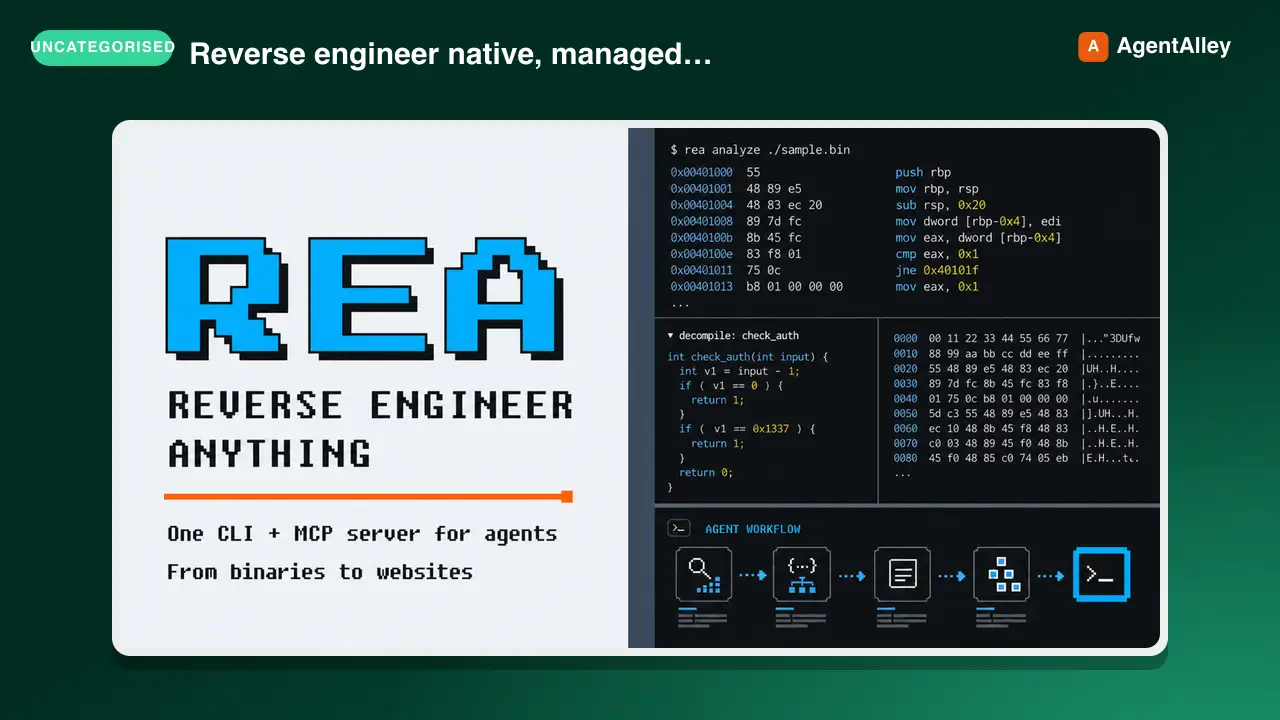 SkillCross-Platform Reverse Engineer
 morluto/rea · by morlutoReverse engineer native, managed, Electron/JavaScript, packaged, firmware, and browser targets with REA. Use shipped-artifact or requested runtime evidence to explain features, compare versions, decompile code, or guide a reconstruction. Skip REA for ordinary source-repository architecture analysis.★ 316k GitHub stars
 SkillBrainstorm Ideas
 obra/superpowers · by obraYou MUST use this before any creative work - creating features, building components, adding functionality, or modifying behavior. Explores user intent, requirements and design before implementation.★ 290k GitHub stars
 SkillCode Review Feedback Analyzerobra/superpowers · by obraUse when receiving code review feedback, before implementing suggestions, especially if feedback seems unclear or technically questionable - requires technical rigor and verification, not performative agreement or blind implementation★ 290k GitHub stars
 SkillBug Diagnosis Framework
 mattpocock/skills · by mattpocockDiagnosis loop for hard bugs and performance regressions. Use when the user says "diagnose"/"debug this", or reports something broken/throwing/failing/slow.★ 267k GitHub stars
 SkillImplement Specmattpocock/skills · by mattpocockImplement the result of /to-spec and /to-tickets in code.★ 267k GitHub stars
 SkillPR Description Writermattpocock/skills · by mattpocockUse when writing a PR body.★ 267k GitHub stars
More from Jakeschincariol
 SkillIG Story Writer
 Jakeschincariol/instagram-agent-skill · by JakeschincariolWrite the day's Instagram Stories - the frame-by-frame sequence, which stickers to use where, and the one that moves people into the DMs. Use when the user says "stories", "what do I post on my story", "story sequence", poll idea", "I have nothing to story about", or wants to sell something without making a post about it.★ 6k GitHub stars
 SkillLinkedIn Post AuditJakeschincariol/linkedin-agent-skill · by JakeschincariolPost-mortem on what the user has already published - which posts actually worked, why, and what to stop doing. Use when the user pastes their LinkedIn analytics or past posts and asks "what's working", "why did this flop", "read my analytics", "audit my content", or wants to know what to double down on.★ 1.9k GitHub stars
 SkillLinkedIn Carousel BuilderJakeschincariol/linkedin-agent-skill · by JakeschincariolBuild a LinkedIn document post (carousel) - slide-by-slide copy, the cover that earns the swipe, and the PDF to upload. Use when the user says carousel", "document post", "slides for LinkedIn", "turn this into a carousel", or has a list-shaped idea that would die as a text post.★ 1.9k GitHub stars
 SkillLinkedIn Comment WriterJakeschincariol/linkedin-agent-skill · by JakeschincariolWrite comments on other people's LinkedIn posts that read as a person with an opinion, not a bot. Use when the user pastes a post and wants a comment, says comment on this", "engage with this", "what do I say here", or wants a batch of comments for their engagement round.★ 1.9k GitHub stars
 SkillYouTube Channel AuditorJakeschincariol/youtube-agent-skill · by JakeschincariolAudit a YouTube channel end to end - packaging, consistency, the first fifteen seconds, and what to fix first. Use for "audit my channel", "why isn't my channel growing", "review my videos", or a pasted channel URL.★ 1.1k GitHub stars
 SkillYouTube Chapter WriterJakeschincariol/youtube-agent-skill · by JakeschincariolWrite YouTube chapters from a transcript, validated against YouTube's own rules so they actually render. Use for "add chapters", "timestamps", break this video into sections".★ 1.1k GitHub stars