Document Type Selector
Document types
Deepens SKILL.md §1 (Know the Reader and the Document's Job): which document type fits a given reader's question, the audience and scope…
# Document Types

Deepens SKILL.md §1 (Know the Reader and the Document's Job): which document type fits a given reader's question, the audience and scope statements that open a page, prerequisite and closing patterns, skeletons for the five common page types, paragraph structure, and the self-editing pass for a full doc set.

## Choose the Document Type

Every page answers one reader's question. Match the type to the question before writing a word — mixing types on one page forces the reader to read everything to find their one task.

| Type | Reader's question | Signals it's the right type | Must not contain |
|---|---|---|---|
| Tutorial | "Walk me through building this, start to finish?" | Reader is new to the feature and wants one guaranteed win | Exhaustive option lists; alternate paths; unexplained jargon |
| How-to | "How do I do this one task?" | Reader already has a working setup and a specific goal | Onboarding scaffolding; the "why" behind the feature |
| Concept | "What is this, and why does it work this way?" | Reader wants a mental model before acting | Numbered steps; command output; UI clicks |
| Reference | "What are the exact parameters, fields, or flags?" | Reader already knows what they want and needs the exact facts | Narrative explanation; opinion; "why" content |
| README / getting started | "What is this, and how do I start?" | Reader is arriving for the first time, evaluating or installing | Deep conceptual explanations; exhaustive configuration matrices |

**One task per page (R2).** A page that answers two of these questions answers neither well. When a draft mixes types — a concept paragraph, then steps, then a reference table — split it along these lines rather than adding more headings to the same page. This taxonomy isn't in Google's guide itself; it's inferred from the guide's Procedures page and its concept-heading guidance (S2, structure-and-formatting.md), generalized to the other common developer-doc shapes.
Overview
Deepens SKILL.md §1 (Know the Reader and the Document's Job): which document type fits a given reader's question, the audience and scope statements that open a page, prerequisite and closing patterns, skeletons for the five common page types, paragraph structure, and the self-editing pass for a full doc set.
Manual install (npx, ZIP)
npx skills add wondelai/skills --skill document-types -g -a claude-codeConnects with Agent Alley MCP · agentalley.io/mcp
Files included
document-types.md11.5 KB
Read document-types.md here
wondelai/
Show the full text213 lines
Document Types
Deepens SKILL.md §1 (Know the Reader and the Document's Job): which document type fits a given reader's question, the audience and scope statements that open a page, prerequisite and closing patterns, skeletons for the five common page types, paragraph structure, and the self-editing pass for a full doc set.
Choose the Document Type
Every page answers one reader's question. Match the type to the question before writing a word — mixing types on one page forces the reader to read everything to find their one task.
| Type | Reader's question | Signals it's the right type | Must not contain |
|---|---|---|---|
| Tutorial | "Walk me through building this, start to finish?" | Reader is new to the feature and wants one guaranteed win | Exhaustive option lists; alternate paths; unexplained jargon |
| How-to | "How do I do this one task?" | Reader already has a working setup and a specific goal | Onboarding scaffolding; the "why" behind the feature |
| Concept | "What is this, and why does it work this way?" | Reader wants a mental model before acting | Numbered steps; command output; UI clicks |
| Reference | "What are the exact parameters, fields, or flags?" | Reader already knows what they want and needs the exact facts | Narrative explanation; opinion; "why" content |
| README / getting started | "What is this, and how do I start?" | Reader is arriving for the first time, evaluating or installing | Deep conceptual explanations; exhaustive configuration matrices |
One task per page (R2). A page that answers two of these questions answers neither well. When a draft mixes types — a concept paragraph, then steps, then a reference table — split it along these lines rather than adding more headings to the same page. This taxonomy isn't in Google's guide itself; it's inferred from the guide's Procedures page and its concept-heading guidance (S2, structure-and-formatting.md), generalized to the other common developer-doc shapes.
Source: procedures, headings (inferred taxonomy — R2)
Audience and Scope Statements
A page's first paragraph does two jobs before any instruction starts: tell the reader whether they're on the right page, and tell them what they'll be able to do afterward (R1). A scope and non-scope statement extends this by naming what's deliberately left out, with a link to where that content lives (R4).
Audience statement
- Before: "This page describes the notification system."
- After: "This page is for backend developers adding Shipit webhook notifications to an existing service. It assumes you can deploy an HTTP endpoint and have admin access to a Shipit project."
Scope and non-scope statement
- Before: "This guide covers webhooks."
- After: "This guide shows how to subscribe to deployment events and verify webhook signatures. It doesn't cover configuring retry policies or building a custom event bus — see Webhook retry policies."
"What you'll do" intro
- Before: "Shipit is a deployment platform that many teams use to ship software faster and reduce risk across environments."
- After: "By the end of this page, you can configure Shipit to redeploy your app automatically whenever a build passes CI."
The non-scope sentence is what rescues a reader who followed a search result to the wrong page — without it, they read the whole doc before discovering it doesn't cover their case.
Source: tech-writing/one "Documents" (R1, R4)
Before You Begin and What's Next
Before you begin (R3) lists everything the reader needs before step 1 — nothing they'll discover along the way. It belongs there, not folded into step 4.
Belongs in prerequisites:
- Software and minimum versions ("Shipit CLI 4.2 or later")
- Required roles or permissions ("Admin role on the target project")
- Tools or SDKs that must already be installed
- Accounts, API keys, or a specific starting state ("A GitHub repository connected to Shipit")
Doesn't belong: conceptual background (link a concept page instead), and setup steps that belong to a different, already-linked page.
- Before: "4. Before running this command, make sure you've installed the Shipit CLI and have admin access on the project."
- After:
## Before you begin

- Shipit CLI 4.2 or later
- Admin role on the target project
- A GitHub repository connected to Shipit
Verification and What's next (R5). A procedure that ends on the last action leaves the reader guessing whether it worked. Close with a verification step phrased as a check, and the expected output, then point to the next task.
- Before: "4. Run
shipit deploy. That's it — you're done." - After:
Confirm that the deployment succeeded:

```
shipit status my-app
```

The command prints `Status: healthy`.

## What's next

- Configure automatic rollbacks
- Send deployment events to Slack
The exact headings "Before you begin" and "What's next", and the "Confirm that…" verification phrasing, aren't quoted rules in Google's guide — they're the convention this skill standardizes on, built from the guide's Procedures page and Google's own documentation practice.
Source: procedures; tech-writing/one "Documents" (R3, R5; heading wording and verification phrasing are convention)
Skeletons (convention)
None of these page shapes are named in Google's guide — they're this skill's convention for applying R1-R6 consistently. Use them as a starting outline, not a rigid template.
README
- Project name and one-line purpose — what it does, in one sentence
- Who it's for — the audience statement
- Quick start — three steps: install, configure, run
- Links out — full docs, contributing guide, license
Getting started (docs-site landing page)
- Title
- What you'll do — the outcome statement (R1)
- Before you begin — prerequisites (R3)
- Install, first command, verify
- What's next (R5)
Tutorial
- Title stating the goal ("Build a webhook listener with Shipit")
- What you'll build — one or two sentences, the end state
- Before you begin — prerequisites (R3)
- Numbered steps, each with the expected result stated after the action
- Clean up — remove anything created only for the tutorial
- What's next (R5)
How-to
- Title as a bare imperative task ("Configure a webhook endpoint") — heading form is S2 (structure-and-formatting.md)
- One sentence of context, only if more than one approach exists
- Before you begin — only what's specific to this task, not full onboarding
- Numbered steps, condition before instruction
- A short verification step (R5)
Concept
- Title as a noun phrase ("Webhook signing") — heading form is S2 (structure-and-formatting.md)
- What it is — key point first (R6)
- Why it works this way — the mechanism or trade-off
- How it fits with other pieces
- A link to the procedure that acts on this concept
Source: convention
Paragraphs and Key Points First
A paragraph carries one idea. Its lead sentence states that idea; everything after supports it. Aim for three to five sentences, and put the information the reader needs before the background that explains it (R6).
Key information before background
- Before: "Shipit's build system uses a layered cache to speed up repeated builds, an approach the team added after users on large monorepos reported slow CI times, and it now applies to every project by default."
- After: "Shipit caches build layers by default, so repeated builds finish faster. The team added this after users on large monorepos reported slow CI times."
One idea per paragraph
- Before: "Deployments run in isolated containers, so one project's build never affects another. You can also configure a custom domain for each environment, which requires DNS access and a verified certificate before Shipit will route traffic to it."
- After:
Deployments run in isolated containers, so one project's build never
affects another.

You can configure a custom domain for each environment. This requires
DNS access and a verified certificate before Shipit routes traffic to it.
A reader skimming only lead sentences should still get the page's argument — that's the test for whether the point comes first.
Source: tech-writing/one "Paragraphs" (R6)
Self-Editing and Organizing Large Doc Sets
A single page needs a different check than a doc set spanning dozens of pages. Apply both.
Self-editing a page:
| Technique | What to do | Catches |
|---|---|---|
| Adopt the reader's persona | Reread as the stated audience, not as the author who already knows the system | Missing prerequisites, unexplained jargon |
| Read it aloud | Read every sentence out loud, one at a time | Run-ons, missing words, buried passive voice |
| Come back later | Leave a draft for a few hours or a day before the final pass | Errors invisible to a tired eye |
| Run the checklist | Walk the page against the Quick Diagnostic rows in SKILL.md | Systemic gaps a single read-through misses |
| Find a peer editor | Have someone unfamiliar with the feature follow the doc | Steps that only work because the author knows a hidden step |
Organizing a doc set:
- Outline first. Write the heading structure before any prose, and get it approved before filling it in.
- State the set's purpose up front. The landing page's first sentence says what the set covers, the same way a single page's first paragraph does (R1).
- Headings as a table of contents. A reader who reads only the headings across the set should be able to tell what's where and pick the right page.
- Keep tutorials and how-tos on separate pages. A tutorial's teaching narrative and a how-to's task focus interfere with each other on the same page — this is R2's one-task-per-page rule applied across an entire set, not just one page.
Source: tech-writing/two "Self-editing" and "Organizing large documents"
Worked Example
A mixed page interleaves concept, steps, and reference. Here's one before a split:
# Webhooks

Shipit webhooks let external services react to deployment events without
polling. Every payload is signed with an HMAC-SHA256 digest so subscribers
can verify the sender before trusting the contents; this became necessary
once webhook endpoints started appearing on the public internet, where
anyone could send forged events.

1. Open your project settings and click **Webhooks**.
2. Click **Add endpoint** and enter your HTTPS URL.
3. Copy the signing secret shown after you save.

The `event` field is one of `deploy.started`, `deploy.succeeded`, or
`deploy.failed`. The `signature` header holds the HMAC digest, and
`timestamp` is a Unix epoch integer used to reject replayed requests
older than five minutes.

4. Deploy your project and check your endpoint's logs for a request.
A reader who only wants to configure an endpoint has to read a security rationale and a payload reference to find steps 1 through 4, scattered across the page. Splitting by task (R2) gives two linked pages — headings only, since the prose above already carries the content:
Page 1 — Concept: "Webhook signing"
- Webhook signing
- Why Shipit signs every payload
- Payload fields (
event,signature,timestamp) — reference material about the payload sits with the concept, not the procedure - See "Configure a webhook endpoint" to set one up
Page 2 — How-to: "Configure a webhook endpoint"
- Configure a webhook endpoint
- Before you begin — an HTTPS-reachable endpoint, admin role on the project
- Numbered steps 1-3 (unchanged)
- Confirm that your endpoint received a request — the stranded step 4 becomes a verification step, with the expected log line stated
- What's next
Source: convention (applies R1-R6 together)
| 1 | # Document Types |
| 2 | |
| 3 | Deepens SKILL.md §1 (Know the Reader and the Document's Job): which document type fits a given reader's question, the audience and scope statements that open a page, prerequisite and closing patterns, skeletons for the five common page types, paragraph structure, and the self-editing pass for a full doc set. |
| 4 | |
| 5 | ## Choose the Document Type |
| 6 | |
| 7 | Every page answers one reader's question. Match the type to the question before writing a word — mixing types on one page forces the reader to read everything to find their one task. |
| 8 | |
| 9 | | Type | Reader's question | Signals it's the right type | Must not contain | |
| 10 | |---|---|---|---| |
| 11 | | Tutorial | "Walk me through building this, start to finish?" | Reader is new to the feature and wants one guaranteed win | Exhaustive option lists; alternate paths; unexplained jargon | |
| 12 | | How-to | "How do I do this one task?" | Reader already has a working setup and a specific goal | Onboarding scaffolding; the "why" behind the feature | |
| 13 | | Concept | "What is this, and why does it work this way?" | Reader wants a mental model before acting | Numbered steps; command output; UI clicks | |
| 14 | | Reference | "What are the exact parameters, fields, or flags?" | Reader already knows what they want and needs the exact facts | Narrative explanation; opinion; "why" content | |
| 15 | | README / getting started | "What is this, and how do I start?" | Reader is arriving for the first time, evaluating or installing | Deep conceptual explanations; exhaustive configuration matrices | |
| 16 | |
| 17 | **One task per page (R2).** A page that answers two of these questions answers neither well. When a draft mixes types — a concept paragraph, then steps, then a reference table — split it along these lines rather than adding more headings to the same page. This taxonomy isn't in Google's guide itself; it's inferred from the guide's Procedures page and its concept-heading guidance (S2, structure-and-formatting.md), generalized to the other common developer-doc shapes. |
| 18 | |
| 19 | Source: procedures, headings (inferred taxonomy — R2) |
| 20 | |
| 21 | ## Audience and Scope Statements |
| 22 | |
| 23 | A page's first paragraph does two jobs before any instruction starts: tell the reader whether they're on the right page, and tell them what they'll be able to do afterward (R1). A scope and non-scope statement extends this by naming what's deliberately left out, with a link to where that content lives (R4). |
| 24 | |
| 25 | **Audience statement** |
| 26 | Before: "This page describes the notification system." |
| 27 | After: "This page is for backend developers adding Shipit webhook notifications to an existing service. It assumes you can deploy an HTTP endpoint and have admin access to a Shipit project." |
| 28 | |
| 29 | **Scope and non-scope statement** |
| 30 | Before: "This guide covers webhooks." |
| 31 | After: "This guide shows how to subscribe to deployment events and verify webhook signatures. It doesn't cover configuring retry policies or building a custom event bus — see Webhook retry policies." |
| 32 | |
| 33 | **"What you'll do" intro** |
| 34 | Before: "Shipit is a deployment platform that many teams use to ship software faster and reduce risk across environments." |
| 35 | After: "By the end of this page, you can configure Shipit to redeploy your app automatically whenever a build passes CI." |
| 36 | |
| 37 | The non-scope sentence is what rescues a reader who followed a search result to the wrong page — without it, they read the whole doc before discovering it doesn't cover their case. |
| 38 | |
| 39 | Source: tech-writing/one "Documents" (R1, R4) |
| 40 | |
| 41 | ## Before You Begin and What's Next |
| 42 | |
| 43 | **Before you begin (R3)** lists everything the reader needs before step 1 — nothing they'll discover along the way. It belongs there, not folded into step 4. |
| 44 | |
| 45 | Belongs in prerequisites: |
| 46 | Software and minimum versions ("Shipit CLI 4.2 or later") |
| 47 | Required roles or permissions ("Admin role on the target project") |
| 48 | Tools or SDKs that must already be installed |
| 49 | Accounts, API keys, or a specific starting state ("A GitHub repository connected to Shipit") |
| 50 | |
| 51 | Doesn't belong: conceptual background (link a concept page instead), and setup steps that belong to a different, already-linked page. |
| 52 | |
| 53 | Before: "4. Before running this command, make sure you've installed the Shipit CLI and have admin access on the project." |
| 54 | After: |
| 55 | |
| 56 | ## Before you begin |
| 57 | |
| 58 | - Shipit CLI 4.2 or later |
| 59 | - Admin role on the target project |
| 60 | - A GitHub repository connected to Shipit |
| 61 | |
| 62 | |
| 63 | **Verification and What's next (R5).** A procedure that ends on the last action leaves the reader guessing whether it worked. Close with a verification step phrased as a check, and the expected output, then point to the next task. |
| 64 | |
| 65 | Before: "4. Run `shipit deploy`. That's it — you're done." |
| 66 | After: |
| 67 | |
| 68 | Confirm that the deployment succeeded: |
| 69 | |
| 70 | |
| 71 | shipit status my-app |
| 72 | |
| 73 | |
| 74 | The command prints `Status: healthy`. |
| 75 | |
| 76 | ## What's next |
| 77 | |
| 78 | - Configure automatic rollbacks |
| 79 | - Send deployment events to Slack |
| 80 | |
| 81 | |
| 82 | The exact headings "Before you begin" and "What's next", and the "Confirm that…" verification phrasing, aren't quoted rules in Google's guide — they're the convention this skill standardizes on, built from the guide's Procedures page and Google's own documentation practice. |
| 83 | |
| 84 | Source: procedures; tech-writing/one "Documents" (R3, R5; heading wording and verification phrasing are convention) |
| 85 | |
| 86 | ## Skeletons (convention) |
| 87 | |
| 88 | None of these page shapes are named in Google's guide — they're this skill's convention for applying R1-R6 consistently. Use them as a starting outline, not a rigid template. |
| 89 | |
| 90 | **README** |
| 91 | Project name and one-line purpose — what it does, in one sentence |
| 92 | Who it's for — the audience statement |
| 93 | Quick start — three steps: install, configure, run |
| 94 | Links out — full docs, contributing guide, license |
| 95 | |
| 96 | **Getting started (docs-site landing page)** |
| 97 | Title |
| 98 | What you'll do — the outcome statement (R1) |
| 99 | Before you begin — prerequisites (R3) |
| 100 | Install, first command, verify |
| 101 | What's next (R5) |
| 102 | |
| 103 | **Tutorial** |
| 104 | Title stating the goal ("Build a webhook listener with Shipit") |
| 105 | What you'll build — one or two sentences, the end state |
| 106 | Before you begin — prerequisites (R3) |
| 107 | Numbered steps, each with the expected result stated after the action |
| 108 | Clean up — remove anything created only for the tutorial |
| 109 | What's next (R5) |
| 110 | |
| 111 | **How-to** |
| 112 | Title as a bare imperative task ("Configure a webhook endpoint") — heading form is S2 (structure-and-formatting.md) |
| 113 | One sentence of context, only if more than one approach exists |
| 114 | Before you begin — only what's specific to this task, not full onboarding |
| 115 | Numbered steps, condition before instruction |
| 116 | A short verification step (R5) |
| 117 | |
| 118 | **Concept** |
| 119 | Title as a noun phrase ("Webhook signing") — heading form is S2 (structure-and-formatting.md) |
| 120 | What it is — key point first (R6) |
| 121 | Why it works this way — the mechanism or trade-off |
| 122 | How it fits with other pieces |
| 123 | A link to the procedure that acts on this concept |
| 124 | |
| 125 | Source: convention |
| 126 | |
| 127 | ## Paragraphs and Key Points First |
| 128 | |
| 129 | A paragraph carries one idea. Its lead sentence states that idea; everything after supports it. Aim for three to five sentences, and put the information the reader needs before the background that explains it (R6). |
| 130 | |
| 131 | **Key information before background** |
| 132 | Before: "Shipit's build system uses a layered cache to speed up repeated builds, an approach the team added after users on large monorepos reported slow CI times, and it now applies to every project by default." |
| 133 | After: "Shipit caches build layers by default, so repeated builds finish faster. The team added this after users on large monorepos reported slow CI times." |
| 134 | |
| 135 | **One idea per paragraph** |
| 136 | Before: "Deployments run in isolated containers, so one project's build never affects another. You can also configure a custom domain for each environment, which requires DNS access and a verified certificate before Shipit will route traffic to it." |
| 137 | After: |
| 138 | |
| 139 | Deployments run in isolated containers, so one project's build never |
| 140 | affects another. |
| 141 | |
| 142 | You can configure a custom domain for each environment. This requires |
| 143 | DNS access and a verified certificate before Shipit routes traffic to it. |
| 144 | |
| 145 | |
| 146 | A reader skimming only lead sentences should still get the page's argument — that's the test for whether the point comes first. |
| 147 | |
| 148 | Source: tech-writing/one "Paragraphs" (R6) |
| 149 | |
| 150 | ## Self-Editing and Organizing Large Doc Sets |
| 151 | |
| 152 | A single page needs a different check than a doc set spanning dozens of pages. Apply both. |
| 153 | |
| 154 | **Self-editing a page:** |
| 155 | |
| 156 | | Technique | What to do | Catches | |
| 157 | |---|---|---| |
| 158 | | Adopt the reader's persona | Reread as the stated audience, not as the author who already knows the system | Missing prerequisites, unexplained jargon | |
| 159 | | Read it aloud | Read every sentence out loud, one at a time | Run-ons, missing words, buried passive voice | |
| 160 | | Come back later | Leave a draft for a few hours or a day before the final pass | Errors invisible to a tired eye | |
| 161 | | Run the checklist | Walk the page against the Quick Diagnostic rows in SKILL.md | Systemic gaps a single read-through misses | |
| 162 | | Find a peer editor | Have someone unfamiliar with the feature follow the doc | Steps that only work because the author knows a hidden step | |
| 163 | |
| 164 | **Organizing a doc set:** |
| 165 | Outline first. Write the heading structure before any prose, and get it approved before filling it in. |
| 166 | State the set's purpose up front. The landing page's first sentence says what the set covers, the same way a single page's first paragraph does (R1). |
| 167 | Headings as a table of contents. A reader who reads only the headings across the set should be able to tell what's where and pick the right page. |
| 168 | Keep tutorials and how-tos on separate pages. A tutorial's teaching narrative and a how-to's task focus interfere with each other on the same page — this is R2's one-task-per-page rule applied across an entire set, not just one page. |
| 169 | |
| 170 | Source: tech-writing/two "Self-editing" and "Organizing large documents" |
| 171 | |
| 172 | ## Worked Example |
| 173 | |
| 174 | A mixed page interleaves concept, steps, and reference. Here's one before a split: |
| 175 | |
| 176 | |
| 177 | # Webhooks |
| 178 | |
| 179 | Shipit webhooks let external services react to deployment events without |
| 180 | polling. Every payload is signed with an HMAC-SHA256 digest so subscribers |
| 181 | can verify the sender before trusting the contents; this became necessary |
| 182 | once webhook endpoints started appearing on the public internet, where |
| 183 | anyone could send forged events. |
| 184 | |
| 185 | 1. Open your project settings and click **Webhooks**. |
| 186 | 2. Click **Add endpoint** and enter your HTTPS URL. |
| 187 | 3. Copy the signing secret shown after you save. |
| 188 | |
| 189 | The `event` field is one of `deploy.started`, `deploy.succeeded`, or |
| 190 | `deploy.failed`. The `signature` header holds the HMAC digest, and |
| 191 | `timestamp` is a Unix epoch integer used to reject replayed requests |
| 192 | older than five minutes. |
| 193 | |
| 194 | 4. Deploy your project and check your endpoint's logs for a request. |
| 195 | |
| 196 | |
| 197 | A reader who only wants to configure an endpoint has to read a security rationale and a payload reference to find steps 1 through 4, scattered across the page. Splitting by task (R2) gives two linked pages — headings only, since the prose above already carries the content: |
| 198 | |
| 199 | **Page 1 — Concept: "Webhook signing"** |
| 200 | Webhook signing |
| 201 | Why Shipit signs every payload |
| 202 | Payload fields (`event`, `signature`, `timestamp`) — reference material about the payload sits with the concept, not the procedure |
| 203 | See "Configure a webhook endpoint" to set one up |
| 204 | |
| 205 | **Page 2 — How-to: "Configure a webhook endpoint"** |
| 206 | Configure a webhook endpoint |
| 207 | Before you begin — an HTTPS-reachable endpoint, admin role on the project |
| 208 | Numbered steps 1-3 (unchanged) |
| 209 | Confirm that your endpoint received a request — the stranded step 4 becomes a verification step, with the expected log line stated |
| 210 | What's next |
| 211 | |
| 212 | Source: convention (applies R1-R6 together) |
| 213 |
Details
- Updated
- Sep 10, 2026
- License
- MIT
- Stars on the repo
- ★ 2,235
- Checked
- Source
- wondelai/skills ↗
- Creator
- wondelai · 319 listings
Similar skills
See all →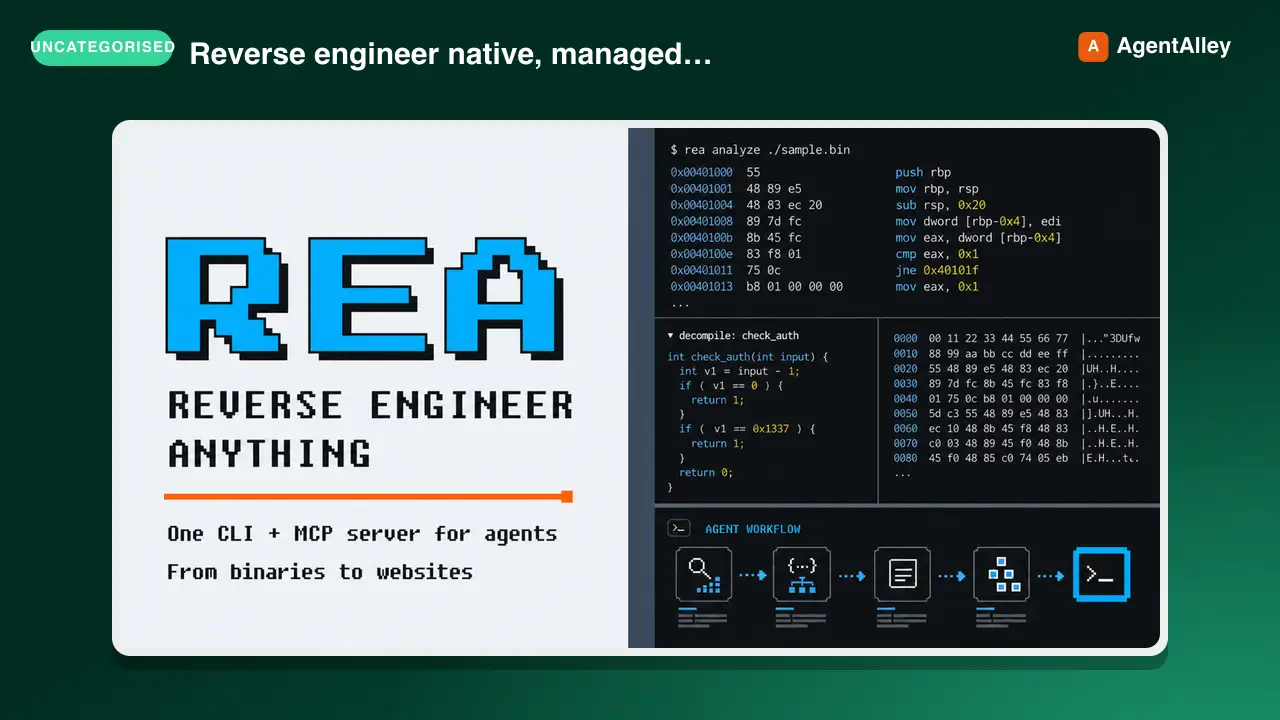 SkillCross-Platform Reverse Engineer
 morluto/rea · by morlutoReverse engineer native, managed, Electron/JavaScript, packaged, firmware, and browser targets with REA. Use shipped-artifact or requested runtime evidence to explain features, compare versions, decompile code, or guide a reconstruction. Skip REA for ordinary source-repository architecture analysis.★ 316k GitHub stars
 SkillBrainstorm Ideas
 obra/superpowers · by obraYou MUST use this before any creative work - creating features, building components, adding functionality, or modifying behavior. Explores user intent, requirements and design before implementation.★ 290k GitHub stars
 SkillCode Review Feedback Analyzerobra/superpowers · by obraUse when receiving code review feedback, before implementing suggestions, especially if feedback seems unclear or technically questionable - requires technical rigor and verification, not performative agreement or blind implementation★ 290k GitHub stars
 SkillBug Diagnosis Framework
 mattpocock/skills · by mattpocockDiagnosis loop for hard bugs and performance regressions. Use when the user says "diagnose"/"debug this", or reports something broken/throwing/failing/slow.★ 267k GitHub stars
 SkillImplement Specmattpocock/skills · by mattpocockImplement the result of /to-spec and /to-tickets in code.★ 267k GitHub stars
 SkillPR Description Writermattpocock/skills · by mattpocockUse when writing a PR body.★ 267k GitHub stars
More from wondelai
 SkillSoftware Design Philosophy
 wondelai/skills · by wondelaiManage software complexity through deep modules, information hiding, and strategic programming. Use when the user mentions "module design", "API too complex", "shallow class", "complexity budget", "strategic vs tactical", "deep module", "information leakage", "pass-through method", "this code is over-engineered", or "simplify this design". Also trigger when reviewing an interface for simplicity, evaluating whether an abstraction is pulling its weight, deciding whether a comment is worth writing, or choosing between general-purpose and special-purpose approaches. Covers deep vs shallow modules, red flags for complexity, and comments as design documentation. For code quality, see clean-code. For architecture boundaries, see clean-architecture.★ 2.2k GitHub stars
 SkillActionable Metrics Guidewondelai/skills · by wondelaiMetrics are the language of validated learning. The wrong metrics create the illusion of progress while the startup drifts toward failure.…★ 2.2k GitHub stars
 SkillAdvertising Mediawondelai/skills · by wondelaiAdvertising media is the vehicle that carries your message to your target market. Choosing the right media is not about what is trendy — it…★ 2.2k GitHub stars
 SkillAffordance Designwondelai/skills · by wondelaiAn affordance is a relationship between an object and a person that determines how the object could possibly be used. A chair affords…★ 2.2k GitHub stars
 SkillLean UX in Agile Teamswondelai/skills · by wondelaiLean UX was designed to work inside Agile development teams, not alongside them. The central mechanism is dual-track agile, where a…★ 2.2k GitHub stars
 SkillAMP Framework Practitionerwondelai/skills · by wondelaiThis reference translates the AMP framework from theory into practice across six domains: product gamification, team management,…★ 2.2k GitHub stars