Creative Brainstorming
brainstorming
You MUST use this before any creative work - creating features, building components, adding functionality, or modifying behavior. Explores user intent, requirements and design before implementation.
---
name: brainstorming
description: "You MUST use this before any creative work - creating features, building components, adding functionality, or modifying behavior. Explores user intent, requirements and design before implementation."
---

# Brainstorming Ideas Into Designs

## Overview

Help turn ideas into fully formed designs and specs through natural collaborative dialogue.

Start by understanding the current project context, then ask questions one at a time to refine the idea. Once you understand what you're building, present the design in small sections (200-300 words), checking after each section whether it looks right so far.

## The Process

**Understanding the idea:**
- Check out the current project state first (files, docs, recent commits)
- Ask questions one at a time to refine the idea
Overview
Help turn ideas into fully formed designs and specs through natural collaborative dialogue.
Manual install (npx, ZIP)
npx skills add davila7/claude-code-templates --skill brainstorming -g -a claude-codenpx degit davila7/claude-code-templates/cli-tool/components/skills/productivity/brainstorming#main ~/.claude/skills/brainstorming-davila7Connects with Agent Alley MCP · agentalley.io/mcp
Files included
SKILL.md2.4 KB
Read SKILL.md here
Show the full text55 lines
Brainstorming Ideas Into Designs
Overview
Help turn ideas into fully formed designs and specs through natural collaborative dialogue.
Start by understanding the current project context, then ask questions one at a time to refine the idea. Once you understand what you're building, present the design in small sections (200-300 words), checking after each section whether it looks right so far.
The Process
Understanding the idea:
- Check out the current project state first (files, docs, recent commits)
- Ask questions one at a time to refine the idea
- Prefer multiple choice questions when possible, but open-ended is fine too
- Only one question per message - if a topic needs more exploration, break it into multiple questions
- Focus on understanding: purpose, constraints, success criteria
Exploring approaches:
- Propose 2-3 different approaches with trade-offs
- Present options conversationally with your recommendation and reasoning
- Lead with your recommended option and explain why
Presenting the design:
- Once you believe you understand what you're building, present the design
- Break it into sections of 200-300 words
- Ask after each section whether it looks right so far
- Cover: architecture, components, data flow, error handling, testing
- Be ready to go back and clarify if something doesn't make sense
After the Design
Documentation:
- Write the validated design to
docs/plans/YYYY-MM-DD-<topic>-design.md - Use elements-of-style:writing-clearly-and-concisely skill if available
- Commit the design document to git
Implementation (if continuing):
- Ask: "Ready to set up for implementation?"
- Use superpowers:using-git-worktrees to create isolated workspace
- Use superpowers:writing-plans to create detailed implementation plan
Key Principles
- One question at a time - Don't overwhelm with multiple questions
- Multiple choice preferred - Easier to answer than open-ended when possible
- YAGNI ruthlessly - Remove unnecessary features from all designs
- Explore alternatives - Always propose 2-3 approaches before settling
- Incremental validation - Present design in sections, validate each
- Be flexible - Go back and clarify when something doesn't make sense
| 1 | |
| 2 | name brainstorming |
| 3 | description "You MUST use this before any creative work - creating features, building components, adding functionality, or modifying behavior. Explores user intent, requirements and design before implementation." |
| 4 | |
| 5 | |
| 6 | # Brainstorming Ideas Into Designs |
| 7 | |
| 8 | ## Overview |
| 9 | |
| 10 | Help turn ideas into fully formed designs and specs through natural collaborative dialogue. |
| 11 | |
| 12 | Start by understanding the current project context, then ask questions one at a time to refine the idea. Once you understand what you're building, present the design in small sections (200-300 words), checking after each section whether it looks right so far. |
| 13 | |
| 14 | ## The Process |
| 15 | |
| 16 | **Understanding the idea:** |
| 17 | Check out the current project state first (files, docs, recent commits) |
| 18 | Ask questions one at a time to refine the idea |
| 19 | Prefer multiple choice questions when possible, but open-ended is fine too |
| 20 | Only one question per message - if a topic needs more exploration, break it into multiple questions |
| 21 | Focus on understanding: purpose, constraints, success criteria |
| 22 | |
| 23 | **Exploring approaches:** |
| 24 | Propose 2-3 different approaches with trade-offs |
| 25 | Present options conversationally with your recommendation and reasoning |
| 26 | Lead with your recommended option and explain why |
| 27 | |
| 28 | **Presenting the design:** |
| 29 | Once you believe you understand what you're building, present the design |
| 30 | Break it into sections of 200-300 words |
| 31 | Ask after each section whether it looks right so far |
| 32 | Cover: architecture, components, data flow, error handling, testing |
| 33 | Be ready to go back and clarify if something doesn't make sense |
| 34 | |
| 35 | ## After the Design |
| 36 | |
| 37 | **Documentation:** |
| 38 | Write the validated design to `docs/plans/YYYY-MM-DD-<topic>-design.md` |
| 39 | Use elements-of-style:writing-clearly-and-concisely skill if available |
| 40 | Commit the design document to git |
| 41 | |
| 42 | **Implementation (if continuing):** |
| 43 | Ask: "Ready to set up for implementation?" |
| 44 | Use superpowers:using-git-worktrees to create isolated workspace |
| 45 | Use superpowers:writing-plans to create detailed implementation plan |
| 46 | |
| 47 | ## Key Principles |
| 48 | |
| 49 | **One question at a time** - Don't overwhelm with multiple questions |
| 50 | **Multiple choice preferred** - Easier to answer than open-ended when possible |
| 51 | **YAGNI ruthlessly** - Remove unnecessary features from all designs |
| 52 | **Explore alternatives** - Always propose 2-3 approaches before settling |
| 53 | **Incremental validation** - Present design in sections, validate each |
| 54 | **Be flexible** - Go back and clarify when something doesn't make sense |
| 55 |
Details
- License
- MIT
- Stars on the repo
- ★ 32,299
- Checked
- Source
- davila7/claude-code-templates ↗
- Creator
- davila7 · 212 listings
Similar skills
See all →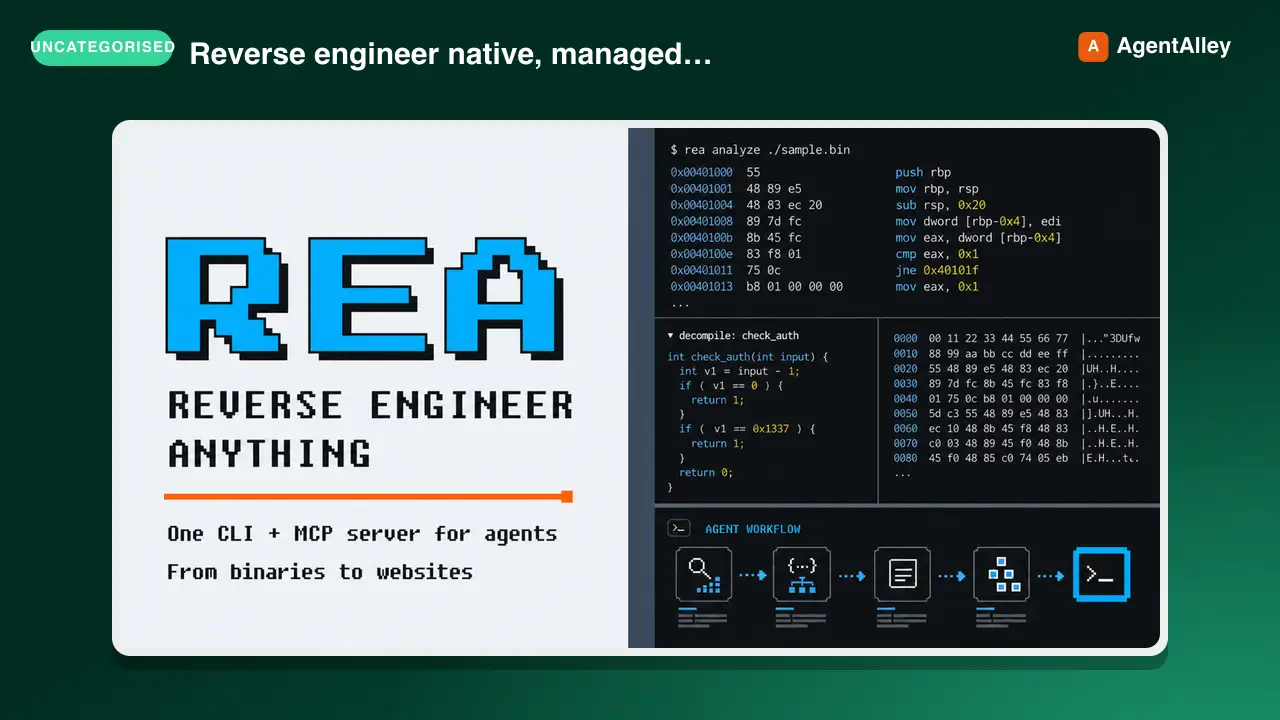 SkillCross-Platform Reverse Engineer
 morluto/rea · by morlutoReverse engineer native, managed, Electron/JavaScript, packaged, firmware, and browser targets with REA. Use shipped-artifact or requested runtime evidence to explain features, compare versions, decompile code, or guide a reconstruction. Skip REA for ordinary source-repository architecture analysis.★ 316k GitHub stars
 SkillBrainstorm Ideas
 obra/superpowers · by obraYou MUST use this before any creative work - creating features, building components, adding functionality, or modifying behavior. Explores user intent, requirements and design before implementation.★ 290k GitHub stars
 SkillCode Review Feedback Analyzerobra/superpowers · by obraUse when receiving code review feedback, before implementing suggestions, especially if feedback seems unclear or technically questionable - requires technical rigor and verification, not performative agreement or blind implementation★ 290k GitHub stars
 SkillBug Diagnosis Framework
 mattpocock/skills · by mattpocockDiagnosis loop for hard bugs and performance regressions. Use when the user says "diagnose"/"debug this", or reports something broken/throwing/failing/slow.★ 267k GitHub stars
 SkillImplement Specmattpocock/skills · by mattpocockImplement the result of /to-spec and /to-tickets in code.★ 267k GitHub stars
 SkillPR Description Writermattpocock/skills · by mattpocockUse when writing a PR body.★ 267k GitHub stars
More from davila7
 Skill2D Game Development
 davila7/claude-code-templates · by davila72D game development principles. Sprites, tilemaps, physics, camera.★ 32.3k GitHub stars
 Skill3D Game Development Principlesdavila7/claude-code-templates · by davila73D game development principles. Rendering, shaders, physics, cameras.★ 32.3k GitHub stars
 Skill3D Web Experience Builderdavila7/claude-code-templates · by davila7Expert in building 3D experiences for the web - Three.js, React Three Fiber, Spline, WebGL, and interactive 3D scenes. Covers product configurators, 3D portfolios, immersive websites, and bringing depth to web experiences. Use when: 3D website, three.js, WebGL, react three fiber, 3D experience.★ 32.3k GitHub stars
 SkillSplit Test Setupdavila7/claude-code-templates · by davila7When the user wants to plan, design, or implement an A/B test or experiment. Also use when the user mentions "A/B test," "split test," "experiment," "test this change," "variant copy," "multivariate test," or "hypothesis." For tracking implementation, see analytics-tracking.★ 32.3k GitHub stars
 AgentResearch Literature Synthesizerdavila7/claude-code-templates · by davila7Academic research synthesis specialist. Use PROACTIVELY for comprehensive research on academic topics, literature reviews, technical investigations, and well-cited analysis combining multiple sources. <example>Context: A podcast episode needs a segment grounded in peer-reviewed evidence with formal citations. user: "Research the current state of transformer efficiency techniques for the episode, with proper academic citations." assistant: "I'll use the academic-research-synthesizer agent to search arXiv and Semantic Scholar, extract full-text findings via WebFetch, and produce a cited literature synthesis with confidence levels." <commentary>Use academic-research-synthesizer (not comprehensive-researcher) when the episode segment needs peer-reviewed sourcing, formal citation format, and explicit confidence tagging rather than general-purpose multi-source coverage.</commentary></example> <example>Context: The episode-orchestrator has routed a "literature review" request for a technical deep-dive segment. user: "Summarize the research landscape on federated learning privacy guarantees." assistant: "I'll invoke academic-research-synthesizer to systematically search academic sources, note peer-review status per source, and synthesize consensus vs. open debates."</example>★ 32.3k GitHub stars
 AgentAcademic Research Specialistdavila7/claude-code-templates · by davila7Academic research specialist for scholarly sources, peer-reviewed papers, and academic literature. Use PROACTIVELY for research paper analysis, literature reviews, citation tracking, and academic methodology evaluation. <example>Context: The research-orchestrator has kicked off Phase 4 parallel research on 'efficacy of intermittent fasting' and needs peer-reviewed evidence. user: "Find the academic evidence on intermittent fasting outcomes." assistant: "I'll use the academic-researcher agent to search Semantic Scholar, PubMed, and OpenAlex for peer-reviewed studies and write structured findings to academic-research.md." <commentary>The request is specifically for scholarly/peer-reviewed evidence rather than general web coverage or code, so academic-researcher (not web-researcher or technical-researcher) is the right specialist.</commentary></example> <example>Context: The user wants a literature review comparing methodologies across studies on a topic. user: "Can you review the literature on transformer model interpretability and identify research gaps?" assistant: "Let me invoke the academic-researcher agent to pull foundational and recent papers, extract methodologies, and surface open research gaps." <commentary>Literature review, methodology extraction, and research-gap identification are core academic-researcher capabilities, distinct from technical-researcher's focus on code repositories and implementations.</commentary></example>★ 32.3k GitHub stars